Gorilla Trekking from Germany
Gorilla trekking from Germany offers one of the most memorable wildlife journeys a traveler can make from Europe to Africa. Within one trip, you can leave cities such as Frankfurt, Berlin, Munich, Hamburg, Düsseldorf, Cologne, or Stuttgart and travel to the mist-covered mountain forests of Uganda, where endangered mountain gorillas live in their natural habitat. Instead of watching gorillas through documentaries or photographs, you can walk through an ancient rainforest with professional trackers and spend precious time observing a habituated gorilla family.
Uganda is one of the world’s leading destinations for mountain gorilla trekking. The country protects these great apes in Bwindi Impenetrable National Park and Mgahinga Gorilla National Park in southwestern Uganda. Both destinations offer travelers a chance to enter thick tropical forest, follow experienced guides, and watch mountain gorillas feeding, resting, interacting, and caring for their young.
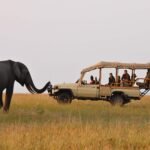
For German travelers, the journey combines adventure with a broader African safari experience. You can spend one day trekking gorillas and then continue to another national park for elephants, lions, chimpanzees, hippos, giraffes, buffaloes, birds, and other wildlife. Therefore, a Uganda safari can become much more than a single gorilla encounter.
Planning remains important because gorilla trekking involves permits, flights, accommodation, visas, road transfers, health preparation, and the right clothing. Fortunately, travelers who organize these details early can enjoy a smooth and rewarding journey.
This guide explains everything you need to know about gorilla trekking from Germany. It covers flights, visas, gorilla permits, trekking areas, accommodation, weather, packing, fitness, costs, safari extensions, responsible tourism, and practical travel advice.
Why Uganda
Uganda offers an excellent combination of mountain gorillas, other primates, savannah wildlife, landscapes, lakes, rivers, and cultural experiences. This variety makes the country particularly attractive to travelers flying a long distance from Germany.
Rather than spending several days traveling for one activity, visitors can combine gorilla trekking with a complete wildlife safari. For example, you can visit Queen Elizabeth National Park for game drives and boat trips, Kibale National Park for chimpanzees, Murchison Falls National Park for wildlife and dramatic waterfalls, or Lake Mburo National Park for a shorter safari before returning to Entebbe.
Moreover, Uganda has two separate mountain gorilla destinations. Bwindi Impenetrable National Park attracts most trekkers, while Mgahinga Gorilla National Park offers a beautiful alternative within the Virunga Mountains.
This flexibility makes itinerary planning easier. If your gorilla permit places you in one part of Bwindi, you can choose accommodation and other safari stops that create a logical travel route.
For German travelers who enjoy hiking, photography, wildlife, conservation, and nature, Uganda offers a strong mix of experiences without requiring several separate holidays.
Mountain Gorillas
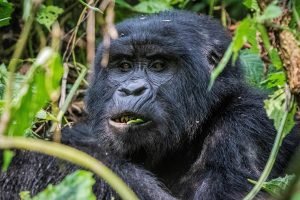
Mountain gorillas rank among the most famous and vulnerable primates on Earth. They live only within a limited region of East and Central Africa, which makes an encounter with them especially significant.
Unlike animals that live across large parts of the continent, mountain gorillas depend on specific high-altitude forest ecosystems. Uganda protects them in Bwindi and Mgahinga, while neighboring Rwanda and the Democratic Republic of Congo also protect populations within the greater Virunga region.
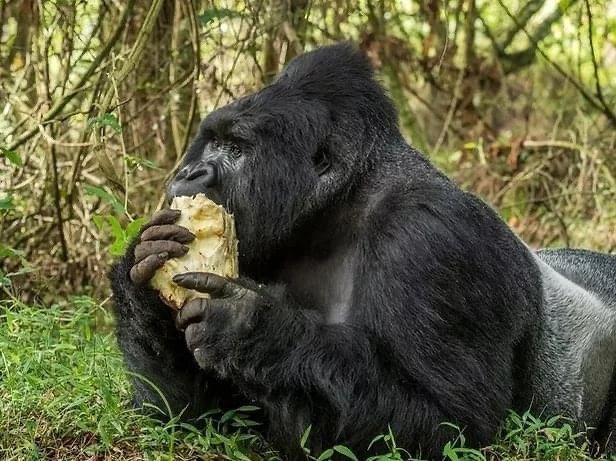
Mountain gorillas live in social groups that usually include a dominant silverback, adult females, juveniles, and infants. The silverback provides leadership and protection, while other members maintain strong social relationships through grooming, play, feeding, and communication.
During a trek, visitors may see a silverback resting among thick vegetation, an infant climbing over its mother, or juveniles chasing each other through the forest. These small moments often become more memorable than dramatic movement.
The experience feels personal because visitors observe the gorillas within their own environment rather than through a barrier. However, strict rules protect both the gorillas and the visitors.
Bwindi Forest
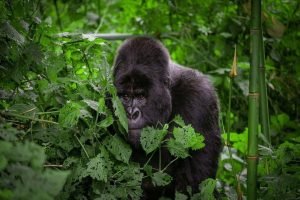
Bwindi Impenetrable National Park remains Uganda’s most famous gorilla trekking destination. The forest covers rugged hills, valleys, streams, dense vegetation, and highland landscapes in southwestern Uganda.
The word “impenetrable” reflects the character of the forest. Thick vegetation, vines, shrubs, ferns, and steep terrain create a challenging environment in some areas. Nevertheless, visitors do not enter the forest alone. Professional rangers, guides, trackers, and porters support the trekking experience.
Bwindi contains four main gorilla trekking sectors: Buhoma, Ruhija, Rushaga, and Nkuringo. Each sector has its own accommodation options, scenery, access roads, and trekking starting points.
Choosing the correct sector matters greatly. A traveler who books a lodge in one sector while holding a permit for another may face a long and difficult early-morning drive.
Therefore, always confirm your trekking sector before paying for accommodation. A professional safari company can match the permit, lodge, and route so that your trekking morning remains simple.
Buhoma
Buhoma lies in northern Bwindi and has a long history of gorilla tourism. It developed as one of Uganda’s earliest gorilla trekking areas and now offers a wide selection of accommodation.
Travelers can choose from relatively affordable camps, comfortable mid-range lodges, and luxury forest properties. Consequently, Buhoma can suit many different safari budgets.
The area also provides opportunities for forest walks, cultural encounters, birdwatching, and community activities. Travelers who stay more than one night can therefore explore beyond the gorilla trek.
Buhoma also combines well with some routes from Queen Elizabeth National Park. This can reduce unnecessary driving when visitors create a longer Uganda safari.
However, permit availability should guide the decision. Do not insist on Buhoma if suitable permits exist in another sector that works better for your dates.
Ruhija
Ruhija lies on the eastern side of Bwindi and attracts travelers who appreciate quiet mountain scenery and birdlife.
The area’s higher elevation means mornings and evenings can feel cool, especially for visitors who expect equatorial Africa to remain hot all day. Therefore, German travelers should pack layers rather than only lightweight safari clothing.
Ruhija can fit well into an itinerary that connects Bwindi with Kabale, Lake Bunyonyi, or other areas of southwestern Uganda.
Treks may involve steep forest terrain depending on the daily location of the gorillas. Since gorilla families move freely, no operator can guarantee an easy walk in advance.
Nevertheless, regular preparation before leaving Germany can make the experience much more comfortable.
Rushaga
Rushaga lies in southern Bwindi and offers another important base for gorilla trekking.
The area provides numerous lodge choices and connects conveniently with routes through Kisoro, Kabale, Lake Mutanda, and other attractions in southwestern Uganda.
Travelers often enjoy the surrounding hills and scenic roads because the landscape feels completely different from many parts of Germany. Terraced slopes, mountain views, small farms, forest edges, and distant volcanoes create excellent photography opportunities.
Rushaga also gives travelers several options for extending their stay around southern Bwindi.
However, visitors should remember that mountain roads can take longer than the distance suggests. A short distance on a map does not always mean a quick journey.
Nkuringo
Nkuringo offers some of the most dramatic scenery around Bwindi. The southern highlands create wide views across deep valleys and distant mountain landscapes.
The terrain can become physically demanding, so visitors should prepare for hills. Still, trekking difficulty changes every day because the gorillas choose their own movement patterns.
A group may find gorillas relatively close to the starting area on one morning. On another morning, trackers may follow the animals much farther into the forest.
Therefore, fitness preparation remains more useful than trying to predict the exact difficulty.
Nkuringo also attracts travelers who appreciate smaller lodges, quiet surroundings, and impressive landscapes.
Mgahinga
Mgahinga Gorilla National Park provides Uganda’s second major gorilla trekking destination.
The park forms part of the Virunga mountain system and offers a landscape shaped by volcanic peaks, bamboo forest, montane vegetation, and high-altitude scenery.
Travelers who trek in Mgahinga often appreciate its quieter atmosphere. The park also offers golden monkey tracking, which can create an excellent second primate experience.
Furthermore, Mgahinga lies near Kisoro and Lake Mutanda, making it possible to create a relaxed multi-day stay in southwestern Uganda.
German hikers may especially enjoy the mountain environment because the region offers a stronger sense of elevation and volcanic geography than Bwindi.
Germany to Uganda
Most travelers flying from Germany to Uganda arrive through Entebbe International Airport.
Current airline listings show bookable connections to Entebbe from several German cities, including Frankfurt, Berlin, Hamburg, and Munich. Lufthansa currently lists Entebbe itineraries from these German departure points, although some journeys may involve partner airlines or connections rather than a nonstop Lufthansa-operated flight.
Flight schedules and fares change throughout the year. Therefore, search according to your exact travel dates rather than relying on a fare seen several months earlier.
Travelers may connect through major hubs in Europe, the Middle East, or Africa depending on the airline.
When comparing tickets, look beyond the cheapest fare. Check total journey time, baggage allowance, connection length, departure airport, arrival time in Entebbe, and ticket-change conditions.
A slightly more expensive itinerary may save several hours of travel and provide a much easier start to your safari.
Frankfurt Flights
Frankfurt provides one of Germany’s most important international departure points and can work especially well for travelers from central and western Germany.
Lufthansa currently publishes Frankfurt–Entebbe booking options. However, travelers should check whether the selected journey uses partner carriers or includes a connection.
If you live far from Frankfurt, consider the additional domestic train or flight time before selecting the route.
Germany’s rail network makes it possible for many travelers to reach Frankfurt Airport relatively easily, but delays can occur. Therefore, build enough time between rail travel and your international departure.
If you book a combined rail-and-flight product, check the conditions carefully.
Berlin Flights
Travelers from Berlin and northeastern Germany can also find Entebbe itineraries.
Lufthansa currently publishes Berlin–Entebbe options, with itineraries available across different dates in 2026 and 2027.
Again, the cheapest fare should not become your only consideration.
A comfortable connection, reasonable departure time, manageable layover, and suitable arrival time can improve the beginning of your Uganda safari.
Remember that you still need ground transportation after reaching Entebbe.
Munich Flights
Munich offers another important departure point for travelers from southern Germany.
Visitors from Bavaria, Austria, and nearby regions may find Munich more convenient than Frankfurt.
Current Lufthansa listings include Munich among the German departure airports with Entebbe booking options.
Before confirming your ticket, compare total travel duration and connection times.
If your safari begins the morning after arrival, try to avoid an itinerary that lands extremely late at night unless your accommodation sits close to Entebbe Airport.
Hamburg Flights
Travelers from northern Germany can also begin their journey from Hamburg.
Current Lufthansa listings include Hamburg among the German cities with Entebbe itineraries.
However, many long-haul journeys from regional European airports involve at least one connection.
Therefore, calculate the complete travel time rather than focusing only on the first flight.
For some travelers, a rail journey to Frankfurt may compete with a connecting flight from Hamburg. Compare both options before booking.
Arriving in Entebbe
Entebbe International Airport lies near Lake Victoria and serves as Uganda’s main international airport.
After immigration and baggage collection, your driver-guide can meet you at the airport and transfer you to a nearby hotel.
If you arrive after a long overnight journey from Germany, staying in Entebbe for the first night usually makes more sense than immediately beginning the drive to Bwindi.
This rest night gives you time to recover, shower, sleep, exchange or withdraw money if necessary, and begin the safari fresh the next morning.
Entebbe also offers gardens, restaurants, lake views, and several accommodation categories.
Uganda Visa
German passport holders should prepare for Uganda’s visa process before travel.
Germany does not appear on Uganda’s current ordinary-passport visa-exemption list. Therefore, German tourists generally need to apply through Uganda’s official electronic visa system. Uganda’s immigration service directs visa-prone travelers to apply online and receive travel authorization before arrival.
Uganda currently lists the ordinary tourist visa fee at US$50. The immigration authority states that visa fees are non-refundable and that attached documents should be in English.
Travelers should use Uganda’s official immigration portal instead of unofficial websites that may charge additional fees or provide misleading information.
Apply early enough to deal with any request for extra information.
Visa Documents
Uganda’s immigration guidance asks applicants to provide relevant travel documents through the online system.
Your passport should have sufficient validity, and the immigration authority states that the passport used for travel should generally have at least six months of validity.
You may also need a recent passport photograph, passport biodata page, travel itinerary, accommodation details, and other supporting information depending on the application.
Make sure all details match your passport exactly.
A spelling error in a name, wrong passport number, or incorrect travel date can create unnecessary problems.
Once immigration approves your application, print the approval letter and carry it with your passport.
Keep a digital copy on your phone as well.
Gorilla Permits
A gorilla permit allows one person to join a scheduled gorilla trek on a specific date and in a designated trekking area.
Permit availability can influence the entire safari itinerary. Therefore, check permits before booking non-refundable hotels or building a fixed route.
Uganda Wildlife Authority manages gorilla trekking permits and publishes conservation tariffs.
The last publicly indexed UWA tariff covering July 2024 to June 2026 listed the foreign non-resident gorilla permit at US$800. However, because that tariff period has ended, travelers planning trips after June 2026 should confirm the applicable current rate directly with Uganda Wildlife Authority or a reliable licensed safari operator instead of assuming the old US$800 rate still applies.
This point matters for German travelers preparing a safari budget in euros. Exchange rates can also affect the final cost.
Book Early
Gorilla permits can sell quickly during popular travel periods.
Therefore, early booking gives you more choice of trekking dates, sectors, and accommodation.
Travelers who plan six to twelve months ahead often enjoy more flexibility than those who inquire a few weeks before departure.
However, last-minute trips can still work if permits remain available.
Before paying for your international flight, ask your safari company to check permit availability for your preferred dates.
Once you know the trekking date, you can organize the rest of the safari around it.
Permit Details
Provide your correct passport details when the tour company requests them.
Your name should match your passport exactly.
Keep a copy of your safari confirmation, permit information, and payment records.
You should also know the trekking park and sector before departure.
A clear itinerary prevents confusion when you reach Bwindi or Mgahinga.
Best Time
Uganda offers gorilla trekking throughout the year.
The gorillas remain in the forest during both wet and relatively dry periods, so visitors can plan the experience in almost any month.
Many travelers prefer the relatively drier periods because trails may contain less mud.
However, rain can fall at any time in tropical mountain forests.
Therefore, even travelers arriving during a drier month should carry waterproof clothing.
The greener rainy periods can also create beautiful photography conditions.
German Summer
Germany’s summer holiday period can work well for a Uganda gorilla safari.
June, July, and August often attract European travelers because families and professionals can use annual leave more easily.
As a result, gorilla permits and popular lodges may receive stronger demand.
Book early if you plan to travel during German school holidays.
Flight prices may also rise during busy European travel periods.
German Winter
Traveling from Germany during winter creates a dramatic climate change.
You can leave cold, short winter days and arrive in equatorial East Africa.
However, do not assume Bwindi will feel hot.
The forest sits at elevation, and mornings may feel cool and damp.
Bring a light fleece or warm layer even if you escape freezing temperatures in Germany.
Christmas Travel
Christmas and New Year can become popular travel periods.
If you plan gorilla trekking from Germany in December, secure permits and accommodation early.
International airfares may also rise around Christmas.
Allow enough connection time because winter weather in Europe can occasionally disrupt departures.
Arriving in Uganda one day before an important safari transfer provides useful flexibility.
Easter Travel
Easter can also provide a convenient holiday window for German travelers.
However, Uganda may experience wetter conditions around parts of March, April, and May.
Rain does not normally cancel gorilla trekking, but it can make forest trails muddy and slippery.
Good boots, gaiters, gloves, and waterproof clothing become especially helpful.
Driving to Bwindi
The road journey from Entebbe or Kampala to Bwindi usually takes most of a day.
Instead of seeing this simply as an inconvenience, many travelers treat the drive as part of the safari.
You pass towns, farms, wetlands, hills, villages, roadside markets, and changing landscapes.
The journey offers a first look at everyday Uganda beyond airports and hotels.
Your driver-guide will normally stop for meals and breaks.
Road Conditions
Uganda has a mixture of paved roads, gravel roads, mountain tracks, and rural access routes.
Main highways can allow relatively comfortable driving, but the final approach to Bwindi may become slower.
Rain can affect some sections.
Therefore, road travel times remain approximate.
German visitors accustomed to Autobahn travel should avoid judging journey time according to kilometers alone.
Terrain matters just as much as distance.
Domestic Flights
Travelers who prefer less road travel can consider domestic flights toward southwestern Uganda.
These flights can significantly reduce travel time, although you still need a road transfer from the airstrip to the lodge.
Fly-in safaris suit honeymooners, luxury travelers, older visitors, business travelers with limited holiday time, and anyone who dislikes long road journeys.
However, smaller aircraft often have stricter baggage limits.
Check the weight allowance before packing in Germany.
Soft-sided luggage usually works better than large hard-shell suitcases.
Trekking Morning
Gorilla trekking normally starts early.
Your lodge will usually prepare breakfast before your transfer to the briefing point.
Bring your trekking equipment, water, camera, passport or required identification, rain jacket, and packed lunch if provided.
Park staff will explain trekking rules before organizing visitors into groups.
Rangers and trackers then lead the group into the forest.
Finding Gorillas
Gorilla trekking differs from visiting an attraction with a fixed location.
The animals move freely through the forest.
Trackers monitor their movements and communicate with the trekking guides.
Some groups find gorillas relatively quickly, while others walk for several hours.
This uncertainty forms part of the adventure.
The Encounter
The moment you first see a mountain gorilla can become the highlight of the entire journey from Germany.
You may initially notice moving vegetation before seeing a face.
Then a large silverback, adult female, juvenile, or infant may appear through the leaves.
The gorillas often continue their normal activities while visitors observe quietly.
One may feed while another rests.
Young gorillas may climb, play, or approach other family members.
The experience feels surprisingly peaceful.
One Hour
Standard gorilla trekking generally provides a limited observation period once visitors reach the habituated gorilla family.
This protected time limit helps manage human impact on the animals.
Therefore, use your time carefully.
Take photographs, but do not spend the full encounter staring through a screen.
Lower the camera occasionally and simply watch.
Those quiet minutes often become the strongest memories.
Trek Difficulty
Gorilla trekking can range from relatively manageable to physically demanding.
The difficulty depends on the gorillas’ location, terrain, mud, elevation, weather, and your fitness.
A trek may involve steep slopes and thick vegetation.
Therefore, some preparation makes sense before leaving Germany.
You do not need elite athletic fitness, but regular walking helps greatly.
Training
Begin preparing several weeks before your safari.
Walk regularly and gradually increase your distance.
Add hills whenever possible.
If you live in a flat area, use stairs, an inclined treadmill, cycling, or gym exercises to build leg strength and endurance.
German hiking trails provide excellent preparation.
Even city residents can use parks and long weekend walks.
Hiking Boots
Proper footwear can make the difference between an enjoyable trek and an uncomfortable one.
Choose boots or sturdy hiking shoes with strong grip.
Water-resistant footwear provides additional comfort during muddy conditions.
Most importantly, break the shoes in before traveling.
Never make your gorilla trek the first full day you wear new boots.
Blisters can quickly reduce your enjoyment.
Gaiters
Gaiters help keep mud, water, small stones, and vegetation away from your lower legs and socks.
They become especially useful during wet conditions.
Although not every traveler considers them essential, they add little weight and can improve comfort considerably.
Gloves
Light gardening or trekking gloves can help when you need to hold branches or steady yourself.
Forest vegetation can contain rough surfaces, thorns, and stinging plants.
Gloves also protect your hands from mud.
Choose a lightweight pair rather than heavy winter gloves.
Rain Jacket
Always carry rain protection.
A compact waterproof jacket works better than a heavy coat.
Rain may arrive suddenly even when the morning begins with sunshine.
Breathable material helps because hiking uphill creates heat.
Pack the jacket in an easy-to-reach section of your daypack.
Long Trousers
Wear long trousers during the trek.
They protect your legs from vegetation, mud, insects, scratches, and sun.
Lightweight hiking trousers work well.
Avoid jeans because wet denim becomes heavy and uncomfortable.
Long Sleeves
A long-sleeved shirt provides additional protection from vegetation and insects.
Choose breathable material that dries quickly.
Layering works better than wearing one thick top.
You can remove a fleece when the trek becomes warm and put it back on during cool breaks.
Daypack
Carry a small comfortable daypack.
You will need space for water, camera equipment, lunch, rain gear, medication, sunscreen, and personal items.
Avoid bringing unnecessary equipment.
Every kilogram feels heavier after several hours on steep terrain.
Hire a Porter
Hiring a porter can make the trek significantly easier.
A porter carries your bag and can help you negotiate steep or muddy sections.
Even experienced hikers can appreciate this support.
Furthermore, porter employment provides direct income to people living around the park.
Therefore, hiring a porter combines practical comfort with a community benefit.
Photography
Gorilla photography can challenge even experienced photographers.
Dense forest creates a mixture of deep shade and bright openings.
Understand your camera before trekking day.
Practice changing ISO, shutter speed, aperture, and focus quickly.
A versatile zoom lens can work well.
However, avoid carrying a heavy collection of lenses unless photography is the main purpose of your trip.
Smartphone Photos
Modern smartphones can produce excellent gorilla photographs.
Clean the lens before the encounter.
Avoid excessive digital zoom because it can reduce quality.
Instead, frame carefully and allow the forest environment to appear in some photographs.
The habitat forms an important part of the story.
Flash Photography
Follow all ranger instructions regarding photography.
Do not use flash if park rules prohibit it near the gorillas.
Prepare your camera settings before reaching the animals so you do not waste valuable time.
Respect always matters more than obtaining one perfect photograph.
Health Preparation
German travelers should speak with a qualified travel medicine professional before visiting Uganda.
Health guidance changes, and individual needs depend on medical history, route, length of stay, and other destinations.
Germany’s Federal Foreign Office currently recommends several travel-health precautions for Uganda and notes year-round malaria risk. It also advises travelers to maintain adequate health insurance.
Therefore, organize a travel medicine appointment well before departure.
Yellow Fever
Health requirements can change, so check current rules before travel.
Germany’s Federal Foreign Office currently states that no compulsory vaccinations are required for direct entry to Uganda from Germany and notes that yellow fever vaccination is no longer compulsory for that direct-entry scenario. However, onward travel to another country may create different requirements because Uganda remains classified as a yellow-fever-risk area.
Uganda’s immigration application guidance may also request health-related documentation in particular processes. Therefore, confirm the latest requirements close to departure rather than relying solely on an older blog post.
Malaria
Malaria prevention deserves serious attention.
Germany’s Federal Foreign Office currently describes a high, year-round malaria risk throughout Uganda.
Speak with a doctor about appropriate prevention.
Use mosquito repellent, wear suitable clothing, and sleep under mosquito protection where recommended.
Do not rely on one measure alone.
Travel Insurance
Comprehensive travel insurance remains important for gorilla trekking from Germany.
Choose a policy that covers medical care, emergency evacuation, trip interruption, outdoor activities, luggage problems, and flight disruptions according to your needs.
Read the policy wording carefully.
Some cheap policies have low limits or exclusions that become important during an adventure safari.
Carry your insurer’s emergency number.
Current Advice
German travelers should always read the current Federal Foreign Office Uganda travel advice shortly before departure.
As of 25 September 2026, the Foreign Office advises particular caution for some western Uganda destinations, including Bwindi and Mgahinga, and recommends considering local guidance and staying informed about current security conditions.
Travel conditions can change quickly.
Therefore, use up-to-date official guidance rather than treating a blog article as permanent security information.
A professional local safari operator can also advise on practical route conditions during your stay.
Where to Stay
Gorilla safari accommodation ranges from simple budget lodges to high-end luxury properties.
Budget travelers can choose clean rooms with basic facilities.
Mid-range lodges often provide comfortable cottages, private bathrooms, meals, views, and personalized service.
Luxury properties may include premium rooms, fireplaces, spa services, fine dining, private decks, and dramatic forest scenery.
However, location matters more than unnecessary luxury.
A comfortable lodge beside the correct trekking point often provides a better experience than a spectacular property far away.
Meals
Most safari lodges serve a mixture of international and Ugandan food.
Breakfast may include eggs, bread, fruit, cereal, tea, coffee, and other items.
Lunch and dinner often feature rice, potatoes, vegetables, meat, fish, pasta, soups, and local dishes.
German travelers with dietary restrictions should tell the safari operator early.
Vegetarian and other dietary preferences can usually be arranged more easily when lodges receive advance notice.
Ugandan Food
Trying local food adds another dimension to the safari.
You may encounter matooke, groundnut sauce, beans, sweet potatoes, chapati, fresh tropical fruit, grilled meat, fish, and other Ugandan dishes.
Coffee lovers should also remember that Uganda produces excellent coffee.
Trying locally grown coffee can become an enjoyable part of the journey.
Drinking Water
Use safe drinking water throughout the safari.
Most reputable safari vehicles and lodges provide bottled or filtered water.
Carry enough water during the gorilla trek.
Dehydration makes hiking more difficult.
Drink regularly rather than waiting until you feel extremely thirsty.
Language
English works widely throughout Uganda’s tourism industry.
German travelers who speak English should find communication relatively straightforward with guides, lodge staff, rangers, and airport personnel.
Uganda also has many local languages, including Luganda and numerous regional languages.
Learning one or two greetings can create friendly interactions.
You do not need to speak a local language to enjoy the safari.
Money
Uganda uses the Uganda shilling.
Many safari packages quote prices to foreign visitors in US dollars.
International cards work in many larger hotels, but cash remains useful in rural areas.
You may need cash for tips, porters, souvenirs, drinks, small purchases, and personal expenses.
Ask your safari company which currency works best for additional payments.
Euros
Do not assume every business accepts euros directly.
Although you may arrive from Germany with euros, tourism businesses often quote US dollars.
Exchange facilities may convert euros, but rates vary.
Therefore, ask your operator for current payment advice before departure.
Credit Cards
Credit and debit cards can work at major hotels, airports, and some lodges.
However, rural connectivity may cause temporary payment problems.
Carry a backup payment option.
Inform your German bank about travel if necessary.
Check foreign transaction fees before relying heavily on your card.
Tipping
Tipping remains voluntary but common in safari tourism.
Visitors often tip driver-guides, porters, lodge staff, or ranger teams when they receive good service.
Ask your tour operator for current guidance because amounts vary according to service and group size.
Keep some small notes available.
Safari Costs
The total price of gorilla trekking from Germany includes more than the gorilla permit.
You may need to budget for international flights, visa, permit, accommodation, transport, guide services, park activities, meals, insurance, tips, and personal spending.
Luxury level changes the final cost considerably.
Domestic flights also increase the budget compared with road transport.
Therefore, request a complete quotation rather than comparing packages only by the headline price.
Budget Safari
Budget travelers can reduce costs by choosing simpler accommodation and traveling by road.
The gorilla encounter itself remains the same regardless of the lodge category.
A guest at a modest lodge does not receive a less meaningful gorilla experience than a luxury traveler.
Therefore, spend according to your priorities.
Clean accommodation, safe transport, a legitimate permit, and a knowledgeable guide matter far more than unnecessary extras.
Mid-Range Safari
Mid-range safaris provide a comfortable balance between cost and quality.
They usually include pleasant lodges, private bathrooms, good meals, reliable vehicles, and personalized guiding.
For many German travelers, this category offers the best overall value.
You receive comfort without paying for every luxury feature.
Luxury Safari
Luxury gorilla safaris focus on convenience, high-end accommodation, privacy, and service.
You may choose fly-in transfers, premium forest lodges, private dining, spa services, upgraded vehicles, or scenic stays.
However, the forest trek still remains a real outdoor adventure.
Luxury cannot remove mud, hills, rain, or uneven terrain.
That contrast often makes the experience even more memorable.
Solo Travel
Solo travelers from Germany can enjoy Uganda with good planning.
A private safari provides maximum flexibility, although the cost per person may become higher because one traveler covers most vehicle expenses.
Scheduled group departures can offer a cheaper alternative when available.
Solo travelers also meet other visitors during gorilla trekking briefings and at lodges.
Couples
Gorilla trekking works particularly well for couples.
A private safari can combine adventure with romantic lodges, lake views, scenic meals, and relaxing evenings.
Honeymooners often combine Bwindi with Lake Bunyonyi, Queen Elizabeth National Park, or another scenic location.
Tell your operator if the trip marks a special occasion.
Families
Families can include gorilla trekking in a broader Uganda safari.
However, gorilla trekking has age rules, so check current Uganda Wildlife Authority requirements before purchasing permits for younger travelers.
Families with children below the trekking age can arrange alternative activities while older family members enter the forest.
A good itinerary should keep everyone involved.
Older Travelers
Older travelers can successfully complete gorilla treks when fitness and health allow.
Age alone does not determine ability.
A physically active 70-year-old may find the trek easier than an inactive younger person.
Discuss mobility concerns with your doctor and safari company.
Hire a porter and prepare through regular walking.
Three Days
A three-day gorilla safari provides one of the shortest road-based itineraries.
Day one
Normally involves the long drive from Entebbe or Kampala to Bwindi.
Day two
Focuses on gorilla trekking.
Day three
Involves the return journey.
Although possible, this itinerary can feel rushed for someone arriving directly from Germany.
Add an arrival night whenever your schedule allows.
Four Days
Four days gives you slightly more flexibility.
You can arrive in Entebbe, travel to Bwindi the next day, trek gorillas, and then return.
Alternatively, you can add Lake Bunyonyi or another nearby stop depending on transport arrangements.
The extra night makes the journey more comfortable.
Five Days
Five days creates a better rhythm.
Spend your first night near Entebbe after arriving from Germany.
Travel toward Bwindi on day two.
Trek gorillas on day three.
Begin the return journey or enjoy another activity on day four.
Then connect with your international flight on day five.
This structure provides more recovery time.
Seven Days
Seven days allows you to combine gorilla trekking with another major safari destination.
Queen Elizabeth National Park works particularly well with Bwindi.
You can add game drives, wildlife viewing, and a boat safari.
The contrast between dense rainforest and open savannah creates a varied African experience.
Ten Days
A ten-day Uganda itinerary allows German travelers to experience much more of the country.
You can combine chimpanzees, savannah wildlife, gorillas, lakes, and different landscapes.
A possible route might include Kibale National Park, Queen Elizabeth National Park, Bwindi, and Lake Mburo.
The longer duration also makes the flight from Germany feel more worthwhile.
Queen Elizabeth
Queen Elizabeth National Park offers a classic wildlife experience that contrasts strongly with gorilla trekking.
Travelers can search for elephants, buffaloes, antelopes, hippos, and other animals.
Depending on current conditions and route, you may also explore different sectors of the park.
Combining Queen Elizabeth with Bwindi creates a strong first-time Uganda itinerary.
Chimpanzees
Chimpanzee trekking adds another fascinating primate encounter.
Kibale National Park remains Uganda’s best-known chimpanzee destination.
Chimpanzees often behave differently from gorillas.
They may move quickly through trees, vocalize loudly, and interact energetically.
Therefore, visitors who see both species gain a much broader understanding of great apes.
Golden Monkeys
Golden monkey tracking works particularly well with a Mgahinga itinerary.
These colorful primates live within the Virunga region and often move quickly through bamboo.
Their active behavior creates a very different experience from gorilla trekking.
Travelers can therefore enjoy two distinctive primate activities from the same general region.
Lake Bunyonyi
Lake Bunyonyi offers a peaceful break after gorilla trekking.
Terraced hills and islands surround the lake, creating beautiful scenery.
Travelers can relax, enjoy lodge views, take photographs, or participate in suitable local activities.
The slower pace feels especially welcome after a demanding forest trek.
Lake Mutanda
Lake Mutanda near Kisoro provides another scenic option.
The Virunga volcanoes create a dramatic backdrop on clear days.
Travelers visiting Mgahinga or southern Bwindi can include the lake without making a major detour.
A relaxed morning near the water adds variety to an active safari.
Cultural Experiences
Uganda’s gorilla regions include communities with deep connections to the surrounding landscape.
Responsible cultural visits can help travelers understand local livelihoods, traditions, agriculture, crafts, and conservation relationships.
Choose experiences that respect local dignity.
Ask before photographing people.
Buy crafts directly from local producers when possible.
Conservation
Gorilla trekking supports a wider conservation system.
Park authorities, rangers, researchers, veterinary teams, communities, tourism businesses, and international partners all contribute to mountain gorilla protection.
Permit revenue helps give the forest economic value beyond destructive land uses.
However, conservation requires more than tourism alone.
Habitat protection, law enforcement, disease prevention, community engagement, and scientific monitoring remain essential.
Responsible Trekking
Follow every instruction from your ranger.
Keep the required distance whenever possible.
Do not touch gorillas.
Do not chase animals for photographs.
Avoid sudden movement and loud voices.
Never feed wildlife.
If a gorilla moves closer, remain calm and listen to the ranger.
Responsible behavior protects both visitors and gorillas.
Illness
Do not hide symptoms of infectious illness merely because you paid for a permit.
Mountain gorillas share biological similarities with humans and may become vulnerable to human diseases.
If you feel seriously unwell before trekking, tell your guide.
Protecting the animals must come before obtaining a photograph.
Plastic Waste
Reduce unnecessary plastic during the safari.
Carry a reusable water bottle where safe refill systems exist.
Do not leave wrappers, tissues, bottles, or other rubbish in the forest.
Keep all waste in your pack until you reach a proper disposal point.
Small habits make a difference.
Safety
Uganda welcomes many international tourists, but travelers should still use normal precautions.
Use reputable transport.
Keep valuables secure.
Avoid carrying large amounts of visible cash.
Follow local advice.
Stay informed about route conditions.
Most importantly, check official travel advice shortly before departure because security situations can change.
Local Guides
A knowledgeable Ugandan driver-guide adds much more than transportation.
The guide understands roads, national parks, wildlife behavior, cultural context, accommodation, timing, and practical travel details.
That local knowledge becomes especially valuable for first-time visitors.
Internet
Mobile internet works in many Ugandan towns and safari areas.
However, connectivity can become weaker around remote forest lodges.
Download important information before leaving Entebbe.
Keep offline copies of your visa, itinerary, insurance, flight details, and emergency contacts.
Do not depend entirely on cloud storage.
Electricity
Uganda uses British-style three-pin electrical sockets.
German travelers should bring an appropriate adapter.
Most modern phone and laptop chargers support Uganda’s voltage range, but check the label on your own devices.
A universal travel adapter can also help during international flight connections.
Power Banks
Bring a power bank for your phone and camera equipment.
Long safari drives and trekking days can limit charging opportunities.
However, airlines regulate lithium batteries.
Check your airline’s rules before departure.
Pack batteries in the correct luggage according to aviation requirements.
Drones
Do not bring a drone with the assumption that you can fly it anywhere.
Uganda regulates drone use, and protected areas can have additional restrictions.
Obtain proper permissions before travel.
If you cannot secure authorization, leave the drone in Germany.
A camera or smartphone provides more than enough opportunities for beautiful images.
Shopping
Uganda offers baskets, carvings, fabrics, coffee, tea, art, jewelry, and other souvenirs.
Community craft shops around gorilla regions can provide meaningful shopping opportunities.
Avoid wildlife products or restricted natural materials.
Check German and European Union customs rules before bringing agricultural or animal products home.
Coffee
Coffee lovers should try Ugandan coffee.
The country produces both Arabica and Robusta varieties.
Some safari routes pass through coffee-growing areas.
A locally roasted bag can make a meaningful souvenir if import rules allow it.
German Travelers
Travel habits in Germany often emphasize punctuality, detailed schedules, reliable infrastructure, and clear planning.
Uganda sometimes moves at a different rhythm.
Weather, wildlife, road conditions, and rural travel can change timing.
Therefore, bring flexibility alongside your itinerary.
A ten-minute delay should not ruin a safari day.
Nature does not operate according to a railway timetable.
Cultural Differences
Travel becomes richer when visitors approach cultural differences with curiosity.
Ugandan communication may feel warmer and more conversational than quick transactional interactions in some European settings.
Greetings matter.
People may ask where you come from or how you are enjoying Uganda.
Take time to respond politely.
These small conversations often become pleasant memories.
Common Mistakes
One common mistake involves booking international flights before checking gorilla permits.
Another involves booking a lodge in the wrong Bwindi sector.
Some travelers also plan too many destinations in too few days.
Others underestimate road travel or arrive with unsuitable footwear.
Avoid these mistakes through careful preparation.
Overpacking
German travelers sometimes pack as if they need equipment for every possible weather condition.
In reality, a safari works better with practical, lightweight luggage.
Pack versatile layers.
Choose clothes that dry quickly.
Bring only the camera equipment you will actually use.
Leave unnecessary formal clothing at home unless your itinerary includes a special event.
Wrong Shoes
Fashion trainers may look comfortable in an airport but perform poorly on muddy mountain trails.
Invest in reliable trekking footwear.
Test it before travel.
Your feet will thank you after several hours in Bwindi.
Tight Schedule
Avoid placing your gorilla trek immediately after your international arrival.
Flight delays happen.
Baggage can arrive late.
Jet lag can reduce energy.
A rest night in Entebbe creates useful protection against these problems.
Booking Process
Start by selecting approximate travel dates.
Next, contact a safari company and check gorilla permit availability.
Then decide how many additional parks or experiences you want.
After the route becomes clear, confirm accommodation and ground transport.
Finally, book international flights that match the safari schedule.
This order reduces unnecessary risk.
Lena Tours
Travelers planning gorilla trekking from Germany can organize their Uganda journey with Lena Tours.
A Uganda-based safari company can coordinate your gorilla permits, airport transfers, safari vehicle, professional driver-guide, accommodation, park activities, and route.
Local knowledge becomes especially important around Bwindi because lodge location, trekking sector, road access, and transfer times need to work together.
Instead of contacting several separate suppliers from Germany, travelers can use one local operator to coordinate the complete safari.
Lena Tours can also tailor the itinerary according to budget, travel dates, group size, accommodation preference, and additional wildlife interests.
Private Safaris
A private safari gives travelers flexibility.
You have your own vehicle and driver-guide rather than following a large coach schedule.
You can stop for photography, adjust meal breaks, and travel at a comfortable pace.
Private travel works particularly well for couples, families, photographers, and small groups.
Group Safaris
Group safaris can reduce costs when travelers share transport.
They also provide social interaction.
However, the itinerary usually offers less flexibility because several travelers must follow the same schedule.
Choose according to personality and budget.
Eco-Conscious Travel
Travelers from Germany often show strong interest in environmental sustainability.
Gorilla tourism creates both opportunities and responsibilities.
Choose accommodation and operators that manage waste responsibly, respect protected areas, support local employment, and follow conservation rules.
Avoid demanding environmentally harmful conveniences merely because you are on holiday.
Responsible tourism starts with individual choices.
Carbon Awareness
Flying from Germany to Uganda creates a significant travel footprint.
Travelers concerned about carbon impact can make the journey more meaningful by staying longer instead of taking very short repeated long-haul trips.
A ten-day safari may offer a richer experience than flying thousands of kilometers for two nights.
You can also select responsible tourism businesses and support conservation activities.
Slow Travel
Slow travel suits Uganda particularly well.
Instead of trying to visit six national parks in one week, choose fewer places and experience them properly.
Stay two or three nights in important destinations.
Allow time for unexpected wildlife sightings.
Enjoy conversations at lodges.
Watch sunsets rather than spending every evening inside a vehicle.
Nature Sounds
One of the greatest contrasts between Germany and Bwindi appears after dark.
Instead of urban traffic, trains, or city sounds, you may hear insects, frogs, birds, rain, and distant forest movement.
Wake early and listen before breakfast.
Travel is not only about what you photograph.
Sound, smell, temperature, and atmosphere shape memory too.
Birdlife
Uganda offers exceptional birdwatching.
Even travelers who arrive with little interest in birds often begin noticing colorful species during the safari.
Bwindi’s forest supports many remarkable birds.
Your guide can help identify them.
Carry binoculars if birdwatching interests you.
Binoculars
Binoculars work well for general Uganda safaris.
You may use them less during close gorilla encounters, but they become valuable in savannah parks.
A lightweight pair fits easily into a daypack.
Do not bring an unnecessarily heavy model.
Safari Vehicle
A proper safari vehicle should provide comfort, visibility, and space for luggage.
Long drives become easier with enough legroom.
Photographers should ask about window access and roof design.
A reliable vehicle also matters on rural roads.
Road Stops
Long transfers should include breaks.
Stop for lunch, restrooms, refreshments, or photography where appropriate.
Do not treat every transfer as a race.
The countryside between parks forms part of Uganda’s travel experience.
Equator Stop
Some road itineraries between central and southwestern Uganda can include a stop around the Equator area.
Visitors often take photographs, browse craft shops, or have refreshments.
The stop provides a simple break during a long drive.
Souvenir Photos
Photographs of local people require respect.
Ask permission before taking close portraits.
Do not photograph children simply because they appear “interesting.”
Travel photography should preserve dignity.
Tips for Couples
Couples should discuss their trekking pace before travel.
If one person hikes regularly and the other does not, prepare together.
Hire porters.
Carry separate water bottles.
Avoid turning the trek into a competition.
The goal is to enjoy the experience together.
Tips for Photographers
Serious photographers should limit equipment to what they can carry comfortably.
A second camera body can reduce lens changes, but it adds weight.
Use weather protection.
Carry spare batteries.
Back up images after trekking.
Most importantly, remember to watch the gorillas without a viewfinder occasionally.
Tips for Hikers
Experienced German hikers may find parts of gorilla trekking familiar.
However, tropical rainforest differs from Alpine or European forest hiking.
Mud, humidity, thick vegetation, and rapidly changing trail conditions create different challenges.
Do not underestimate the terrain simply because the elevation appears manageable.
Tips for Beginners
First-time hikers should not panic.
Many ordinary travelers complete gorilla trekking successfully.
Begin training early.
Choose proper footwear.
Hire a porter.
Take a steady pace.
Listen to the ranger.
Preparation matters more than athletic perfection.
Weather Changes
Mountain weather can change quickly.
A sunny morning may become cloudy and wet.
A cool start can become warm once you climb.
Therefore, layers work best.
Pack items that you can remove and store easily.
Mud
Mud forms part of the gorilla trekking experience.
Instead of trying to keep your boots perfectly clean, accept it.
Your lodge can often help clean footwear after the trek.
Pack a separate bag for dirty boots when returning to Germany.
Laundry
Many safari lodges provide laundry services, although policies differ.
Ask whether the lodge can wash trekking clothes.
Some items, especially underwear, may have different laundry rules.
Quick-drying clothing makes travel easier.
Jet Lag
Germany and Uganda have a relatively manageable time difference compared with journeys to Asia or the Americas, but travel fatigue still matters.
Long flights, airport connections, and overnight travel can reduce energy.
Therefore, the arrival night remains useful even when jet lag itself feels mild.
Travel Documents
Keep your passport, visa approval, travel insurance, itinerary, permit information, and flight booking accessible.
Store digital copies securely.
Give a trusted person in Germany your basic itinerary.
Preparation becomes especially helpful during unexpected travel changes.
Emergency Contacts
Save your safari operator’s phone number before departure.
Keep your lodge contact information as well.
Record your travel insurer’s emergency line.
German travelers may also wish to save relevant consular contact information.
Do this before an emergency occurs.
Respect Rangers
Park rangers and trackers make gorilla tourism possible.
Listen carefully to their instructions.
They understand gorilla behavior and forest conditions.
Do not pressure them to break rules for photographs.
Respect creates a safer experience for everyone.
Respect Porters
Treat porters professionally.
Do not overload them with unnecessary luggage.
Communicate politely.
Pay agreed rates through the proper process.
A porter contributes significantly to your comfort during a difficult trek.
Gorilla Behavior
Gorillas communicate through posture, vocalization, facial expressions, movement, and physical interaction.
Your ranger may explain behavior during the encounter.
A silverback beating its chest does not automatically mean visitors face danger.
Remain calm and follow instructions.
Never interpret wildlife behavior through entertainment stereotypes.
Young Gorillas
Juvenile gorillas often attract attention because of their playful behavior.
They may climb branches, chase siblings, tumble, or investigate their surroundings.
However, visitors should never encourage interaction.
Watch quietly.
Allow the gorillas to control their own space.
Silverbacks
An adult male silverback can look extremely powerful.
Its size and presence often create the strongest first impression.
However, established habituated groups have undergone a long process that helps them tolerate controlled human observation.
The silverback remains a wild animal, so visitors must follow ranger instructions at all times.
Gorilla Mothers
Female gorillas often provide some of the most touching observations.
A mother may feed while holding an infant or allow a young gorilla to climb across her.
These natural interactions remind visitors that gorilla trekking is not simply about seeing a rare species.
It is about observing a complex social family.
Habituation
Gorilla habituation involves a gradual process in which wild gorillas become accustomed to the carefully controlled presence of researchers, trackers, and eventually visitors.
Habituation does not turn gorillas into tame animals.
They remain wild and free to move through the forest.
The process allows tourism to occur with structured rules.
Conservation Rules
Visitor limits, time limits, health requirements, and distance rules exist for a reason.
They reduce stress and disease risk.
Travelers sometimes view regulations as restrictions on their holiday.
Instead, consider them part of the privilege of entering a sensitive habitat.
Without conservation rules, responsible gorilla tourism would not exist.
Local Communities
Communities around gorilla parks live close to globally important conservation areas.
Tourism can create jobs through guiding, accommodation, transport, crafts, farming, portering, and other services.
However, tourism should provide respectful opportunities rather than treating local residents as scenery.
Engage with curiosity and humility.
Buying Local
Buy locally made products when possible.
Ask where items came from.
Supporting community businesses allows more tourism income to remain near the parks.
A handmade basket or piece of art can also hold more meaning than a generic souvenir.
Uganda Beyond Gorillas
Although gorillas may inspire the trip, Uganda offers far more.
Savannah parks provide classic African wildlife.
Forests protect chimpanzees and birds.
Lakes offer beautiful scenery.
The Nile creates opportunities for sightseeing and adventure.
Longer itineraries reveal a much richer destination.
Murchison Falls
Travelers with additional time can include Murchison Falls National Park.
The park offers wildlife, Nile scenery, game drives, and views of the famous falls.
However, Murchison lies far from Bwindi.
Therefore, include enough days to avoid exhausting transfers.
Lake Mburo
Lake Mburo National Park can fit conveniently into some road itineraries between southwestern Uganda and Entebbe.
The park offers a different landscape and several wildlife species.
Because of its location, it can break up the journey toward the airport.
Kibale
Kibale National Park stands out for chimpanzee trekking.
The forest also supports numerous other primates and birds.
A Kibale and Bwindi itinerary appeals strongly to travelers who love primates.
Allow enough days to travel comfortably between destinations.
Adventure Travel
Uganda suits travelers who enjoy active holidays.
You can combine trekking with hiking, primate tracking, nature walks, boat trips, and other outdoor experiences.
German travelers who regularly hike or cycle often appreciate this active style.
Nevertheless, rest days still matter.
Relaxation
A safari does not need to involve activity every hour.
Spend an afternoon at the lodge.
Read on a terrace.
Watch birds.
Enjoy a view.
Travel feels richer when the itinerary includes space for quiet moments.
Honeymoons
Gorilla trekking can create an unusual and memorable honeymoon.
Combine the trek with private lodges, scenic lakes, wildlife drives, and relaxed meals.
Tell the operator you are celebrating your honeymoon so they can recommend suitable accommodation.
Anniversaries
Couples celebrating an anniversary may also enjoy a gorilla safari.
The journey feels more meaningful than a standard resort holiday for people who value shared experiences.
A challenging trek followed by an unforgettable wildlife encounter can create a powerful memory.
Birthdays
Some travelers arrange gorilla trekking around a milestone birthday.
If the actual birthday falls on trekking day, tell your lodge or tour company.
Small celebrations can sometimes be arranged before or after the trek.
Group Travel
Friends traveling together can share vehicle costs.
A private group safari also allows you to choose your own travel style.
Discuss expectations before booking.
Some travelers prefer early starts and wildlife photography, while others prioritize relaxation and comfortable lodges.
Planning Ahead
Begin planning several months before departure whenever possible.
Confirm annual leave.
Check passport validity.
Research flights.
Contact your safari operator.
Secure the permit.
Arrange travel medicine appointments.
Apply for the visa.
Buy or test trekking equipment.
This sequence reduces last-minute stress.
One Month Before
One month before travel, review all bookings.
Check flights.
Confirm visa approval.
Verify insurance.
Test hiking boots.
Check your camera.
Confirm airport pickup.
Read current official travel advice.
One Week Before
A week before departure, check your airline schedule again.
Review weather expectations.
Charge equipment.
Download travel documents.
Pack medication in hand luggage.
Inform your bank if needed.
Send your arrival details to your safari operator one final time.
Departure Day
Arrive at the German airport with plenty of time.
International journeys can involve security checks, passport control, and long walking distances.
Keep travel documents accessible.
Wear comfortable clothing.
Drink water during the flight.
Try to rest before arriving in Uganda.
First Morning
Your first morning in Uganda often creates a memorable contrast.
Warm air, tropical vegetation, unfamiliar bird calls, and different traffic immediately remind you that you have left Europe.
Enjoy breakfast and meet your driver-guide.
Ask questions about the route.
Then begin the journey toward your first safari destination.
First Gorilla View
The first gorilla sighting often arrives suddenly.
You may spend hours walking, concentrating on mud and vegetation.
Then a tracker gestures quietly.
A dark shape becomes visible through green leaves.
Within seconds, the entire effort feels worthwhile.
After the Trek
Return to the briefing area and take time to recover.
Clean your boots.
Drink water.
Have a proper meal.
Back up your photographs.
Do not immediately schedule another exhausting activity unless necessary.
Allow the experience to settle.
Sharing Photos
Many travelers want to share gorilla photographs immediately.
However, internet connections around Bwindi may vary.
Don’t get frustrated if uploads take time.
Your family and friends in Germany can wait.
Enjoy the forest while you are still there.
Returning Home
The journey back to Germany often feels very different from the outward trip.
At the beginning, you think about permits, flights, and what the trek will feel like.
On the return journey, you carry memories of real gorillas, forest sounds, Ugandan landscapes, and people you met.
That emotional difference explains why many travelers describe gorilla trekking as more than a normal holiday.
Is It Worth It?
For travelers who love wildlife and nature, gorilla trekking from Germany can justify the long journey and significant cost.
The experience requires preparation.
You may encounter mud, steep terrain, rain, long drives, and early mornings.
However, these challenges make the encounter feel authentic.
You do not enter a zoo.
You travel into a protected African forest and search for wild gorillas within their own habitat.
Why Stay Longer
If your budget and holiday allowance permit, stay longer than the minimum three-day gorilla itinerary.
You have already paid for a long international flight.
Adding several days can dramatically increase the value of the journey.
Visit another national park.
Track chimpanzees.
Relax beside a lake.
Explore different landscapes.
A longer safari transforms a gorilla trip into a complete Uganda experience.
Final Thoughts
Gorilla trekking from Germany offers a remarkable journey from the cities, towns, and countryside of Europe to the mountain forests of East Africa. Whether you start in Frankfurt, Berlin, Munich, Hamburg, Düsseldorf, Cologne, Stuttgart, or another German city, your journey can lead to one of the most extraordinary wildlife encounters in the world.
Uganda gives travelers the opportunity to trek mountain gorillas in Bwindi Impenetrable National Park and Mgahinga Gorilla National Park. In addition, the country offers chimpanzees, elephants, lions, buffaloes, hippos, birds, lakes, mountains, the Nile, and many other attractions.
Good planning makes the journey easier. First, check gorilla permit availability. Next, build an itinerary around the correct trekking sector. Then choose accommodation, organize transport, book suitable flights, arrange your Uganda visa, prepare your health requirements, and train for the forest walk.
German travelers should also check current official visa, health, and security information before departure because these details can change. Uganda’s immigration service currently requires visa-prone travelers, including ordinary German passport holders, to use its online visa process, while Germany’s Federal Foreign Office publishes regularly updated Uganda travel guidance.
Most importantly, give yourself time to enjoy the experience.
Do not travel thousands of kilometers to race through Uganda.
Slow down when possible. Watch the landscape change as you drive toward Bwindi. Talk with your guide. Listen to the forest. Hire a porter. Follow your ranger. Put your camera down occasionally when you reach the gorillas.
The actual gorilla encounter may occupy only a small part of your total journey, but it can become the moment you remember for the rest of your life.
For travelers considering gorilla trekking from Germany, Uganda offers far more than an opportunity to tick mountain gorillas off a wildlife list. It offers an adventure through rainforest, highlands, villages, savannah, lakes, and conservation landscapes that can completely change your understanding of East Africa.
Plan carefully, travel responsibly, respect the gorillas, support local communities, and allow Uganda enough time to leave an impression.
Your journey may begin at an airport in Germany, but it can end with one of the greatest wildlife memories you will ever carry home.
Plan Your Safari with Lena Tours
Complete the enquiry form below and our safari specialists will prepare a personalised itinerary and quotation for your journey.