+256700487423 | +256771008829 info@lenatours.africa
Unmatched African Experience
+256700487423 | +256771008829 info@lenatours.africa
Unmatched African Experience

How Many Days Does It Take to Hike Mount Rwenzori?

How Many Days Does It Take to Hike Mount Rwenzori? Complete Guide to Hiking Duration, Routes, Costs and Margherita Peak

Discover how long it takes to hike Mount Rwenzori in Uganda, from one-day nature walks to nine-day summit expeditions. Explore the Central Circuit, Kilembe Trail, Margherita Peak, beautiful mountain lakes, hiking difficulty, accommodation, packing essentials and the best time to visit the legendary Mountains of the Moon.


How Many Days Does It Take to Hike Mount Rwenzori in Uganda?

Hiking Mount Rwenzori in Uganda can take anywhere from one day to ten days or longer, depending on the hiking route, altitude, physical fitness, weather conditions and whether travellers intend to reach Margherita Peak, the highest summit of the Rwenzori Mountains.

For travellers planning to reach Margherita Peak at 5,109 metres above sea level, most established guided expeditions require approximately seven to nine days of trekking. However, visitors who prefer exploring the beautiful lower mountain slopes can enjoy shorter hiking experiences lasting one, two, three or four days.

The Rwenzori Mountains offer some of the most spectacular hiking experiences in Africa, with breathtaking landscapes, snow-covered peaks, beautiful valleys, waterfalls, high-altitude lakes and extraordinary plant species. Unlike mountains where visitors follow relatively straightforward paths to a single summit, Rwenzori features a complex network of ridges, valleys, wetlands and rugged mountain peaks.

The hiking experience involves moving through several vegetation zones, each with different environmental conditions. Travellers begin in tropical mountain forests before gradually entering bamboo vegetation, giant heather forests, alpine wetlands and, on summit expeditions, rocky and glacial environments.

For this reason, the number of days required to hike Mount Rwenzori depends largely on the type of experience a traveller wants. Someone interested in nature photography and forest walking may enjoy a two-day experience, while an experienced mountaineer hoping to stand on Margherita Peak will need a much longer and more demanding itinerary.

The two best-known trekking approaches are the Central Circuit, which begins near Nyakalengija, and the Kilembe Trail, which approaches the mountains from the southern side. Both provide access to beautiful mountain environments and possible summit expeditions.

Operators currently advertise seven-day Central Circuit summit programmes and seven- to eight-day Kilembe summit programmes, while longer itineraries provide additional opportunities for acclimatisation, exploration or climbing other peaks.

Rwenzori Mountaineering Services

At Lena Tours, we recommend selecting a hiking itinerary according to your interests, trekking experience and available time rather than choosing the shortest possible route. The Rwenzori Mountains are physically demanding, and sufficient preparation makes the journey safer and more enjoyable.

RWENZORI HIKING DURATION AT A GLANCE

1 day

Short forest and nature walks

2–4 days

Lower mountain trekking

5–6 days

Extended alpine and non-summit hikes

7–9 days

Typical Margherita Peak expeditions

Mount Rwenzori Hiking Duration Explained

The following table provides a practical overview of the different hiking experiences available within the Rwenzori Mountains.

Hiking duration Recommended experience General difficulty
1 day Lower forest walk and nature exploration Easy to moderate
2 days Foothill trekking and overnight mountain experience Moderate
3 days Extended lower mountain trekking Moderate to challenging
4 days Mountain valleys and higher viewpoints Challenging
5 days Scenic trekking to selected alpine areas Challenging
6 days Extended Central Circuit or Kilembe exploration without Margherita summit Strenuous
7 days Fast-paced guided summit expedition on selected routes Very strenuous and technical
8 days Popular guided Margherita Peak expedition Very strenuous and technical
9 days Summit expedition with additional flexibility Very strenuous and technical
10+ days Multiple peaks or extended mountain exploration Very strenuous and technical

These durations refer to hiking days rather than the complete international holiday. Travellers should also allow time for arrival, transfer to Kasese, equipment preparation and recovery after the expedition.

Not every itinerary follows the same mountain trail, and some operators use different overnight camps or approach routes. All durations should therefore be treated as planning guides rather than guaranteed schedules.

Where Is Mount Rwenzori Located?

mindtrip

Mount Rwenzori is located in western Uganda along the border with the Democratic Republic of the Congo. The mountain range forms part of the Albertine Rift region, an area famous for exceptional biodiversity, dramatic landscapes and rich natural ecosystems.

The mountains lie within Rwenzori Mountains National Park, a protected area recognised as a UNESCO World Heritage Site because of its outstanding biodiversity, mountain scenery and ecological importance.

Kasese is one of the most important gateway towns for travellers preparing to explore the mountains. It provides access to the surrounding trekking routes, accommodation facilities and transport arrangements.

International visitors normally arrive through Entebbe International Airport before travelling west towards Kasese.

Travellers can combine a Rwenzori hiking expedition with other destinations in Uganda, including Queen Elizabeth National Park, Kibale National Park, Bwindi Impenetrable National Park and Lake Bunyonyi.

This geographical advantage makes the Rwenzori Mountains particularly attractive for visitors who want to combine mountaineering with wildlife viewing and primate experiences.

Unlike a conventional safari, where visitors often travel between attractions in a vehicle, Rwenzori trekking requires several consecutive days of walking through difficult mountain environments.

The duration of the expedition therefore depends not only on the distance covered but also on the elevation gained, trail conditions and time needed for physical recovery.

How High Is Mount Rwenzori, and Why Does Its Height Affect Trekking Duration?

Mount Rwenzori reaches an elevation of 5,109 metres, or approximately 16,762 feet, at Margherita Peak on Mount Stanley.

This makes it Uganda’s highest point and the third-highest mountain summit in Africa after Mount Kilimanjaro and Mount Kenya.

The height of the mountains directly influences the number of days required for a complete trekking expedition.

As hikers climb higher, the atmosphere becomes thinner, reducing the amount of oxygen available with each breath. Although physically fit individuals may feel comfortable at lower elevations, strenuous activity can become increasingly demanding above approximately 3,000 metres.

The body needs time to adjust to these changing conditions. This process, known as acclimatisation, is especially important when planning a summit expedition.

Travellers who ascend too quickly may develop altitude illness, which can cause headaches, nausea, dizziness, unusual tiredness and sleep disturbances.

Severe altitude-related complications can become life-threatening, making gradual ascent and careful monitoring essential.

In addition to altitude, the Rwenzori Mountains contain difficult terrain, including steep slopes, muddy tracks, rocky ridges and extensive wetlands.

These features can significantly slow down progress. A distance that might take two hours on a dry walking trail could require considerably more time in deep mud or on challenging mountain terrain.

Consequently, a seven-day itinerary does not necessarily mean the hiking experience is easier than a longer expedition. Shorter routes may require longer daily walking periods and provide less flexibility.

Travellers should consider elevation, daily hiking hours and technical climbing requirements before deciding how many days they need.

Can You Hike Mount Rwenzori in One Day?

Yes. A one-day hiking experience is possible on selected lower mountain trails, although it does not provide access to Margherita Peak.

One-day hiking trips are particularly suitable for travellers who have limited time in western Uganda or prefer a short introduction to the natural beauty of the Mountains of the Moon.

These walks generally focus on forest landscapes, waterfalls, beautiful vegetation, local communities and scenic viewpoints.

The route and walking duration depend on the selected trail, accessibility and weather conditions.

What to Expect During a One-Day Rwenzori Hike

A typical one-day experience begins with a morning transfer from accommodation in the Kasese region to an appropriate trailhead.

After meeting a local guide and receiving a safety briefing, visitors begin walking through the lower mountain environment.

The forest offers opportunities to observe interesting vegetation, listen to birds and appreciate the landscapes surrounding the mountain range.

Depending on the route, hikers may encounter waterfalls, streams, forest viewpoints and traditional agricultural communities.

The lower slopes generally have warmer conditions than the alpine areas, although rainfall remains possible throughout the year.

During the walk, the guide can explain the ecological importance of the mountain forests and the relationship between local communities and the protected landscape.

After completing the walk, visitors return to their accommodation or continue towards another destination in western Uganda.

Who should choose a one-day hike? Travellers with limited holiday time, visitors interested in nature photography, and people who prefer a lower-altitude experience without committing to several nights in mountain huts.

A one-day hike can also be included within a larger Uganda safari itinerary as an additional adventure activity.

Is Two Days Enough to Hike Mount Rwenzori?

A two-day hiking itinerary is suitable for exploring selected lower-altitude areas of the Rwenzori Mountains.

Although two days are insufficient for a normal Margherita Peak expedition, they allow visitors to travel deeper into the mountain environment and experience an overnight trekking adventure.

Depending on the trail and operating arrangements, visitors may spend their first day ascending through forest vegetation before staying at a designated mountain hut or camp.

The following day involves exploring nearby scenery or returning to the starting point.

Benefits of a Two-Day Hiking Experience

A two-day trek provides more time to appreciate the mountains than a single-day excursion.

Visitors can experience the changing atmosphere of the forest, enjoy an overnight stay and observe the mountain landscape during different parts of the day.

Early mornings are often particularly atmospheric because clouds may move through the valleys while birds become active within the surrounding vegetation.

The experience also provides an introduction to basic multi-day trekking routines, including packing suitable clothing, following a daily walking schedule and staying in simple mountain accommodation.

However, a two-day itinerary can still be physically demanding, particularly if the chosen route includes steep climbs.

Travellers should therefore select the trail carefully and avoid assuming that a short expedition automatically requires little preparation.

Three Days Hiking Mount Rwenzori: A Beautiful Short Adventure

Complete Medical Guide to Trekking the Rwenzori Mountains

A three-day hiking experience provides an opportunity to explore the Rwenzori Mountains at a more relaxed pace than a very short visit.

Many travellers appreciate this duration because it allows them to experience the mountain environment without committing to a full technical summit expedition.

Depending on the route, hikers can explore montane forests, bamboo vegetation, beautiful streams and higher viewpoints.

The exact elevations reached vary between operators, and three-day trips do not normally include Margherita Peak.

Day 1: Begin the Mountain Trek

The experience begins with registration and a briefing at the selected trailhead.

After meeting the mountain guides and support team, hikers begin walking through the lower forest environment.

The trail may pass through farmland before entering protected mountain vegetation.

Along the way, travellers encounter streams, forest plants and opportunities to observe birds.

The first day ends at an approved mountain camp or hut.

Day 2: Explore the Mountain Landscape

After breakfast, continue exploring the higher mountain environment.

Depending on the route, the trail may pass through bamboo vegetation, ridges or open viewpoints.

The changing scenery provides excellent opportunities for photography and nature appreciation.

Hikers should allow sufficient time for rest, hydration and observing the surrounding vegetation.

After completing the day’s exploration, return to the overnight camp or proceed to another designated stopping point.

Day 3: Descend and Return to Kasese

The final day involves descending through forest vegetation towards the trailhead.

Travellers can enjoy additional views of the valleys and surrounding landscapes.

After completing the hike, return to Kasese for refreshments and onward travel arrangements.

Three-day hiking experiences are suitable for travellers looking for a meaningful mountain adventure without attempting the highest summits.

Four Days Hiking Mount Rwenzori: More Time to Explore

A four-day itinerary provides greater opportunities to experience different vegetation zones and reach selected higher mountain landscapes.

Compared with a three-day experience, the additional day may allow travellers to spend more time exploring viewpoints, photographing unusual plants or walking at a more comfortable pace.

Four-day trekking programmes vary considerably because the Rwenzori Mountains have different trail networks and access points.

Some itineraries concentrate on scenic valleys, while others explore routes towards intermediate mountain camps.

The experience may involve challenging terrain, particularly where trails pass through wetlands or steep slopes.

Travellers should consider their fitness and the expected daily walking hours before booking.

One important benefit of a four-day expedition is the opportunity to appreciate mountain life without rushing towards a summit.

At higher elevations, visitors may encounter giant heather vegetation, moss-covered plants and increasingly open landscapes.

The air becomes cooler, and the surrounding scenery changes dramatically.

For hikers interested in ecology and photography, these environmental transitions can be as rewarding as reaching a mountain summit.

However, four days is still generally insufficient for a conventional expedition to Margherita Peak.

Five Days Hiking Mount Rwenzori: Exploring the Alpine Environment

Five-day trekking experiences can provide an excellent introduction to the higher Rwenzori landscapes.

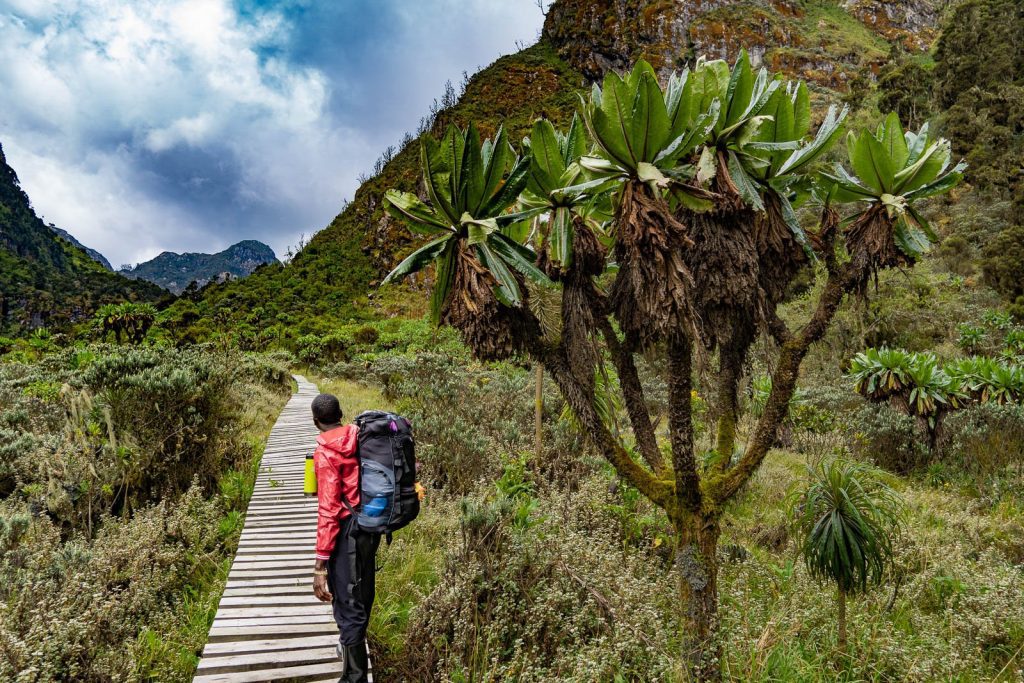
Depending on the selected route, hikers may reach beautiful alpine valleys, mountain viewpoints and environments characterised by giant lobelias and groundsels.

These plants are among the most distinctive features of the Rwenzori Mountains.

Their unusual appearance reflects adaptations to cold temperatures, high humidity and changing mountain conditions.

The five-day format may be particularly appealing to travellers interested in scenery rather than technical climbing.

Why Choose a Five-Day Trek?

A five-day expedition provides enough time to experience multiple mountain environments, although the exact range depends on the trail and overnight schedule.

Travellers can observe how vegetation changes with elevation, enjoy remote mountain accommodation and gain an appreciation of the physical demands of multi-day trekking.

The expedition may also provide opportunities to visit scenic mountain lakes or important viewpoints.

However, the higher the selected destination, the more carefully the itinerary must address altitude gain and acclimatisation.

Travellers should never select a high-altitude route based entirely on the number of days advertised.

Instead, they should request details about overnight elevations, expected walking hours and the maximum altitude reached.

Six Days Hiking Mount Rwenzori: Extended Mountain Trekking

A six-day Rwenzori hiking expedition is suitable for travellers seeking a more complete mountain experience without necessarily climbing Margherita Peak.

Some operators offer six-day Central Circuit programmes that explore the main mountain valleys and return without including the technical summit.

The route may pass through major mountain huts and landscapes associated with the classic Central Circuit.

Rwenzori Mountaineering Services, for example, advertises a six-day Central Circuit-only itinerary. This demonstrates that travellers can explore significant sections of the mountain system without undertaking the highest summit ascent.

Rwenzori Mountaineering Services

Is Six Days Enough to Reach Margherita Peak?

Six days should not be assumed sufficient for a standard Margherita Peak summit expedition.

Although exceptionally fast or specialised climbing arrangements may exist, established summit programmes generally allow more time.

The ascent involves substantial altitude gain, and climbers must prepare for the technical sections of the upper mountain.

A short itinerary can leave little flexibility when weather conditions deteriorate or an additional rest day becomes necessary.

For most travellers interested in reaching Uganda’s highest point, a properly organised seven- to nine-day programme is the more realistic planning range.

Six-day itineraries are better considered for extended mountain trekking, unless a specialist operator confirms a different programme appropriate for the climber’s experience.

Seven Days Hiking Mount Rwenzori: Can You Reach Margherita Peak?

The Wild Rwenzori's: Hiking Margherita Peak in 2025

Yes. Some specialist mountain operators offer seven-day trekking expeditions that include a guided attempt to reach Margherita Peak.

The seven-day Central Circuit programme is among the established summit itineraries in the Rwenzori Mountains.

However, this is a strenuous adventure, and travellers should carefully consider whether the schedule provides enough acclimatisation for their individual circumstances.

A seven-day programme involves multiple days of physically demanding walking, high-altitude accommodation and potentially technical climbing.

Travellers must be prepared for difficult trail conditions, cold temperatures and early starts.

What Is the Seven-Day Central Circuit?

The Central Circuit generally begins near Nyakalengija in the Kasese region and follows an established network of trails through the Rwenzori Mountains.

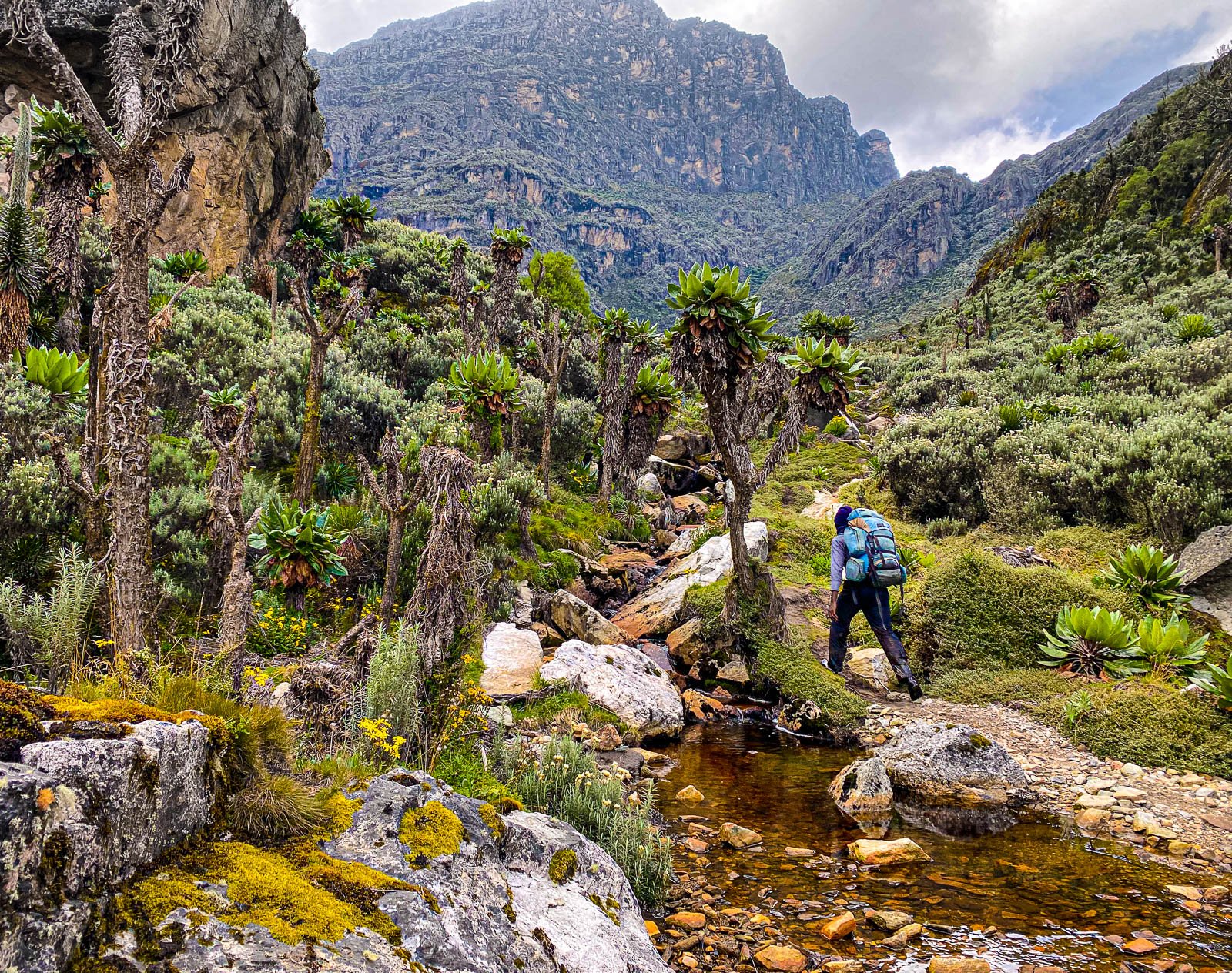
The route introduces hikers to several spectacular environments, including mountain forests, bamboo vegetation, giant heather, alpine wetlands and rocky high-altitude landscapes.

Seven-day summit itineraries typically follow the Nyabitaba, John Matte, Bujuku and Elena hut approach before attempting Margherita Peak and descending through the Kitandara and Guy Yeoman areas.

The precise overnight arrangement may differ between operators.

Rwenzori Mountaineering Services

Typical Seven-Day Central Circuit Itinerary

Day Route Main experience
1 Nyakalengija – Nyabitaba Forest trekking
2 Nyabitaba – John Matte Bamboo and heather vegetation
3 John Matte – Bujuku Alpine wetlands and mountain scenery
4 Bujuku – Elena area High-altitude ascent
5 Margherita Peak attempt – Kitandara area Technical mountaineering
6 Kitandara – Guy Yeoman Mountain descent
7 Guy Yeoman – Nyakalengija Final descent and trail completion

A seven-day summit expedition is best suited to well-prepared travellers with excellent endurance, appropriate mountain experience and an understanding of the challenges associated with high altitude.

It should not be marketed as an easy hiking holiday.

Eight Days Hiking Mount Rwenzori: A Popular Summit Expedition

An eight-day itinerary is one of the most popular ways to explore the Rwenzori Mountains and attempt Margherita Peak.

This duration allows travellers to experience the gradual transformation of the mountain environment while following an established route towards the highest summit.

Eight-day expeditions are commonly offered along the Kilembe Trail, although other route combinations may also be available.

Rwenzori Trekking Services publishes an eight-day Margherita Peak itinerary along the Kilembe approach, which includes mountain camps, alpine valleys and a guided summit attempt.

Rwenzori Trekking Services

Why Is Eight Days Popular?

Eight days can provide a practical balance between expedition duration, mountain exploration and summit preparation.

The itinerary normally includes several stages of ascent before the summit attempt, followed by a descent through different sections of the mountain range.

However, eight days do not automatically guarantee adequate acclimatisation for every participant. The rate of ascent, sleeping elevations and individual response to altitude are more important than the total number of days alone.

Hikers should review the actual route profile before booking.

Another advantage of an eight-day itinerary is the opportunity to experience remarkable landscapes without reducing the entire adventure to a summit objective.

Along the Kilembe route, travellers may encounter beautiful waterfalls, moss-covered forests, giant heather, alpine valleys and spectacular mountain views.

These features make the expedition enjoyable even if adverse conditions prevent the summit attempt.

Nine Days Hiking Mount Rwenzori: Extra Time for the Mountain Experience

A nine-day expedition can offer additional flexibility compared with a standard seven- or eight-day programme.

Depending on the itinerary, the extra day may be used for a slower ascent, acclimatisation, exploration of other mountain areas or adjustments resulting from weather conditions.

For travellers with sufficient time, a longer programme may provide a more comfortable experience.

However, the extra day must be allocated sensibly. Simply spending another day at high altitude does not automatically prevent altitude illness or make every expedition safe.

The route should still follow suitable acclimatisation principles.

Who Should Choose a Nine-Day Itinerary?

A nine-day programme may appeal to travellers who prefer a less hurried mountain experience, photographers who want additional time to enjoy the scenery, and mountaineers interested in exploring more of the Rwenzori range.

It may also suit people who want some flexibility in their schedule rather than committing to the shortest available summit programme.

Travellers should ask whether the ninth day is an additional trekking day, an acclimatisation day, a weather contingency day or a transfer day.

T his distinction is important because tour operators sometimes count the total duration differently.

For example, an itinerary advertised as nine days may include eight trekking days and one road-transfer day, while another may involve nine complete days on the mountain.

Always review the detailed itinerary before confirming a booking.

Ten Days or More: Exploring Several Rwenzori Peaks


Extended Rwenzori expeditions lasting ten days or longer provide opportunities to explore more of the mountain system.

The Rwenzori range contains six principal mountain massifs, including Mount Stanley, Mount Speke, Mount Baker, Mount Emin, Mount Gessi and Mount Luigi di Savoia.

Although Margherita Peak is the highest and most famous objective, the surrounding mountains offer spectacular scenery and additional climbing opportunities.

Specialist itineraries may include attempts on other peaks, depending on the climber’s experience, conditions and available guiding arrangements.

Rwenzori Trekking Services’ published 2026 programme includes a ten-day high-peaks option covering Margherita, Mount Speke, Mount Baker and Weismann’s Peak.


These longer programmes require careful planning because climbing several peaks involves additional physical effort and potentially difficult technical terrain.

Travellers should also allow time for rest and recovery, especially if the expedition involves repeated periods above 4,000 metres.

For experienced mountaineers, an extended journey can provide a more comprehensive understanding of the Rwenzori Mountains.

Rather than focusing exclusively on reaching the highest summit, the adventure becomes an exploration of the wider alpine environment.

Central Circuit vs Kilembe Trail: Which Route Takes Longer?

Choosing between the Central Circuit and Kilembe Trail is one of the most important decisions when planning a Rwenzori hiking expedition.

Both routes provide access to remarkable mountain landscapes, but they approach the range from different directions and follow different sequences of camps.

The Central Circuit begins near Nyakalengija and is traditionally associated with the classic Rwenzori hut-to-hut trekking experience.

The Kilembe Trail approaches the mountains from the southern side and passes through a series of valleys, mountain camps and high-altitude viewpoints.

Neither route is automatically better for every traveller. The appropriate choice depends on physical fitness, desired mountain scenery, operator arrangements and climbing objectives.

Feature Central Circuit Kilembe Trail
Starting point Nyakalengija Kilembe
Popular summit duration 7–9 days 7–9 days
Short trekking options Yes Yes
Major attractions Bujuku Valley, alpine lakes, central peaks Waterfalls, Mutinda, Bugata, alpine valleys
Margherita Peak Possible on summit programmes Possible on summit programmes
Overnight facilities Mountain huts and camps Mountain huts and camps
General difficulty Demanding Demanding
Technical summit sections Yes Yes

The Central Circuit Experience


Rwenzori Central Circuit Trail: Complete Expert Guide

The Central Circuit is particularly famous for its dramatic vegetation, mountain lakes and classic trekking environments.

Travellers pass through a variety of landscapes that highlight the ecological diversity of the Rwenzori Mountains.

One of the most memorable sections is the Bujuku Valley, where wetlands, giant lobelias and surrounding peaks create spectacular scenery.

The route is also associated with established mountain huts, making it familiar to hikers researching Rwenzori trekking itineraries.

However, the terrain can be extremely wet and physically demanding.

Long sections of mud, slippery rocks and boggy paths may slow progress considerably.

For this reason, travellers should assess the expected daily walking hours and not assume that relatively short distances will be easy.

The Kilembe Trail Experience

8-Day Rwenzori Kilembe Trail Trek | Climb Margherita Peak (5,109m) Uganda

The Kilembe Trail is celebrated for its beautiful valleys, waterfalls, unusual mountain vegetation and panoramic viewpoints.

The route begins at a lower elevation and gradually progresses into increasingly dramatic mountain scenery.

Trekkers may pass through locations such as Sine Camp, Mutinda Camp, Bugata Camp and Hunwick’s Camp before approaching the high summit area.

Some sections provide impressive views across valleys and towards neighbouring mountain peaks.

The route also offers shorter trekking options for travellers who prefer not to climb Margherita Peak.

As with the Central Circuit, conditions can be challenging because of rainfall, mud, altitude and rugged terrain.

Professional mountain guidance remains essential.

Detailed 8-Day Mount Rwenzori Hiking Itinerary via Kilembe Trail

This sample itinerary follows the broad structure of an established eight-day Kilembe summit expedition. It is designed to help travellers understand how trekking days are distributed between ascent, summit preparation and descent.

Exact camps, overnight elevations and climbing arrangements may change according to the operator, weather, route conditions and individual acclimatisation needs.

Day 1: Kilembe Trailhead to Sine Camp – Begin the Hiking Adventure

What is the difference between the Central Circuit and Kilembe Route?

The first day of the expedition begins near Kilembe in the Kasese region of western Uganda.

After breakfast, travellers meet their mountain guides, porters and support team for the final briefing and equipment checks.

The guide explains the route, expected walking conditions and important safety procedures.

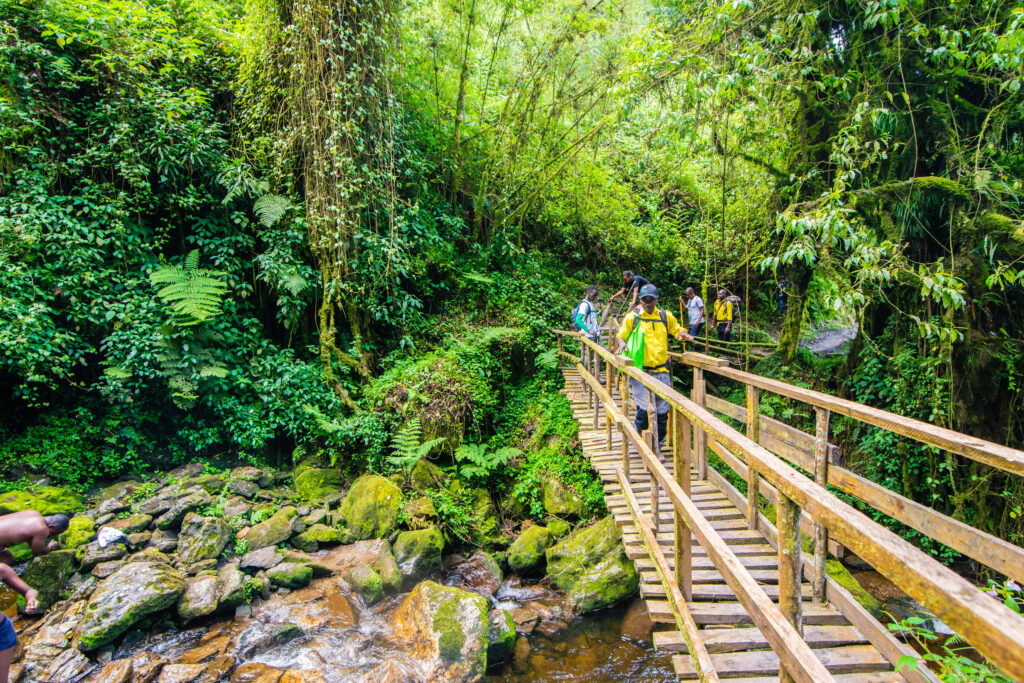
The hike begins through the beautiful lower mountain environment, where dense forests, streams and diverse plant species create a refreshing natural atmosphere.

As the trail gains elevation, visitors gradually leave the cultivated foothills behind and enter increasingly remote landscapes.

The forest may provide opportunities to observe monkeys and birds, although wildlife sightings cannot be guaranteed.

Moss-covered trees, ferns, flowers and unusual vegetation make this stage especially attractive for nature photography.

The ascent requires steady walking, and trekkers should avoid starting too quickly.

Taking a comfortable pace helps conserve energy for the following days.

After reaching Sine Camp, settle into the mountain accommodation and enjoy a meal prepared by the expedition team.

The evening provides an opportunity to rest and discuss the next day’s ascent.

Approximate elevation: Sine Camp, 2,596 metres.

Estimated hiking time: Around five to seven hours, depending on the route and group.

Main activities: Forest hiking, birdwatching, vegetation exploration and overnight camping.

Day 2: Sine Camp to Mutinda Camp – Enter the Heather Zone

Rwenzori Mountains – Sine Camp to Mutinda Camp – Jonty travels…

After breakfast, the journey continues through the bamboo and heather vegetation zones.

The trail becomes increasingly demanding as hikers climb towards higher elevations.

Some sections may be muddy or slippery, particularly after rainfall.

As the forest changes, travellers encounter unusual plants, moss-covered trees and beautiful mountain streams.

The route passes through the Kalalama area before continuing towards Mutinda Camp.

The surrounding landscape is famous for its distinctive heather vegetation, which creates a dramatic atmosphere when clouds move through the valleys.

On suitable itineraries and when conditions allow, hikers may have the option of exploring Mutinda Lookout as an additional activity.

However, any side excursion should be carefully assessed because it increases the day’s exertion and altitude exposure.

After arriving at Mutinda Camp, enjoy the surrounding mountain scenery before resting for the evening.

Approximate elevation: Mutinda Camp, around 3,580 metres.

Estimated hiking time: Approximately five to seven hours, excluding optional side trips.

Main activities: Bamboo forest, giant heather vegetation and mountain viewpoints.

Day 3: Mutinda Camp to Bugata Camp – Explore the Alpine Valleys

Mutinda camp - Picture of Mount Stanley, Rwenzori Mountains National Park - Tripadvisor

Today’s trek introduces travellers to the spectacular Afro-alpine environment of the Rwenzori Mountains.

After breakfast, begin walking through beautiful valleys characterised by unusual vegetation, rocky slopes and wetland areas.

As the route climbs higher, hikers encounter giant lobelias, groundsels and other specialised mountain plants.

These species have adapted to the cold, wet conditions found at higher elevations.

The landscape becomes increasingly open, providing opportunities to appreciate the size and beauty of the surrounding mountains.

Along the route, travellers may encounter streams, waterfalls and scenic mountain basins.

The trail can be physically demanding, particularly where hikers must cross wet or uneven ground.

As the group approaches Bugata Camp, the temperature may become noticeably colder.

After settling into camp, the guide will review the following day’s route and monitor how participants are responding to the altitude.

Approximate elevation: Bugata Camp, around 4,060 metres.

Estimated hiking time: Approximately five to seven hours.

Main activities: Alpine vegetation, mountain valleys and landscape photography.

Day 4: Bugata Camp to Hunwick’s Camp – Cross the High Mountain Pass


The fourth day involves hiking through some of the most spectacular high-altitude landscapes along the Kilembe route.

The trail generally continues towards Bamwanjara Pass, which rises to approximately 4,450 metres.

This section offers impressive mountain scenery when visibility is favourable.

The surrounding environment includes rocky ridges, unusual alpine plants and dramatic views towards neighbouring peaks.

Although the terrain is beautiful, altitude and difficult ground can make progress slower than expected.

Hikers should maintain a comfortable pace and inform their guide if they experience headaches, dizziness or other concerning symptoms.

After crossing the pass, the route descends towards Hunwick’s Camp.

The combination of ascent and descent can be physically demanding, particularly when the trails are wet.

At camp, travellers can enjoy a warm meal and rest before continuing towards the upper mountain.

Approximate elevation: Hunwick’s Camp, around 3,900 metres.

Estimated hiking time: Approximately six to seven hours.

Main activities: High mountain pass, alpine scenery and mountain trekking.

Day 5: Hunwick’s Camp to Margherita Camp – Approach Mount Stanley

After breakfast, the expedition continues towards the high-altitude camp used for approaching Margherita Peak.

The route passes through impressive mountain landscapes, including areas near Lake Kitandara and rocky high-altitude terrain.

The environment becomes increasingly exposed as hikers approach the upper sections of Mount Stanley.

Travellers may encounter cold winds, changing weather and difficult rocky paths.

The guide will regulate the pace and assess the group’s condition throughout the day.

On arrival at Margherita Camp, the climbing team prepares for the following day’s summit attempt.

This preparation may include checking harnesses, helmets, crampons, ropes and other technical equipment.

The guide should also explain the planned climbing route, expected conditions and procedures for turning back if necessary.

An early night is important because summit day may require a very early departure.

Approximate elevation: Margherita Camp, around 4,485 metres.

Estimated hiking time: Approximately five to seven hours.

Main activities: High-altitude trekking, summit preparation and technical equipment checks.

Day 6: Summit Margherita Peak – 5,109 Metres


Day six is usually the most challenging stage of the expedition.

Climbers may begin before sunrise, depending on the weather forecast, route conditions and instructions from the professional mountain guides.

The ascent towards Margherita Peak involves difficult high-altitude terrain.

Depending on current conditions, the climb can require movement across rocks, snow and glacier surfaces.

Technical mountaineering equipment may be necessary, and all participants must follow the instructions of the specialist climbing team.

The cold temperatures and reduced oxygen availability make the ascent physically demanding.

Hikers should avoid rushing and take appropriate rest stops when instructed.

As the group approaches the highest sections of Mount Stanley, spectacular views may appear across the surrounding mountain peaks.

However, weather conditions can change rapidly, and visibility is never guaranteed.

For successful climbers, reaching Margherita Peak at 5,109 metres represents one of the most memorable achievements of an African mountaineering adventure.

The summit marks Uganda’s highest natural point.

Nevertheless, reaching the summit must never become more important than personal safety.

If weather conditions, altitude symptoms or route hazards create unacceptable risks, the climbing guide may decide that the group should turn back.

After the attempt, descend carefully towards the designated camp, often in the Hunwick’s area on the standard eight-day programme.

Highest elevation: Margherita Peak, 5,109 metres.

Estimated activity time: Approximately ten to fourteen hours on some summit schedules, depending on conditions.

Main activities: Technical mountaineering, summit attempt and descent.

Day 7: Hunwick’s Camp to Kiharo Camp – Descend Through the Mountains

After the demanding summit day, the expedition continues through some of the most beautiful mountain landscapes.

The descent may pass through the Nyamwamba Valley and other spectacular sections of the Kilembe Trail.

As the route progresses towards lower elevations, the vegetation gradually becomes denser.

The scenery includes alpine plants, rocky slopes, streams and surrounding mountain ridges.

Although descending generally reduces altitude-related stress, the physical effort can remain substantial.

Long downhill sections place pressure on the knees and leg muscles, while wet rocks and muddy trails require concentration.

Hikers should use trekking poles where appropriate and follow the guide’s instructions.

Upon reaching Kiharo Camp, travellers can enjoy a well-earned rest.

Approximate elevation: Kiharo Camp, around 3,460 metres.

Estimated hiking time: Approximately six to eight hours.

Main activities: Mountain descent, valley scenery and nature photography.

Day 8: Kiharo Camp to Kilembe – Complete the Rwenzori Expedition


The final day begins with breakfast at the mountain camp before the group starts descending towards Kilembe.

As elevation decreases, the landscape gradually changes from high-altitude vegetation to forest and lower mountain environments.

The trail may pass through beautiful river valleys, dense vegetation and scenic viewpoints.

This final stage provides an opportunity to reflect on the remarkable environments experienced during the expedition.

Travellers who attempted Margherita Peak may feel a strong sense of achievement, while others may value the mountain scenery, unique vegetation and overall trekking experience.

After reaching the trailhead, the group completes the necessary departure procedures and returns to Kasese.

Depending on the onward itinerary, travellers may stay overnight in Kasese or continue towards another Uganda safari destination.

Destination: Kilembe trailhead and Kasese.

Estimated hiking time: Approximately five to seven hours.

Main activities: Forest descent, completion of the expedition and transfer.

The above eight-day route is a sample itinerary adapted to the broad structure of established Kilembe programmes. Final camp arrangements, summit timing and daily distances must be confirmed by the actual operating company.

How Many Hours Do You Hike Each Day on Mount Rwenzori?

The number of hours spent walking each day depends on the route, terrain, weather conditions, altitude and the physical ability of the trekking group.

On many multi-day expeditions, hikers walk approximately five to eight hours per day.

However, some stages can be shorter, while difficult climbing days may require ten to fourteen hours or more.

These time estimates include considerable variation because mountain trails are not comparable to ordinary walking paths.

Mud, slippery rocks, steep climbs and high-altitude conditions can significantly slow progress.

Hiking stage Typical time range
Lower forest trekking 4–7 hours
Bamboo and heather zone 5–8 hours
Alpine valleys and wetlands 5–8 hours
High mountain passes 5–8 hours
Margherita Peak summit attempt 10–14 hours or longer
Final mountain descent 5–8 hours

These figures are illustrative. The operating guide’s current route plan should be used for actual scheduling.

Why Can a Short Distance Take Several Hours?

One of the most surprising aspects of Rwenzori trekking is the amount of time required to cover relatively short distances.

For example, a trail measuring just several kilometres may involve steep elevation changes, wetland crossings and rocky sections.

Hikers may need to use stepping stones, cross wooden boardwalks or move carefully around slippery terrain.

At high altitude, walking speed often decreases because physical activity requires greater effort.

Frequent pauses may also be necessary to adjust clothing, drink water or assess weather conditions.

Consequently, travellers should focus on the quality of the hiking experience rather than the distance covered each day.

How Difficult Is Mount Rwenzori Hiking?


Mount Rwenzori is widely regarded as one of Africa’s challenging mountain trekking destinations.

Its difficulty comes from a combination of altitude, weather, wet terrain, steep trails and, for summit climbers, technical mountaineering requirements.

The mountain’s elevation of 5,109 metres is significant, but height alone does not explain the challenge.

The Rwenzori Mountains receive substantial rainfall, creating extremely wet conditions in many areas.

Hikers often encounter muddy paths, waterlogged vegetation and difficult footing.

In some places, the trail passes through wetlands that require careful navigation.

The high-altitude environment also presents challenges because temperatures become much colder as elevation increases.

Travellers may experience strong winds, rain, mist or freezing conditions depending on altitude and weather.

For climbers attempting Margherita Peak, additional challenges include exposed rock, ice and glacier terrain.

These upper sections require appropriate technical equipment, specialised guiding and a willingness to turn back when conditions are unsafe.

Is Mount Rwenzori Suitable for Beginners?

Beginners can enjoy selected lower-altitude Rwenzori hiking experiences.

A short guided forest walk or carefully planned introductory trek may be appropriate for someone who enjoys walking but has limited mountain experience.

However, a full Margherita Peak expedition is a very different activity.

Summit attempts require excellent physical endurance, preparation for high-altitude conditions and familiarity with the potential hazards of technical climbing.

Travellers without previous mountaineering experience should discuss their capabilities with a qualified mountain guide before selecting a summit itinerary.

Some climbers may benefit from practical training in rope use, crampons and movement over difficult terrain.

Importantly, enjoying the Rwenzori Mountains does not require reaching the highest summit.

The forests, giant lobelias, mountain lakes and alpine valleys offer beautiful experiences for travellers choosing lower-altitude routes.

Why Is Acclimatisation Important When Hiking Mount Rwenzori?

Acclimatisation refers to the process through which the body adjusts to lower oxygen availability at high altitude.

As travellers ascend the Rwenzori Mountains, atmospheric pressure decreases, making strenuous activity more demanding.

This adjustment takes time and varies between individuals.

A person who exercises regularly may still experience altitude illness, while another traveller with similar fitness may respond differently.

For this reason, physical fitness does not guarantee protection against altitude-related problems.

Common Symptoms of Altitude Illness

Symptoms of acute mountain sickness can include headache, nausea, unusual fatigue, loss of appetite, dizziness and difficulty sleeping.

These symptoms may appear after ascending to higher elevations, particularly when the increase in sleeping altitude has been rapid.

More serious warning signs include confusion, poor coordination, severe breathlessness or unusual difficulty walking.

Such symptoms require immediate attention and generally urgent descent with appropriate medical care.

Hikers should never hide symptoms from their guides because they are concerned about losing the opportunity to reach the summit.

How to Reduce Altitude-Related Risks

A sensible acclimatisation plan involves gradual ascent, appropriate rest and careful observation of symptoms.

At elevations above approximately 3,000 metres, established medical guidance recommends avoiding rapid increases in sleeping altitude and allowing additional acclimatisation time where possible.

Adequate hydration, proper nutrition and avoiding unnecessary physical exhaustion also support general trekking well-being, although they cannot guarantee prevention of altitude illness.

Travellers with relevant health concerns should seek personalised medical advice before undertaking a high-altitude expedition.

The CDC’s travel medicine guidance provides information on altitude illness prevention and treatment.

Kilembe Trail – Rwenzori Trekking Expeditions

It is important to understand that severe altitude illness cannot be managed simply by drinking additional water or continuing to climb more slowly.

When symptoms are serious or worsening, stopping the ascent and descending may be necessary.

What Is the Best Time to Hike Mount Rwenzori?

The Rwenzori Mountains can be visited throughout the year, although weather conditions vary between seasons.

The periods from December to February and June to August are often preferred for trekking because rainfall may be relatively lower during those months.

Nevertheless, the Rwenzori Mountains are famous for their wet climate, and rain can occur at any time of year.

Visitors should therefore prepare for changing mountain weather regardless of their departure date.

December to February

This period is commonly considered favourable for trekking because some sections of the mountain may experience relatively less persistent rainfall.

Clear weather can provide excellent opportunities for landscape photography and distant mountain views.

However, hikers should still expect muddy trails, cold nights and possible rain.

Snow and ice conditions at higher elevations remain variable, and the mountain operator must assess summit access.

March to May

March to May is generally associated with increased rainfall in western Uganda.

The vegetation becomes particularly lush, waterfalls can be impressive and mist frequently surrounds the valleys.

These conditions create beautiful scenery but may make trekking more demanding.

Wet trails can increase the risk of slipping, while persistent moisture makes it more difficult to keep clothing and equipment dry.

Travellers considering a longer expedition during this period should prepare carefully and allow appropriate flexibility.

June to August

June to August is another frequently recommended period for mountain trekking.

Visitors may experience relatively favourable conditions for extended hiking, although rainfall remains possible.

This period can also be convenient for travellers combining a Rwenzori expedition with wildlife safaris elsewhere in Uganda.

As with other popular travel periods, advance booking is advisable.

September to November

September to November often brings increased rainfall to parts of western Uganda.

Mountain trails may become particularly wet, and clouds can reduce visibility.

However, the forests and alpine vegetation remain beautiful throughout this season.

Travellers with flexible schedules and appropriate equipment can still enjoy guided hiking, provided the selected route is considered safe.

How Much Does It Cost to Hike Mount Rwenzori?

The cost of a Mount Rwenzori hiking expedition depends on several factors, including the number of trekking days, chosen route, guiding arrangements, park fees, equipment requirements and group size.

Shorter lower-altitude hikes generally involve fewer mountain nights and lower logistical expenses than full summit expeditions.

A Margherita Peak expedition requires more extensive support, including experienced guides, porters, accommodation, meals and potentially technical climbing equipment.

What Influences the Hiking Cost?

One of the largest factors is the number of mountain days.

Longer expeditions require additional food, accommodation, guiding support and porter services.

The number of travellers also influences the cost because some logistical expenses can be shared.

Technical equipment requirements may increase the total price, especially when climbers need to hire specialised gear.

Transport arrangements between Entebbe, Kampala, Kasese and the trailhead are another important consideration.

Visitors combining the Rwenzori Mountains with other Uganda safari destinations will also need to include accommodation, park activities and additional road transfers.

At Lena Tours, a complete itinerary can be structured around the traveller’s preferred hiking duration and wider Uganda safari interests.

What Accommodation Is Available During Rwenzori Hiking?


Accommodation on Mount Rwenzori mainly consists of mountain huts and designated camps.

These facilities are designed to support trekking expeditions and generally provide basic shelter rather than conventional hotel services.

The exact facilities vary between routes and individual camps.

Central Circuit Mountain Huts

The Central Circuit is associated with several established mountain huts.

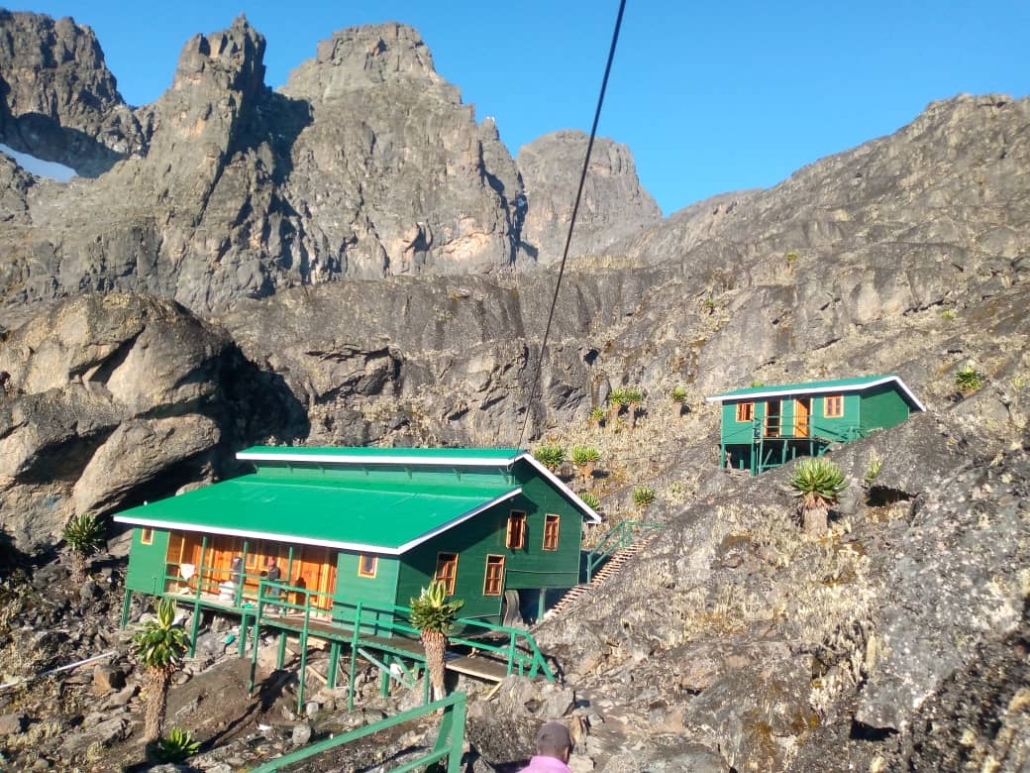
These include Nyabitaba, John Matte, Bujuku, Elena, Kitandara and Guy Yeoman.

The huts are positioned along different sections of the route and provide resting points between trekking stages.

Facilities may include sleeping areas and basic arrangements for meals and sanitation.

Visitors should confirm whether sleeping bags, mattresses or other equipment are included in their package.

Kilembe Trail Camps

The Kilembe route uses a different network of camps and huts.

Names commonly associated with the route include Sine, Kalalama, Mutinda, Bugata, Hunwick’s, Margherita and Kiharo.

Not every itinerary stays at all these camps because the schedule depends on the selected route and number of days.

The accommodation offers practical shelter in remote mountain environments.

Travellers should prepare for cold nights, simple facilities and limited access to electricity or communication.

Accommodation Before and After the Trek

Kasese provides a useful base for travellers preparing for Rwenzori hiking.

Spending a night in the area before departure allows time for rest, equipment checks and meeting the expedition team.

After completing the hike, an additional overnight stay can be beneficial before travelling to another destination.

Travellers combining hiking with wildlife activities may also choose to stay near Queen Elizabeth National Park.

What Should You Pack for Mount Rwenzori Hiking?

Packing suitable clothing and equipment is essential because the mountain environment can be wet, cold and physically challenging.

Even travellers visiting during the relatively drier periods should prepare for rain and muddy trails.

Rwenzori hiking packing checklist

  • Waterproof rain jacket and trousers
  • Warm insulated jacket or fleece
  • Thermal base layers
  • Comfortable hiking trousers
  • Warm gloves, beanie and extra socks
  • Daypack and waterproof backpack liner
  • Sleeping bag suitable for expected temperatures
  • Trekking poles
  • Headlamp with spare batteries
  • Reusable water bottles or hydration system
  • Sunscreen, sunglasses and lip balm
  • Personal first-aid supplies and medications
  • High-energy snacks and personal toiletries
  • Helmet, harness, crampons and other technical gear when required.

Note: Waterproofing is particularly important because persistent moisture can make clothing and equipment uncomfortable.

Hikers should use waterproof liners or dry bags to protect spare clothing, electronic devices and sleeping equipment.

Boots should be worn during training before the expedition to reduce the likelihood of blisters.

For technical summit climbing, specialist equipment should be checked carefully with the mountain operator.

Travellers should never assume that helmets, ropes, crampons or ice axes are automatically included in a package.

How to Prepare Physically for a Seven- or Eight-Day Rwenzori Hike

Physical preparation can improve endurance, confidence and overall enjoyment during a multi-day mountain expedition.

Travellers planning to reach Margherita Peak should begin preparing well before their departure date.

A training programme may include regular walking, hill climbing, cardiovascular exercises and strength training.

The aim is to prepare the body for several consecutive days of walking rather than a single intense workout.

Walking and Hiking Practice

Regular walking is one of the most useful forms of preparation.

Travellers can gradually increase their walking distance and include hills or stair climbing.

Longer weekend hikes can help build the endurance needed for several hours on mountain trails.

Practising on uneven terrain is particularly useful because the Rwenzori Mountains contain slippery rocks, muddy sections and steep slopes.

Strength Training

Leg strength helps with climbing uphill and controlling movements during long descents.

Exercises such as squats, lunges and step-ups may help strengthen the muscles used during hiking.

Core exercises can also improve stability while carrying a backpack.

Training should be appropriate to the individual’s fitness and medical circumstances.

Training With a Backpack

Hikers should practise carrying a backpack containing equipment similar to what they expect to use during the expedition.

This helps the shoulders, back and legs adjust to the additional weight.

However, there is no benefit in carrying unnecessarily heavy equipment.

Travellers should pack efficiently and follow the guidance of the mountain operator concerning personal loads and porter services.

Preparing for Wet Mountain Conditions

Rwenzori hiking often involves wet or slippery ground.

Although it may not be possible to reproduce the exact terrain at home, practising on uneven surfaces can improve balance and confidence.

Waterproof boots, trekking poles and suitable clothing should also be tested before departure.

Good physical preparation cannot eliminate mountain risks, but it can make the experience more manageable.

Can You Combine Mount Rwenzori Hiking With Other Uganda Safari Activities?

Yes. Mount Rwenzori is conveniently located in western Uganda, making it possible to combine hiking with some of the country’s most popular wildlife and primate experiences.

This combination is particularly rewarding for international travellers who want to experience Uganda’s mountains, forests and savannah landscapes during one holiday.

Queen Elizabeth National Park – Wildlife Safaris

Queen Elizabeth National Park offers game drives, boat safaris and opportunities to observe a wide variety of wildlife.

Travellers may encounter elephants, buffaloes, antelopes, hippos and numerous bird species.

A boat cruise along the Kazinga Channel is one of the park’s most popular experiences.

For hikers returning from the Rwenzori Mountains, a relaxed wildlife safari can provide a welcome change of pace.

Kibale National Park – Chimpanzee Tracking

Kibale National Park is famous for its tropical forests and chimpanzee tracking experiences.

Visitors can join authorised guided tracking activities and learn about chimpanzee behaviour, forest conservation and primate habitats.

A Kibale visit may be arranged before or after the Rwenzori expedition, depending on the preferred travel route.

Bwindi Impenetrable National Park – Gorilla Trekking

Bwindi Impenetrable National Park is one of Uganda’s most important mountain gorilla conservation destinations.

Visitors can participate in authorised gorilla trekking experiences accompanied by professional park guides.

Combining gorilla trekking with Mount Rwenzori creates a varied adventure involving mountain landscapes and encounters with one of Africa’s most remarkable primates.

Lake Bunyonyi – Relaxation After Hiking

Lake Bunyonyi is known for its scenic islands, beautiful hills and peaceful atmosphere.

Travellers can enjoy relaxing lakeside accommodation, photography, guided canoe experiences and cultural visits.

After a strenuous mountain expedition, Lake Bunyonyi can be a particularly attractive destination for rest and recovery.

Frequently Asked Questions About How Many Days It Takes to Hike Mount Rwenzori

1. How many days does it take to hike Mount Rwenzori?

Hiking Mount Rwenzori can take one day to ten days or longer. Shorter routes focus on the lower mountain environment, while summit expeditions generally require approximately seven to nine days.

2. How many days does it take to reach Margherita Peak?

Most guided Margherita Peak expeditions last around seven to nine trekking days. The exact duration depends on the chosen route, climbing conditions and acclimatisation programme.

3. Can you hike Mount Rwenzori in three days?

Yes. Three-day routes provide opportunities to explore selected lower mountain areas, forests and viewpoints. However, a three-day itinerary is not a standard option for reaching Margherita Peak.

4. Is five days enough to hike Mount Rwenzori?

Five days can be enough to enjoy an extended scenic trek through different mountain environments. It is generally not enough for a conventional technical summit expedition to Margherita Peak.

5. Can you climb Margherita Peak in seven days?

Yes. Some professional operators offer seven-day summit expeditions, particularly along the Central Circuit. Such programmes are strenuous and require careful consideration of fitness, altitude and climbing experience.

6. Is eight days enough for a Rwenzori summit expedition?

Yes. Eight-day Margherita Peak expeditions are offered by established mountain operators. However, the suitability of the itinerary depends on the sleeping-altitude profile, individual acclimatisation and conditions.

7. Which is better: seven or eight days?

For travellers who can accommodate the additional time, an appropriately structured eight-day programme may provide more flexibility. However, the actual route and acclimatisation schedule matter more than the total duration alone.

8. Is nine days better for hiking Mount Rwenzori?

A nine-day itinerary may provide additional time for acclimatisation, photography or weather flexibility, depending on how the programme is designed. It is a good option to consider when planning an extended expedition.

9. How many hours do you walk each day?

Many trekking days involve approximately five to eight hours of walking. Summit day may require ten to fourteen hours or longer, depending on route and conditions.

10. Is Mount Rwenzori harder to climb than Mount Kilimanjaro?

The highest Rwenzori summit typically presents more technical climbing challenges than Kilimanjaro’s standard trekking routes. However, Kilimanjaro is higher, and both mountains involve substantial altitude-related risks.

11. Do I need climbing experience to hike Mount Rwenzori?

Technical climbing experience is not generally required for selected lower-altitude walks. Margherita Peak is more demanding, and travellers should discuss the necessary training and abilities with a qualified mountain operator.

12. What is the best month to hike Mount Rwenzori?

December to February and June to August are often considered favourable trekking periods. However, rainfall remains possible throughout the year.

13. How cold does Mount Rwenzori get?

Temperatures vary with altitude and weather conditions. Lower slopes can be relatively warm, while upper mountain areas may experience freezing temperatures, strong winds, snow and ice.

14. Are there glaciers on Mount Rwenzori?

Yes. The highest Rwenzori mountains contain surviving glaciers, although their extent has declined significantly over time. Current conditions should always be confirmed before a technical summit expedition.

15. Do I need a guide for Mount Rwenzori?

Visitors should arrange their trekking through authorised mountain operators and follow the applicable park regulations. Professional guides are especially important for difficult trails and technical climbing sections.

16. How much does an eight-day Rwenzori hike cost?

Prices vary between operators and depend on included services. One operator’s published 2026 Kilembe programme lists an eight-day high-peaks package at US$1,695 per person, including its specified hiking and park-fee components. This is not a universal price or a Lena Tours quotation.

17. Can I hike Mount Rwenzori without reaching the summit?

Absolutely. Many travellers choose shorter treks because they want to explore forests, waterfalls, mountain lakes and unusual alpine vegetation without attempting technical climbing.

18. Can I combine Rwenzori hiking with gorilla trekking?

Yes. Travellers can arrange a combined itinerary featuring the Rwenzori Mountains and mountain gorilla trekking in Bwindi Impenetrable National Park or Mgahinga Gorilla National Park.

19. How many extra days should I allow for a Rwenzori holiday?

In addition to the actual trekking days, allow time for travel to Kasese, equipment preparation and recovery. A trip featuring eight trekking days may require approximately ten to twelve days in Uganda, depending on travel connections and other planned activities.

20. What is the best Rwenzori hiking itinerary for first-time visitors?

For visitors new to multi-day trekking, a carefully selected two- to four-day lower mountain itinerary may provide an enjoyable introduction. Travellers seeking Margherita Peak should first assess their fitness, technical experience and ability to manage high-altitude conditions.

Why Book a Mount Rwenzori Hiking Adventure With Lena Tours?

A successful Rwenzori hiking adventure begins with careful planning.

Choosing the appropriate number of trekking days is one of the most important decisions because it influences the route, physical demands, accommodation, equipment and overall holiday experience.

Lena Tours can help travellers plan a Uganda itinerary that combines the Rwenzori Mountains with scenic road transfers, appropriate accommodation and other safari destinations.

For technical Margherita Peak expeditions, arrangements should involve authorised specialist climbing operators, trained mountain guides and qualified support teams.

Travellers interested in shorter experiences can focus on the lower mountain forests, viewpoints, cultural encounters and beautiful natural landscapes.

An extended Uganda adventure can also include game drives in Queen Elizabeth National Park, chimpanzee tracking in Kibale National Park, mountain gorilla trekking in Bwindi and relaxing lakeside experiences at Lake Bunyonyi.

By choosing a hiking programme suited to your experience and available time, you can enjoy the Mountains of the Moon without unnecessary pressure to complete the shortest possible itinerary.

Conclusion: How Many Days Should You Spend Hiking Mount Rwenzori?

Mount Rwenzori offers remarkable hiking opportunities for travellers with different interests, fitness levels and available holiday time.

A one-day hike can introduce visitors to the beautiful mountain forests, while two- to four-day expeditions offer more time to explore lower mountain trails and viewpoints.

Five- and six-day itineraries provide opportunities for more extensive mountain exploration, including selected high-altitude environments.

For those hoping to reach Uganda’s highest point at Margherita Peak, seven to nine trekking days is the typical planning range, with longer options available for additional exploration or acclimatisation.

The most important consideration is not simply how quickly you can reach the summit but whether the itinerary provides an appropriate balance of physical challenge, safety, mountain scenery and enjoyment.

The Rwenzori Mountains reward visitors with extraordinary landscapes, remarkable vegetation, beautiful lakes, waterfalls and unforgettable views of the high peaks.

Whether you choose a short forest adventure or a demanding expedition towards Margherita Peak, the Mountains of the Moon remain one of Uganda’s most exceptional natural destinations.

Discover the beauty of the Rwenzori Mountains with Lena Tours – Unmatched African Experience.

Visit: www.lenatours.africa


Plan Your Safari with Lena Tours

Complete the enquiry form below and our safari specialists will prepare a personalised itinerary and quotation for your journey.


    Destinations
    Select all that interest you

    Activities
    Select all that interest you


    Translate »

    You cannot copy content of this page

    int(16)

    Customer Reviews

    Lena Tours

    Client Reviews

    Nkuraija J Jan 2025

    Trip Advisor
    Our group was driven around by Derrick. He was an excellent driver, very careful, and took great care. He would ensure that we were all sitted and he closed the doors before setting off. He looks very young but a careful and confident driver. He is very respectful and would recommend him and will use him again. He is very professional 👏 👌

    Alina A Aug 2025

    Trip Advisor
    Me and my friends went to Murchison Falls with Dominic for 3 days and had the most amazing time! Dominic was such a wonderful guide, always telling us about all the animals and answered all the 1000 questions I asked him! He was always attentive and curious, and looked like he was having the best time with us as well :) could not recommend him enough as guide! Will definitely be back to Uganda soon and book a safari with Dominic again!!!

    Getaway29182776775 May 2026

    Trip Advisor
    We did a 4 day safari, which included Queen elisabeth park, chimp hike and lake mburo park. Everything from the activities to accommodations were great and Dominic is a fantastic guide, so I will definitely choose then again when I return for gorilla trekking!

    Tamara S May 2026

    Trip Advisor
    We visited Queen Elizabeth National Park and Lake Mburo, saw an incredible variety of animals, and stayed in some truly amazing accommodations! Our guide Dominic showed us the famous highlights and also took us to hidden gems and breathtaking viewpoints that made us fall even more in love with Uganda. And Dominic is not only a fantastic guide, he is also an excellent photographer! :) One of my personal highlights was the walking safari in Lake Mburo. Being able to experience the wildlife on foot was something really special and completely different from a game drive. We hope to have the chance to travel with Lena Tours again in the future. There is still so much more to discover, and we would love to come back for another adventure!