Africa offers some of the world’s most remarkable wildlife experiences. However, few adventures compare with witnessing the Great Wildebeest Migration and meeting mountain gorillas in their natural habitat. One experience takes visitors across the open savannah of Kenya. The other leads deep into Uganda’s ancient tropical rainforest. Together, they create an unforgettable African safari.
The Great Wildebeest Migration attracts wildlife lovers from around the world. Every year, vast herds of wildebeests move across the SerengetiโMara ecosystem in search of fresh grass and water. Zebras and gazelles also follow the changing seasons. Along the way, predators hunt, young animals struggle to survive, and rivers create natural obstacles. This extraordinary movement presents an incredible opportunity to witness wildlife in action.
Meanwhile, gorilla trekking in Uganda offers a completely different adventure. Instead of watching animals from a safari vehicle, travelers walk through a beautiful rainforest with experienced guides. Their destination is a habituated mountain gorilla family. Once visitors find the gorillas, they can spend up to one hour observing their daily activities. Watching a silverback protect his family or a young gorilla play among the vegetation creates memories that last a lifetime.
At Lena Tours, we believe an African safari should offer more than wildlife sightings. We want every journey to reveal the beauty of nature, introduce travelers to local cultures, and support wildlife conservation. Therefore, our wildebeest migration and gorilla trekking safari combines exciting game drives with forest exploration, comfortable accommodation, and carefully planned travel connections.
This guide explains the best time to travel, the main wildlife attractions, accommodation choices, travel requirements, and safari costs. Furthermore, it includes a detailed 10-day itinerary covering Kenya and Uganda. Whether you are planning a honeymoon, a photographic safari, or an adventure with friends, this combined journey offers something special.
The Great Wildebeest Migration is one of the largest movements of land mammals on Earth. It takes place within the greater SerengetiโMara ecosystem, which stretches across northern Tanzania and southwestern Kenya. More than a million wildebeests participate in this continuous journey. Large numbers of zebras and gazelles also move through the ecosystem.
Rainfall drives much of the migration. As seasonal rains encourage new grass to grow, grazing animals follow the food supply. Consequently, the herds move between different parts of the Serengeti and Maasai Mara. Their journey forms a broad annual cycle rather than a simple trip between two fixed points.
The migration has no exact starting or finishing date. Wildebeests continue moving throughout the year. Although people often associate the event with river crossings, these dramatic moments represent only one stage of the journey. Calving, predator activity, and large gatherings on open plains are equally important parts of the experience.
During the migration, predators take advantage of the moving herds. Lions, cheetahs, leopards, and spotted hyenas search for opportunities to hunt. Crocodiles also wait near certain river crossings. As a result, the migration reveals the relationship between predators and prey in one of Africa’s most productive wildlife ecosystems.
For photographers, this natural spectacle offers remarkable opportunities. Visitors may photograph thousands of animals moving across the plains, predators following the herds, or wildebeests gathering near riverbanks. Each game drive provides a different experience because wildlife movements change daily.
Lena Tours helps travelers select appropriate dates and safari areas. Our planning focuses on the animals’ seasonal movements rather than promising an exact river crossing. Nature remains unpredictable, and no responsible operator can guarantee a particular wildlife event.
The Great Migration takes place mainly in Kenya’s Maasai Mara and Tanzania’s Serengeti. Both destinations offer excellent wildlife experiences. However, the most suitable location depends on your travel dates and the stage of the migration.
The Maasai Mara National Reserve is one of Africa’s most famous safari destinations. Its open grasslands support large populations of herbivores and predators. During the usual migration season, wildebeests travel north from the Serengeti ecosystem and gather across the Mara landscape.
Visitors can explore the reserve through morning and afternoon game drives. In addition, selected locations offer opportunities to observe the herds near the Mara River. Lions, elephants, giraffes, buffaloes, and other resident animals make the Maasai Mara worthwhile throughout the year.
The reserve’s open terrain often makes wildlife photography easier. Travelers can follow animals from suitable viewing distances while enjoying broad views of the landscape. Moreover, experienced guides understand where to search for migration activity and resident predators.
The Serengeti National Park supports the migration during much of the annual cycle. In the southern Serengeti and nearby Ndutu plains, many wildebeests give birth during the early months of the year. Later, the herds gradually move through the central and western parts of the ecosystem.
The northern Serengeti becomes particularly attractive during the river-crossing period. However, the exact movement of animals depends on rainfall and grazing conditions. Some herds cross the river several times, while others remain on one side for extended periods.
Travelers who visit from January to March often prefer the southern Serengeti because of the calving season. Those traveling from July to October may focus on northern Serengeti or Maasai Mara wildlife areas.
For our featured 10-day itinerary, Lena Tours combines the Maasai Mara in Kenya with Uganda’s gorilla trekking destinations. This route offers an excellent balance between migration viewing and rainforest exploration.
Choosing the right month can significantly improve your safari experience. Although both activities are possible during much of the year, the migration follows seasonal patterns. Gorilla trekking takes place throughout the year, subject to permit availability and park conditions.
The most popular period for combining Maasai Mara migration viewing with gorilla trekking is July through September, with October also offering possibilities. The exact timing varies each year because rainfall influences animal movements.
|
Months |
Typical migration area |
Safari experience |
|---|---|---|
|
JanuaryโMarch |
Southern Serengeti and Ndutu |
Calving and predator activity |
|
AprilโMay |
Central and western Serengeti |
Moving herds and greener landscapes |
|
June |
Western and northern Serengeti |
Large herds and possible river crossings |
|
JulyโAugust |
Northern Serengeti and Maasai Mara |
Migration concentrations and river-crossing opportunities |
|
SeptemberโOctober |
Maasai Mara and northern Serengeti |
Migration viewing and predator encounters |
|
NovemberโDecember |
Serengeti, depending on rainfall |
Herds moving toward southern grazing areas |
These months provide a general guide rather than a fixed wildlife schedule. Rainfall patterns may shift migration movements by several weeks.
July to September often provides an excellent combination of wildlife experiences. Large migration herds may occupy the Maasai Mara, while Uganda experiences one of its relatively drier trekking periods. Consequently, travelers can enjoy open-savannah game drives and rainforest adventures within a single holiday.
The comparatively dry weather can also make some gorilla trekking trails easier to navigate. Nevertheless, Bwindi remains a tropical rainforest. Rain can fall during any month, and some forest paths remain steep or muddy.
Safari demand increases during this period. Popular lodges and gorilla permits may become difficult to secure. Therefore, advance booking is especially important.
Yes. Travelers can combine gorilla trekking with wildlife safaris throughout the year. However, the ideal migration destination may change.
From January to March, the southern Serengeti is often better suited to migration-focused travel. During April and May, visitors can explore quieter safari destinations while enjoying Uganda’s lush scenery. Later in the year, the migration gradually returns toward the southern Serengeti.
Lena Tours can adjust the safari route to match your preferred travel period. This flexibility helps travelers enjoy the appropriate wildlife regions instead of visiting one destination regardless of seasonal animal movements.
Combining the Great Migration and gorilla trekking allows visitors to experience two contrasting African environments. Kenya’s Maasai Mara offers open grasslands, large animal herds, and spectacular predator encounters. Uganda’s Bwindi forest provides dense vegetation, mountain scenery, and intimate wildlife observation.
The experiences also create different emotional connections. Watching thousands of wildebeests cross the plains reveals the scale of nature. By contrast, observing a mountain gorilla family highlights the social behavior of individual animals. Both encounters help travelers understand the importance of protecting natural habitats.
Furthermore, this combination offers excellent photographic variety. Visitors can capture wide landscapes in Kenya and detailed wildlife portraits in Uganda. Savannah sunsets, mist-covered forests, elephant herds, and gorilla families provide endless subjects for photography.
Another advantage involves travel efficiency. Instead of arranging two completely separate holidays, travelers can connect Kenya and Uganda through regional flights. Lena Tours can organize ground transfers, domestic flights, accommodation, and park activities under one itinerary.
Cultural experiences add another dimension. Travelers may learn about Maasai traditions in Kenya or explore community initiatives around Bwindi. These activities allow visitors to engage with local communities and better understand the relationship between tourism and conservation.
Finally, the combination creates a more complete East African safari. Rather than concentrating on one national park, guests discover different landscapes, wildlife species, and travel experiences within a relatively short period.
Gorilla trekking is one of Uganda’s most important wildlife attractions. Every year, travelers visit the country’s southwestern forests to observe endangered mountain gorillas. These remarkable primates live in family groups led by dominant silverbacks.
Mountain gorillas share many behavioral characteristics with humans. They develop strong family bonds, communicate through sounds and gestures, and protect their young. Visitors often feel deeply moved when observing their social interactions.
Uganda protects mountain gorillas in Bwindi Impenetrable National Park and Mgahinga Gorilla National Park. Both destinations offer guided trekking experiences. However, Bwindi remains the main choice for many visitors because it has several established trekking sectors and a wide selection of accommodation.
Bwindi Impenetrable National Park is a UNESCO World Heritage Site known for its outstanding biodiversity. The forest covers steep hills, deep valleys, and ancient mountain slopes. Its rich vegetation creates an important habitat for mountain gorillas and many other species.
Besides gorillas, Bwindi supports forest birds, butterflies, smaller mammals, and numerous plant species. Birdwatchers particularly appreciate the forest because several Albertine Rift endemic birds occur in the region.
The atmosphere is equally memorable. Morning mist often settles between forested hills, while birds call from the canopy. Small streams cross the landscape, and thick vegetation surrounds the trekking trails.
Gorilla trekking offers visitors a rare opportunity to explore this environment with trained rangers. Along the way, guides may explain forest ecology, animal signs, conservation activities, and the behavior of mountain gorillas.
A typical gorilla trekking experience starts early in the morning. Visitors arrive at the designated park briefing point, where Uganda Wildlife Authority rangers explain the trekking rules. Guides then organize groups and lead them into the forest.
The walking distance varies according to the location of the assigned gorilla family. Some groups may find gorillas relatively quickly. Others may need several hours of hiking across slopes and forest trails.
Once trackers locate the gorillas, visitors follow the ranger’s instructions and approach quietly. The official viewing period lasts up to one hour. During this time, guests may observe feeding, resting, grooming, and playful interactions.
After the encounter, the group returns along the forest trails. The experience can require considerable physical effort, especially on steep or muddy ground. Nevertheless, the reward of seeing mountain gorillas in the wild makes the journey worthwhile for many travelers.
Uganda Wildlife Authority regulates gorilla trekking to protect visitors and mountain gorillas. The minimum trekking age is 15 years. Each habituated gorilla group receives a limited number of visitors per day, and normal viewing lasts one hour.
Visitors must follow ranger instructions throughout the experience. They should maintain the required viewing distance, avoid sudden movements, and never attempt to touch or feed the gorillas. Travelers who feel sick must inform their guide before trekking because respiratory illnesses can threaten gorilla health.
Flash photography is prohibited during gorilla encounters. Visitors should also avoid eating or drinking near the animals. If a gorilla approaches, the ranger will explain how to respond calmly.
These rules protect the gorillas while allowing responsible tourism. In addition, permit revenue helps support wildlife management, conservation activities, and community benefits.
Bwindi has four main gorilla trekking sectors. Each provides a different landscape and selection of accommodation. Your assigned trekking sector also determines the most suitable lodge location.
|
Trekking sector |
Main characteristics |
Suitable travelers |
|---|---|---|
|
Buhoma |
Established tourism area and forest accommodation |
First-time visitors and varied budgets |
|
Ruhija |
Higher altitude and excellent forest scenery |
Birdwatchers and nature enthusiasts |
|
Rushaga |
Several habituated gorilla groups and mountain views |
Gorilla-focused travelers |
|
Nkuringo |
Dramatic scenery and often demanding terrain |
Active travelers and hikers |
Buhoma lies in the northern part of Bwindi. It has a long history of gorilla tourism and offers accommodation across different categories. Its location also works well for itineraries connecting Bwindi with Queen Elizabeth National Park through Ishasha.
Visitors staying in Buhoma can enjoy forest views and community activities. Depending on their schedule, travelers may explore nearby villages or learn about local conservation projects.
Ruhija sits in a scenic highland area of Bwindi. Its cooler mountain environment attracts visitors who appreciate birdwatching and forest landscapes.
The trekking terrain can be challenging. However, the experience rewards travelers with impressive views and opportunities to explore a quieter part of the forest.
Rushaga lies in southern Bwindi and provides access to multiple gorilla trekking experiences. Its mountainous landscape features beautiful valleys and green hills.
The sector is especially popular with guests interested in gorilla trekking and, where permits allow, the separate gorilla habituation experience. Accommodation ranges from modest lodges to more comfortable forest retreats.
Nkuringo offers dramatic mountain scenery and an adventurous trekking atmosphere. Its trails can involve steep climbs, so visitors should prepare for physical activity.
On clear days, guests may enjoy impressive views across the surrounding highlands. This sector is a good option for travelers who appreciate hiking and remote natural environments.
For the featured safari below, Lena Tours can prioritize Buhoma because it connects conveniently with the Ishasha sector of Queen Elizabeth National Park. Final lodge selection depends on the confirmed gorilla permit location.
The itinerary focuses on comfortable travel, outstanding wildlife experiences, and carefully selected accommodation. Moreover, guests have enough time to enjoy the main destinations without rushing through every activity.
|
Day |
Destination |
Main activity |
Overnight |
|---|---|---|---|
|
1 |
Nairobi, Kenya |
Arrival and safari briefing |
Nairobi |
|
2 |
Maasai Mara |
Transfer and afternoon game drive |
Maasai Mara |
|
3 |
Maasai Mara |
Full-day migration game drive |
Maasai Mara |
|
4 |
Maasai Mara |
Migration and predator viewing |
Maasai Mara |
|
5 |
NairobiโEntebbe |
Regional flight to Uganda |
Entebbe |
|
6 |
EntebbeโBwindi |
Domestic flight and forest transfer |
Bwindi |
|
7 |
Bwindi |
Mountain gorilla trekking |
Bwindi |
|
8 |
BwindiโIshasha |
Transfer and tree-climbing lion search |
Ishasha |
|
9 |
Queen Elizabeth |
Game drive and Kazinga Channel boat safari |
Queen Elizabeth |
|
10 |
Queen ElizabethโEntebbe |
Transfer, domestic flight and departure |
Departure |
This is a sample itinerary. Flights, lodge locations, and trekking sectors must be confirmed together before booking.
Your exciting African adventure begins upon arrival at Jomo Kenyatta International Airport in Nairobi. A representative will welcome you and arrange your transfer to the hotel. Depending on your arrival time, you may enjoy views of Kenya’s capital as you travel through the city.
Nairobi serves as an important gateway to the Maasai Mara and many other East African safari destinations. The city offers modern accommodation, restaurants, cultural attractions, and convenient transport connections. Therefore, spending your first night here allows you to recover from your international flight before beginning the safari.
After checking into your hotel, you can relax and enjoy the facilities. Guests who arrive early may choose an optional guided city excursion. However, additional activities depend on arrival times, traffic, and personal preferences.
Later, your safari representative will discuss the upcoming journey. The briefing covers wildlife viewing expectations, daily departure times, luggage requirements, and park regulations. You will also receive useful advice about photography and game drives.
The guide will explain how migration movements affect wildlife viewing. Although river crossings attract international attention, wildlife sightings cannot be guaranteed. Nevertheless, the Maasai Mara supports excellent year-round animal populations. This means your safari can remain rewarding even when the main herds occupy another part of the ecosystem.
Dinner provides an opportunity to relax and prepare for the next morning. Guests should arrange their luggage and charge cameras before departure.
Suggested accommodation: Tamarind Tree Hotel or Four Points by Sheraton Nairobi Airport.
Meal plan: Dinner, depending on arrival and package arrangements.
Main experience: Arrival, hotel relaxation, and safari briefing.
After breakfast, your guide will meet you at the hotel for the journey to the Maasai Mara. The drive takes you away from Nairobi’s busy streets and into Kenya’s scenic countryside. Along the route, changing landscapes reveal rural communities, farmland, hills, and expansive valleys.
The journey generally takes several hours, depending on road conditions and the location of your lodge. Travelers who prefer a faster transfer may choose a scheduled domestic flight from Nairobi to a suitable Maasai Mara airstrip.
Upon arrival, your guide will help you check into your lodge or safari camp. You can enjoy lunch and rest before the afternoon game drive. The Maasai Mara offers impressive landscapes, including rolling grasslands, seasonal streams, and scattered acacia trees.
During the afternoon, your guide will search for resident wildlife and, when present, migration herds. Large groups of wildebeests may spread across the plains, grazing alongside zebras and other herbivores. The movement of these animals creates excellent opportunities for photography.
The reserve also supports lions, elephants, buffaloes, giraffes, and several antelope species. Cheetahs favor open areas where they can spot prey, while leopards often seek shelter near trees and vegetation.
As evening approaches, the changing light creates beautiful photographic conditions. Golden sunlight may illuminate the savannah, allowing visitors to capture memorable wildlife scenes.
After the game drive, you will return to the lodge for dinner. The sounds of the African wilderness create a special atmosphere as you relax after your first safari experience.
Suggested accommodation: Mara Serena Safari Lodge, Ashnil Mara Camp, or a comparable camp.
Meal plan: Breakfast, lunch, and dinner.
Main experience: Scenic transfer and afternoon wildlife safari.
Today offers an excellent opportunity to explore the Maasai Mara in greater depth. After an early breakfast, you will depart with your guide for an extended game drive. The morning hours often provide productive wildlife viewing because temperatures remain relatively cool.
Your guide will search for migration herds according to recent wildlife movements. During the main season, large groups may gather near grazing areas or approach river systems. Although crossings occur unpredictably, experienced guides can identify suitable areas where herds have recently moved.
Watching wildebeests gather near a river creates a remarkable atmosphere. Some animals approach the water cautiously, while others move back toward the safety of the grasslands. When a crossing begins, many animals may enter the water within a short period. However, visitors should remember that crossings may not occur during their particular game drive.
The Mara River contains crocodiles, and its banks create difficult obstacles for migrating animals. These natural challenges explain why the migration attracts international wildlife photographers. Every movement reveals the struggle for survival within a complex ecosystem.
In addition to wildebeests, the Maasai Mara supports significant predator activity. Your guide may locate lions resting after a hunt, cheetahs scanning the plains, or hyenas moving between grazing herds.
Birdwatchers also have plenty to enjoy. Eagles, vultures, storks, and other savannah birds occupy different habitats throughout the reserve. Their presence adds variety to the wildlife experience.
You will enjoy lunch at a suitable designated location or return to camp, depending on the day’s route. Throughout the safari, your guide will maintain appropriate distances from animals and respect park regulations.
The afternoon provides further opportunities to observe wildlife behavior. Large elephant families may cross open grasslands, while giraffes browse among trees. On clear days, the horizon stretches across an enormous natural landscape.
As the sun begins to set, you will return to your camp. Dinner and relaxation complete a memorable day in the heart of the Great Migration.
Suggested accommodation: Ashnil Mara Camp or Mara Serena Safari Lodge.
Meal plan: Breakfast, lunch, and dinner.
Main experience: Full-day migration and predator viewing.
Your fourth day offers another opportunity to explore the Maasai Mara. After breakfast, your guide will take you to different wildlife areas based on current animal movements. Spending several days in the reserve increases your chances of seeing a wider variety of animals.
Early morning game drives are particularly rewarding for photography. Soft light improves natural colors and creates attractive backgrounds. Predators may also remain active before temperatures rise.
You may encounter elephant families feeding across the plains or giraffes browsing on acacia trees. Buffaloes often gather in groups, while antelope species move between grazing areas.
During migration season, wildebeest herds may occupy different sections of the reserve. Your guide will use local information to determine a suitable route. However, movement remains unpredictable, so the day may focus on resident wildlife as well as migrating animals.
A special optional activity is a hot-air balloon safari. Weather permitting, guests can rise above the savannah and enjoy spectacular views of the surrounding landscape. Balloon flights generally operate early in the morning and require advance reservations.
Another optional experience involves a responsible cultural visit to a Maasai community. Visitors can learn about traditional lifestyles, livestock keeping, local crafts, and the importance of preserving cultural heritage. Community visits should take place with informed consent and fair local participation.
In the afternoon, you can relax at the lodge or continue wildlife viewing. Guests interested in photography may choose to spend additional time searching for lions, cheetahs, or large animal herds.
The evening offers a final opportunity to appreciate the Maasai Mara’s peaceful atmosphere. You may enjoy dinner while discussing memorable sightings from the previous days.
Tomorrow, the safari continues to Uganda, where the landscapes and wildlife experiences change dramatically.
Suggested accommodation: Mara Serena Safari Lodge or a comparable safari camp.
Meal plan: Breakfast, lunch, and dinner.
Main experience: Game drives, wildlife photography, and optional balloon or cultural activities.
After breakfast, you will leave the Maasai Mara and travel toward Nairobi. Depending on your confirmed arrangements, the journey may take place by road or scheduled domestic flight. A flight can reduce travel time and make the international connection more comfortable.
Upon reaching Nairobi, your representative will assist with the transfer to Jomo Kenyatta International Airport. You will then board a regional flight to Entebbe International Airport in Uganda.
The flight between Nairobi and Entebbe is relatively short. Nevertheless, travelers should allow enough time for the connection, immigration requirements, baggage handling, and possible schedule changes.
On arrival in Uganda, a Lena Tours representative will welcome you at the airport. The transfer to your hotel introduces you to Entebbe, a relaxed lakeside town near the northern shores of Lake Victoria.
Uganda is often called the Pearl of Africa because of its diverse landscapes and natural attractions. The country combines tropical forests, mountain ranges, savannah parks, lakes, and rich cultural traditions.
Entebbe provides an ideal overnight stop before the journey to Bwindi. Its comfortable accommodation and airport access help visitors prepare for the next stage of their adventure.
Depending on the flight arrival time, you may relax at the hotel or enjoy a short lakeside excursion. A peaceful evening allows you to recover from travel and organize your equipment for gorilla trekking.
Your Lena Tours guide will explain the Bwindi travel arrangements, including the domestic flight, transfer time, and confirmed gorilla trekking sector.
Suggested accommodation: Best Western Premier Garden Hotel Entebbe or Hotel No. 5.
Meal plan: Breakfast and dinner, with lunch according to flight arrangements.
Main experience: Regional flight, arrival in Uganda, and relaxation.
After an early breakfast, you will transfer to Entebbe International Airport for a domestic flight toward southwestern Uganda. Depending on the confirmed trekking sector, the flight may arrive at Kihihi or Kisoro airstrip.
This flight offers a scenic introduction to Uganda’s countryside. On clear days, travelers may enjoy aerial views of farmland, lakes, hills, and forested landscapes.
Upon landing, a Lena Tours driver-guide will meet you for the road transfer to your lodge near Bwindi. Transfer times vary considerably because the forest contains several trekking sectors. Therefore, the final route must match your confirmed gorilla permit and accommodation.
As you approach Bwindi, the scenery becomes increasingly mountainous. Green hills surround small villages, while cultivated slopes contrast with dense forest vegetation. The area provides a beautiful introduction to southwestern Uganda.
After arriving at the lodge, you will check into your room and enjoy lunch. The afternoon is generally reserved for relaxation and preparation. Some lodges offer views of the surrounding hills and forest canopy.
Travelers interested in community tourism may choose an optional village walk. These activities provide opportunities to meet local residents, learn about regional traditions, and support community businesses.
In the evening, your guide will explain the following day’s gorilla trekking program. You will receive practical information about clothing, water, packed lunch, walking sticks, and optional porter services.
Prepare your equipment before dinner to avoid rushing the next morning. Waterproof footwear, gloves, a rain jacket, and a small backpack are particularly useful in Bwindi.
As darkness falls, the sounds of the rainforest create a peaceful atmosphere. Tomorrow promises one of Africa’s most extraordinary wildlife encounters.
Suggested accommodation: Mahogany Springs Lodge or Buhoma Lodge, if trekking from Buhoma.
Meal plan: Breakfast, lunch, and dinner.
Main experience: Scenic domestic flight, Bwindi transfer, and forest relaxation.
Today is one of the most memorable days of your African safari. You will wake early, enjoy breakfast, and prepare for the gorilla trekking experience. Afterward, your guide will transfer you to the designated Uganda Wildlife Authority briefing point.
The morning briefing introduces visitors to gorilla behavior, forest conditions, and conservation rules. Rangers explain how to approach the animals safely and why responsible visitor behavior matters.
After the briefing, guides organize visitors into trekking groups. Your group will enter the forest with trained rangers and, where appropriate, additional trackers and support staff.
Bwindi’s landscape offers a true rainforest adventure. The trails pass through thick vegetation, uneven slopes, and sometimes muddy sections. Depending on the gorillas’ location, the hike may take a few hours or considerably longer.
Along the way, your ranger may point out forest plants, wildlife signs, and interesting features of the ecosystem. The forest also supports birds, butterflies, and other animals that contribute to its biodiversity.
Eventually, the trackers will guide your group toward the assigned gorilla family. At this point, the atmosphere often becomes quieter as visitors prepare for the encounter.
Seeing mountain gorillas in their natural habitat is an extraordinary experience. A large silverback may rest among the vegetation while younger gorillas play nearby. Mothers may groom their infants, and other family members may feed on leaves or move through the forest.
The gorillas’ human-like expressions and strong social relationships make the encounter especially moving. Nevertheless, visitors must remember that these are wild animals. Rangers maintain control of the experience and explain how to behave throughout the viewing period.
You will have up to one hour with the gorillas after the family is located. Photography is allowed without flash, subject to ranger guidance. Visitors should remain quiet and avoid movements that could disturb the animals.
After the encounter, your group will leave the gorillas and begin the return trek. The walking distance depends on the route and where the animals have moved.
Back at the lodge, you can enjoy a late lunch or afternoon refreshments. The remainder of the day provides time to relax and reflect on the experience.
Many travelers consider gorilla trekking the emotional highlight of their East African holiday. The opportunity to observe these remarkable primates creates a powerful connection with wildlife and conservation.
Suggested accommodation: Buhoma Lodge or Mahogany Springs Lodge.
Meal plan: Breakfast, packed lunch, and dinner.
Main experience: Guided mountain gorilla trekking and one-hour gorilla encounter.
After breakfast, you will leave Bwindi and begin the journey toward the Ishasha sector of Queen Elizabeth National Park. The route passes through beautiful countryside, villages, and changing vegetation.
Ishasha is famous for its tree-climbing lions. Although lions sometimes climb trees in other African wildlife areas, the behavior has become a well-known attraction in this region.
The lions often rest in large fig trees and other suitable branches. Researchers and wildlife observers have suggested several possible reasons for this behavior. These include escaping insects, avoiding heat near the ground, and finding comfortable resting positions.
However, the lions do not spend all their time in trees. They also move through the grasslands, hunt prey, and rest on the ground. Therefore, sightings depend on the animals’ location and daily behavior.
Upon entering Ishasha, your guide will begin searching suitable wildlife areas. The landscape differs from Bwindi’s dense forest. Open grasslands, scattered trees, and riverine habitats create a more typical savannah environment.
Besides lions, Ishasha supports elephants, buffaloes, topis, Uganda kobs, and other wildlife. Birdwatching can also be rewarding throughout the area.
After the game drive, you will continue to your lodge. The quieter atmosphere makes Ishasha especially attractive to visitors who appreciate less crowded safari areas.
In the evening, you can enjoy dinner and relax while surrounded by the natural sounds of the bush. The following day introduces more of Queen Elizabeth National Park.
Suggested accommodation: Ishasha Wilderness Camp.
Meal plan: Breakfast, lunch, and dinner.
Main experience: Scenic transfer and search for tree-climbing lions.

Your safari continues through Queen Elizabeth National Park, one of Uganda’s most diverse wildlife destinations. After breakfast, you will leave Ishasha and travel toward the northern or central sections of the park, depending on the day’s confirmed route.
The park supports a mixture of savannah, wetlands, woodland, and lake environments. This habitat diversity attracts many species of birds and mammals.
During your game drive, the guide will search for elephants, buffaloes, antelopes, and other wildlife. Lions may also appear in suitable areas, although sightings remain unpredictable.
The park’s scenery creates an impressive background for photography. Distant mountain ranges, open plains, crater landscapes, and lakes make the environment visually distinctive.
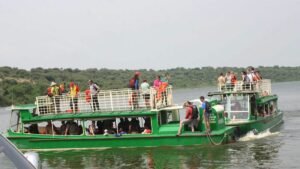
Later, you will enjoy a boat safari along the Kazinga Channel. This natural waterway connects Lake Edward and Lake George. It supports large numbers of hippos and provides important habitat for many aquatic birds.
The boat trip offers excellent opportunities to observe animals near the shoreline. Hippos often rest in the water, while elephants and buffaloes may approach the banks. Crocodiles may also appear in suitable areas.
Birdwatchers can search for kingfishers, African fish eagles, pelicans, cormorants, and other water-associated species. The boat’s perspective makes wildlife viewing different from the earlier game drives.
During the cruise, your guide will explain the ecological importance of the channel. Water supports wildlife during dry periods and creates feeding opportunities for many animals.
After the boat safari, you will transfer to your lodge for relaxation and dinner. Enjoy the peaceful atmosphere while reflecting on the variety of landscapes explored during the journey.
By this point, you will have experienced migration wildlife, mountain gorillas, tree-climbing lion habitat, and a classic Ugandan boat safari.
Suggested accommodation: Mweya Safari Lodge or Elephant Plains Lodge.
Meal plan: Breakfast, lunch, and dinner.
Main experience: Wildlife game drive and Kazinga Channel boat safari.
After breakfast, you will prepare for the final stage of your 10-day safari. Your Lena Tours guide will arrange the road transfer to Kasese Airstrip or another confirmed departure point for your flight to Entebbe.
Flight availability and departure times determine the morning schedule. Therefore, Lena Tours will coordinate the final transfer with your international departure arrangements.
During the journey, you may enjoy one last view of Uganda’s beautiful countryside. The landscapes reflect the remarkable diversity of the country’s western tourism region.
Upon arrival in Entebbe, your representative can assist with the next transfer. Guests with suitable onward flight times may continue directly to Entebbe International Airport.
If your international departure takes place late at night, a day-use hotel room or an additional activity may be arranged at an extra cost. However, travelers should allow generous connection time for baggage collection, check-in, and airport procedures.
Your safari ends with remarkable memories of East Africa. You will have explored the Maasai Mara’s open plains, observed wildlife in Kenya, trekked through Bwindi’s ancient rainforest, and discovered Queen Elizabeth National Park.
For many travelers, the combination of wildebeest migration and gorilla trekking becomes one of the most rewarding wildlife holidays they will ever experience.
Lena Tours aims to make the journey comfortable, informative, and memorable. From initial planning to the final airport transfer, our team coordinates the essential details so guests can concentrate on exploring Africa.
Meal plan: Breakfast, with other meals depending on departure time.
Main experience: Domestic flight, airport transfer, and departure
Accommodation plays an important role in the overall safari experience. Well-positioned lodges reduce unnecessary travel and give guests more time to enjoy wildlife activities.
Lena Tours can arrange budget, mid-range, or luxury accommodation depending on your preferences. However, popular migration camps and Bwindi lodges often sell out during peak travel months. Therefore, early reservations help secure desirable locations.
|
Destination |
Mid-range option |
Luxury option |
|---|---|---|
|
Nairobi |
Tamarind Tree Hotel |
Hemingways Nairobi |
|
Maasai Mara |
Ashnil Mara Camp |
Mara Serena Safari Lodge or a suitable luxury conservancy camp |
|
Entebbe |
Best Western Premier Garden Hotel |
Hotel No. 5 |
|
Bwindi โ Buhoma |
Mahogany Springs Lodge |
Sanctuary Gorilla Forest Camp |
|
Ishasha |
Enjojo Lodge |
Ishasha Wilderness Camp |
|
Queen Elizabeth |
Buffalo Safari Lodge |
Mweya Safari Lodge or Elephant Plains Lodge |
The final lodge list depends on availability, the guest’s budget, and the confirmed route. In particular, gorilla permit sectors must match the accommodation location whenever possible.
A suitable lodge can make a major difference to your experience. For example, accommodation near your gorilla trekking briefing point helps reduce early morning driving. Similarly, staying close to important wildlife areas allows more time for game drives.
In the Maasai Mara, some camps provide access to migration areas, while others offer quieter settings near the reserve or in surrounding conservancies. However, entry permissions, game drive rules, and reserve fees vary by location.
Lena Tours considers these factors while preparing each safari quotation. Our aim is to balance comfort, location, travel time, and wildlife viewing opportunities.
The cost of a combined Kenya and Uganda safari depends on several factors. Travel dates, accommodation standards, group size, flight arrangements, and park fees all influence the final price.
A 10-day safari during the peak migration season often costs more than a similar journey during quieter months. This happens because popular Maasai Mara camps experience high demand. Gorilla permit fees also represent a significant part of the total cost.
Furthermore, international and domestic flight connections affect the budget. Our featured itinerary uses flights between Kenya and Uganda and within Uganda to reduce long-distance driving.
Lena Tours prepares personalized quotations according to each client’s requirements. A couple may prefer a comfortable mid-range safari, while honeymoon travelers may choose exclusive camps and luxury forest accommodation.
|
Safari component |
What the cost covers |
|---|---|
|
Accommodation |
Nine nights in selected hotels, camps, and lodges |
|
Road transport |
Safari vehicles and scheduled ground transfers |
|
Regional flights |
Flights connecting Kenya and Uganda |
|
Domestic flights |
Selected internal connections in Kenya and Uganda |
|
Gorilla permit |
Authorized mountain gorilla trekking experience |
|
National park fees |
Applicable reserve and park entrance charges |
|
Game drives |
Guided wildlife viewing in selected parks |
|
Boat safari |
Kazinga Channel wildlife cruise |
|
Guide services |
Professional guides and safari assistance |
|
Meals |
Meals specified in the confirmed itinerary |
Uganda Wildlife Authority controls gorilla trekking permit prices. As of 2026, the standard permit for a foreign non-resident visitor is US$800 per person. The same standard price is listed for 2027. Certain eligible low-season dates in 2026 have a promotional rate of US$600, subject to official booking conditions.
A standard gorilla permit allows the visitor to participate in the official guided trek and spend up to one hour with the assigned habituated gorilla family.
However, the fee does not include hotel accommodation, private transport, domestic flights, porter services, or other safari arrangements.
Guests should book permits early, especially when planning a safari between July and September. Availability is limited, and the permit must correspond to the correct trekking date.
The Maasai Mara attracts substantial international demand during the migration period. Consequently, many lodges charge higher rates between July and October.
Some properties also introduce minimum-night requirements during peak periods. In addition, popular migration areas may attract many safari vehicles.
Travelers who want a more exclusive experience can consider carefully chosen camps in surrounding conservancies. These areas may offer attractive accommodation and additional activities, subject to local regulations. However, access to the national reserve and migration viewing areas must form part of the overall itinerary planning.
Booking early allows Lena Tours to compare suitable properties before availability becomes limited.
A budget-conscious safari can use comfortable but simpler accommodation and carefully planned road transfers. Nevertheless, our featured 10-day itinerary includes several flights, so it is better suited to travelers who prioritize efficient connections.
Mid-range packages usually offer ensuite accommodation, reliable safari vehicles, and experienced guides. This category provides a good balance between comfort and overall value.
Luxury packages may include exclusive safari camps, premium forest lodges, private guiding, and additional activities. Some guests also request private charter flights or specialized photography experiences.
Rather than publishing a package price that might not match your dates, Lena Tours can prepare an accurate quotation based on confirmed availability.
A typical private safari package can include airport transfers, accommodation, meals, a professional safari guide, scheduled game drives, a Kazinga Channel boat cruise, and a gorilla trekking permit.
Depending on the quotation, the package may also cover Maasai Mara reserve fees, Uganda national park entrance charges, regional flights, domestic flights, and ground transfers.
Before confirming your booking, Lena Tours will provide a detailed breakdown of the services included in your package.
Items that may be excluded include international flights to Africa, travel insurance, visa or travel authorization costs, personal purchases, optional activities, alcoholic drinks, porter fees, and gratuities.
Travelers should review the final itinerary carefully because flight schedules and accommodation arrangements may affect the package inclusions.
Packing for a combined migration and gorilla safari requires preparation for two different environments. The Maasai Mara often offers open, exposed landscapes with cool mornings and warmer afternoons. Bwindi features humid forest conditions, muddy trails, and changing mountain weather.
Lightweight clothing in neutral colors works well during game drives. Khaki, brown, olive, and beige are popular options because they blend with the natural surroundings.
Morning drives can feel cold, especially when vehicles have open viewing roofs. Therefore, carry a warm fleece or lightweight jacket.
A wide-brimmed hat, sunglasses, and sunscreen help protect against strong sunlight. Comfortable closed shoes are also useful for lodge activities and transfers.
Avoid packing only summer clothing. Even during the dry season, early mornings can be surprisingly cool.
Gorilla trekking requires more protective clothing. Long trousers help reduce scratches from forest vegetation, while long-sleeved shirts protect the arms.
Waterproof hiking boots with good grip are particularly important. Forest paths may become slippery after rain, and some trails involve steep sections.
Gardening-style gloves can help when holding vegetation for balance, but avoid damaging plants unnecessarily. A lightweight waterproof jacket protects against sudden rain.
Travelers should carry enough drinking water and a packed lunch. A small daypack allows you to keep essential equipment within easy reach.
A camera with a suitable zoom lens works well for savannah photography. However, different lenses may suit different activities.
In the Maasai Mara, a telephoto lens helps capture distant wildlife without disturbing animals. For landscape photography, a wider lens can show the enormous scale of the savannah.
Gorilla photography presents different conditions. Forest lighting can be dim, so a camera that performs well in low light is useful.
Flash photography is prohibited near the gorillas. Therefore, learn how to adjust exposure settings before entering the forest.
Extra batteries, memory cards, and protective camera bags are also valuable. Moisture-resistant equipment is especially useful in Bwindi.
Travelers should review passport, immigration, vaccination, and insurance requirements before departure. Entry rules vary by nationality and can change.
Many visitors need passports valid for at least six months beyond their planned arrival, although precise rules should be checked against their travel documents.
Kenya uses an Electronic Travel Authorisation system for many foreign visitors, with nationality-based exemptions. Uganda operates its own visa system.
The East Africa Tourist Visa may be suitable for eligible travelers visiting Kenya and Uganda. It generally allows tourism travel within Kenya, Uganda, and Rwanda for up to 90 days, subject to the issuing country’s conditions. Travelers must enter first through the country that issues the visa.
Before traveling, guests should confirm the correct authorization or visa for their nationality and itinerary.
Uganda requires yellow fever vaccination documentation for many arriving travelers. Kenya may also require proof depending on a traveler’s origin and recent itinerary.
Visitors should speak with a qualified travel-health professional before departure. The consultation can cover malaria prevention, routine vaccinations, and other destination-specific precautions.
Travel insurance is strongly recommended. Ideally, your policy should cover emergency medical care, evacuation, wildlife activities, and changes caused by unexpected travel disruptions.
In addition, travelers should carry necessary personal medication and inform their safari organizer about important mobility or dietary requirements.
Gorilla trekking does not require professional hiking experience. However, a reasonable level of fitness makes the activity more enjoyable.
The forest contains uneven ground, steep slopes, and sometimes muddy trails. Visitors may walk for several hours before finding the gorillas.
Travelers with mobility limitations should explain their needs in advance. Certain assistance arrangements may be available, including porter services and specialized carrying support. However, these services require advance coordination and additional fees.
Lena Tours can discuss the requirements with local trekking teams and help guests prepare appropriately.
The wildebeest migration and gorilla trekking safari offers excellent opportunities to see different animal species. Nevertheless, no wildlife encounter can be guaranteed.
The Maasai Mara supports an impressive range of herbivores and predators. Visitors may encounter wildebeests, zebras, elephants, buffaloes, giraffes, topis, gazelles, and other antelopes.
Lions are a major attraction. Some prides rest in open areas, while others move through the grassland in search of prey.
Cheetahs also favor the open terrain. Their speed and hunting behavior make them particularly exciting animals to observe.
Leopards can be harder to locate because they often seek shelter in trees or dense vegetation. Nevertheless, an experienced guide may find them in suitable habitats.
Birdwatchers can enjoy raptors, ground birds, water-associated species, and many other birds throughout the region.
Bwindi’s mountain gorillas remain the main attraction. However, the forest supports far more than one primate species.
Visitors may encounter signs of forest mammals and hear numerous bird calls during their trek. Colorful butterflies also inhabit forest edges and clearings.
The rich vegetation creates an important environment for conservation. Each forest walk offers an opportunity to understand how the different species depend on this ecosystem.
Queen Elizabeth National Park supports elephants, buffaloes, Uganda kobs, hippos, and many bird species.
The Ishasha sector is particularly famous for its tree-climbing lions. Meanwhile, the Kazinga Channel provides excellent water-based wildlife viewing.
Hippos are a major attraction along the channel. Visitors may also see elephants drinking near the water or buffaloes resting beside the banks.
By combining all three destinations, travelers experience a remarkable range of African animals in different natural habitats.
Wildlife conservation plays an essential role in the future of African tourism. Without protected habitats, many of the animals that attract visitors would face greater threats.
The Great Migration depends on maintaining connected grassland ecosystems. Wildebeests need access to seasonal grazing areas, rivers, and traditional movement corridors.
Human settlement, land-use changes, and infrastructure can affect these natural routes. Therefore, conservation efforts across Kenya and Tanzania remain essential.
Mountain gorilla conservation also requires long-term protection. Park authorities, researchers, conservation organizations, and local communities all contribute to protecting the animals.
Gorilla trekking permit revenue helps finance conservation operations and related community benefits. Responsible tourism can also create employment in guiding, accommodation, transport, and hospitality.
At Lena Tours, we encourage visitors to respect wildlife regulations and support responsible tourism activities. Guests should avoid littering, feeding wild animals, or pressuring guides to approach wildlife too closely.
Photography should never disturb animals or interfere with their natural behavior. Similarly, travelers should respect community privacy during cultural visits.
By making responsible choices, safari visitors can help support the long-term protection of East Africa’s natural heritage.
This combined safari appeals to many types of travelers. However, individual interests and physical abilities should guide the final itinerary.
Couples often enjoy the contrast between adventurous wildlife activities and peaceful lodge accommodation.
The Maasai Mara offers beautiful sunsets, romantic safari settings, and memorable game drives. Bwindi provides quiet forest retreats surrounded by dramatic mountain scenery.
Luxury accommodation can add private dining, spa treatments, and carefully organized special experiences.
Solo travelers can enjoy a private safari or join a suitable scheduled group, where available.
A private itinerary provides flexibility and personalized guiding. However, costs may be higher because one person covers expenses normally shared by multiple travelers.
Lena Tours can prepare quotations that explain any single-room supplements and transport differences.
Families can enjoy wildlife viewing in Kenya and Uganda. However, gorilla trekking has a minimum age of 15 years.
Younger children cannot participate in the standard gorilla trekking activity. Therefore, families with younger guests may prefer a modified itinerary that includes additional game drives, boat safaris, and suitable nature activities.
Parents should also consider driving distances, accommodation arrangements, and the interests of each child.
The combined safari offers excellent variety for photography enthusiasts.
In Kenya, wide landscapes and open grasslands support migration and predator photography. Uganda provides rainforest portraits, detailed animal behavior, and scenic highland landscapes.
Professional photographers may prefer private vehicles or longer stays in selected wildlife areas.
Yes. Travelers can combine the Great Wildebeest Migration in Kenya or Tanzania with mountain gorilla trekking in Uganda. Regional flights help connect the destinations. A 10-day itinerary offers time for several migration game drives, gorilla trekking, and additional wildlife activities.
The answer depends on the season. Kenya’s Maasai Mara is especially popular from July to October. Tanzania’s Serengeti provides migration opportunities during other stages of the annual cycle. Uganda offers mountain gorilla trekking throughout the year.
Ten days can provide a rewarding combined safari if travel connections are planned carefully. However, it requires efficient transfers and confirmed flight schedules.
Visitors who want additional destinations, more photography time, or extra relaxation may prefer a 12- to 14-day itinerary.
No. River crossings are natural events influenced by rainfall, grazing conditions, and herd behavior. Animals may gather at a river without crossing or move to another location unexpectedly.
An experienced safari guide can search active migration areas, but no operator can guarantee a crossing.
The standard gorilla trekking permit allows up to one hour with the assigned habituated gorilla family after the animals are located.
The entire activity often takes longer because visitors must walk through the forest to find the gorillas and return afterward.
Yes. Travelers can arrange multiple gorilla trekking experiences if permits are available.
A second trek may allow visitors to observe another gorilla family or enjoy a different forest experience. Each trek requires its own permit.
However, adding another trekking day would normally extend this particular itinerary or require replacing another activity.
Uganda Wildlife Authority manages gorilla trekking through regulated procedures and trained rangers. Visitors receive a safety briefing and must follow official instructions.
Although wildlife activities always involve some risk, responsible guiding and visitor behavior help reduce unnecessary danger.
August and September are popular choices for travelers hoping to see the migration in the Maasai Mara while trekking gorillas in Uganda.
July and October can also work well. However, migration locations vary, so guests should remain flexible.
Yes. Travelers should secure a permit before their trekking date. Availability can become limited during popular travel periods.
Lena Tours can assist with arranging the permit as part of the confirmed safari package.
Yes. Chimpanzee trekking in Kibale National Park makes an excellent addition to a migration and gorilla safari.
However, adding Kibale requires more travel time. A longer itinerary is usually more comfortable because it allows visitors to explore the forest without rushing.
Yes. The journey can begin in Entebbe with gorilla trekking and Queen Elizabeth National Park. Guests can then fly to Kenya for the Maasai Mara safari.
The best order depends on international flights, accommodation availability, and gorilla permit dates.
For peak travel months, booking six to twelve months in advance can provide a wider choice of accommodation and trekking dates.
However, shorter-notice bookings may still be possible when permits, lodges, and flights remain available.
Choosing the right safari operator helps make a multi-country journey more enjoyable. A combined Kenya and Uganda itinerary involves different park authorities, travel connections, permits, and accommodation arrangements.
Lena Tours helps travelers organize these elements into one coordinated safari.
Our approach focuses on suitable destinations, realistic travel schedules, and experiences that match each client’s interests. We understand that some travelers prioritize wildlife photography, while others prefer comfortable accommodation or cultural exploration.
Furthermore, we recognize that a gorilla trekking permit should be secured before finalizing certain accommodation and transport arrangements. The chosen trekking sector affects lodge location and travel time.
We also aim to provide clear communication about safari inclusions, exclusions, and available options. This helps guests understand their itinerary before confirming the booking.
Whether you prefer a mid-range safari or a luxury wildlife holiday, Lena Tours can help design an experience that combines East Africa’s outstanding natural attractions.
The Great Wildebeest Migration and mountain gorilla trekking represent two of Africa’s most remarkable wildlife experiences. One showcases the movement of enormous animal herds across open plains. The other introduces travelers to mountain gorilla families living within an ancient rainforest.
Together, these adventures reveal the beauty and diversity of East Africa.
During this 10-day safari, you can explore Kenya’s Maasai Mara, discover Uganda’s Bwindi Impenetrable National Park, search for tree-climbing lions in Ishasha, and enjoy a boat safari along the Kazinga Channel.
Every destination offers a different experience. Moreover, the journey supports a deeper appreciation of wildlife, local communities, and natural habitats.
At Lena Tours, we can help turn this adventure into a personalized safari that suits your travel dates, accommodation preferences, and budget.
Contact Lena Tours today to start planning your African wildlife adventure.
Complete the enquiry form below and our safari specialists will prepare a personalised itinerary and quotation for your journey.
You cannot copy content of this page