UGANDA SAFARI GUIDE • LENA TOURS
A Safari in Uganda: The Complete Guide to Wildlife, Gorillas, Top Destinations, Accommodation and Itineraries
From misty mountain forests to the banks of the Nile, discover how to plan a rewarding journey through the Pearl of Africa.
Travel information checked: 6 November 2026. Prices and requirements are date-sensitive; accommodation is subject to availability.
Why choose Uganda for your next safari?
A safari in Uganda brings together experiences that often require several separate holidays elsewhere. You can watch giraffes crossing open grassland, cruise past hippos along the Nile, follow chimpanzee calls through rainforest, and hike into mountain gorilla habitat within one carefully planned journey. Between the parks, the scenery changes constantly. Tea estates spread across rolling hills, roadside markets display tropical fruit, and volcanic peaks rise above the cultivated slopes of the southwest. Uganda rewards travelers who enjoy these connections as much as the headline wildlife encounters.
The country is especially appealing if you want variety. Traditional game drives form an important part of the experience, but they share the itinerary with forest walks, canoe excursions, birdwatching, cultural visits and quiet afternoons overlooking lakes. A week can introduce one region, while two weeks allow a broader circuit with time to appreciate each stop. Travelers interested in mountain hiking, specialist birding or the remote northeast should usually allow longer. The best itinerary begins with your priorities and available time rather than a list of every attraction on the map.
Uganda also offers a wide range of places to stay. Simple guesthouses, permanent safari tents, comfortable lodges and exclusive forest retreats serve different budgets and travel styles. However, location often matters more than a property’s marketing category. A lovely lodge on the wrong side of Bwindi can create an exhausting journey before gorilla trekking. Similarly, a hotel outside a park may reduce room costs but add travel time and repeated entry charges. Good planning connects accommodation, permits, road conditions and daily activities into a route that actually works.
This guide explains the main destinations, what you can realistically expect to see, how to choose accommodation and how to prepare for the practical side of travel. It also includes several sample itineraries, planning tables and a clear distinction between published permit prices and illustrative safari budgets. Wildlife remains unpredictable, weather can alter plans, and travel requirements can change. These realities are part of safari planning, but they do not diminish the pleasure of a journey designed with enough flexibility, preparation and time outdoors.
Uganda at a glance
Uganda lies in East Africa and shares borders with Kenya, Tanzania, Rwanda, the Democratic Republic of the Congo and South Sudan. Entebbe International Airport serves as the main international arrival point, while Kampala is the capital. The equator crosses the country, but elevation has a strong influence on local temperatures. A warm afternoon beside the Nile can feel very different from an evening in the highlands near Bwindi. Pack for these changes instead of assuming that every day will be uniformly hot because you are traveling near the equator.
| Planning detail | What visitors should know |
|---|---|
| Main international gateway | Entebbe International Airport; arrange an arrival transfer |
| Capital | Kampala; a separate destination from Entebbe |
| Currency | Ugandan shilling, abbreviated UGX |
| Time zone | East Africa Time, UTC+3 |
| Communication | English is widely used in tourism; local languages vary by region |
| Electricity | Generally 240V, 50Hz; Type G sockets are common |
| Driving | Traffic keeps left; rural road conditions can vary considerably |
| Ideal first safari length | About 10–14 days for a varied western circuit |
| Trip priorities | Choose your key wildlife, preferred pace and accommodation before finalizing the route |
Distances alone do not explain travel time in Uganda. Town traffic, speed controls, roadworks, winding highland roads, rain and wildlife stops all affect a journey. A map application may underestimate the time needed to reach a remote lodge. Treat transfers as substantial parts of your holiday and avoid adding several major activities after a long drive. Ask your operator for realistic door-to-door estimates, including breaks, rather than only the time spent moving. This makes arrival days more comfortable and reduces the temptation to drive after dark.
Top Uganda safari destinations: choosing the right combination
Uganda has ten national parks, with very different landscapes and visitor experiences. Most first-time wildlife itineraries concentrate on the west and southwest because this allows travelers to combine savannah parks with gorillas and chimpanzees. The northeast suits a separate extension or a longer circuit. Eastern Uganda works particularly well for adventure activities and hiking. No single park supplies every experience, so a balanced itinerary combines complementary destinations and allows enough nights in each place to avoid spending the whole holiday in transit.
| Destination | Main appeal | Suggested nights | Useful planning point |
|---|---|---|---|
| Bwindi Impenetrable | Mountain gorilla trekking and forest scenery | 2–3 | Match your lodge to your permit sector |
| Mgahinga Gorilla | Gorillas, golden monkeys and volcano landscapes | 2–3 | Book separate activities and allow hiking time |
| Murchison Falls | Game drives, Nile cruises and the waterfall | 2–3 | Check lodge position against your activities |
| Queen Elizabeth | Savannah wildlife and Kazinga Channel | 2–3 | Ishasha is a separate southern area |
| Kibale | Chimpanzees and forest walks | 2–3 | Stay near the relevant briefing point |
| Lake Mburo | Zebras, guided walks and a gentle safari finish | 1–2 | Two nights allow more than a transit stop |
| Kidepo Valley | Remote savannah and expansive scenery | 3 or more | Allow substantial travel time or consider flights |
| Semuliki | Lowland forest birding and hot springs | 1–2 | Specialist birding benefits from extra days |
| Rwenzori Mountains | Mountain trekking | Route-dependent | High-altitude routes require a dedicated expedition |
| Mount Elgon | Hiking and highland landscapes | Route-dependent | Combine with the wider eastern region |
Bwindi Impenetrable National Park: mountain gorillas and rainforest

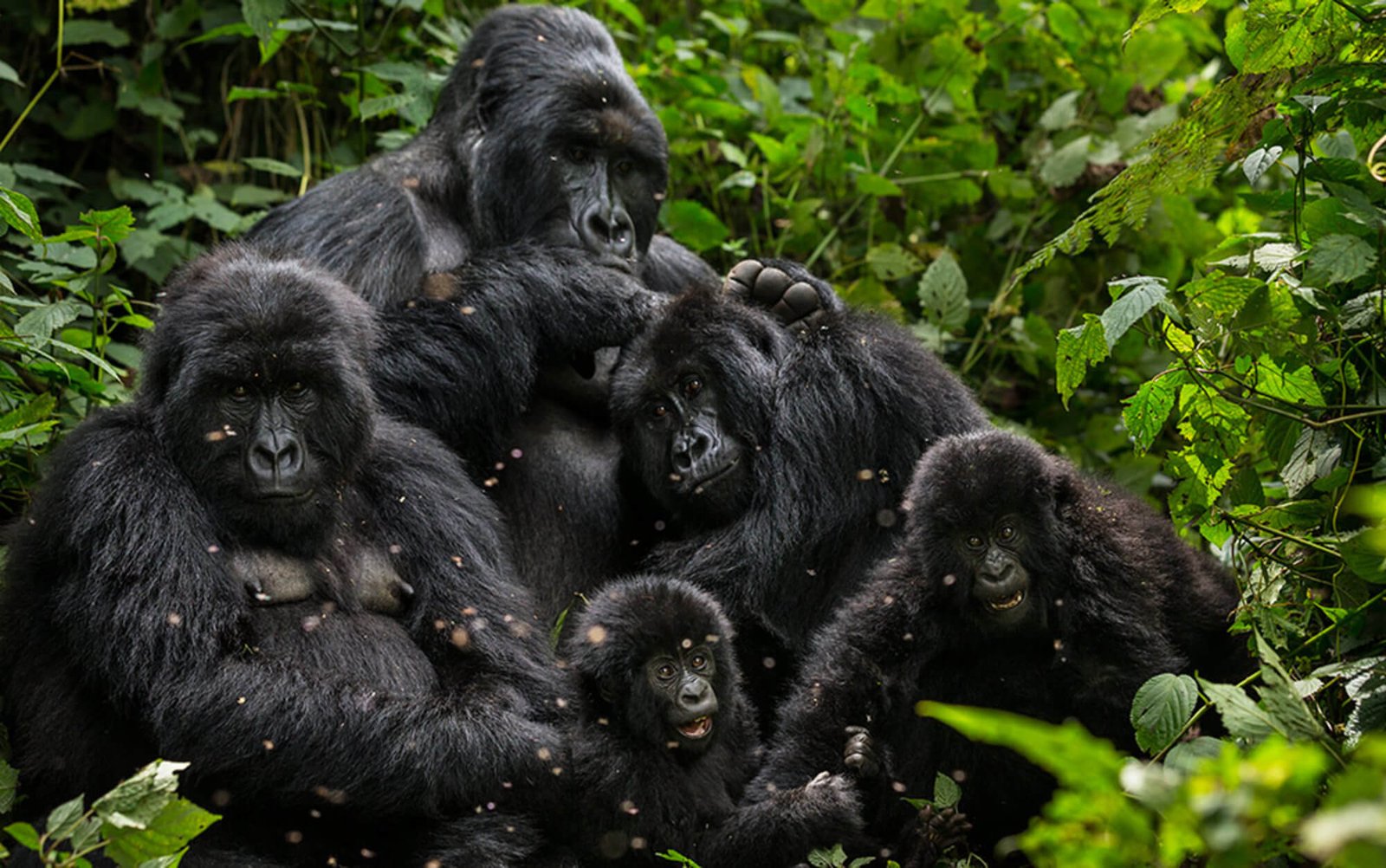
Bwindi is one of Uganda’s most compelling destinations because the experience requires you to enter the forest on foot. Mountain gorilla trekking takes place here and in Mgahinga, with ranger-led visits regulated through permits. Bwindi’s steep ridges and dense vegetation create a very different setting from a savannah game drive. Its main trekking sectors are Buhoma, Ruhija, Rushaga and Nkuringo. The permit sector should guide your lodge choice and transfer arrangements; these areas are not interchangeable meeting points.
Plan to sleep near your briefing area before the trek. Arriving in the district late and attempting an unfamiliar mountain road before dawn creates avoidable stress. An extra night also gives you time to organize a porter, check footwear and discuss any mobility concerns with your guide. A short walk near the lodge may help you settle into the landscape, but leave enough energy for the main activity. Your trekking day needs flexibility because the gorillas’ location, vegetation and terrain determine how long you spend walking.
Beyond the gorillas, make room for the surrounding communities and forest atmosphere. A locally guided walk can introduce farming, food preparation, craft businesses or conservation projects where hosts actively welcome visitors. Ask how fees reach participating residents and avoid unplanned visits to private homes. Photography is more meaningful when it follows conversation and consent. A second quiet afternoon at Bwindi can be as memorable as another long transfer, especially when you can sit above the forest and listen to the changing calls of birds and insects.
Mgahinga Gorilla National Park: volcanoes and golden monkeys
Mgahinga occupies the volcanic southwest near Kisoro. Its appeal lies in the combination of forest primates and dramatic mountain scenery. Gorilla trekking and golden monkey tracking are separate activities, so travelers wanting both need separate bookings and sufficient time. The wider setting also suits guided hikes for visitors whose fitness and interests match the chosen route. Mountain weather can change quickly, and clouds sometimes hide the peaks. Plan around the experience of the landscape rather than the promise of a particular photograph.
A stay near Kisoro or Lake Mutanda can create a beautiful base, but check the transfer to the activity start rather than judging distance from a broad destination label. Roads may be slow, particularly after rain. A golden monkey excursion, a volcano hike and a gorilla trek should not be compressed into one overloaded day. If you want several physical activities, alternate demanding outings with a less strenuous afternoon. This also makes the trip more enjoyable for couples or groups whose members have different walking speeds.
Murchison Falls National Park: wildlife beside the Nile

Murchison Falls combines open-country wildlife viewing with the Nile and its dramatic waterfall. Visitors often pair game drives with a river cruise and a separate visit to the top of the falls. These experiences show different aspects of the park: animals across the savannah, wildlife along the banks, and the force of the river where it rushes through the rock. Give each activity its own time instead of treating the waterfall as a quick addition between other bookings.
Two nights allow a useful introduction, while three nights offer a more relaxed stay and additional wildlife viewing. Lodge location affects how early you reach game-drive areas and how long you travel to a boat departure. Ask which riverbank and park area your accommodation serves, and confirm the current crossing arrangements where relevant. Avoid assuming that every property carrying “Murchison” in its name sits beside the same attractions. A carefully located lodge can give you more time outdoors without increasing the number of activities.
Ziwa Rhino Sanctuary is a common addition to the road journey from the Kampala area, but it is a separate destination with separate charges and operating arrangements. A visit should fit within daylight hours and a sensible transfer schedule. If your international flight lands late, overnight near Entebbe before starting north. The next morning will then feel like the beginning of a holiday, with time for breaks and conversation, rather than a race to complete several bookings after an overnight flight.
Queen Elizabeth National Park: Kazinga Channel and varied habitats
Queen Elizabeth offers a diverse safari setting that includes savannah, water, crater landscapes and forested areas. The Kazinga Channel boat experience complements game drives, while Ishasha in the southern part of the park is associated with tree-climbing lions. These lions are wild animals, and their presence in particular trees cannot be guaranteed. Kyambura Gorge offers a different forest environment with a separately booked chimpanzee activity. Choose the parts of the park that match your interests and available nights.
Travelers sometimes underestimate the distance between the central park area and Ishasha. A hotel near the channel does not automatically serve as a convenient base for repeated southern game drives. When traveling onward to Bwindi, an Ishasha visit can work if the road, security situation and permit sector support that route. However, an itinerary should never rely on a specific lion sighting during a transfer. Give your guide permission to keep moving when time, weather or animal welfare makes a longer search inappropriate.
A good stay balances early wildlife viewing, a channel cruise and time at the lodge. Midday can be hot, and a rest between activities makes the next outing more enjoyable. Travelers who enjoy photography may prefer fewer activities with longer observation at each sighting. Birdwatchers might prioritize waterbirds and mixed habitats over searching exclusively for cats. Explain these preferences before the safari begins so that the guide can make useful choices when several possibilities compete for the same afternoon.
Kibale National Park: chimpanzees and forest discovery

Kibale is a major destination for chimpanzee tracking in Uganda. The forest experience can be energetic: chimpanzees may call loudly, move rapidly and spend time high in the trees. A tracking outing differs from a gorilla trek, and many travelers value doing both. Standard tracking and habituation experiences have different arrangements and charges, so ask exactly which product appears in your itinerary. Stay within comfortable reach of the correct reporting point and leave the tracking day flexible.
The wider area offers opportunities to slow the pace. Community-guided wetland walks around Bigodi, crater-lake scenery and time near Fort Portal can turn Kibale into more than a one-activity stop. Choose a locally managed experience with clear guiding arrangements and a transparent fee. A patient walk can reveal smaller details that disappear during a road transfer: insects on leaves, birds moving through reeds, local crops and the way people use the landscape. You do not need to identify every species to enjoy learning from an informed guide.
Lake Mburo National Park: walking and a gentler safari rhythm
Lake Mburo works well near the beginning or end of a southwestern circuit. Its attraction lies in combining vehicle-based wildlife viewing with authorized guided activities on foot or, where available, by bicycle or horseback. These activities require proper arrangements and are not an invitation to wander independently among animals. Zebras and antelope give the landscape a distinctive character, and a lakeside excursion adds another perspective. Check which activities your particular lodge can actually organize and which charges remain separate.
One night can break a long journey, but two nights change the experience. You can arrive without rushing, enjoy an evening outing and still have time for a morning walk before breakfast the following day. Travelers returning to Entebbe should remain realistic about traffic and airport check-in. A final overnight near the airport provides more protection against delays than trying to combine a full safari morning, a long road journey and a tightly timed international departure on the same day.
Kidepo Valley National Park: an extension for unhurried travelers
Kidepo belongs in the conversation when travelers want a more remote savannah experience and have enough time to reach northeastern Uganda. Broad views and a sense of space form a major part of its appeal. It usually works best as a dedicated extension rather than a hurried detour from a short western circuit. Flying can reduce road travel, but flights depend on current schedules, minimum passenger arrangements, weather and airstrip conditions. Confirm these details before constructing the rest of your holiday around a particular connection.
If you travel by road, allow overnight stops where needed and appreciate the changing landscapes along the route. A cultural visit should be arranged through willing local hosts and experienced guides. Ask questions respectfully and avoid treating any community as a performance that exists for visitors. Clothing, homes, food and livelihoods have meaning beyond a tourist photograph. Buying a locally made item or paying fairly for a guided experience can support hosts more directly than distributing gifts without understanding their consequences.
Semuliki National Park: lowland forest and specialist birding
Semuliki appeals to travelers who enjoy forest environments, birding and the contrast between western Uganda’s different habitats. The hot springs are a recognized attraction, but specialist visitors may spend much longer exploring the forest with an experienced guide. It is important to distinguish Semuliki National Park from the similarly named Toro-Semliki Wildlife Reserve. They are separate protected areas with different access arrangements and experiences. Confirm which place your itinerary names before booking accommodation or assuming that a photograph represents your actual destination.
Forest birding often rewards patience more than distance. A morning with modest sightings can still teach you a great deal when the guide explains calls, feeding patterns and vegetation. Choose suitable footwear and prepare for humidity, insects and wet ground. A standard sightseeing stop and a specialist birding excursion need different amounts of time, so make your expectations clear. If one rare bird is your main reason for visiting, discuss several days and alternative sites rather than relying on a brief visit.
Rwenzori Mountains: a dedicated mountain journey
The Rwenzori Mountains offer a trekking holiday with very different requirements from a conventional wildlife safari. Short walks and high-altitude expeditions are separate undertakings. A serious mountain route needs an appropriate operator, qualified support, route-specific equipment, realistic acclimatization and insurance that explicitly covers the intended altitude and activities. Do not add a summit objective to a general safari as though it were a casual day trip. Mountain conditions, route difficulty and your health should determine the plan.
Travelers who are interested in the scenery but do not want a major expedition can ask about suitable lower-level guided options. Even then, discuss elevation gain, trail surface, expected duration and turnaround arrangements. Waterproof gear matters because a wet mountain day feels much colder than a wet afternoon in town. A responsible itinerary gives the mountain team authority to change plans and does not make safety depend on reaching a particular viewpoint. The achievement comes from a well-managed journey as much as from a destination.
Mount Elgon and the wider Sipi area
Eastern Uganda offers another rewarding hiking region around Mount Elgon and the Sipi Falls area. Mount Elgon National Park and the surrounding attractions should be planned as related but distinct experiences, with separate guiding and access arrangements where required. Travelers can combine highland scenery with coffee experiences and walks suited to their available time. Ask for a route description that explains steep sections, slippery ground and the difference between a short waterfall walk and a longer mountain trek.
The east can work beautifully with Jinja, especially for visitors who prefer active travel over trying to include every western park. A balanced itinerary might combine river activities, waterfalls, coffee and hiking, then add a flight or separate transfer to a primate destination if time permits. Avoid planning a very demanding hike immediately after a late-night arrival. A comfortable first day, reliable meals and proper sleep can improve the whole experience more than squeezing in one additional stop.
More places to include beyond the national parks
Mabamba Swamp: searching for the shoebill
Mabamba is a rewarding wetland excursion for visitors staying around Entebbe. A locally guided canoe trip moves through channels and papyrus habitat while guides search for shoebills and other wetland birds. Start with realistic expectations: the shoebill is wild, and an excursion cannot guarantee a sighting. The journey itself offers an intimate experience of the wetland, with opportunities to observe fishing activity, changing vegetation and smaller birds that are easy to overlook when everyone concentrates on one famous species.
Ask about the boat, life jackets, transfer arrangements and expected time on the water. Carry sun protection, drinking water and a waterproof bag for cameras. If balance or mobility is a concern, explain this before booking because boarding a small canoe may require assistance. Follow the guide’s instructions and remain quiet near birds. A good sighting depends on patient positioning and respectful distance. Chasing a bird for a closer photograph reduces the quality of the encounter and can disturb its feeding behavior.
Ziwa: a separate rhino experience
Ziwa can introduce a different style of wildlife viewing through a guided rhino activity, subject to current operating conditions. It is often included on a northbound road itinerary, but travelers should confirm the booking directly through their operator and understand the walking requirements. Wear closed shoes and follow the guide’s distance instructions. Wildlife behavior determines what is possible, and the guide should decide when to move, stop or change direction. Treat the outing as an encounter with large wild animals rather than a predictable photo session.
A Big Five itinerary requires special care with wording. Seeing rhinos at Ziwa and searching for elephants, buffalo, lions and leopards in savannah parks can create the opportunity to encounter the five species across a journey. It does not mean that every species lives in every park or that all five will appear on a single game drive. Ask what the itinerary actually includes and where each species would be sought. This helps you evaluate marketing claims without losing the excitement of the search.
Lake Bunyonyi and Lake Mutanda: time to pause

Terraced hills, islands and changing light encourage a slower rhythm, with optional canoe or boat excursions arranged through reputable local providers. Lake Mutanda offers another beautiful southwestern base, particularly for itineraries involving Kisoro or the southern forest region. Choose between them according to your route rather than trying to add both automatically. A lakeside stay is most rewarding when it gives you actual time to rest instead of functioning only as another overnight address.
Never interpret a lake’s attractive appearance as proof that swimming is medically safe. Ask a travel-health professional about freshwater exposure in Uganda, and choose alternatives if the health advice does not support swimming. Boats should carry suitable life jackets for every passenger, including children. Confirm how luggage reaches an island property and whether late arrivals involve crossing after dark. Practical details such as steep access paths, reliable hot water and meal arrangements matter just as much as the view when you are recovering from a demanding trek.
Jinja: river scenery and adventure
Jinja offers a different chapter of a Uganda holiday, with river scenery and a range of organized adventure activities. Travelers may consider rafting, kayaking, river cruises or a relaxed stay beside the Nile, depending on current operator availability and conditions. Select a professional provider, discuss your experience level honestly and check that your insurance covers the activity. Ask about safety briefings, equipment, rescue support, age limits and what happens when river conditions change. A reputable operator should explain these clearly before taking payment.
Not everyone needs an adrenaline activity to enjoy Jinja. A quiet river stay can suit couples, families or travelers who want a break from early departures. Give yourself time to appreciate the setting and ask about locally run experiences that fit your interests. The transfer from Entebbe or Kampala can be slow because of urban traffic, so avoid relying on a short map estimate. A separate night in the area often makes the visit more enjoyable than squeezing it between airport arrival and another long journey.
Entebbe and Kampala: more than arrival points
Entebbe is a useful place to recover from a flight, organize cash and begin birdwatching or lakeside sightseeing. Choose accommodation with a reliable airport transfer and a clear plan for late check-in. Kampala deserves its own time if you enjoy urban history, markets, food or cultural sites. Traffic can make a short distance take much longer than expected. A guided city visit should group nearby attractions and include time for lunch rather than attempting every landmark in a single rushed circuit.
Ask permission before photographing people, and follow site-specific rules at religious or cultural places. A guide can explain appropriate clothing and behavior, but curiosity and courtesy go a long way. Avoid photographing security installations, military personnel or restricted infrastructure. Keep valuables discreet in crowded places and use arranged transport after dark. The cities add context to the parks: they show contemporary Uganda, its businesses, creativity and daily life, which are as much part of the country as its famous wildlife.
What animals can you see on a safari in Uganda?
Uganda’s wildlife appeal comes from the range of habitats you can visit. Forest primates, savannah mammals and wetland birds require different methods of observation. A vehicle helps you cover open country, a boat reveals riverbanks, and a guided walk brings you into places roads cannot reach. Your best chance of a satisfying safari comes from combining these experiences and allowing repeated outings. An animal list can help you choose destinations, but it should not become a contract that the landscape is expected to fulfill.
| Interest | Where to focus | How to improve the experience |
|---|---|---|
| Mountain gorillas | Bwindi or Mgahinga | Secure a permit and prepare for forest walking |
| Chimpanzees | Kibale; selected other authorized sites | Choose the site and experience type deliberately |
| Golden monkeys | Mgahinga | Book a separate guided activity |
| Lions and leopards | Suitable savannah parks, including Murchison and Queen Elizabeth | Allow repeated game drives; sightings remain uncertain |
| Elephants and buffalo | Major savannah parks | Combine drives with appropriate boat activities |
| Rhinos | Ziwa, subject to current access | Confirm a separate guided booking |
| Shoebill | Mabamba and other suitable wetlands | Use a local birding guide and allow patient searching |
| Bird diversity | A mix of forest, wetland, savannah and highland sites | Hire a specialist guide and travel slowly |
Early mornings often suit wildlife viewing, but the quality of a guide’s decisions matters more than a rigid timetable. Light, recent sightings, weather and animal movement influence where to go. When you find something interesting, consider staying and watching rather than immediately moving to the next species. An elephant feeding, a bird building a nest or a group of antelope responding to a sound can reveal more than a distant predator briefly seen through several vehicles. Describe the kind of experience you value so that the guide can respond.
Birdwatching: build time around habitats
Birdwatchers should resist treating every destination as a quick checklist stop. Forest species may demand early starts, careful listening and repeated visits, while wetland birds depend on habitat conditions and access. Tell your operator whether you are a beginner, a general wildlife enthusiast or a specialist with target species. This determines the guiding skills, equipment and pace that will work best. A specialist birding itinerary may cover fewer kilometers each day yet deliver much more than a standard safari with occasional bird stops.
Bring binoculars that you can comfortably carry all day and practice focusing before the holiday. A camera is useful, but many forest sightings are brief or obscured. Listen to your guide’s directions and learn a consistent way to describe a location in the branches. Keep a simple notebook or digital list, but avoid allowing record-keeping to interrupt the encounter. For mixed-interest couples, plan some dedicated birding mornings alongside shared boat trips or lodge time, so that both travelers enjoy the rhythm of the holiday.
Gorilla and chimpanzee trekking: permits, fitness and expectations
A permit is tied to an authorized activity and date; it is not a general ticket that allows unlimited forest access. Before paying, confirm the visitor’s passport details, residency or nationality category, activity type, park, date and reporting sector. Your operator should explain payment, cancellation and rescheduling rules in writing. Do not book an unrelated lodge first and assume a matching permit will always be available. If gorillas are the main purpose of your journey, secure that part of the plan before committing to the rest.
UWA’s February 2026 notice introduced lower-season tracking rates for April, May and November, with immediate effect, and stated that these permits cannot be rescheduled. The same notice publishes tariff revisions effective 1 January 2027. This means a quotation for one travel period may differ from a quotation for another, even when the route looks identical. Ask the operator to confirm the tariff applicable to your exact dates and visitor category. The table below is a planning reference for adult foreign non-residents, not a complete tariff card.
| Activity | 2026 standard reference | Published lower-season rate* | Standard rate from 1 January 2027 |
|---|---|---|---|
| Gorilla tracking | $800 | $600 | $800 |
| Gorilla habituation | $1,500 | No discounted rate stated in the cited notice | $1,800 |
| Kibale chimpanzee tracking | $250 | $200 for chimpanzee tracking; confirm site applicability | $300 |
| Chimpanzee habituation | Request the applicable current tariff | No discounted rate stated in the cited notice | $400 |
The cited UWA notice names April, May and November. Confirm continued applicability, site, eligibility and conditions for your travel date. Other visitor categories have different rates. Standard 2026 references come from UWA’s published tariff; the later notice supplies the revisions. Permits do not include your complete safari transport, accommodation or meals.
For standard gorilla trekking, the minimum age is 15. Normal primate tracking provides a maximum of one hour of observation under UWA guidance, while habituation is a separate product with different arrangements. The total outing can take much longer because the walk to and from the animals depends on their location and terrain. Chimpanzee and other activity age rules should be checked separately. Do not assume that the gorilla age rule applies identically to every forest excursion.
Fitness preparation should focus on walking comfortably over uneven ground and managing uphill sections at your own pace. Practice with the shoes and daypack you intend to use. A porter can help carry equipment and provide support where appropriate, while also creating paid local work. Explain any balance problems, knee concerns or medical limitations before the booking. Some forms of additional assistance may be possible by prior arrangement, but neither a short trek nor an easy gorilla group can be guaranteed in advance.
Wear sturdy walking shoes or boots, long trousers and clothing suitable for rain. Carry water, a packed meal if advised, a rain layer and protection for electronics. Gardening-style gloves can help where vegetation is rough, but follow the guide’s instructions about what to touch. Keep your bag manageable; an oversized photography kit can become a burden on steep ground. A walking stick, if offered, is worth considering. Small practical choices often improve the day more than buying specialized clothing you have never used.
Animal health and behavior come first. Report illness before entering the forest, follow current masking or hygiene instructions, maintain the distance set by the rangers and never touch or feed primates. If an animal approaches, remain calm and let the ranger direct you. Flash photography and loud behavior can disrupt the encounter, so prepare camera settings beforehand. The most meaningful moments often happen when you lower the camera and observe. A permit buys access to a regulated experience, not control over the animals or the conditions.
When is the best time to visit Uganda?
Uganda can be visited throughout the year, but different months create different travel conditions. June to August and December to February are commonly chosen for relatively drier conditions in much of the western circuit. Rain remains possible, especially around forests and mountains. March to May and parts of September to November can bring wetter travel, though patterns vary by region and year. The northeast has its own seasonal rhythm, so a month that suits Bwindi is not automatically the ideal month for every Kidepo plan.
| Period | Common planning advantages | What to consider |
|---|---|---|
| December–February | Often relatively dry on popular safari routes | Holiday demand, dust and variable regional heat |
| March–May | Green scenery; potential seasonal offers | Wet trails, slower roads and rain interruptions |
| June–August | Popular period for combined wildlife and primate trips | Reserve key permits and preferred lodges early |
| September–November | Rich landscapes and varied birding opportunities | Rain may affect roads and walks; November permit conditions need checking |
Choose dates by weighing your priorities. A photographer seeking green landscapes may welcome rain showers, while someone with limited mobility may prefer a period with a better chance of firmer trails. Families may need school holidays, and travelers on a tighter budget may accept wetter conditions in return for a suitable offer. However, do not choose a month only because one fee is discounted. Compare the whole trip cost, available lodges, cancellation terms and your tolerance for muddy walking and altered activity timings.
Rain does not necessarily stop a safari day. Showers may pass, light can improve dramatically afterward, and animals continue living their lives regardless of a visitor’s schedule. Prepare with waterproof layers and realistic expectations. A flexible guide can adjust activities where bookings permit, but fixed permits and boat departures limit how much can change. Build some breathing space into the itinerary so that every short delay does not threaten the next reservation. This is especially useful when combining long road transfers with forest activities.
Accommodation in Uganda: choosing where to stay
Uganda’s accommodation options range from simple rooms and campsites to comfortable safari lodges and highly exclusive retreats. Budget, midrange and luxury are useful starting labels, but they are not consistent national quality grades. Compare what is actually included: bathroom arrangements, room size, meals, electricity, hot water, access paths, views and distance to activities. A permanent tent can be spacious and comfortable, while an expensive room can still involve a steep climb from reception. Ask for recent photographs of your room category rather than relying on a property’s most impressive suite.
Budget stays: Put location and comfort first
Budget travel can work well when the essentials are clear. Look for clean rooms, secure surroundings, a reliable meal plan and manageable access to the day’s activities. Shared bathrooms, limited charging hours or simpler menus may be reasonable tradeoffs if you know about them before arrival. Camping requires a more detailed check of equipment, bedding, bathrooms and what happens during heavy rain. Saving on accommodation does not remove permit or transport costs, so assess the entire itinerary rather than expecting a low room rate to make an intensive primate safari inexpensive.
Midrange lodges: A practical balance
Midrange accommodation often appeals to travelers who want private bathrooms, comfortable beds, good meals and a pleasant setting without choosing the most expensive properties. The best fit depends on the route and room category. Ask whether your package includes full board, whether lunch is packed on transfer days and how early breakfast can be served before trekking. If you value a swimming pool, reliable Wi-Fi or a desk for work, request confirmation instead of assuming those features belong to a category. Your priorities should determine the shortlist.
Luxury stays: Allow time to enjoy them
Luxury accommodation makes the most sense when the itinerary leaves time to appreciate it. A beautiful lodge adds limited value if you arrive after dark and depart before breakfast every morning. Consider fewer destinations or an extra night where the setting is particularly appealing. Confirm whether drinks, laundry, transfers, private activities or spa treatments are included. Exclusive accommodation does not make wild animals more predictable, and a premium room cannot eliminate difficult road conditions. Pay for the service, setting and comfort you actually want.
| Area | Example properties | Selection focus |
|---|---|---|
| Murchison Falls | Pakuba Safari Lodge; Paraa Safari Lodge; Chobe Safari Lodge | Different locations; match the lodge to game drives and boat arrangements |
| Kibale area | Kibale Forest Camp | Confirm room type and transfer to the tracking briefing point |
| Queen Elizabeth area | Queen Elizabeth Bush Lodge; Mweya Safari Lodge; Kyambura Gorge Lodge | Choose around channel, central park or gorge interests |
| Bwindi, Buhoma | Buhoma Lodge; Silverback Lodge | Match a Buhoma stay to the booked permit and room access needs |
| Bwindi, Rushaga area | Ichumbi Gorilla Lodge | Check the exact trekking reporting point and road transfer |
| Mgahinga area | Mount Gahinga Lodge; Amajambere Iwacu Community Camp | Compare comfort, guiding arrangements and activity access |
| Lake Mburo area | Rwakobo Rock; Mihingo Lodge | Check park access, paths and the activities offered for your dates |
These are examples, not live availability or a ranked endorsement. Properties offer different room categories and price levels. Confirm the exact room, meal basis, accessibility and current quotation. Official property and operator references appear in the source notes.
For every lodge, ask about practical access. How many steps lead to the room? Is the path lit and suitable in rain? Can staff assist with luggage? Is the shower floor slippery? Can the kitchen accommodate your dietary needs with advance notice? These questions are particularly useful for older travelers, families and anyone with reduced mobility. Describe actual requirements rather than relying on phrases such as “easy access,” which different people interpret very differently. Written confirmation helps the property prepare and reduces uncomfortable surprises.
Wildlife may move around unfenced safari properties. Follow the lodge’s escort rules, keep doors closed as advised and do not leave food where animals can reach it. After dark, call for assistance rather than walking independently because a path looked harmless during the afternoon. Children need close supervision around water, steep viewpoints and open grounds. The pleasure of staying near wildlife comes with ordinary responsibilities, and a good briefing should make these clear without making guests feel that they must constantly worry.
Entry requirements, visas and health preparation
Entry requirements depend on nationality, travel document, residency and the purpose of your visit. Check your eligibility through Uganda’s official immigration guidance before applying. Where a tourist visa is required, the official single-entry tourist visa currently costs US$50, excluding applicable bank charges. Immigration lists a passport bio-data page with at least six months of validity, a recent passport photograph, a tour plan, itinerary and accommodation information among the supporting documents. Apply through the official e-visa portal and retain your approval.
The East African Tourist Visa is a separate option for eligible travelers combining Uganda, Kenya and Rwanda. The published fee is US$100, and the issuing country should be your first entry point. It does not cover Tanzania or every neighboring country. Before choosing it, check your route, nationality eligibility and what happens if you leave the participating countries. A multi-country itinerary may require additional documentation even when one visa covers several destinations. Your airline and immigration authorities remain the right places to confirm boarding and entry conditions.
Yellow fever information deserves a dated explanation because older travel pages may conflict with newer guidance. On 2 October 2026, Uganda’s immigration authority published a notice stating that a yellow fever vaccination certificate is no longer mandatory for entry into Uganda. Entry rules and medical recommendations are different questions. Consult a travel-health professional about vaccination, your medical history and the requirements of onward or transit countries. Check the live official guidance again before travel rather than relying only on an old application checklist.
Arrange a travel-health consultation well before departure, ideally several weeks in advance. Discuss malaria prevention, recommended vaccines, regular medication, pregnancy, allergies and the physical demands of your planned activities. Use mosquito protection and follow the prevention plan your clinician recommends. Drink reliably treated water and take care with food hygiene. Medical facilities can be limited outside major centers, so suitable insurance should cover treatment and evacuation for the places and activities on your route. These precautions should be tailored to the individual traveler.
Keep essential medication in your hand luggage with prescriptions or supporting documentation where needed. Carry enough for reasonable delays and ask about storage if medicine is temperature-sensitive. Share significant allergies or emergency needs with the operator and relevant lodges before arrival. Your guide can help coordinate assistance, but should not be expected to diagnose an illness. If you become unwell, seek qualified advice promptly rather than trying to protect a prepaid activity at the expense of your health or the health of wildlife.
Insurance and practical emergency planning
Choose insurance based on the actual itinerary. Gorilla trekking, rafting, mountain climbing, cycling, horseback activities and light-aircraft travel may have different policy conditions. Check altitude limits, adventure-activity definitions, medical evacuation, pre-existing conditions, cancellation and missed international connections. Keep the assistance number available offline and give a trusted person at home a copy of your route. Ask the operator who coordinates help in a remote area and how any evacuation payment would be handled. Clear arrangements are more useful than a vague statement that the safari is insured.
Safety, local laws and respectful travel
Travel safety varies by location and circumstances. Read current government advice for your nationality before paying non-refundable costs and again shortly before departure. Relevant concerns include terrorism, crime, road safety and incidents in parts of western Uganda near the DRC border. Use an experienced operator, follow local authority instructions and be prepared for route changes. A safari company should be willing to discuss current conditions and alternatives instead of offering a blanket assurance that every destination is equally safe at every time.
In towns, keep valuables discreet, use arranged transport and avoid demonstrations or large political gatherings. On safari, remain in the vehicle unless your guide authorizes you to leave at a suitable place. Do not approach animals, stand between them and their route, or pressure a driver to follow them off permitted tracks. Boat safety matters too: wear an appropriate life jacket and avoid overcrowded craft. Your personal safety and the animals’ freedom to behave naturally are connected, especially when an exciting sighting makes it tempting to move closer.
Respectful travel also involves ordinary behavior. Ask before taking close photographs of people, dress appropriately at religious sites and accept that some spaces are private. Learn a few greetings where possible, listen to how hosts describe their own communities and avoid stereotypes. Do not give sweets, money or school materials directly to children along the road. If you want to support a project, ask about a transparent, locally accountable way to contribute. A thoughtful purchase or fairly paid service often creates a more useful exchange.
Transport: road safaris, domestic flights and realistic travel days
A private road safari offers flexibility, space for luggage and the continuity of traveling with the same guide. Before booking, confirm the actual vehicle, number of passengers, seat arrangement, luggage capacity and whether every guest has a suitable viewing position. Ask about seat belts, maintenance, spare tires and how breakdowns are handled. A pop-up roof is useful for wildlife viewing, but comfort on long transfers depends on much more than the roof. Photographers carrying large bags may benefit from additional space rather than filling every available seat.
Domestic flights can reduce long road journeys, especially when time is limited. However, published schedules, routes and fares change, so treat flight-based itineraries as subject to current confirmation. Ask which airstrip serves your lodge and how long the final road transfer takes. Kihihi and Kisoro are different gateways for the southwestern region, and neither eliminates the need to match accommodation to your permit. Check baggage limits, soft-bag requirements and charges before packing. Avoid a tight international connection after a weather-sensitive domestic flight.
| Journey | Broad allowance | Why timing changes |
|---|---|---|
| Entebbe/Kampala to Murchison area | About 5–8 hours, plus substantial activity stops | Starting point, traffic, park gate and lodge location |
| Murchison to Kibale area | About 7–10 hours | Route, roadworks, breaks and exact endpoints |
| Kibale to central Queen Elizabeth area | About 2–4 hours | Selected roads, stops and lodge position |
| Queen Elizabeth to Bwindi | About 4–8 hours or longer | Forest sector, Ishasha plans and road conditions |
| Bwindi to Lake Bunyonyi | About 2–5 hours | Departure sector and mountain roads |
| Lake Bunyonyi to Lake Mburo area | About 4–6 hours | Stops and specific accommodation |
| Lake Mburo to Entebbe | About 5–7 hours or longer | Traffic, stops and airport approach |
These are broad planning estimates, not timetables or guaranteed journey durations. Ask for a current route-specific estimate. Rain, road closures, sightseeing and security instructions can extend any transfer.
Self-drive travel requires more preparation than simply hiring a four-wheel-drive vehicle. Understand insurance excesses, park rules, recovery arrangements, cross-border restrictions and which roads the rental company permits. Driving after dark adds difficulty, particularly on unfamiliar rural roads. For many first-time visitors, a driver-guide improves both comfort and wildlife interpretation. If you prefer independence, build a conservative route and keep an emergency contact available offline. The best transport choice is the one that matches your confidence and the actual demands of the journey.
How much does a Uganda safari cost?
The cost of a safari depends on your group size, season, route, accommodation, permits and transport. A solo traveler pays most vehicle and guiding costs alone, while a couple or small group shares those costs. Gorilla and chimpanzee permits can represent a substantial fixed amount regardless of how simple the accommodation is. Domestic flights, exclusive lodges and additional specialist activities increase the total. Compare complete itineraries rather than a headline daily price, and check whether the first and last days include the same services in every quotation.
| Travel style | Broad allowance per person per day | What to expect |
|---|---|---|
| Budget private road safari | US$180–300 | Simple stays, shared vehicle costs, basic comfort |
| Midrange private road safari | US$300–500 | Comfortable rooms and a practical level of service |
| Luxury private safari | US$550–1,000+ | Premium lodges, more exclusive service and room choices |
Author’s broad planning allowances for two adults sharing, intended to cover accommodation, ordinary meals, vehicle, fuel and guiding. Add primate permits, park/activity fees, domestic flights, international flights, visas, insurance, tips and personal spending unless a written quote includes them. Actual prices may fall outside these ranges. These figures are not a Lena Tours offer.
For example, using a hypothetical midrange allowance of US$350 per day, ten days would produce a base planning amount of US$3,500 per person. Adding one standard 2026 foreign non-resident gorilla permit at US$800 and one Kibale chimpanzee permit at US$250 gives US$4,550 before the additional excluded charges listed above. This is arithmetic to show how costs build, not a bookable package price. The applicable season, lodge contracts, group size and tariff date can all change the actual quotation.
| Service | Details to confirm in writing |
|---|---|
| Transport | Vehicle type, private or shared use, fuel, driver-guide and airport transfers |
| Accommodation | Named property, room category, occupancy, dates and substitution policy |
| Meals | Which breakfasts, lunches and dinners are included each day |
| Permits | Park, activity, date, sector and visitor category |
| Park and activity fees | Entry periods, game drives, cruises, walks and any separate charges |
| Drinks and personal costs | Water allowance, other drinks, laundry, tips and optional activities |
| Booking terms | Deposit, balance date, cancellation, amendments and refund conditions |
Ask how payments are protected and verify that beneficiary details match the company or an explained authorized payment arrangement. Be cautious about an unexpected last-minute bank-account change. Keep invoices, receipts and the final itinerary together. Before accepting a very low quotation, check whether permits, fuel, park fees or meals have been omitted. Before accepting a high quotation, ask which specific services justify the difference. Clear questions help both the traveler and the operator build a holiday that matches expectations.
What to pack for a Uganda safari
Pack for several environments rather than one imagined African climate. Lightweight clothing suits warm game drives, while long sleeves, a warmer layer and rain protection help during early starts and highland stays. Neutral colors are practical, but there is no need to replace your entire wardrobe with specialist safari clothing. Comfortable clothes that dry reasonably quickly are often more useful. Separate dusty game-drive clothing from clean items, and leave room for laundry delays. For domestic flights, check the exact baggage allowance before choosing a suitcase.
| Category | Useful items |
|---|---|
| Documents | Passport, visa approval where required, insurance, bookings and emergency contacts |
| Clothing | Light layers, long trousers, long sleeves, warm top and waterproof jacket |
| Footwear | Broken-in walking shoes or boots, comfortable lodge footwear and spare socks |
| Outdoor protection | Hat, sunscreen, suitable insect repellent and reusable water bottle |
| Forest daypack | Water, rain layer, packed food, dry bag and optional gloves |
| Wildlife viewing | Binoculars, camera, spare batteries, memory cards and lens cloth |
| Electronics | Type G adapter, power bank and offline copies of essential information |
| Health | Regular medication and a personal kit advised by your clinician |
Protect electronics from both dust and moisture. A simple waterproof inner bag can be more valuable than an elaborate backpack without weather protection. Charge batteries whenever the opportunity arises and ask lodges about power availability before depending on overnight charging. A headlamp is helpful for early departures, but use it considerately around other guests and wildlife. Keep your essential items together so that leaving before dawn does not require unpacking everything. The more organized your bag, the less likely you are to forget a document or camera battery.
Money, mobile service and everyday practicalities
Carry a combination of payment methods and ask your operator how much local cash you will need for optional activities, small purchases and tips. Card acceptance varies, and remote lodges may have connectivity problems or surcharges. Exchange money through reputable providers and avoid carrying more cash than you can manage securely. When paying an invoice quoted in a foreign currency, confirm the accepted currency and conversion basis. Cash-machine limits and availability vary, so organize practical spending money before traveling far from major towns.
A local SIM or suitable roaming plan can help with communication, but coverage is not continuous. Ask about registration requirements and use authorized outlets. Download maps, booking confirmations and important contact numbers before leaving reliable Wi-Fi. Tell family that periods without signal are possible, especially in forests and remote parks. If you must work during the holiday, identify suitable nights in advance rather than assuming every lodge can support video calls. A safari is easier to enjoy when necessary communications have a realistic plan.
Ugandan meals can include matooke, beans, rice, groundnut sauce, vegetables, fish and other regional dishes, while many tourist lodges serve broader menus. Ask hosts about the ingredients and try local food where preparation is appropriate for your health needs. Vegetarian and vegan meals are often easier to arrange with advance notice. Serious allergies need explicit communication with each property, including the risk of cross-contact. Do not rely on a single note in an old email being passed automatically to every kitchen along the route.
Sample Uganda safari itineraries
The following itineraries are route suggestions rather than fixed offers. Their order may change with permit availability, lodge space, flight times, road conditions and current security advice. Choose accommodation only after the route and permits fit together. Each version leaves some room for meals, rest and ordinary travel delays. If you have fewer days, remove a destination instead of reducing every stay to one night. These examples also keep mountain expeditions and the remote northeast separate from a standard short western circuit.
Five days: Queen Elizabeth, Bwindi and Lake Bunyonyi
This compact journey suits travelers whose priorities are savannah wildlife, a channel cruise, gorilla trekking and a short lake stay. It involves substantial driving and works best when you arrive before day one and remain in Uganda after day five if your flight schedule is tight. The exact Bwindi sector matters because it determines the transfer route. Travelers who dislike long road days should add nights or request a flight-based alternative rather than expecting the same journey to feel leisurely.
| Day | Plan | Overnight |
|---|---|---|
| 1 | Early departure from Kampala/Entebbe; transfer to Queen Elizabeth | Queen Elizabeth area |
| 2 | Morning game drive; Kazinga Channel cruise | Queen Elizabeth area |
| 3 | Transfer to the booked Bwindi sector; settle near the briefing point | Bwindi |
| 4 | Gorilla trek; transfer to Bunyonyi only if return time and daylight permit | Lake Bunyonyi, or Bwindi if adjusted |
| 5 | Brief lakeside time if available; road return to Entebbe | Optional additional airport night |
On the first day, treat arrival in the Queen Elizabeth area as the main goal. An evening drive may be possible if you reach the lodge early, but it should remain optional. Day two provides a fuller park experience without changing accommodation. Depart early on day three and keep sightseeing stops proportionate to the road journey. Ishasha should only be included when the route and conditions support it; it cannot be assumed to fit every transfer to every Bwindi sector.
Day four needs particular flexibility. A gorilla trek can finish much later than anticipated, making an onward mountain-road transfer uncomfortable or impractical. For a better-paced version, add a second Bwindi night and move the lake stay to the following day. If five days is a strict limit, consider ending at an appropriate airstrip with a confirmed flight instead of forcing the lake stop. The right itinerary protects the trekking experience and avoids making your holiday depend on an unusually early return.
Seven days: chimpanzees, wildlife and gorillas
| Day | Plan | Overnight |
|---|---|---|
| 1 | Transfer from Entebbe to the Kibale area | Kibale area |
| 2 | Chimpanzee tracking; optional community wetland walk | Kibale area |
| 3 | Transfer to Queen Elizabeth; afternoon activity if timing allows | Queen Elizabeth area |
| 4 | Game drive and Kazinga Channel boat excursion | Queen Elizabeth area |
| 5 | Transfer to the booked Bwindi sector | Bwindi |
| 6 | Gorilla trekking; rest at the lodge | Bwindi |
| 7 | Long road return or separately confirmed flight-based departure | Additional Entebbe night recommended before an early flight |
This version includes two major primate experiences without trying to add the entire country. Two nights around Kibale give you time to settle before tracking. The wetland walk on day two remains optional because the chimpanzee outing, weather and your energy should guide the afternoon. On day three, a modest activity after the transfer may be enjoyable, but avoid booking an inflexible start time that leaves no room for lunch or road delays. Day four provides the main Queen Elizabeth wildlife program.
The second Bwindi night is a valuable feature. After trekking, you can shower, review photographs and enjoy the forest setting without repacking immediately. Day seven is still a major transfer if you travel by road, so it should not connect to a tightly timed flight. A confirmed domestic flight can improve comfort, but its fare, airstrip transfer and baggage rules must be included in the quotation. If Lake Bunyonyi is important, extend the journey rather than adding another rushed stop.
Ten days: a varied Uganda safari circuit
| Day | Plan | Overnight |
|---|---|---|
| 1 | Arrival and airport transfer | Entebbe |
| 2 | Travel north; Ziwa if prebooked and timing permits | Murchison area |
| 3 | Game drive and Nile cruise | Murchison area |
| 4 | Transfer to Kibale; falls viewpoint only if scheduled without rushing | Kibale area |
| 5 | Chimpanzee tracking; relaxed afternoon | Kibale area |
| 6 | Transfer to Queen Elizabeth; boat cruise if timings support it | Queen Elizabeth area |
| 7 | Early game drive; transfer to Bwindi | Bwindi |
| 8 | Gorilla trekking and rest | Bwindi |
| 9 | Transfer to Lake Mburo, subject to sector-specific travel time | Lake Mburo area |
| 10 | Short guided activity if feasible; return to Entebbe | Add an airport night as needed |
Ten days can provide considerable variety, but this version remains active and includes long transfers. The route is best for travelers who accept some early departures and prioritize breadth. Arrival day should remain gentle. The northbound journey on day two combines travel with a separate rhino booking only when the schedule supports it. Murchison deserves a full day for wildlife and the river, while the top-of-falls visit needs a specific place in the program rather than an assumption that it will somehow fit.
Day four is one of the longest drives, so a waterfall visit that morning may make the day excessive. Your operator may place it on day two or another suitable occasion instead. Queen Elizabeth receives limited time in this version; travelers who especially enjoy savannah wildlife should add a night there. Day nine also depends heavily on the Bwindi sector. If the drive is too long for your group, choose a better-positioned overnight stop or use the fourteen-day version below.
Fourteen days: a more comfortable wildlife and primate holiday
| Day | Plan | Overnight |
|---|---|---|
| 1 | Arrive and settle in | Entebbe |
| 2 | Mabamba wetland excursion; relaxed afternoon | Entebbe |
| 3 | Transfer via a prebooked Ziwa visit | Murchison area |
| 4 | Morning game drive and Nile boat safari | Murchison area |
| 5 | Falls viewpoint and additional wildlife time | Murchison area |
| 6 | Road transfer to Kibale | Kibale area |
| 7 | Chimpanzees; optional Bigodi experience | Kibale area |
| 8 | Transfer to Queen Elizabeth; settle in or enjoy a short activity | Queen Elizabeth area |
| 9 | Game drive and Kazinga Channel cruise | Queen Elizabeth area |
| 10 | Transfer to Bwindi, with stops chosen for the booked sector | Bwindi |
| 11 | Gorilla trekking; restful afternoon | Bwindi |
| 12 | Transfer to Lake Bunyonyi; optional boat excursion | Lake Bunyonyi |
| 13 | Transfer to Lake Mburo; evening wildlife viewing if practical | Lake Mburo area |
| 14 | Guided morning activity; return to Entebbe | Optional airport night |
This itinerary gives the journey a more comfortable rhythm. Mabamba receives its own morning, and Murchison has enough time for the falls, river and game drives without compressing everything into one day. The long transfer to Kibale is followed by a second night in the area, while Queen Elizabeth receives a full activity day. Two Bwindi nights protect the gorilla experience. The lake stay then provides a change of pace before the final safari stop. Travelers who want even less driving can add another Lake Mburo night.
Kidepo, Jinja and major mountain treks are best added as extensions to this route rather than inserted without extra days. A Kidepo extension needs a separate transport plan and several nights. Jinja can add river activities and relaxation before or after the western circuit. A Rwenzori expedition requires its own detailed program, equipment and recovery time. If the holiday has a fixed end date, choose the experiences that matter most and leave the rest for another visit. A satisfying safari does not need to include every famous place.
Tailoring the safari to your travel style
Families should plan around the youngest traveler’s energy, activity eligibility and ability to manage long drives. Ask each lodge about room layout, child policies, supervision near wildlife and suitable meal times. If adults want to trek gorillas while children cannot participate, arrange a clear alternative with responsible care rather than assuming the driver will provide childcare. A slower itinerary with several two-night stays often works better than a long list of parks. Small discoveries, such as tracks, insects and birds, can be as engaging as large mammals.
Solo travelers benefit from a clear understanding of private versus shared arrangements. A private vehicle provides flexibility but costs more when there is no one with whom to share it. A group departure can reduce some costs, although dates, route and viewing preferences become less flexible. Confirm single supplements, room privacy and whether the advertised group actually operates with a minimum number of participants. Let a trusted contact know the final itinerary, and use established transfers rather than improvising transport late at night.
Older travelers and anyone with mobility limitations should describe practical needs early. Discuss vehicle access, maximum comfortable walking time, room steps and preferred breaks. A lodge can be luxurious yet unsuitable because its rooms sit on a steep hillside. Likewise, a shorter itinerary can still be tiring if it contains consecutive long drives. Ask for a plan built around comfortable daily limits. If gorilla trekking is a priority, explore available support with the operator and park authorities before purchasing permits, while recognizing that terrain and trek duration remain variable.
Honeymooners and couples may prefer a balance of wildlife and private time rather than an activity every morning and afternoon. A forest lodge, a scenic lake stay and a quieter final night can give the journey a celebratory feel without adding unnecessary distance. Tell the operator which moments matter: a special dinner, a room with a view or simply fewer early starts. Confirm any requested extras in writing. Thoughtful pacing often creates a more memorable romantic holiday than adding another expensive property for just one short night.
Responsible tourism: make the visit worthwhile for people and wildlife
Conservation depends on behavior as well as fees. Follow the rules at every sighting, respect park boundaries and avoid pressure for closer encounters. Do not buy products made from protected wildlife or collect natural objects from parks. Carry out litter and ask about refillable water where safe systems exist. Choose locally guided experiences that pay hosts fairly, and ask how community visits are organized. A good operator should be able to explain who benefits from an activity rather than relying only on broad claims about helping local people.
Cultural visits should leave hosts in control of how they present their lives. Batwa experiences, for example, should be community-led or demonstrably accountable to the people involved. Avoid language that treats living communities as relics or exhibits. Ask permission before recording performances or photographing children, and understand any restrictions on sharing images. If a visit feels intrusive or exploitative, raise the concern with your operator. Your choices can encourage better tourism practices when they are expressed thoughtfully and linked to the services you purchase.
Leave useful feedback after the safari. Mention guiding, meal arrangements, cleanliness, road pacing and how clearly the company communicated changes. Specific comments help providers improve more than a general statement that everything was good or bad. If a problem arises during the journey, report it promptly so that there is a chance to resolve it. Many practical issues become easier when addressed early and politely. A safari works best as a collaboration between the traveler, guide, lodges and the communities who welcome visitors.
Frequently asked questions about a safari in Uganda
How many days do I need?
Five to seven days can introduce a focused region, but ten to fourteen days provide more scope for a varied western circuit. Add time for Kidepo, eastern Uganda or mountain trekking. Count arrival and departure days honestly: a late arrival is not a full sightseeing day. If you want a slower holiday, reduce the number of destinations before reducing the number of nights everywhere.
Can I combine gorillas, chimpanzees and the Big Five?
You can plan a route that creates opportunities to see these animals across different destinations, including a separate rhino visit where available. However, the Big Five are not a guaranteed package of sightings, and primate permits do not eliminate natural uncertainty. Ask which destination supports each wildlife goal and allow enough time for repeated game drives.
Is Uganda suitable for a first safari?
Uganda can be an excellent choice for travelers who enjoy variety and accept that road journeys can be long. A first safari usually benefits from a well-paced route and an experienced guide. Explain your comfort expectations, walking ability and main interests before booking. The country offers more than one style of holiday, so the itinerary should reflect the traveler.
Do I need to book gorilla permits early?
Book as early as practical when your dates and traveler details are firm, particularly if you want a specific sector or have limited flexibility. Availability changes, and a verbal assurance is not the same as a secured permit. Ask for clear confirmation and understand payment and cancellation terms. Let the permit and route determine the accommodation rather than reversing that order.
Can I take photographs during the safari?
Photography is a major part of many visitors’ enjoyment, but follow ranger, guide and site rules. Ask permission before photographing people and avoid restricted installations. Protect equipment from rain and dust, and bring spare batteries. During wildlife encounters, prioritize respectful distance and natural behavior over a particular composition. A memorable photograph should not require disturbing the subject.
What should I confirm before paying a deposit?
Confirm dates, group size, room arrangements, permits, route, inclusions, exclusions and cancellation terms. Check the actual company and payment beneficiary, and retain the final written quotation. Discuss health, dietary, mobility and activity needs before committing. Once these details are clear, the operator can build a journey that balances your ambitions with realistic travel time and comfortable daily arrangements.
Plan your Uganda safari with Lena Tours
A rewarding Uganda safari begins with a few clear choices: the experiences you care about most, the time you have available and the level of comfort that suits your budget. From there, the route should connect permits, accommodation and transport into days that feel enjoyable on the ground. Whether you dream of gorillas in Bwindi, chimpanzees in Kibale, a Nile cruise in Murchison or a quiet afternoon beside Lake Bunyonyi, enough time in the right places makes the difference.
Share your preferred dates, number of travelers, arrival and departure plans, accommodation expectations and main interests with Lena Tours. Include any walking limitations, dietary needs or special occasions so that the proposal can account for them from the start. Request a written itinerary with the exact services and applicable prices for your travel dates. Uganda offers extraordinary variety, and a carefully designed journey lets you enjoy its wildlife, landscapes and hospitality at a pace that feels right for you.
Lena Tours — Unmatched African Experience.
Website: www.lenatours.africa
Plan Your Safari with Lena Tours
Complete the enquiry form below and our safari specialists will prepare a personalised itinerary and quotation for your journey.