Hiking on Mount Rwenzori is one of the most extraordinary mountain adventures in Uganda, offering travelers an opportunity to discover tropical rainforests, spectacular waterfalls, glacier-covered summits, beautiful mountain lakes, and some of Africa’s most unusual alpine vegetation. Commonly known as the Mountains of the Moon, the Rwenzori Mountains rise along Uganda’s western border with the Democratic Republic of Congo, creating a dramatic landscape that attracts mountaineers, nature lovers, photographers, and adventurous travelers from around the world.
Unlike many African mountain destinations, the Rwenzori Mountains provide an exceptionally diverse trekking experience. Hikers begin their journeys in warm, green valleys surrounded by farmland and dense forest. As they climb higher, the scenery gradually changes into bamboo woodland, giant heather forests, mist-covered valleys, alpine wetlands, and rugged rock formations. Eventually, experienced climbers may reach the icy terrain surrounding Margherita Peak, the highest point of Mount Stanley and Uganda’s tallest summit, standing approximately 5,109 meters above sea level.
The transition between these landscapes makes hiking on Mount Rwenzori a remarkable journey. Within a relatively short geographical distance, visitors encounter environments that appear completely different from one another. Rainforest trails give way to moss-covered vegetation, while the higher mountain slopes reveal striking giant lobelias, groundsels, mountain streams, and glacial features.
For adventurous travelers interested in exploring Uganda beyond traditional wildlife safaris, the Rwenzori Mountains offer a refreshing alternative. While national parks such as Queen Elizabeth, Murchison Falls, and Bwindi are famous for wildlife and primate encounters, Rwenzori Mountains National Park introduces visitors to another side of Uganda: high-altitude wilderness, unique plant life, mountain climbing, and challenging trekking expeditions.
Hiking on Mount Rwenzori does not always require reaching the highest summit. Travelers can choose from short nature walks, two-day mountain adventures, scenic multi-day hikes, full mountain circuits, and demanding summit expeditions. Consequently, the destination attracts different categories of visitors, from active beginners who enjoy forest walks to experienced mountaineers seeking a technical climbing challenge.
At Lena Tours, we believe that exploring Uganda’s magnificent landscapes should combine adventure, responsible tourism, meaningful cultural experiences, and careful travel planning. A Rwenzori trekking holiday can form part of a dedicated mountain expedition or a longer Uganda safari that also includes gorilla trekking, chimpanzee tracking, wildlife game drives, and relaxing visits to beautiful lakes.
This comprehensive guide explains everything travelers should know about hiking on Mount Rwenzori, including its geographical location, major mountain peaks, popular hiking routes, trekking itineraries, accommodation, equipment, costs, weather conditions, physical preparation, wildlife, conservation, and opportunities to combine mountain hiking with other Uganda safari activities.
The Rwenzori Mountains are located in western Uganda along the international border with the Democratic Republic of Congo. The mountain range extends through a beautiful region characterized by fertile valleys, farming communities, rivers, tropical forests, and scenic landscapes. Uganda’s side of the range contains Rwenzori Mountains National Park, which protects a substantial portion of the mountains and their surrounding ecosystems.
The park covers approximately 996 square kilometers and received recognition as a UNESCO World Heritage Site in 1994 because of its exceptional natural beauty and ecological importance. UNESCO highlights the area’s glaciers, waterfalls, lakes, and distinctive vegetation, together with its habitats supporting rare and threatened species.
UNESCO World Heritage Centre+1
Kasese serves as one of the main gateway towns for visitors planning hiking expeditions. From Kasese, travelers can continue to established trekking departure points, including Nyakalengija and Kilembe. These locations provide access to different mountain routes, and each route offers its own attractions, scenery, hiking challenges, and accommodation arrangements.
Many international travelers begin their journeys at Entebbe International Airport before traveling west through Uganda’s beautiful countryside. Depending on the chosen road, the journey toward Kasese may pass tea plantations, villages, rolling hills, and scenic parts of western Uganda.
The mountains also lie close to several important tourist destinations. Queen Elizabeth National Park provides opportunities for wildlife viewing and boat cruises, while Kibale National Park offers exceptional chimpanzee tracking experiences. Travelers interested in primates can continue farther south toward Bwindi Impenetrable National Park for mountain gorilla trekking.
Because these attractions are located within western and southwestern Uganda, a well-planned itinerary can combine Rwenzori hiking with some of the country’s most memorable safari experiences.
The name Mountains of the Moon is one of the most fascinating elements of Rwenzori’s identity. It reflects the long historical association between the mountains of equatorial Africa, ancient geographical ideas, and the search for the sources of the River Nile.
For centuries, explorers and geographers were interested in understanding where the Nile originated. Ancient geographical writings described mysterious mountains associated with the great river’s sources. Later generations connected those descriptions with the Rwenzori range, although the precise historical identification remains a subject of interpretation.
Today, the name Mountains of the Moon has become closely associated with the Rwenzori Mountains and their remarkable scenery.
The mountain range’s appearance helps explain why the name captures travelers’ imaginations. High peaks frequently disappear behind thick clouds, while mist rises through deep valleys and across vast expanses of forest. During clear weather, snow and ice can become visible above the tropical landscape, creating an almost dreamlike contrast.
Unlike mountains dominated by dry volcanic slopes, the Rwenzori range receives considerable rainfall. Moisture from the surrounding region contributes to thick vegetation, mountain streams, waterfalls, and extensive wetlands. Clouds frequently gather around the higher peaks, producing an environment that feels mysterious and remote.
This combination of history, unusual landscapes, and natural beauty gives hiking on Mount Rwenzori a distinctive character.
Visitors do not simply climb a mountain. They travel through an important African landscape with connections to geography, conservation, cultural traditions, and centuries of exploration.
The Rwenzori Mountains consist of several massifs and peaks rather than one isolated mountain. Their rugged terrain includes steep ridges, deep valleys, glacial formations, high-altitude wetlands, and numerous rivers.
One of the most interesting features of the range is its geological origin. Unlike Mount Kilimanjaro and Mount Kenya, which are volcanic mountains, the Rwenzori range primarily developed through tectonic uplift associated with the East African Rift system.
Powerful geological forces gradually raised enormous sections of the Earth’s crust, producing the impressive mountain landscape visible today.
The range contains several major massifs, including Mount Stanley, Mount Speke, Mount Baker, Mount Emin, Mount Gessi, and Mount Luigi di Savoia.
These mountains have different elevations, climbing routes, and landscape features. Some provide relatively accessible trekking opportunities, while others require advanced climbing experience and technical equipment.
| Mountain | Approximate elevation | Main attraction |
|---|---|---|
| Mount Stanley โ Margherita Peak | 5,109 m | Uganda’s highest summit and glacier climbing |
| Mount Speke | 4,890 m | Rugged peaks and high-altitude scenery |
| Mount Baker | 4,844 m | Challenging mountain ascents and scenic views |
| Mount Emin | 4,798 m | Remote high-altitude mountaineering |
| Mount Gessi | 4,715 m | Mountain ridges and wilderness exploration |
| Mount Luigi di Savoia | 4,627 m | Scenic high peaks and alpine trekking |
Elevations are approximate and may differ slightly between mapping and mountaineering references.
Mount Stanley receives particular attention because it contains Margherita Peak, Africa’s third-highest summit after Kilimanjaro and Mount Kenya. This makes the Rwenzori Mountains especially attractive to experienced climbers hoping to explore Africa’s major mountain destinations.
UNESCO World Heritage Centre+1
However, reaching Margherita Peak is considerably different from completing a general mountain hike. Depending on the current route and surface conditions, the final ascent may involve exposed rock, ice, snow, ropes, crampons, and challenging high-altitude terrain.
Travelers should therefore distinguish between ordinary trekking and technical mountaineering before selecting their preferred itinerary.
One of the most remarkable characteristics of the Rwenzori Mountains is the extraordinary diversity of scenery encountered during a single expedition.
Many famous mountain treks involve long ascents through relatively open landscapes. In contrast, the Rwenzori hiking experience begins in dense, humid environments before progressing through several distinct vegetation zones.
The lower mountain slopes contain tropical and montane forests where trees grow beneath thick layers of moss. Rainfall supports lush vegetation, creating a beautiful environment filled with birds, insects, streams, and forest wildlife.
As hikers climb higher, bamboo vegetation becomes increasingly prominent. Tall bamboo stands create enclosed pathways, while the surrounding forest provides a peaceful atmosphere that contrasts with the dramatic terrain farther uphill.
The next vegetation zones introduce giant heathers and other unusual plants adapted to cold, wet mountain conditions. These areas often contain thick mosses, mist-covered trees, and extensive wetlands.
Higher still, travelers encounter giant lobelias and groundsels that resemble plants from another world. These striking species have evolved characteristics that help them survive intense sunlight, freezing nights, and the demanding conditions of equatorial alpine environments.
The highest sections of the range contain rocky landscapes, alpine vegetation, snow, and glaciers.
Few trekking destinations offer such dramatic ecological transitions within one mountain expedition.
Another appealing feature of hiking on Mount Rwenzori is its sense of wilderness. Compared with some of Africa’s better-known mountain destinations, sections of the Rwenzori trekking network can feel particularly secluded.
Hikers may spend hours walking through mountain valleys while encountering relatively few other groups. The landscape is often dominated by natural sounds, including flowing rivers, birdsong, distant waterfalls, and wind moving through the vegetation.
This peaceful atmosphere appeals to travelers who appreciate remote destinations and meaningful outdoor experiences.
However, remoteness also increases the importance of planning. Mountain conditions can change rapidly, and access to advanced medical facilities is limited. Visitors should arrange their expeditions with experienced local mountain operators and follow the guidance of properly trained professionals.
Water is an essential feature of the Rwenzori landscape. The mountains receive substantial precipitation, helping to create numerous rivers, waterfalls, wetlands, and glacial lakes.
During hiking expeditions, travelers may cross streams, follow river valleys, walk near mountain lakes, and observe waterfalls flowing down steep slopes.
Bujuku Lake and the Kitandara Lakes are among the notable high-altitude water bodies associated with established trekking routes. Their surrounding mountains create remarkable photographic scenery, particularly when clouds clear and distant peaks become visible.
These lakes also contribute to the ecological importance of the range by supporting high-altitude habitats and the region’s complex water systems.
For photographers, the combination of reflective water, dramatic peaks, mist, and unusual vegetation creates exceptional opportunities for landscape photography.
Rwenzori Mountains National Park protects one of Uganda’s most valuable natural environments. Its importance extends beyond tourism because the mountains support biodiversity, water catchments, and high-altitude ecosystems that are rarely encountered elsewhere in tropical Africa.
UNESCO recognized the park as a World Heritage Site in 1994 under natural criteria relating to exceptional scenery and biodiversity. The protected landscape includes glaciers, lakes, waterfalls, forests, alpine vegetation, and habitats for species of conservation concern.
UNESCO World Heritage Centre
The mountains play an important role in regional water systems. Rainfall, streams, wetlands, and high-altitude catchments contribute to rivers that support communities, agriculture, and wildlife across western Uganda.
Their ecological value also makes responsible tourism particularly important.
Visitors who hike through the national park should avoid damaging vegetation, disturbing wildlife, leaving litter, or entering restricted areas without authorization. Even seemingly minor disturbances can have lasting effects on fragile alpine environments.
Sustainable trekking practices help preserve the mountain landscape while supporting local guides, porters, communities, and conservation programs.
At Lena Tours, responsible travel should be a fundamental part of every mountain adventure. Visitors should learn about the natural environment, respect local traditions, and follow established conservation guidelines throughout their journeys.
Choosing the right route is one of the most important decisions when organizing a Rwenzori mountain expedition. Different trails offer different levels of difficulty, scenery, duration, and access to the highest peaks.
The two best-known multi-day trekking routes are the Central Circuit Trail and the Kilembe Trail. Both provide access to the spectacular mountain landscape, although their starting points, camps, and trekking experiences differ.
The Central Circuit Trail is one of the most established hiking routes in the Rwenzori Mountains. It begins at Nyakalengija and takes trekkers through dense forests, bamboo vegetation, alpine wetlands, mountain valleys, and dramatic high-altitude landscapes.
The route has long been associated with Rwenzori Mountaineering Services, which operates trekking services along the Central Circuit.
Hikers begin their journey at relatively low elevation before gradually climbing toward the high mountain environment. The route passes several mountain huts, allowing participants to rest, eat, recover, and acclimatize as their expedition progresses.
Common accommodation points include Nyabitaba, John Matte, Bujuku, Elena, Kitandara, and Guy Yeoman. The exact sequence depends on the itinerary and whether climbers plan to attempt Margherita Peak.
Rwenzori Mountaineering Services
One of the Central Circuit’s attractions is the opportunity to experience several mountain landscapes without following exactly the same trail throughout the entire journey.
The lower sections introduce trekkers to lush forests and mountain streams. Higher elevations reveal bamboo woodland, giant heather vegetation, and extensive wetlands.
As the trail approaches the central peaks, the scenery becomes increasingly dramatic. Mount Stanley, Mount Baker, and Mount Speke rise above the surrounding valleys, providing impressive views during favorable weather.
Travelers who prefer to focus on scenery rather than technical mountaineering can complete suitable versions of the Central Circuit without climbing Margherita Peak.
Meanwhile, experienced climbers can select itineraries that include a summit attempt, provided they meet the required physical and technical conditions.
Recommended duration: Approximately 6โ9 days, depending on the route and summit objectives.
Best suited for: Experienced hikers, nature lovers, photographers, and mountaineers.
The Kilembe Trail offers another exceptional way to explore the Rwenzori Mountains. Starting near the Kilembe area outside Kasese, this route follows a different approach into the mountains and is particularly admired for its dramatic valleys, beautiful forests, waterfalls, and high-altitude scenery.
Rwenzori Trekking Services operates the Kilembe trekking route, which features a network of mountain camps and several itineraries designed for different hiking interests.
The route begins in the lower mountain forest before climbing toward the bamboo and giant heather zones. As trekkers gain elevation, the scenery gradually opens to reveal impressive ridges, waterfalls, unusual alpine vegetation, and distant mountain peaks.
Common camps associated with Kilembe itineraries include Sine, Mutinda, Bugata, Hunwick’s, Margherita, and Kiharo, although specific camp arrangements vary by expedition.
Rwenzori Trekking Safaris+1
One of the highlights of this route is the changing landscape around the mountain valleys. Thick vegetation gives way to alpine bogs, rocky slopes, and dramatic viewpoints.
During clear weather, trekkers may enjoy exceptional views across the surrounding mountains and valleys.
The Kilembe Trail also offers summit expeditions to Margherita Peak. These generally require several days of hiking before the final technical ascent.
Shorter Kilembe itineraries are suitable for visitors who want to experience the mountains without committing to a full summit expedition.
Recommended duration: Approximately 2โ10 days or longer, depending on the itinerary.
Best suited for: Adventurous hikers, landscape photographers, experienced trekkers, and climbers seeking Margherita Peak.
Not every traveler visiting Rwenzori Mountains National Park wants to spend a week hiking through remote mountain terrain.
Fortunately, shorter nature walks provide opportunities to appreciate the lower slopes without undertaking a demanding expedition.
These walks may explore forest trails, community landscapes, river valleys, or selected areas near established trailheads.
Visitors can enjoy the sounds of birds, discover local vegetation, observe waterfalls, and learn about the relationship between nearby communities and the mountain environment.
Short walks are particularly suitable for travelers who already have a busy Uganda safari itinerary but would like to experience the Mountains of the Moon.
They also appeal to families with active children, photographers, and visitors who prefer shorter outdoor activities.
The precise walking routes and durations should be confirmed with local guides because access and trail conditions may change.
A scenic mountain trek offers a rewarding alternative to technical summit climbing.
These itineraries usually involve several days of hiking through the forest, bamboo, heather, and alpine vegetation zones without requiring climbers to cross demanding glacier terrain.
Travelers may reach beautiful mountain viewpoints, high-altitude camps, and scenic valleys before returning to the starting point.
This option allows visitors to appreciate the Rwenzori landscape while avoiding some of the technical difficulties associated with Margherita Peak.
Nevertheless, multi-day scenic trekking can still be physically challenging. Muddy trails, uneven surfaces, steep slopes, rainfall, and altitude require appropriate preparation.
A traveler who does not attempt the summit should not automatically assume that every alternative route is easy.
| Hiking option | Typical duration | Difficulty | Main experience |
|---|---|---|---|
| Lower mountain nature walk | Half-dayโ1 day | Easy to moderate | Forests, birds, scenery |
| Short mountain trekking | 2โ4 days | Moderate to challenging | Waterfalls, vegetation, mountain camps |
| Scenic Central Circuit | Around 6 days | Challenging | Alpine valleys, lakes, mountain huts |
| Central Circuit with Margherita | 7โ9 days | Very challenging, technical summit | Classic circuit and glacier ascent |
| Kilembe summit expedition | 7โ9 days | Very challenging, technical summit | Southern valleys and Margherita Peak |
| Extended multi-peak expedition | 10+ days | Advanced | Several peaks and extended mountain exploration |
The right choice depends on your fitness, mountain experience, available time, financial budget, and personal interests.
For travelers interested in reaching Margherita Peak, an eight-day Kilembe itinerary provides a comprehensive mountain expedition. The route explores several ecological zones before approaching the highest summit in Uganda.
The itinerary below is an illustrative planning model based on the established Kilembe route. Exact camp allocations, acclimatization schedules, summit conditions, and daily movements must be approved by the operating mountain guides.
The adventure begins at the Kilembe trekking base near Kasese, where participants meet their mountain guides and porters. Before entering the national park, the team reviews the hiking program, checks essential equipment, and discusses safety procedures.
After completing the necessary preparations, hikers begin ascending through the lower mountain landscape. The trail initially passes through vegetation influenced by the surrounding communities before entering the protected forest.
As the journey continues, dense vegetation provides shade while the sounds of flowing water and forest birds create a peaceful environment.
The lower slopes offer opportunities to observe different plant species, insects, and occasional wildlife. Mountain guides explain the surrounding ecosystem and introduce trekkers to the distinctive characteristics of Rwenzori Mountains National Park.
The route gradually becomes more demanding as the trail climbs through the forest. Hikers encounter muddy sections, exposed roots, and uneven ground that require careful footing.
Several stretches provide beautiful views of the surrounding valleys, particularly where the vegetation opens.
Eventually, the group reaches Sine Camp, situated within the forest environment. After settling into the accommodation, trekkers can relax, enjoy a warm meal, and prepare for the following day’s ascent.
Accommodation: Sine Camp or an operator-confirmed alternative.
Meals: Lunch and dinner, subject to the booked package.
After breakfast, the second day introduces hikers to some of the mountain’s most distinctive vegetation.
The trail climbs through bamboo woodland, where tall stems create an enclosed landscape. As elevation increases, the vegetation changes and the surrounding environment becomes noticeably cooler.
Sections of the route involve steep climbs, muddy ground, and slippery surfaces. Trekking poles and waterproof hiking boots become especially useful during this stage.
As the group approaches the giant heather zone, the landscape takes on an unusual appearance. Thick moss covers tree branches, while mist sometimes moves between the trunks, giving the forest a mysterious atmosphere.
The guides maintain a manageable walking pace, allowing trekkers to conserve energy and adjust gradually to the increasing altitude.
Along the way, visitors may notice unusual plants that survive in the mountain’s cold and wet conditions.
On arrival at Mutinda Camp, trekkers enjoy spectacular scenery and an opportunity to appreciate the changing environment.
Depending on the weather, fitness, and approved program, guides may arrange an optional acclimatization walk toward a nearby viewpoint.
The evening provides time for dinner, rest, and preparation for the next day’s journey.
Accommodation: Mutinda Camp.
Meals: Breakfast, lunch, and dinner.
The third day takes hikers deeper into the Rwenzori Mountains and introduces them to the extraordinary Afro-alpine environment.
After an early breakfast, the expedition continues along trails that climb through beautiful valleys, rocky areas, and sections of wet mountain vegetation.
As the landscape opens, trekkers begin to appreciate the impressive scale of the surrounding mountain range.
Giant lobelias and groundsels become increasingly visible. These unusual plants grow in clusters across the slopes, creating remarkable photographic opportunities.
The Rwenzori Mountains are particularly famous for such vegetation because their high-altitude ecosystems support plant forms rarely encountered in ordinary tropical landscapes.
The route may pass boggy sections where hikers need to move carefully across wet ground or designated boardwalks.
Although the ascent can be tiring, the surrounding beauty provides constant encouragement.
During clear weather, the higher mountain peaks appear above the valleys, while clouds create dramatic shadows across the landscape.
Eventually, the group approaches Bugata Camp, located in an impressive high-altitude environment.
By this stage, participants may begin noticing the physical effects of elevation. Guides monitor the group’s condition and encourage appropriate hydration, nutrition, and rest.
Accommodation: Bugata Camp.
Meals: Breakfast, lunch, and dinner.
The fourth day explores some of the most dramatic scenery along the Kilembe Trail.
Hikers continue across high mountain terrain, passing rocky sections, alpine vegetation, and beautiful valleys surrounded by rugged ridges.
The landscape becomes increasingly open, allowing visitors to appreciate the scale of the Rwenzori Mountains.
During favorable weather, distant peaks emerge from the clouds, creating outstanding opportunities for photography.
The route may cross exposed areas where wind, rain, and mist can make conditions uncomfortable. Warm layers and waterproof clothing remain essential throughout the day.
The guides continue to monitor altitude adaptation and maintain a steady hiking pace.
As trekkers approach Hunwick’s Camp, the mountain environment feels increasingly remote.
Participants can appreciate how far they have traveled from the warmer valleys around Kasese.
On arrival, the group settles into camp and enjoys a substantial meal. Rest becomes particularly important because the next stages of the expedition involve higher elevation and greater physical demands.
Accommodation: Hunwick’s Camp.
Meals: Breakfast, lunch, and dinner.
The fifth day prepares trekkers for the most demanding section of their expedition.
After breakfast, the group continues toward the higher slopes of Mount Stanley, where the landscape changes from alpine vegetation to increasingly rocky terrain.
The atmosphere becomes noticeably colder as altitude increases.
Hikers may encounter large boulders, steep sections, and exposed ridges that require careful movement.
The guides select safe routes according to current mountain conditions.
As the team approaches Margherita Camp, the surrounding landscape becomes dominated by high peaks and rocky formations.
After reaching camp, the guides inspect climbing equipment, review the summit plan, and explain the challenges that may arise during the ascent.
Depending on current conditions, the summit attempt may require harnesses, helmets, ropes, crampons, ice axes, and other specialized equipment.
Participants should understand how their equipment works and follow the instructions of qualified mountain guides.
The evening is usually dedicated to eating, organizing clothing, checking essential supplies, and resting before the early summit departure.
Summit day represents the most challenging and memorable part of the expedition.
The climbing team usually begins very early, often before sunrise, to take advantage of the planned weather window and allow adequate time for the demanding ascent and descent.
After checking equipment, participants follow their mountain guides toward the upper sections of Mount Stanley.
The route involves steep rocky areas and potentially technical terrain, depending on the current glacier and rock conditions.
Some sections may require climbing across snow or ice, while others involve scrambling over exposed rocks.
The guides determine where ropes and other protective equipment are necessary.
As the team climbs higher, the effects of altitude may become more pronounced. Breathing can feel more demanding, and movement may become slower.
Participants must communicate any symptoms of illness, severe fatigue, dizziness, or unusual discomfort.
During favorable conditions, the surrounding peaks create a spectacular mountain panorama.
The final approach to Margherita Peak requires concentration and careful movement. The summit stands at approximately 5,109 meters above sea level, making it the highest point in Uganda.
For successful climbers, reaching the top is a remarkable personal achievement.
The summit provides an opportunity to appreciate the extraordinary landscape of the Rwenzori Mountains and reflect on the effort required to reach such a remote location.
However, summit success is never guaranteed.
Weather, ice conditions, rockfall hazards, altitude illness, and the physical condition of the participants may prevent the group from continuing.
Qualified guides must always make the final safety decisions.
After the summit attempt, the group descends carefully toward the designated camp. Depending on the operating itinerary, this may involve returning to a higher camp before continuing to Hunwick’s Camp.
Because summit day can be exceptionally demanding, adequate food, hydration, warm clothing, and rest are essential.
Accommodation: Operator-confirmed descent camp.
Meals: Breakfast, lunch, and dinner.
After the excitement and physical demands of the summit attempt, the seventh day begins the extended return toward lower elevations.
The descent introduces trekkers to another perspective of the Rwenzori landscape.
High-altitude rocky terrain gradually gives way to alpine vegetation and greener mountain valleys.
Depending on the selected route, hikers may pass beautiful streams, waterfalls, and areas with impressive giant groundsels.
Although descending generally requires less uphill effort, it can place significant pressure on the knees and ankles.
Uneven ground, wet rocks, and muddy paths demand continued attention.
Trekking poles can help improve balance and reduce strain during steep downhill sections.
As the group moves toward Kiharo Camp, the vegetation becomes increasingly dense.
The lower elevation may feel more comfortable after spending several nights in cold mountain conditions.
On arrival, hikers enjoy a warm meal and an opportunity to relax.
The evening provides time to share experiences, review photographs, and reflect on the expedition.
Accommodation: Kiharo Camp or an approved alternative.
Meals: Breakfast, lunch, and dinner.
The final day completes the Rwenzori Mountains hiking expedition.
After breakfast, the group continues descending through the lower mountain environment toward the Kilembe trailhead.
The forest becomes warmer and more humid as the elevation decreases.
Participants may enjoy final opportunities to observe birds, beautiful vegetation, waterfalls, and the surrounding valleys.
By this stage, the contrast between the high alpine landscape and the lower forest becomes particularly memorable.
The route eventually returns to the trekking base, where the expedition concludes.
After completing the necessary administrative procedures, participants can thank the guides and porters who supported the journey.
Travelers may then transfer to accommodation in Kasese or continue toward another Uganda safari destination.
Some visitors choose to spend a relaxing evening at a comfortable lodge after the demanding expedition.
Others extend their adventure into Queen Elizabeth National Park for wildlife viewing or travel toward Kibale National Park for chimpanzee tracking.
A carefully planned post-trek schedule allows sufficient time for recovery before additional activities.
Accommodation: Optional hotel in Kasese or onward safari lodge.
Meals: Breakfast and lunch, depending on package arrangements.
Important: This eight-day example is not a fixed or guaranteed expedition schedule. Mountain operators may adjust camp sequences, include additional acclimatization time, or cancel summit attempts for safety reasons.
The Central Circuit offers another popular expedition for experienced hikers interested in exploring the high mountain environment and attempting Margherita Peak.
This classic itinerary begins at Nyakalengija and follows established mountain huts through beautiful vegetation zones.
The following seven-day outline reflects a commonly offered Central Circuit program, although additional acclimatization days may be advisable for some travelers.
The expedition begins at Nyakalengija, where trekkers meet their guides and porters before entering Rwenzori Mountains National Park.
The first stage follows trails through farmland and tropical forest, introducing visitors to the rich vegetation of the mountain slopes.
As the group ascends, hikers may encounter forest birds, monkeys, mountain streams, and beautiful moss-covered vegetation.
The trail gradually becomes steeper, making steady pacing important.
After several hours of walking, participants reach Nyabitaba Hut, where they spend their first night.
The hut provides a convenient location for rest before continuing toward the higher mountain environments.
After breakfast, hikers continue through forest and bamboo vegetation toward John Matte Hut.
The route features river crossings, moss-covered rocks, muddy ground, and impressive scenery.
As elevation increases, the vegetation changes significantly, introducing trekkers to giant heather and other plants adapted to cooler conditions.
This stage can be physically challenging because of steep sections and slippery trails.
However, the surrounding mountain scenery provides an unforgettable experience.
John Matte Hut serves as an important overnight stop before the trek continues toward the higher alpine environment.
The third day takes trekkers through some of the Rwenzori Mountains’ most famous wetland landscapes.
The route crosses the Bigo Bog areas, where giant lobelias grow among extensive alpine vegetation.
These wetlands create a remarkable landscape, although the ground can be extremely muddy.
After passing the bogs, hikers approach Bujuku Lake and its surrounding mountain valley.
During clear weather, the towering peaks of Mount Stanley, Mount Speke, and Mount Baker create breathtaking views.
Bujuku Hut provides accommodation in a beautiful high-altitude setting.
The fourth day involves a demanding ascent toward Elena Hut, which serves as a high-altitude staging point for some Margherita Peak summit expeditions.
Hikers climb across rocky terrain and sections of alpine vegetation.
The weather becomes colder and more unpredictable as elevation increases.
On arrival, participants rest, organize equipment, and prepare for the summit attempt.
Guides review the technical requirements and assess whether the team is ready to proceed.
Climbers should eat properly, remain hydrated, and communicate any health concerns before attempting the summit.
Summit day begins very early, with climbers following their guides toward the upper sections of Mount Stanley.
The ascent may involve exposed rocks, snow, ice, and technical climbing equipment.
Reaching Margherita Peak is a demanding mountaineering objective that depends on weather, route safety, equipment, and the group’s condition.
If conditions permit, successful climbers can stand at Uganda’s highest point before beginning the careful descent.
The journey may then continue toward the beautiful Kitandara Lakes and the designated overnight hut.
This can be one of the longest and most physically demanding days of the expedition.
After breakfast, hikers continue across spectacular mountain terrain.
The route climbs toward Freshfield Pass before descending through rocky sections and alpine landscapes.
Beautiful mountain views may appear during clear weather.
The trail eventually leads toward Guy Yeoman Hut, where participants spend the evening surrounded by the mountain environment.
This stage offers another opportunity to appreciate the diverse scenery that makes the Central Circuit so special.
The final stage involves a long descent through forests, river valleys, and sections of bamboo vegetation.
As the altitude decreases, temperatures become warmer and the forest grows denser.
The route eventually returns to Nyakalengija, completing the Central Circuit.
Participants can then return to Kasese for accommodation or continue their Uganda safari.
The full itinerary involves substantial physical effort and technical summit demands. Travelers with less mountaineering experience should consider a longer program that allows more gradual altitude adaptation.
Margherita Peak is the ultimate goal for many visitors who travel to the Rwenzori Mountains. Standing approximately 5,109 meters above sea level, the summit forms part of Mount Stanley and represents the highest point in Uganda.
The peak holds a special place in African mountaineering because of its elevation, historical importance, and technical climbing conditions.
Unlike a straightforward high-altitude walking trail, a Margherita Peak expedition may require specialized climbing skills and equipment.
The mountain’s upper sections contain challenging rock formations, steep slopes, and areas influenced by ice and snow.
The character of the summit route can change as glaciers retreat and exposed rock increases.
Consequently, climbers should never rely solely on old descriptions or previous expedition photographs when planning their ascent.
Before departure, travelers should verify current summit access, route conditions, glacier safety, and equipment requirements with the authorized mountain operator.
Yes. Climbing Margherita Peak is a serious high-altitude mountaineering challenge.
Although some experienced trekkers can reach high Rwenzori camps without advanced technical climbing, the final summit section may require substantially different skills.
Climbers must cope with prolonged physical effort, low temperatures, high altitude, steep terrain, and potentially exposed climbing sections.
Ice axes, crampons, harnesses, helmets, and ropes may be required depending on the route and conditions.
Previous mountain hiking experience is valuable, but technical training and competent guiding are particularly important for the summit attempt.
The mountain is not an appropriate place to learn advanced glacier travel without qualified supervision.
Most standard expeditions take approximately seven to nine days from the trailhead, although longer itineraries are possible.
The number of days depends on the chosen route, accommodation sequence, acclimatization schedule, and climbing objectives.
For some travelers, additional time at altitude may improve comfort and provide more flexibility.
However, no itinerary can eliminate the risks of altitude illness or guarantee favorable summit weather.
A careful approach emphasizes safe progress rather than simply reaching the summit in the shortest possible time.
Beginners should distinguish between introductory hiking and technical mountaineering.
A traveler who regularly walks long distances but has never experienced high altitude or technical terrain may find Margherita Peak significantly more challenging than expected.
It is possible to begin exploring the Rwenzori Mountains through lower-altitude walks and shorter trekking programs before attempting the highest peaks.
Individuals who want to climb Margherita should ideally develop mountain fitness, gain experience on demanding terrain, and discuss technical training requirements with qualified guides.
Mountain conditions and guide assessments should determine whether a summit attempt is suitable.
One of the greatest attractions of hiking on Mount Rwenzori is the opportunity to pass through a series of fascinating ecological zones.
As altitude increases, temperatures, rainfall patterns, vegetation, and wildlife habitats change.
These ecological transitions give the mountain range much of its remarkable natural character.
The montane forest zone covers portions of the lower mountain slopes and supports rich plant and animal diversity.
Tall trees form a dense canopy, while ferns, vines, mosses, and other plants grow beneath the forest cover.
The environment is humid, particularly after rainfall, and numerous small streams flow down the slopes.
Birdsong often fills the forest, creating a pleasant atmosphere for visitors beginning their hikes.
Several monkey species inhabit the broader forest ecosystem, although wildlife encounters depend on location, weather, and luck.
The forest also provides an opportunity to learn about the importance of protected mountain habitats.
Trees help regulate water movement, protect soils, and support numerous ecological interactions.
For photographers, the forest’s filtered sunlight and rich vegetation provide opportunities for atmospheric nature images.
As elevation increases, bamboo becomes a prominent feature of the vegetation.
Tall bamboo stems create distinctive green corridors along parts of the mountain trails.
During misty weather, the bamboo forests can appear particularly beautiful because clouds settle between the stems.
Walking through these areas may involve wet ground, exposed roots, and steep sections.
The vegetation is different from the lower montane forest, demonstrating how altitude influences plant communities.
Bamboo habitats also provide shelter and feeding opportunities for various wildlife species.
Visitors should remain on established trails to prevent unnecessary disturbance to the surrounding vegetation.
The giant heather zone is among the most visually distinctive parts of the Rwenzori Mountains.
Here, unusual trees and shrubs grow beneath thick layers of moss and lichen.
Their twisted branches create striking shapes, particularly when surrounded by fog.
The combination of cool air, moisture, and dense vegetation produces an almost otherworldly atmosphere.
Hikers often consider this zone one of the most memorable sections of their journey.
The environment also reflects the mountain’s high rainfall and persistent cloud cover.
Photographers may enjoy capturing the contrasting textures of moss, branches, rocks, and mist.
However, the wet conditions can make trails slippery, so careful walking remains essential.
The Afro-alpine zone introduces visitors to the extraordinary giant lobelias and groundsels for which the Rwenzori Mountains are famous.
These plants have adapted to challenging conditions, including cold nights, strong sunlight, and high humidity.
Their unusual appearance creates a landscape unlike an ordinary tropical mountain environment.
The area also contains alpine wetlands, rocky slopes, mountain streams, and beautiful valleys.
Many hiking routes pass through extensive boggy sections where travelers must take care to avoid slipping or sinking into soft ground.
During clear weather, the surrounding mountain peaks provide dramatic views.
The Afro-alpine zone is especially important for conservation because its plants and habitats are highly specialized.
Damage caused by trampling or trail erosion can take a long time to recover.
Visitors should therefore follow the designated paths and avoid disturbing fragile vegetation.
The highest sections of the Rwenzori Mountains consist largely of exposed rocks, snow, ice, and glacial features.
Vegetation becomes sparse because of the extreme conditions.
Temperatures may fall below freezing, particularly overnight and during storms.
Strong winds, fog, snow, and icy surfaces can make movement difficult.
This environment requires considerably more preparation than lower-altitude forest hiking.
Climbers attempting Margherita Peak must understand that technical alpine terrain demands specialist equipment, experienced supervision, and careful assessment of conditions.
For successful mountaineers, the high alpine landscape provides an unforgettable view of one of Africa’s most extraordinary mountain environments.
Although the Rwenzori Mountains are best known for hiking and mountain climbing, the national park also supports fascinating wildlife and birdlife.
The range contains several habitats, from lower montane forests to high-altitude ecosystems. These environments provide shelter for different mammals, birds, reptiles, amphibians, and invertebrates.
Wildlife viewing in Rwenzori differs from a traditional Uganda game-drive safari. Animals frequently remain concealed within thick vegetation, and the challenging terrain limits visibility.
Nevertheless, patient hikers may encounter wildlife or observe signs of animal activity along the trails.
![]()
Various mammals inhabit the forests and surrounding ecosystems.
Black-and-white colobus monkeys are among the primates associated with the region. Their striking black-and-white fur makes them especially attractive to wildlife photographers.
Blue monkeys also occur in the forest habitats, where they move through the vegetation while searching for food.
Chimpanzees inhabit parts of the wider mountain forest ecosystem, although sightings during ordinary hiking expeditions are uncommon and should not be expected as a scheduled activity.
Other wildlife includes forest-dwelling mammals that may remain hidden from hikers.
The park also supports small mammals, which contribute to the ecosystem through seed dispersal, feeding relationships, and other ecological processes.
Because wildlife encounters are unpredictable, visitors should treat them as an additional attraction rather than the primary purpose of a Rwenzori trekking expedition.
For travelers whose main interest is observing chimpanzees, Kibale National Park offers more specialized tracking activities.
Similarly, visitors interested in elephants, lions, buffaloes, and other large savannah animals should consider combining the mountain expedition with Queen Elizabeth National Park.

Birdwatching provides another rewarding activity during hikes through the lower and middle mountain forests.
The Rwenzori region forms part of the Albertine Rift, an area recognized for exceptional biodiversity and several geographically restricted bird species.
One of the most attractive birds associated with the region is the Rwenzori turaco, known for its colorful plumage and forest habitat.
Other bird species associated with the Albertine Rift mountain environment include sunbirds, forest robins, and a variety of forest specialists.
Experienced bird guides can help visitors recognize calls, identify species, and locate birds in dense vegetation.
Early morning walks often provide favorable opportunities for birdwatching because many species become active at this time.
However, visibility may be limited by mist, thick forest cover, or rainfall.
Travelers interested in bird photography should carry binoculars, suitable camera equipment, and protective covers for wet conditions.
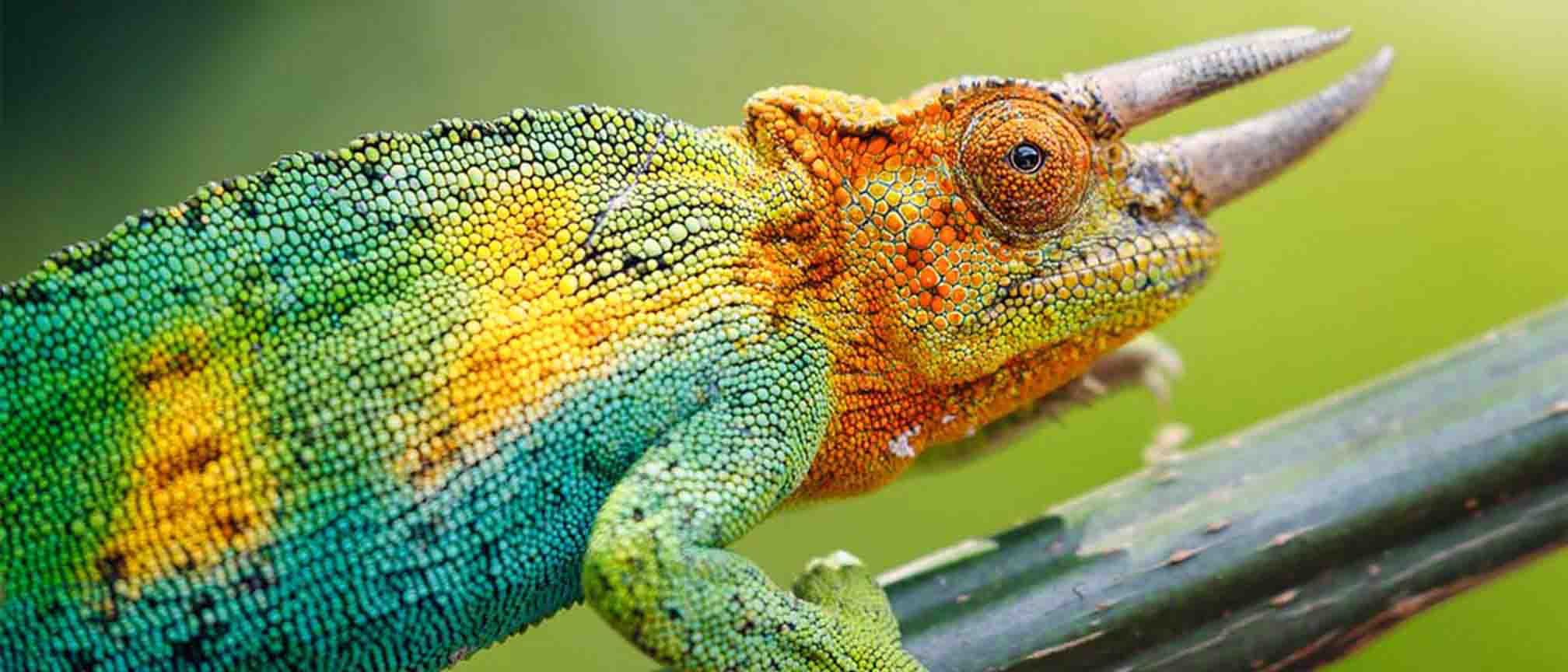
The Rwenzori Mountains also support interesting smaller animals, including chameleons, frogs, insects, and other organisms adapted to the mountain’s varied habitats.
The three-horned chameleons associated with the Rwenzori region are particularly fascinating because of their unusual appearance.
These reptiles often move slowly through vegetation, relying on camouflage to avoid predators.
Mountain guides familiar with the local environment may help visitors spot them in suitable habitats.
However, travelers should avoid handling wild animals unnecessarily.
Observing wildlife quietly and maintaining respectful distances helps protect both visitors and the animals.
Choosing the right hiking season can significantly influence the overall trekking experience.
The Rwenzori Mountains receive considerable rainfall throughout the year because of their location and the influence of moist air moving across the region.
Even during relatively dry periods, visitors should prepare for rain, mist, muddy trails, and sudden weather changes.
The two periods generally considered more favorable for hiking are December to February and June to August.
These months often experience comparatively lower rainfall, although dry conditions are never guaranteed.
The wetter periods commonly include March to May and September to November. Weather patterns can vary from year to year, so long-term seasonal averages are not reliable short-term forecasts.
Rwenzori National Park
December, January, and February are popular months for travelers interested in mountain trekking.
These months often provide relatively favorable weather conditions compared with the main rainy periods.
Hikers may experience clearer mountain views, less persistent rainfall, and somewhat improved trail conditions.
However, the mountain can still receive rain or snow, particularly at higher elevations.
Visitors planning a summit expedition during this period should carry full waterproof equipment and prepare for freezing conditions near the highest peaks.
Because the period also overlaps with holiday travel, advance arrangements are advisable.
March, April, and May are generally wetter months in the Rwenzori region.
Rainfall may make mountain trails increasingly slippery, while streams and rivers can become more difficult to cross.
Boggy areas may also become particularly challenging.
The higher mountain sections can experience persistent cloud cover, reducing visibility and complicating navigation.
Although trekking may remain possible on selected routes, visitors should expect more demanding conditions.
Travelers with limited mountain experience may prefer shorter guided hikes or choose a comparatively drier period.
Mountain guides should determine whether planned routes are safe and accessible.
June, July, and August form another popular trekking period.
These months often provide some of the more favorable conditions for mountain adventures.
Lower average rainfall can make certain trails more manageable, although sections of the Rwenzori Mountains remain permanently wet.
Clearer mornings may offer excellent views of the surrounding peaks.
The period also coincides with a popular season for Uganda wildlife safaris and gorilla trekking.
Consequently, travelers can organize a combined holiday that includes Rwenzori hiking, Queen Elizabeth National Park, and Bwindi Impenetrable National Park.
Early reservations are recommended for mountain trekking services and high-demand tourism activities.
September, October, and November generally bring wetter conditions to the mountain environment.
Rainfall can make trekking physically demanding, particularly along steep and muddy trails.
Visibility may also become limited by heavy cloud cover and mist.
However, the vegetation remains lush, and the mountain landscape can be exceptionally atmospheric.
Some experienced hikers enjoy the quieter atmosphere during these periods.
Visitors should nevertheless remain flexible because weather-related changes may affect their itineraries.
| Month | General conditions | Hiking suitability |
|---|---|---|
| January | Comparatively drier | Very good |
| February | Comparatively drier | Very good |
| March | Rainfall increasing | Variable |
| April | Often very wet | Challenging |
| May | Often wet | Challenging |
| June | Generally improving | Good |
| July | Relatively drier | Very good |
| August | Relatively favorable | Very good |
| September | Rainfall increasing | Variable |
| October | Often wet | Challenging |
| November | Often wet | Challenging |
| December | Generally improving | Good |
These are broad seasonal expectations, not weather guarantees. Trekking safety depends on actual conditions and local operator guidance.
Mountain weather changes considerably with elevation.
Travelers arriving in Kasese may experience warm temperatures, while the upper slopes of Mount Stanley can be bitterly cold.
The difference is particularly noticeable during multi-day expeditions.
At lower elevations, hikers may begin their journey wearing relatively light clothing. However, waterproof jackets and warm layers soon become necessary as the route climbs.
Higher in the mountains, mist and wind can make temperatures feel colder than the thermometer suggests.
Rainfall may occur unexpectedly, and wet clothing increases the risk of becoming dangerously cold.
Near the high alpine camps, temperatures can fall below freezing.
The answer depends on altitude, time of day, wind, cloud cover, and season.
The lower mountain forests are generally warmer than the alpine regions.
At high camps, nighttime temperatures can fall below freezing, while the exposed summit region may experience snow, ice, and strong winds.
Travelers should not assume that equatorial geography means consistently warm weather.
Proper insulation, waterproof clothing, gloves, and warm sleeping equipment are essential for high-altitude expeditions.
The Rwenzori Mountains act as a natural barrier to moist air moving across the region.
As air rises over the slopes, it cools, allowing moisture to condense into clouds and precipitation.
This process contributes to the mountain’s extensive forests, wetlands, rivers, and waterfalls.
The same conditions that create the extraordinary landscapes also make trekking more demanding.
Therefore, waterproof equipment and flexible schedules are important throughout the year.
The cost of hiking on Mount Rwenzori depends on several factors, including the selected route, expedition duration, number of travelers, equipment requirements, guiding arrangements, and transportation.
Short nature walks generally cost considerably less than multi-day mountain expeditions.
A full Margherita Peak climbing package involves several days of guide and porter services, accommodation, food, park fees, and potentially technical equipment.
For example, published 2026 Kilembe Trail rates from Rwenzori Trekking Services list an eight-day Margherita Peak package at approximately US$1,695 per person, comprising hiking fees and the stated park fees. Other Kilembe packages vary according to duration and route.
rwenzoritrekking.com+1
Published Central Circuit packages may have different inclusions, particularly concerning equipment rental and transport.
Rwenzori Mountaineering Services
| Package | Published reference price per person |
|---|---|
| 3-day Central Circuit nature trek | From US$510 |
| 6-day Central Circuit | From US$1,200 |
| 7-day Central Circuit with Margherita | From US$1,365 |
| 8-day Kilembe Margherita expedition | Around US$1,695 |
| 9-day Kilembe high-peaks trek | Around US$1,890 |
These are operator-published reference rates, not Lena Tours quotations. They may exclude transport, pre/post-trek accommodation, optional equipment, insurance, or other services. Prices and inclusions must be reconfirmed before booking.
Expedition duration is an important pricing factor because longer mountain itineraries require additional meals, accommodation nights, guiding services, and porter support.
The chosen trail can also influence cost because different mountain operators use their own infrastructure and pricing structures.
Technical summit expeditions may involve additional equipment and specialist supervision.
Transport arrangements also affect the final package price. International travelers may require airport transfers, accommodation in Entebbe or Kasese, and private transport to the trekking base.
The size of the group can influence shared transport costs and some logistical expenses, although mountain operating costs may remain largely dependent on the number of participants.
Special requirements, such as additional personal porters or extended acclimatization schedules, can also affect the quotation.
At Lena Tours, a personalized package should clearly explain the services included, excluded expenses, payment arrangements, and applicable booking conditions.
A full-service multi-day mountain package commonly includes authorized mountain guides, necessary porter support, meals during the trek, accommodation in mountain huts or camps, and the applicable park charges.
Some operators include technical climbing equipment in selected packages, while others charge separately for rental.
Travelers must check the written itinerary rather than assume that all equipment is automatically provided.
International flights, travel insurance, visa fees, personal hiking clothing, certain equipment rentals, accommodation before and after the mountain expedition, alcoholic beverages, personal purchases, and tips may be excluded.
Special evacuation cover and technical mountaineering insurance should be reviewed carefully before departure.
Because a Rwenzori expedition involves remote terrain, travelers should consider more than the advertised base price when comparing packages.
Accommodation on the Rwenzori Mountains differs significantly from the comfortable safari lodges available in other Ugandan national parks.
Most multi-day trekking expeditions use mountain huts or designated camps along the established routes.
These facilities provide basic shelter in remote environments where construction, maintenance, and supply transport are difficult.
Hikers should expect a practical mountain experience rather than luxury hotel accommodation.
Commonly used Central Circuit huts include Nyabitaba, John Matte, Bujuku, Elena, Kitandara, and Guy Yeoman.
The huts are positioned along established trekking sections, allowing participants to break their journey into manageable stages.
Facilities are usually basic, with shared sleeping arrangements and limited amenities.
Depending on the hut and operating arrangements, visitors may need to bring sleeping bags, sleeping mats, and other personal items.
Electricity, private bathrooms, hot showers, and mobile connectivity should not be expected throughout the expedition.
Because infrastructure can change, travelers should confirm the condition and facilities of each planned overnight stop before departure.

The Kilembe Trail uses a separate network of mountain camps.
Depending on the expedition, these may include Sine Camp, Mutinda Camp, Bugata Camp, Hunwick’s Camp, Margherita Camp, and Kiharo Camp.
The camps provide basic shelter and support for trekkers moving between the lower forest and higher mountain environments.
Accommodation standards vary between locations.
Some facilities consist of simple mountain huts with sleeping platforms, while others offer slightly different layouts.
Visitors should pack for cold nights, limited facilities, and wet conditions.
The simplicity of mountain accommodation forms part of the experience.
After a demanding day of hiking, a dry sleeping area and warm meal can feel particularly rewarding.
For travelers who prefer comfortable accommodation before or after their expedition, lodges and hotels are available in the wider Kasese region and near the mountain trailheads.
Options include accommodation near Nyakalengija, Kilembe, and Kasese town.
Some travelers also choose lodges around Queen Elizabeth National Park, especially when combining mountain hiking with a wildlife safari.
Spending at least one night near the trailhead before departure is often beneficial.
It allows time to inspect equipment, meet the mountain guides, discuss the route, and begin the expedition without rushing.
After completing the trek, an additional night can provide valuable recovery time before long-distance travel.

Packing appropriate equipment is essential for a successful Rwenzori mountain adventure.
The combination of heavy rainfall, cold temperatures, muddy trails, and technical high-altitude terrain requires thoughtful preparation.
Visitors should choose equipment according to their itinerary rather than relying on a generic safari packing list.
A short forest walk requires different clothing and gear from a multi-day Margherita Peak expedition.
Rwenzori hiking packing checklist
A technical summit expedition may require additional mountaineering equipment, including crampons, climbing harnesses, helmets, mountaineering boots, ice axes, ropes, and other protective gear.
The exact requirements depend on the approved route and current mountain conditions.
Some specialized equipment may be available for rental through the operating mountain company.
However, visitors should confirm availability, size, suitability, and rental charges well before arrival.
Climbers must never assume that ordinary hiking boots are suitable for every section of the summit route.
Qualified guides should inspect all technical equipment before the ascent.
The Rwenzori Mountains are exceptionally wet.
Rain can fall unexpectedly, while muddy trails and wet vegetation frequently soak clothing and footwear.
A reliable waterproof jacket helps maintain warmth and comfort.
Waterproof pack liners or dry bags protect spare clothing, electronic equipment, sleeping bags, and essential personal items.
Trekkers should pack extra socks because prolonged exposure to moisture can cause blisters and foot discomfort.
Keeping dry clothing available for the evening is particularly important at colder mountain camps.
Physical preparation can make a significant difference to the comfort and enjoyment of a mountain expedition.
The level of training required depends on the selected itinerary.
A short nature walk may require only ordinary walking fitness, while a seven- or eight-day mountain expedition demands considerably more stamina.
Climbing Margherita Peak requires additional preparation because the summit attempt may involve long hours of physical effort, high altitude, technical terrain, and extreme weather.
For a multi-day trek, participants should be comfortable walking for several hours over uneven ground.
The ability to climb steep hills, carry a daypack, and maintain a steady pace is especially useful.
Good cardiovascular fitness helps trekkers cope with prolonged activity.
Strong leg muscles support ascending and descending steep mountain slopes.
Balance and coordination are also important because the trails frequently contain slippery rocks, exposed roots, and muddy ground.
However, physical fitness alone does not protect against altitude sickness.
Even extremely fit athletes can develop altitude-related illness.
Travelers planning a demanding expedition may begin structured training several months before departure.
During the first month, the focus can be on establishing a consistent walking routine.
Regular brisk walks, moderate hill climbs, and low-impact cardiovascular exercises help build endurance.
In the second month, hikers can gradually increase the duration and elevation gain of their walks.
Strength exercises for the legs and core may improve stability and reduce fatigue.
During the third month, training can include longer hikes over uneven terrain while carrying a daypack similar to the one used during the expedition.
Participants should gradually build their workload rather than suddenly increasing training intensity.
Adequate rest remains essential.
Travelers with relevant medical conditions should consult a qualified healthcare professional before undertaking strenuous mountain activity.
Mental resilience also contributes to a successful trekking experience.
The Rwenzori Mountains can be physically demanding, particularly when rain continues for several hours or trails become muddy.
Trekkers may experience fatigue, discomfort, and frustration during difficult sections.
Approaching the expedition with realistic expectations helps maintain motivation.
Participants should understand that progress may be slower than expected and that summit attempts may be abandoned for safety reasons.
A positive attitude, patience, and willingness to follow guide instructions can make the adventure more enjoyable.
High altitude is one of the most important health considerations during a Rwenzori summit expedition.
As travelers climb higher, atmospheric pressure decreases and less oxygen becomes available with each breath.
The body requires time to adapt.
If elevation increases too quickly, some people may develop acute mountain sickness.
Symptoms can include headache, nausea, dizziness, fatigue, poor appetite, and difficulty sleeping.
More serious altitude-related illness can affect the brain or lungs and may become life-threatening.
Appropriate acclimatization is essential.
Mountain expeditions should allow a sensible ascent profile and sufficient opportunities to assess how participants respond to increasing elevation.
Hikers should maintain a manageable pace, eat regularly, and drink enough fluids.
However, drinking excessive water does not prevent altitude sickness.
Symptoms should be reported promptly to the guides.
Travelers should never hide headaches or other concerning symptoms simply because they want to reach the summit.
If symptoms worsen, the guide may recommend stopping the ascent or descending.
Serious symptoms require urgent descent and medical evaluation.
A person who develops worsening altitude symptoms should not continue climbing to a higher sleeping elevation.
Severe headache, repeated vomiting, confusion, difficulty walking normally, or breathlessness at rest can indicate a dangerous condition.
These symptoms require immediate attention.
A guide may need to organize emergency descent and evacuation.
Travelers should discuss altitude illness prevention, their medical history, and possible medication with a qualified healthcare professional before departure.
Acetazolamide may be appropriate in some circumstances, but it should not replace a safe acclimatization schedule or medical assessment.
Cold exposure, hypothermia, dehydration, blisters, falls, and physical exhaustion are additional concerns during mountain expeditions.
Wet conditions can increase the likelihood of cold-related problems.
Travelers should protect themselves with appropriate clothing, maintain regular meals, and communicate openly with their guides.
A well-organized expedition should include first-aid arrangements, emergency communication procedures, and an evacuation plan.
Specialized travel insurance should cover the intended altitude and technical activities.
Hiking on Mount Rwenzori can be a rewarding adventure when participants select appropriate routes, prepare carefully, and follow experienced mountain guides.
However, no mountain expedition is completely risk-free.
The terrain includes steep slopes, slippery rocks, exposed areas, remote valleys, and rapidly changing weather.
High-altitude expeditions introduce additional concerns associated with cold, altitude illness, and technical climbing.
Glacier retreat can also create changing route conditions, including unstable surfaces and exposed rock.
Visitors should therefore use authorized mountain operators and follow current guidance from the Uganda Wildlife Authority and qualified guides.
Travelers should choose routes appropriate to their experience and fitness, use reliable equipment, communicate medical concerns, and follow the decisions of their mountain guides.
Hiking groups should avoid leaving established routes without authorization.
Participants should also respect planned turnaround times during summit attempts.
Reaching the top is never more important than returning safely.
Before booking, visitors should confirm the operator’s emergency procedures, first-aid arrangements, evacuation options, and technical guiding qualifications.
Visitors should not plan independent, unsupported expeditions through the protected high mountain routes.
Established trekking services operate with local guides and support teams who understand the terrain, weather patterns, and logistical requirements.
Local guides help organize mountain movements, monitor conditions, identify hazards, and coordinate emergency responses.
Porters transport essential supplies and equipment, allowing participants to focus on hiking.
Using experienced local professionals improves organization and supports employment in surrounding communities.
Mountain guides and porters are essential to the successful operation of many Rwenzori trekking expeditions.
They provide valuable local knowledge and logistical support in an environment where transportation and communication can be difficult.
Guides are responsible for route planning, mountain navigation, group coordination, and many safety-related decisions.
They help trekkers understand the terrain and adapt their walking pace to conditions.
Porters transport food, equipment, and other necessary supplies between mountain camps.
Their work allows the group to access remote areas without requiring individual travelers to carry every item.
Mountain cooks and camp support staff may also contribute to the expedition.
Local guides often have extensive experience of the mountain’s vegetation, weather patterns, and established routes.
They may explain the cultural significance of particular landscapes while introducing visitors to the region’s wildlife and ecosystems.
Their expertise becomes particularly important when weather conditions deteriorate or the trail becomes difficult to follow.
During technical climbing, properly qualified personnel are essential for equipment management and safe movement.
Responsible tourism includes fair treatment of the people supporting trekking expeditions.
Porters should receive appropriate compensation, suitable working conditions, and reasonable load limits.
They should also have access to suitable clothing, shelter, food, and medical support.
Visitors can support ethical trekking by choosing operators that demonstrate responsible employment practices.
Tips may provide additional appreciation for good service, but they should not replace fair wages.
At Lena Tours, supporting local communities and responsible tourism partnerships should remain part of the overall safari experience.
The glaciers of the Rwenzori Mountains are among the region’s most remarkable natural features. Their presence near the equator makes them especially fascinating to travelers, geographers, and scientists.
For generations, these ice-covered summits have attracted the attention of explorers and researchers. They represent an extraordinary contrast between tropical geography and high-altitude alpine conditions.
However, the glaciers are retreating as climate conditions change.
Scientific research has documented the dramatic reduction of glacier coverage in the Rwenzori Mountains over time. Changes in temperature, precipitation, and the balance between ice accumulation and melting influence the remaining glaciers.
Wiley Online Library
The retreat of the ice has important consequences for mountain ecosystems, research, and tourism.
As glaciers shrink, formerly ice-covered sections may become exposed rock.
Some routes may therefore change in difficulty and require different mountaineering techniques.
Rockfall hazards, unstable surfaces, and changes in glacier access can also affect climbing conditions.
Consequently, a route that was used successfully in previous years may not remain appropriate indefinitely.
Climbers should rely on updated assessments from qualified mountain guides.
Historical route descriptions, photographs, and published travel blogs cannot substitute for current technical information.
The Rwenzori Mountains provide important opportunities to study how tropical alpine environments respond to climate change.
Their ecosystems contain specialized plants, high-altitude wetlands, lakes, and habitats influenced by unusual climatic conditions.
Protecting these environments helps preserve biodiversity and supports scientific research.
Responsible tourism can contribute to conservation through appropriate park fees, local employment, and environmental education.
Visitors can reduce their environmental footprint by avoiding litter, minimizing unnecessary waste, and respecting fragile vegetation.
The opportunity to observe this changing mountain landscape also encourages travelers to appreciate the importance of protecting natural environments for future generations.
The Rwenzori Mountains are not only a destination for adventure tourism. They are also closely connected to the history, traditions, livelihoods, and cultural identity of surrounding communities.
Communities living around the mountain slopes maintain strong relationships with the landscape.
Agriculture, local trade, tourism, and traditional knowledge contribute to everyday life in the region.
Visitors who spend time near the trailheads can learn about community history, farming practices, traditional foods, and the cultural importance of the mountains.
The Bakonzo are among the communities historically associated with the Rwenzori mountain region.
Their cultural traditions, language, agricultural practices, and relationship with the mountain landscape form an important part of the area’s heritage.
For many local residents, the mountains hold spiritual, cultural, and historical meaning beyond their value as a tourist destination.
Travelers interested in cultural experiences can arrange respectful community visits through appropriate local hosts.
Such activities may include guided village walks, traditional storytelling, demonstrations of local crafts, and discussions about agricultural life.
Visitors should respect community customs and request permission before photographing individuals or private property.
The lower mountain slopes provide opportunities for guided community walks.
These experiences can introduce travelers to villages, cultivated landscapes, local markets, and traditional ways of life.
Community guides may explain how residents grow crops, manage natural resources, and adapt to the mountain environment.
Visitors may also learn about the economic importance of tourism.
Mountain guiding, porter services, accommodation, transport, and local food supplies create employment opportunities for surrounding communities.
Choosing community-based activities can help distribute tourism benefits more widely.
Food is an important part of Uganda’s cultural heritage.
Travelers visiting western Uganda may have opportunities to enjoy local dishes prepared from ingredients grown in the region.
Meals may include matooke, beans, groundnuts, vegetables, cassava, sweet potatoes, and other regional foods.
Traditional cooking experiences can provide an opportunity to learn about everyday life and local food customs.
After several days of mountain trekking, visitors may particularly appreciate a freshly prepared meal at a comfortable lodge.
Most international travelers begin their Uganda journey at Entebbe International Airport.
From Entebbe, visitors can travel toward the Rwenzori region by road.
A private safari vehicle is a convenient choice because it allows travelers to organize stops, transport hiking equipment, and continue to other destinations after completing the trek.
Kasese serves as a major gateway to the Rwenzori Mountains.
Travelers can reach the town through western Uganda’s road network.
The journey typically takes much of a day, depending on the selected route, traffic, weather, and road conditions.
Possible routes pass through or near Fort Portal and other scenic areas of western Uganda.
Along the way, travelers may enjoy views of agricultural landscapes, villages, rolling hills, and sections of the Albertine Rift region.
Travelers should arrange transport sufficiently early to avoid arriving at the mountain trailhead late in the day.
From Kasese, visitors continue to their chosen trekking departure point.
The Central Circuit generally begins at Nyakalengija, while the Kilembe Trail starts near Kilembe.
Transfer arrangements depend on the operator, chosen accommodation, and exact hiking program.
A guided mountain expedition normally begins with equipment checks, registration procedures, and a briefing.
Therefore, spending a night close to the trekking departure point can simplify preparations.
Travelers may be able to arrange domestic aviation services to airstrips serving the wider Kasese region, subject to scheduled or charter flight availability.
However, air services and operational arrangements can change.
A flight does not take visitors directly to the high mountain camps. Ground transfers and trekking are still required.
Travelers considering domestic flights should confirm current schedules, baggage allowances, transfer arrangements, and operating conditions before booking.
One of the greatest advantages of hiking on Mount Rwenzori is the opportunity to combine the expedition with other famous Uganda attractions.
The mountains are located within western Uganda, where several national parks and wildlife destinations offer memorable experiences.
A well-organized itinerary can combine mountain trekking, wildlife viewing, chimpanzee tracking, gorilla trekking, and cultural activities.
Queen Elizabeth National Park is an excellent addition to a Rwenzori hiking adventure.
The park is known for its savannah landscapes, wildlife, volcanic crater scenery, and the famous Kazinga Channel.
Visitors may enjoy guided game drives in search of elephants, buffaloes, antelopes, and lions.
Wildlife sightings depend on conditions and animal movements.
A boat safari along the Kazinga Channel provides opportunities to observe hippos, waterbirds, and animals visiting the water’s edge.
After several days of mountain hiking, a wildlife safari provides a contrasting experience.
Instead of walking through high-altitude valleys, travelers can explore Uganda’s savannah landscapes from a safari vehicle or boat.
Kibale National Park is one of Uganda’s best-known destinations for chimpanzee tracking.
The forest supports a variety of primates, birds, and other wildlife.
Visitors can join authorized chimpanzee tracking activities, subject to permit availability and applicable park regulations.
The experience offers an opportunity to observe chimpanzees in their natural habitat under the guidance of trained trackers.
Combining Kibale with Rwenzori provides an interesting contrast between tropical forest wildlife and alpine adventure.
Travelers should allow sufficient time for transfers and rest between strenuous activities.
Bwindi Impenetrable National Park is internationally recognized for mountain gorilla trekking.
This experience allows visitors to join guided forest excursions in search of habituated gorilla families.
Gorilla trekking involves walking through dense vegetation and hilly terrain, so it can also require considerable physical effort.
For travelers planning both Rwenzori hiking and gorilla trekking, careful scheduling is important.
A rest day after a demanding mountain expedition may help participants recover before undertaking another challenging activity.
Gorilla permits should be arranged in advance through authorized channels, and availability must be confirmed for the intended travel dates.
Lake Bunyonyi offers a relaxing conclusion to a demanding adventure holiday.
Located in southwestern Uganda, the lake is surrounded by beautiful green hills, islands, and attractive scenery.
Travelers can enjoy peaceful accommodation, boat excursions, birdwatching, and opportunities to relax.
After the cold mountain environment of the Rwenzori Mountains, spending time beside Lake Bunyonyi can provide a welcome change of pace.
This combination is particularly appealing to travelers who want both adventure and relaxation during their Uganda holiday.
This itinerary combines an eight-day mountain expedition with additional sightseeing and wildlife experiences.
It is designed for travelers who want to experience the Rwenzori Mountains while also enjoying one of Uganda’s major wildlife destinations.
| Day | Destination | Main activities |
|---|---|---|
| 1 | Entebbe | Airport arrival and overnight |
| 2 | Kasese | Scenic road transfer and trekking briefing |
| 3 | Rwenzori โ Kilembe | Hike to Sine Camp |
| 4 | Rwenzori | Hike to Mutinda Camp |
| 5 | Rwenzori | Hike to Bugata Camp |
| 6 | Rwenzori | Hike to Hunwick’s Camp |
| 7 | Rwenzori | Hike to Margherita Camp |
| 8 | Mount Stanley | Margherita Peak summit attempt |
| 9 | Rwenzori | Descend toward Kiharo Camp |
| 10 | Kasese | Complete descent and rest |
| 11 | Queen Elizabeth National Park | Game drive and Kazinga Channel boat safari |
| 12 | Entebbe | Return transfer and departure, subject to flight timing |
The safari begins with arrival at Entebbe International Airport, where travelers meet their representative and transfer to accommodation.
Depending on arrival time, guests may relax or enjoy optional sightseeing.
The following day, the journey continues to the Rwenzori region.
The drive introduces visitors to Uganda’s varied landscapes, local communities, and beautiful countryside.
On arrival near Kasese, travelers meet the mountain team, review their trekking schedule, and prepare their equipment.
The next eight days focus on exploring the mountain landscape through the selected Kilembe itinerary.
Travelers move through tropical forest, bamboo vegetation, giant heather, and Afro-alpine environments.
Each day introduces different scenery and physical challenges.
The higher sections of the expedition offer spectacular mountain views and the opportunity for qualified climbers to attempt Margherita Peak.
Throughout the journey, experienced mountain guides coordinate the trekking program and assess safety conditions.
After completing the descent, guests return to Kasese for rest and recovery.
After the mountain expedition, travelers continue to Queen Elizabeth National Park.
The day’s activities can include a guided game drive and a boat cruise along the Kazinga Channel, depending on arrival time and the confirmed activity schedule.
The park provides opportunities to observe savannah wildlife, birds, and beautiful landscapes.
An overnight stay at a safari lodge allows visitors to relax after their demanding mountain adventure.
After breakfast, the safari continues toward Entebbe.
Depending on the confirmed departure arrangements, guests transfer to the international airport or spend an additional night near Entebbe.
Travelers with early flights should consider extending the itinerary rather than relying on a same-day long-distance road transfer.
This proposed program can be adjusted to include more recovery time, extra wildlife activities, or additional national parks.
Responsible tourism is important for protecting the extraordinary natural environment of Rwenzori Mountains National Park.
Mountain ecosystems can be fragile because vegetation grows slowly under cold conditions and heavy rainfall can accelerate erosion.
Visitors have a responsibility to minimize their impact.
Remaining on designated trails helps reduce damage to vegetation and fragile mountain soils.
Walking outside established paths can disturb plant communities and contribute to erosion.
This is particularly important in the Afro-alpine environment, where unusual plants grow under demanding conditions.
Travelers should carry all non-biodegradable waste out of the mountain environment.
Plastic packaging, bottles, and other rubbish can damage ecosystems and spoil the scenery.
Reusable water bottles, carefully planned food packaging, and organized waste collection can reduce unnecessary litter.
Wild animals should never be fed, chased, handled unnecessarily, or disturbed for photographs.
Visitors should follow guide instructions when observing animals.
Maintaining a respectful distance helps protect wildlife and reduces unnecessary risks.
Travelers should treat local residents with courtesy and respect.
Community visits should be organized with appropriate permission.
Supporting local guides, porters, artisans, and accommodation providers helps strengthen the economic benefits of tourism.
Freshwater ecosystems play an important role in the Rwenzori environment.
Hikers should avoid contaminating streams or lakes with soap, chemicals, or waste.
Camp teams should follow appropriate sanitation and environmental procedures.
Protecting these resources benefits wildlife, surrounding communities, and future generations of visitors.
The Rwenzori Mountains are located in western Uganda along the border with the Democratic Republic of Congo. The main Ugandan trekking gateways include Kasese, Nyakalengija, and Kilembe.
The highest point of the Rwenzori Mountains is Margherita Peak on Mount Stanley, approximately 5,109 meters above sea level. It is Uganda’s highest summit and the third-highest mountain summit in Africa.
The duration depends on the selected route. Short nature walks may take a few hours, while scenic multi-day hikes can last two to six days. Full Margherita Peak expeditions commonly require approximately seven to nine days or longer.
December to February and June to August are generally more favorable because they tend to receive comparatively less rainfall. However, wet weather can occur throughout the year.
Yes, beginners can enjoy selected short nature walks and introductory hiking experiences. However, the full mountain circuits are physically demanding, and technical summit climbing requires advanced preparation and qualified supervision.
Yes. Margherita Peak is a serious mountaineering objective involving high altitude, steep terrain, unpredictable weather, and potentially technical rock and glacier travel.
Yes, the highest parts of the Rwenzori Mountains retain glaciers and ice-covered areas. However, the glaciers have retreated substantially over time, and their condition continues to change.
Yes. Snow and freezing conditions can occur at the highest elevations, despite the mountain range’s location near the equator.
Costs vary according to the route, duration, operator, included equipment, park charges, and transportation. Published 2026 operator prices for a standard eight-day Kilembe Margherita expedition are around US$1,695 per person before separately arranged travel services.
Visitors planning established multi-day mountain expeditions should book through authorized trekking arrangements with experienced mountain guides. Technical summit climbing requires suitably qualified supervision.
Waterproof hiking boots, moisture-managing clothing, insulating layers, waterproof jackets, gloves, and warm headwear are important. Technical summit climbers also require equipment appropriate to the current route conditions.
Yes. Established trekking routes contain basic mountain huts and camps. Facilities vary, and travelers should confirm sleeping arrangements and required equipment before departure.
Yes. Several scenic hiking programs explore mountain forests, valleys, wetlands, and alpine landscapes without involving the technical summit ascent.
Yes. Solo travelers can join organized mountain expeditions or arrange private guiding services. Traveling independently does not mean hiking unsupported through remote mountain terrain.
Yes. A Uganda safari can combine mountain hiking with gorilla trekking in Bwindi Impenetrable National Park, provided sufficient time is allowed for transport, permit arrangements, and physical recovery.
The mountain forests support several primate species, forest birds, reptiles, and other wildlife. Sightings are unpredictable, so the destination is best approached primarily as a mountain and nature experience.
No. Mount Kilimanjaro is higher, reaching approximately 5,895 meters. Margherita Peak on Mount Stanley reaches approximately 5,109 meters.
Some expeditions operate during wetter months, but muddy trails, heavy rainfall, reduced visibility, and changing river conditions can make hiking significantly more difficult. Route suitability must be confirmed locally.
Coverage may be unreliable or absent in remote valleys and high mountain camps. Travelers should not depend on ordinary mobile phones as their only emergency communication method.
Lena Tours can help organize a broader Uganda travel itinerary that includes accommodation, road transfers, mountain trekking arrangements with specialist operators, wildlife safaris, and additional tourism activities. A tailored program also helps travelers coordinate their route, trekking duration, and onward travel plans.
A successful Rwenzori hiking holiday begins with careful planning.
Travelers need to consider the right mountain route, suitable accommodation, transportation, equipment, physical preparation, and the number of days available.
At Lena Tours โ Unmatched African Experience, our aim is to help visitors explore Uganda through organized, memorable, and responsible travel experiences.
Whether you are interested in a short nature walk, an extended Rwenzori trekking expedition, or a combined wildlife and mountain safari, your journey can be tailored to your travel interests and available time.
We can help coordinate your Uganda itinerary around the mountain experience while working with the relevant specialist trekking providers.
Travelers interested in combining several destinations can consider experiences such as Queen Elizabeth National Park wildlife safaris, chimpanzee tracking in Kibale, mountain gorilla trekking in Bwindi, or relaxing visits to Lake Bunyonyi.
A personalized itinerary allows sufficient time for the mountain expedition while accommodating other attractions throughout Uganda.
The most important goal is to create an experience that balances adventure, safety, comfort, and appreciation for the country’s remarkable natural heritage.
Hiking on Mount Rwenzori is much more than a physical challenge. It is an extraordinary opportunity to experience one of Africa’s most remarkable mountain landscapes.
From the lush tropical forests of the lower slopes to the giant lobelias of the Afro-alpine valleys and the dramatic high peaks of Mount Stanley, every stage reveals a different side of Uganda’s natural beauty.
Travelers who explore the mountains encounter an environment shaped by rainfall, altitude, geological forces, and unusual ecological conditions.
The landscape offers opportunities for photography, birdwatching, cultural discovery, mountain trekking, and technical climbing.
For experienced mountaineers, attempting Margherita Peak represents a memorable challenge. Meanwhile, travelers who prefer shorter adventures can appreciate the mountain’s forests, waterfalls, and scenic valleys without reaching the highest summit.
The Rwenzori Mountains also provide an ideal addition to a wider Uganda safari.
Visitors can combine mountain hiking with wildlife viewing in Queen Elizabeth National Park, chimpanzee tracking in Kibale, and gorilla trekking in Bwindi Impenetrable National Park.
With thoughtful preparation, suitable equipment, experienced mountain guides, and a flexible itinerary, visitors can discover the extraordinary appeal of Uganda’s Mountains of the Moon.
Plan your Rwenzori Mountains hiking adventure with Lena Tours and discover the landscapes, wildlife, and natural wonders that make Uganda an unforgettable African travel destination.
Lena Tours
Unmatched African Experience
Explore Uganda’s mountains, wildlife, primates, and spectacular landscapes with a customized safari itinerary.
Website: www.lenatours.africa
Complete the enquiry form below and our safari specialists will prepare a personalised itinerary and quotation for your journey.
You cannot copy content of this page