
Gorilla Festival in Uganda 2026: Gorilla Trekking, Conservation, Bwindi Sectors and 5-Day Safari Itineraries with Lena Tours
Uganda is one of the most remarkable destinations in Africa for travelers who dream of seeing mountain gorillas in their natural habitat. In 2026, the country once again placed these great apes at the center of conservation and tourism through activities surrounding World Gorilla Day, observed globally on 24 September. Uganda’s 2026 celebrations also included community conservation programs around Bwindi, while the main national celebration was scheduled for 1 October 2026 following an adjustment to the official program. Activities around the Ruhija area included Tree planting, Community clean-ups, Conservation discussions, Health outreach, gorilla trekking, and programs highlighting the connection between protecting wildlife and improving local livelihoods.
For travelers, the Gorilla Festival in Uganda 2026 is more than a celebration. It provides an opportunity to understand why mountain gorillas matter, how tourism supports conservation, and why communities surrounding Bwindi Impenetrable National Park and Mgahinga Gorilla National Park remain important partners in protecting these endangered primates. Visitors can combine the spirit of the festival with an unforgettable gorilla trekking safari organized by Lena Tours.
Understanding the Gorilla Festival in Uganda 2026
The term Gorilla Festival in Uganda is often used by travelers and tourism businesses when referring to celebrations, conservation activities, community events, and tourism experiences connected with World Gorilla Day. The internationally recognized date is 24 September, while Uganda organized several surrounding activities in 2026. Uganda Wildlife Authority reported on 23 September that the country was joining the world in marking World Gorilla Day and highlighted the long history of mountain gorilla conservation in the country.
In 2026, conservation activities around Bwindi demonstrated that protecting gorillas involves much more than guarding animals inside a national park. Communities planted trees, participated in environmental clean-ups, attended conservation discussions, and took part in activities intended to reduce pressure on the forest. In Mpungu Sub-county near the Ruhija sector, community programs also included a medical camp and other public activities.
These activities carry an important message. Mountain gorillas cannot survive without healthy forests. At the same time, forests bordering densely populated communities require cooperation between conservation organizations, tourism businesses, government authorities, local residents, guides, lodge employees, farmers, schools, artisans, and visitors.
A traveler taking a gorilla safari therefore participates in something much larger than a wildlife encounter. Tourism creates demand for accommodation, guiding, transport, food, crafts, cultural experiences, porters, conservation staff, and many other services. Responsible travel can consequently support both wildlife protection and rural livelihoods.
Why Uganda Celebrates Mountain Gorillas
Mountain gorillas are among the most recognizable animals on Earth, yet they occupy an extremely small natural range. Uganda Wildlife Authority states that Uganda’s mountain gorillas occur in Bwindi Impenetrable National Park and Mgahinga Gorilla National Park. Bwindi represents a separate mountain gorilla population, while Mgahinga forms part of the wider Virunga ecosystem that stretches across Uganda, Rwanda, and the Democratic Republic of Congo.
Uganda’s latest published national wildlife report cites 459 mountain gorillas in Bwindi from the 2018 census. A new Bwindi census was completed in 2026, but its genetic analysis was still underway when the report was published, so travelers should be cautious about websites claiming a new definitive Bwindi population before the official results are released.
That distinction is important for accurate tourism information. Conservation statistics evolve as researchers complete DNA analysis, compare samples, identify individuals, and determine whether animals were counted more than once. Lena Tours recommends using official Uganda Wildlife Authority figures rather than relying on estimates circulated online.
Gorilla Tourism and Conservation in Uganda
Tourism has become closely connected to Uganda’s mountain gorilla conservation strategy. Gorilla trekking permits generate revenue while visitor spending supports guides, drivers, lodges, restaurants, porters, craft sellers, agricultural suppliers, and businesses operating around the national parks.
Recent reporting during the 2026 World Gorilla Day period highlighted the economic importance of gorilla tourism to Uganda and to communities surrounding Bwindi and Mgahinga.
However, conservation is not simply about income. Mountain gorillas require secure habitat, veterinary monitoring, ranger patrols, scientific research, disease prevention, community cooperation, and careful visitor management. The number of people visiting each habituated gorilla family is controlled, and guests must follow ranger instructions during their encounter.
By maintaining these rules, Uganda attempts to balance tourism opportunities with the long-term welfare of the gorillas.
Why Bwindi Is Central to Gorilla Tourism
Bwindi Impenetrable National Park lies in southwestern Uganda, where steep green hills surround one of Africa’s most biologically diverse forests. The park is famous internationally for mountain gorillas, although it also protects many other species of mammals, birds, butterflies, reptiles, trees, and plants.
The dense forest can look mysterious from the outside. Once travelers enter with their ranger guides, they discover towering trees, tangled vines, giant ferns, streams, narrow trails, and layers of vegetation covering steep valleys and ridges.
Gorilla trekking is Bwindi’s signature activity. Uganda Wildlife Authority explains that treks can take approximately two to seven hours, depending on where the gorillas are located, and visitors normally spend one hour observing a habituated gorilla family once it has been found.
The walking time varies because gorillas are wild animals. They do not remain beside the visitor center waiting for tourists. Trackers study signs left by the group and communicate with ranger teams as they follow the animals through the forest.
One day may involve a relatively short walk. Another can require several hours of climbing and descending through dense vegetation. That uncertainty forms an important part of the experience.
Gorilla Trekking Sectors in Uganda
Bwindi is divided into four principal gorilla trekking sectors: Buhoma, Ruhija, Rushaga, and Nkuringo. Uganda Wildlife Authority also designates the Ntebeko/Muhavura visitor area in Mgahinga Gorilla National Park for trekking the Nyakagezi gorilla group.
Travelers should understand these sectors before booking accommodation because Bwindi is large, mountainous, and slow to cross by road. A permit allocated to one entry point should normally be matched with a lodge close to that same sector.
1. Buhoma Sector
Buhoma is located on the northern side of Bwindi Impenetrable National Park and has a long history in Uganda’s gorilla tourism industry. It was the area from which Uganda’s early organized gorilla trekking experiences developed, and today it remains one of the best-known gateways to Bwindi.
The scenery around Buhoma combines thick rainforest with cultivated hillsides and small communities. Lodges range from relatively simple accommodation to high-end properties overlooking the forest.
Travelers often choose Buhoma when approaching Bwindi through the Ishasha area of Queen Elizabeth National Park. Uganda Wildlife Authority notes that Bwindi can be reached from Queen Elizabeth’s southern Ishasha sector, providing travelers with an opportunity to combine gorilla trekking with a search for the area’s famous tree-climbing lions.
Buhoma is also attractive for travelers who want additional forest walks, cultural experiences, birding, community visits, or a longer Uganda safari connecting Bwindi with Queen Elizabeth National Park.
What Makes Buhoma Special?
Buhoma combines a well-developed tourism infrastructure with access to beautiful forest scenery. Travelers can find several lodge categories, while the surrounding area provides opportunities to interact with communities and learn more about life beside Bwindi.
The sector works especially well for safari itineraries arriving from Queen Elizabeth National Park or Kihihi.
Travelers flying from Entebbe can also use Kihihi Airstrip before transferring by road to Buhoma. Scheduled and chartered flights significantly reduce travel time compared with driving all the way from Kampala or Entebbe.
2. Ruhija Sector
Ruhija lies in the eastern part of Bwindi and offers a quieter mountain atmosphere. The landscape features rolling hills, elevated viewpoints, misty forest, and excellent birdlife.
For visitors who enjoy combining gorilla trekking with birdwatching or forest walks, Ruhija can be especially appealing.
Uganda Wildlife Authority highlights Ruhija’s Bamboo Trail and Mubwindi Swamp area for birding opportunities, including the possibility of encountering Albertine Rift species.
Ruhija also played a visible role during Uganda’s 2026 World Gorilla Day celebrations. Community activities in Mpungu Sub-county included tree planting, community cleaning, conservation discussions, medical outreach, and other programs emphasizing the relationship between conservation and community wellbeing.
Who Should Choose Ruhija?
Ruhija can suit travelers seeking a quieter stay, bird lovers, photographers, couples, and visitors who prefer mountain scenery.
Because the roads can become challenging after rain, Lena Tours normally recommends an appropriate 4WD safari vehicle for transfers around Bwindi.
The journey itself can be beautiful. Travelers pass steep cultivated hills, villages, valleys, and changing forest landscapes as they approach the park.
3. Rushaga Sector
Rushaga lies in southern Bwindi and has become one of the most important gorilla tourism areas in Uganda. Its location makes it convenient for travelers arriving through Kisoro as well as visitors entering Uganda from Rwanda.
The southern Bwindi landscape is dramatic. Steep hills stretch toward the Virunga volcanoes, while farms, villages, forests, and distant mountains create beautiful photographic opportunities.
Rushaga is particularly significant because it has been associated with Uganda’s Gorilla Habituation Experience, a specialized activity that differs from a standard one-hour gorilla trek. Travelers considering habituation should always confirm current availability, permit prices, operating arrangements, and sector allocation with Lena Tours and Uganda Wildlife Authority before booking.
Why Choose Rushaga?
Rushaga can be a strong choice for travelers who want southern Bwindi scenery, convenient access from Kisoro, or a safari that combines Bwindi with Mgahinga Gorilla National Park.
It is also useful for longer itineraries involving golden monkey trekking, Lake Mutanda, Kisoro, the Virunga landscape, or cross-border East African travel.
The road from Kisoro toward southern Bwindi winds through spectacular highlands. Although distances may appear short on a map, mountain roads mean journey times can be longer than expected.
4. Nkuringo Sector
Nkuringo sits in the southern part of Bwindi and is known for dramatic hills, deep valleys, and far-reaching views toward the Virunga volcanoes on clear days.
The area’s steep terrain can make trekking physically demanding, although the exact difficulty always depends on where the allocated gorilla family has moved.
Travelers who enjoy hiking and mountain landscapes often appreciate Nkuringo.
Uganda Wildlife Authority describes access from Kabale toward Nkuringo as a mountainous journey and recommends a 4WD vehicle. Kisoro also provides an important access point for Nkuringo and Rushaga.
What Makes Nkuringo Attractive?
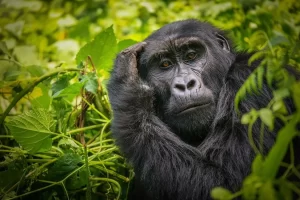
Nkuringo combines gorilla trekking with impressive scenery. It can work particularly well for adventurous travelers who enjoy walking, photography, viewpoints, and smaller mountain lodges.
Its southern location also allows travelers to combine Bwindi with Lake Mutanda and Mgahinga.
5. Mgahinga Gorilla National Park
Although the four sectors above belong to Bwindi, Uganda has another important gorilla trekking destination: Mgahinga Gorilla National Park.
Mgahinga occupies Uganda’s portion of the Virunga Mountains near Kisoro. Gorilla trekking there is centered around the Nyakagezi group and the Ntebeko/Muhavura visitor area. UWA’s gorilla-management guidelines recognize Ntebeko/Muhavura alongside Bwindi’s four designated entry points.
Mgahinga offers a very different landscape from Bwindi. Volcanic peaks rise dramatically above bamboo and montane forest. Travelers can combine gorilla trekking with golden monkey tracking, nature walks, birdwatching, cultural experiences, and volcano hiking.
For someone planning a longer primate-focused safari, combining Bwindi and Mgahinga can create an exceptional experience.
Which Gorilla Trekking Sector Should You Choose?
There is no single sector that suits every traveler. The most suitable choice depends on permit availability, accommodation preference, itinerary direction, fitness, transportation, and other activities planned before or after the gorilla trek.
Buhoma often works well when arriving from Queen Elizabeth National Park.
Ruhija can appeal to travelers interested in birding, quieter surroundings, and highland scenery.
Rushaga provides convenient access from Kisoro and is useful when combining Bwindi with southern Uganda attractions.
Nkuringo offers dramatic scenery and a stronger mountain atmosphere.
Mgahinga provides a different ecosystem entirely, with volcanoes and the possibility of combining gorillas with golden monkeys.
Rather than selecting accommodation first and buying any available permit later, Lena Tours recommends securing the gorilla trekking permit and then matching the lodge and transport arrangements to the correct entry point.
Gorilla Permits in Uganda in 2026
Gorilla permits are controlled by the Uganda Wildlife Authority.
For ordinary gorilla tracking, current 2026 tariff information lists the standard foreign non-resident permit at US$800 per person, with different rates for foreign residents, Rest of Africa visitors, and East African citizens. Uganda Wildlife Authority’s published tariff information remains the appropriate source to confirm the exact amount that applies to each travel date and visitor category.
Because tariffs, seasonal offers, booking terms, or activity arrangements can change, travelers should confirm the applicable price at the time of reservation.
A gorilla permit generally covers the guided gorilla trekking activity, the permitted observation period after the gorillas are located, and associated conservation charges defined by UWA.
It does not mean that transportation, accommodation, meals, porter services, tips, drinks, or additional safari activities are automatically included in a complete Lena Tours package. Those items depend on the itinerary chosen.
Book Permits Early
Gorilla permits are limited because only controlled numbers of visitors can trek habituated families.
Popular periods can sell out months in advance. Travelers planning Christmas holidays, summer travel, honeymoon safaris, photography tours, or fixed international flights should therefore consider confirming permits early.
Booking ahead also improves accommodation choice. Once a particular sector becomes necessary because of permit availability, finding the right lodge nearby becomes much easier when the reservation is made early.
What Happens on Gorilla Trekking Day?
The excitement normally begins before breakfast.
Guests wake early, prepare their equipment, eat breakfast, and travel from the lodge to the relevant park headquarters. Registration and briefing take place before groups enter the forest.
Rangers explain how visitors should behave, what distance should be maintained, what to do if a gorilla approaches, and why noise must remain controlled.
Visitors are then organized according to park procedures and assigned to a habituated gorilla family.
Walking begins with ranger guides and trackers leading the way.
The forest changes constantly. One section may follow a clear trail. Another can cross muddy ground, climb steep slopes, pass beneath vines, or descend toward streams.
Porters can be extremely useful. In addition to carrying a backpack, a porter may help a visitor maintain balance on slippery ground.
Hiring a porter also supports local employment around the park.
Finding the Gorillas
Trackers usually have information about where a family nested previously. They follow footprints, broken vegetation, feeding signs, droppings, and other clues.
The gorillas may move while the team approaches, requiring trackers to continue following their route.
Eventually, the atmosphere changes.
Rangers may ask visitors to prepare cameras, leave walking sticks behind, and approach quietly.
Then the forest opens just enough to reveal a dark shape among the leaves.
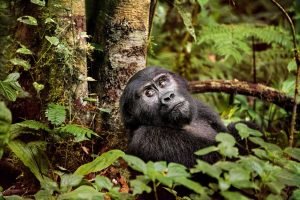
A large silverback may sit beneath a tree.
Young gorillas might play nearby.
A female could feed quietly while holding an infant.
Another animal may disappear behind vegetation before returning a few moments later.
The experience can feel surprisingly peaceful.
One Hour with Mountain Gorillas
Standard gorilla trekking generally allows visitors one hour with a habituated gorilla family after it has been located.
That hour frequently passes much faster than visitors expect.
Instead of spending the entire encounter looking through a camera, it helps to take photographs in short periods and then simply observe.
Watch how the gorillas use their hands.
Listen to the forest.
Notice interactions between mothers and infants.
Observe how young gorillas play and climb.
Look at the enormous shoulders of the silverback.
These small moments often become the strongest memories of a Uganda safari.
Gorilla Trekking Rules
Rules protect both visitors and gorillas.
Guests should follow every instruction provided during the ranger briefing. Specific operational requirements can be updated by Uganda Wildlife Authority, so instructions at the park take priority over general advice published online.
Visitors should avoid making unnecessary noise.
Flash photography should not be used.
Food should not be eaten near gorillas.
Waste must never be left in the forest.
Travelers who are unwell should inform their guide before trekking because gorillas can be vulnerable to human diseases.
Movement near the animals should remain controlled and respectful.
Nobody should attempt to touch a gorilla.
If an animal moves close to the group, visitors should follow the ranger’s instructions rather than attempting to approach it.
How Difficult Is Gorilla Trekking?
There is no fixed answer.
A trek can be relatively easy on one day and demanding on another.
The gorillas decide where they move.
Terrain differs between sectors and even between routes within the same sector.
Rain can make trails slippery.
High elevation may affect visitors who are used to living at sea level.
Preparation helps.
Regular walking before the safari can improve stamina. Lightweight hiking boots with good grip are valuable. Long trousers protect legs from vegetation, while gardening gloves can help when holding branches or steadying yourself.
Travelers concerned about mobility should tell Lena Tours in advance so that the operator can discuss practical arrangements and lodge location before confirming the safari.
What to Pack for Gorilla Trekking
A successful trek does not require expensive expedition equipment, but appropriate clothing makes the experience much more comfortable.
Bring strong waterproof or water-resistant hiking boots.
Wear long trousers.
Pack a lightweight rain jacket because mountain weather changes quickly.
Use long sleeves for protection against vegetation.
Carry drinking water and a packed lunch where required.
Bring insect repellent.
Gardening gloves can protect your hands.
A small backpack keeps essentials organized.
A camera with spare batteries is useful, although flash must remain off around gorillas.
Binoculars are excellent for birdwatching.
A walking stick may be available locally and can help on slippery slopes.
Gaiters are valuable during wet conditions.
Most importantly, keep your equipment manageable. Carrying unnecessary weight makes steep forest walking harder.
Best Time to Attend Gorilla Festival Activities and Trek Gorillas
World Gorilla Day is observed annually on 24 September. Uganda’s national events can vary in timing from year to year, as demonstrated in 2026 when the official national celebration was moved to 1 October while other community activities took place around the September observance.
Travelers specifically interested in festival-related activities should therefore confirm the official schedule before purchasing flights.
Gorilla trekking itself operates throughout the year.
June through September and December through February are commonly attractive to travelers because conditions may be relatively drier.
March to May and October to November can bring heavier rainfall, creating muddy forest conditions, but Bwindi remains extremely beautiful.
Rain is possible at any time because Bwindi is a tropical rainforest.
The wetter periods may also appeal to travelers seeking greener scenery, fewer tourists in some locations, or seasonal permit promotions when available.
Gorilla Festival and Community Tourism
One of the most meaningful parts of Uganda’s gorilla story exists outside the forest.
Communities around Bwindi play an essential role in conservation.
People farm steep hillsides beside the protected area, operate small businesses, work in lodges, guide visitors, sell crafts, perform traditional music, provide porter services, and supply food to tourism businesses.
The 2026 World Gorilla Day activities around Ruhija showed how conservation programs can extend into community life through tree planting and other initiatives. Recent reporting also documented efforts by communities near Bwindi to grow useful trees outside the national park so residents can obtain resources such as firewood, medicinal plants, and timber without increasing pressure on protected forest habitat.
Responsible community tourism gives visitors a chance to understand this relationship.
A village walk should not treat local residents as an attraction. Instead, it should create respectful interaction and support locally led activities.
Lena Tours can arrange community experiences depending on location, availability, guest interests, and the time available.
Combining Gorilla Festival Travel with a Uganda Safari
Flying across the world only for one hour with gorillas is possible, but Uganda offers much more.
Travelers can combine Bwindi with Queen Elizabeth National Park, Kibale National Park, Lake Mburo National Park, Murchison Falls National Park, Mgahinga Gorilla National Park, Lake Bunyonyi, Lake Mutanda, Jinja, or cultural experiences.
A longer itinerary changes the rhythm of the journey.
Instead of racing directly to Bwindi and returning immediately, visitors see changing landscapes and experience Uganda’s wildlife diversity.
Savannah game drives may reveal elephants, buffaloes, lions, antelopes, giraffes, warthogs, and other animals depending on the park visited.
Boat safaris add hippos, crocodiles, water birds, and beautiful landscapes.
Chimpanzee trekking in Kibale creates another major primate experience.
Golden monkey tracking in Mgahinga complements the gorilla trek.
For travelers with limited time, a five-day Bwindi safari provides a comfortable introduction.
Below are two different Lena Tours 5-day itinerary options.
5-Day Bwindi Gorilla Trekking Safari – Option One
Kampala/Entebbe – Lake Mburo – Bwindi – Lake Bunyonyi – Entebbe
This itinerary suits travelers who want a relaxed road safari with gorilla trekking, beautiful countryside, wildlife, and a scenic stop at Lake Bunyonyi.
Your 5-day Uganda gorilla safari with Lena Tours begins after breakfast in Kampala or Entebbe.
Your professional Lena Tours driver-guide will meet you at your hotel, introduce the safari program, assist with luggage, and begin the journey southwest.
Leaving the busy urban areas behind, the landscape gradually changes.
Small towns give way to farmland, rolling hills, banana plantations, grazing cattle, roadside markets, and broad views across central Uganda.
A stop around the Equator area can be arranged for photographs, refreshments, or souvenir shopping depending on timing.
After continuing toward western Uganda, you arrive in the Lake Mburo region.
Lake Mburo National Park provides an excellent introduction to Uganda’s savannah wildlife. The park’s open grasslands, woodland, rocky areas, and lakes create habitats for zebras, impalas, buffaloes, warthogs, elands, waterbucks, hippos, and numerous bird species.
After checking into your lodge, you can relax before an afternoon or evening game drive.
This first wildlife experience introduces you to the slower rhythm of safari travel.
Instead of concentrating only on reaching Bwindi, you begin your journey by observing Uganda’s changing ecosystems.
As sunset approaches, the landscape becomes especially attractive for photography.
Return to the lodge for dinner and overnight.
Destination: Lake Mburo National Park
Activities: Scenic transfer, Equator stop, afternoon game drive
Meals: Lunch and dinner depending on package arrangement
Accommodation: Budget, mid-range, or luxury option selected during booking
Day 2: Lake Mburo to Bwindi Impenetrable National Park
Wake early and enjoy breakfast while listening to the sounds of the bush.
Depending on your program, Lena Tours can arrange a morning activity before departing Lake Mburo.
Your journey then continues toward southwestern Uganda.
The route becomes increasingly mountainous as you approach the highlands.
Terraced fields cover steep hills.
Small villages appear beside winding roads.
Banana plantations and cultivated valleys create beautiful scenery.
The dramatic landscape is part of the Bwindi experience long before you enter the forest.
Lunch can be arranged en route.
Eventually, the dense green outline of Bwindi appears.
Your driver continues toward the sector corresponding to your gorilla permit.
This detail is essential.
Travelers trekking from Buhoma should stay near Buhoma.
Those holding Ruhija permits should normally stay around Ruhija.
Rushaga permit holders should sleep within convenient reach of Rushaga.
The same principle applies to Nkuringo.
Upon reaching the lodge, check in and enjoy time to rest.
Tomorrow is the main highlight of the journey.
Prepare your backpack, hiking boots, rain jacket, gloves, camera equipment, drinking water, and other essentials before dinner.
Enjoy the cool mountain atmosphere and an early night.
Destination: Bwindi Impenetrable National Park
Activities: Scenic road transfer and highland views
Meals: Breakfast, lunch and dinner
Accommodation: Lodge near your assigned gorilla trekking sector
Day 3: Gorilla Trekking in Bwindi Impenetrable National Park
Today brings the experience that inspired your journey to Uganda.
Wake early and eat a good breakfast.
Your Lena Tours guide transfers you to the relevant UWA visitor center.
After registration, rangers conduct a detailed briefing.
They explain forest behavior, gorilla etiquette, safety procedures, and the trekking process.
Visitors are organized according to the day’s arrangements and then set off with ranger guides.
The adventure begins almost immediately.
Morning mist may hang between the hills.
Bird calls echo through the forest.
The group follows narrow paths before entering denser vegetation.
Your ranger explains plants, animal signs, forest ecology, and conservation work along the way.
Trackers ahead communicate information about the gorilla family’s location.
The trek may take several hours, so there is no need to rush.
Take regular breaks whenever rangers recommend them.
Eventually, the trackers locate the family.
Cameras come out.
Voices become quiet.
Then you move forward carefully.
The first sight of a mountain gorilla can be difficult to describe.
Its size may surprise you.
The calm expression of a silverback can feel completely different from dramatic wildlife images seen on television.
Infants may climb vegetation or play beside adults.
Females continue feeding.
A silverback might rest only a short distance away, occasionally watching the visitors.
Standard tracking provides approximately one hour of observation after the gorillas are reached.
Use that hour wisely.
Take photographs, but also lower the camera.
Look around.
Listen.
Remember where you are.
You are standing inside an ancient African rainforest with one of the rarest great apes in the world.
After the encounter, the group leaves the gorillas and begins the walk back.
Depending on where the family was found, your return journey may be shorter or longer.
At the end of the trek, guests usually have time to celebrate, take photographs, and meet the Lena Tours driver again.
Return to the lodge for a hot shower and well-earned rest.
Later, depending on energy levels and timing, a community experience may be arranged.
Dinner follows at the lodge.
Destination: Bwindi Impenetrable National Park
Main activity: Mountain gorilla trekking
Meals: Breakfast, packed lunch and dinner
Accommodation: Same Bwindi lodge
Day 4: Bwindi to Lake Bunyonyi
Enjoy breakfast without the pressure of another early trek.
After checking out, begin the scenic journey toward Lake Bunyonyi.
The landscape remains spectacular.
Mountain roads curve through cultivated hills before Lake Bunyonyi comes into view.
Its calm water and numerous islands create one of southwestern Uganda’s most recognizable landscapes.
Check into your accommodation and spend the afternoon relaxing.
Travelers may choose an optional canoe experience, boat trip, village visit, nature walk, or simply enjoy the views from the lodge.
After the physical challenge of gorilla trekking, Lake Bunyonyi provides an ideal place to slow down.
Sit beside the water with a drink.
Watch changing light across the islands.
Listen to birds around the shoreline.
Reflect on your gorilla encounter.
Dinner and overnight follow at your lodge.
Destination: Lake Bunyonyi
Activities: Scenic transfer and optional lake activities
Meals: Breakfast, lunch and dinner
Accommodation: Selected Lake Bunyonyi lodge
Day 5: Lake Bunyonyi to Kampala or Entebbe
Wake to peaceful lake views before breakfast.
After checking out, begin the return journey through Kabale and southwestern Uganda.
The changing scenery keeps the long drive interesting.
Lunch will be arranged along the route.
Additional brief stops can be made where time permits.
Later in the day, arrive in Kampala or Entebbe.
Lena Tours transfers you to your hotel or Entebbe International Airport depending on your onward schedule.
Your 5-day Bwindi gorilla trekking safari ends with photographs, memories, and a much deeper understanding of Uganda’s mountain gorillas.
Destination: Kampala or Entebbe
Activities: Scenic return transfer
Meals: Breakfast and lunch depending on package arrangement
5-Day Bwindi Gorilla Safari – Option Two
Entebbe – Fly to Kihihi – Buhoma – Gorilla Trekking – Queen Elizabeth Ishasha – Entebbe
This second itinerary works especially well for travelers who prefer to reduce long road journeys while combining gorillas with a short wildlife safari.
Day 1: Arrival in Entebbe
Welcome to Uganda.
A Lena Tours representative meets you at Entebbe International Airport and transfers you to your hotel.
Depending on your arrival time, the remainder of the day can be spent relaxing.
Guests arriving earlier may add an optional Entebbe activity.
This night is deliberately kept easy because the following morning begins your journey toward Bwindi.
During dinner or an evening briefing, your Lena Tours representative reviews the safari schedule.
Permit information, luggage arrangements, flight details, trekking clothing, and any final questions can be discussed.
Overnight in Entebbe.
Destination: Entebbe
Activities: Airport arrival and safari briefing
Accommodation: Selected Entebbe hotel
Day 2: Fly from Entebbe to Kihihi and Transfer to Buhoma
After an early breakfast, transfer to the domestic departure area for your scheduled flight toward Kihihi.
Flying across Uganda offers a completely different perspective.
From the air, travelers see towns, farmland, wetlands, lakes, forests, and the western highlands.
After landing at Kihihi Airstrip, meet your Lena Tours driver-guide.
Continue by 4WD toward the Buhoma side of Bwindi.
Uganda Wildlife Authority identifies Kihihi as an important air access point for Bwindi’s northern side.
The drive introduces you to southwestern Uganda at a relaxed pace.
Arrive at the lodge, check in, and enjoy lunch.
The afternoon can remain free for relaxation or include an optional community activity.
Spend time watching the forest from the lodge.
Tomorrow you will enter it.
Prepare your trekking equipment before dinner.
Destination: Buhoma, Bwindi
Activities: Domestic flight and road transfer
Accommodation: Budget, mid-range, or luxury Buhoma lodge
Day 3: Gorilla Trekking in Buhoma
Breakfast is served early.
Your driver takes you to the Buhoma visitor area for registration and briefing.
After ranger instructions, begin trekking into Bwindi.
Buhoma’s rainforest creates a beautiful atmosphere as morning light filters through layers of vegetation.
The pace depends on terrain and the movement of the gorilla family.
Rangers monitor guests and allow breaks as necessary.
You may cross streams, climb forested slopes, walk through thick undergrowth, and pass enormous trees.
When trackers locate the gorillas, excitement spreads through the group.
Follow instructions carefully.
Approach quietly.
Then enjoy your permitted observation period.
Watch the gorillas feed.
Observe relationships within the family.
Photograph carefully without flash.
Notice how comfortable they are moving through vegetation that humans find difficult to penetrate.
After approximately one hour with the gorillas during a standard trek, begin the journey out of the forest.
Return to the lodge afterward.
The afternoon remains relaxed because everyone reacts differently to the trek.
Some guests have plenty of energy remaining.
Others prefer a shower, lunch, and quiet afternoon overlooking the forest.
Enjoy dinner and a second night in Buhoma.
Destination: Bwindi Impenetrable National Park
Main activity: Gorilla trekking
Accommodation: Same Buhoma lodge
Day 4: Bwindi to Ishasha Sector of Queen Elizabeth National Park
After breakfast, leave Bwindi and drive north toward the Ishasha area of Queen Elizabeth National Park.
This route creates a natural connection between mountain rainforest and savannah.
The change in landscape is fascinating.
Dense forest gives way to open countryside and eventually to wildlife habitat.
Uganda Wildlife Authority specifically notes the route between Queen Elizabeth National Park’s Ishasha area and Buhoma, making it a practical combination for safari planning.
Enter the Ishasha sector and begin searching for wildlife.
The area is famous for lions that are sometimes seen resting in fig trees, although wildlife sightings can never be guaranteed.
Look for buffaloes, elephants, Uganda kobs, topis, warthogs, monkeys, and numerous birds as well.
Spend the afternoon exploring before reaching your lodge.
Dinner follows as you discuss the dramatic contrast between yesterday’s rainforest trek and today’s savannah.
Destination: Queen Elizabeth National Park – Ishasha
Activities: Transfer and game drive
Accommodation: Selected Ishasha lodge
Day 5: Morning Game Drive and Return to Entebbe
Wake early for breakfast followed by another wildlife drive if timing permits.
Morning can provide excellent light for photography.
Animals are often active before temperatures rise.
After leaving Ishasha, continue the return journey toward Entebbe.
Alternatively, Lena Tours can arrange a domestic flight from the western region if appropriate to the client’s schedule and budget.
Travelers continuing with a longer Uganda itinerary may proceed toward another national park instead of returning directly.
Upon arrival in Entebbe, transfer to your hotel or airport.
Your five-day adventure comes to an end.
Destination: Entebbe
Activities: Game drive and return transfer
Meals: Breakfast and lunch depending on the arrangement
Accommodation for a 5-Day Bwindi Gorilla Safari
Lena Tours can design these itineraries using budget, mid-range, luxury, or premium accommodation.
Budget lodges focus on clean rooms, meals, and convenient access.
Mid-range properties provide more comfort, attractive locations, private bathrooms, restaurant services, and additional amenities.
Luxury lodges may offer spacious cottages, exceptional forest views, fireplaces, personalized service, high-quality cuisine, spa treatments, and other premium features.
The most important factor remains location.
A beautiful lodge on the wrong side of Bwindi can cause unnecessary early-morning driving.
For this reason, Lena Tours first confirms the trekking sector and then recommends suitable accommodation nearby.
Road Safari or Flying Safari?
Both options have advantages.
A road safari allows travelers to see more of Uganda.
You pass towns, villages, farms, trading centers, landscapes, and national parks that would be invisible from an aircraft.
It also makes stopovers such as Lake Mburo or the Equator easy to include.
A flying safari saves time.
Guests with limited holiday days can reach western Uganda much faster and spend additional time at their lodge.
Flying also appeals to honeymooners,older visitors, luxury travelers, and anyone who wants to reduce long road transfers.
Some travelers choose a combination.
They fly into Bwindi and return by road through Queen Elizabeth National Park.
Others drive outward through Lake Mburo and fly back from Kihihi or Kisoro.
Lena Tours can customize the route around international flight times and available gorilla permits.
Gorilla Trekking from Kigali to Bwindi
International travelers sometimes ask whether they can fly into Kigali, Rwanda, and travel by road to Bwindi.
Geographically, Kigali can provide relatively convenient access to southwestern Uganda.
However, border requirements, immigration rules, visas, transport regulations, and travel conditions can change.
Travelers should verify current entry requirements for both countries before arranging the journey.
Lena Tours can design itineraries based on the client’s confirmed travel documents and border plan.
Gorilla Trekking from Entebbe
Entebbe remains the main starting point for many Uganda gorilla safaris.
Travelers can drive to Bwindi in a private 4WD safari vehicle or use a scheduled domestic flight.
The road trip normally occupies much of the day because Bwindi lies deep in southwestern Uganda.
However, the scenery makes the journey enjoyable for visitors who view the transfer as part of the safari.
Flying dramatically reduces transit time.
UWA notes that scheduled flights serve Kisoro for southern Bwindi sectors such as Rushaga and Nkuringo and Kihihi for the northern side.
Combining Bwindi with Mgahinga
Travelers spending several nights in southwestern Uganda should consider Mgahinga Gorilla National Park.
The park offers a completely different landscape.
Volcanoes dominate the skyline.
Bamboo zones cover sections of the slopes.
Golden monkeys provide another primate experience.
Hikers may also be interested in volcano excursions depending on fitness and current park arrangements.
A visitor can trek gorillas in Bwindi, spend a night around Kisoro or Lake Mutanda, and then explore Mgahinga.
This combination works especially well for photographers and travelers fascinated by primates.
Why Mountain Gorillas Need Continued Protection
Mountain gorilla conservation has achieved important progress, but success does not remove future risks.
The gorillas occupy limited habitats surrounded by human communities.
Forest boundaries cannot simply expand indefinitely.
Human population pressures continue.
Disease remains a concern because great apes share biological similarities with humans.
Climate change can influence vegetation and ecosystems.
Wildlife protection requires continuous funding.
The 2026 community tree-planting activities around Bwindi demonstrate one practical response. Residents can obtain some useful tree resources outside the protected forest, helping reduce pressure on gorilla habitat.
Long-term conservation therefore requires cooperation.
Rangers alone cannot solve every challenge.
Tourists alone cannot solve them.
Tour companies cannot act independently.
Success depends on communities, scientists, park authorities, government institutions, conservation organizations, tourism businesses, and visitors working together.
The Role of Local Communities
Visitors sometimes imagine national parks as wilderness areas completely separated from people.
Bwindi tells a more complicated story.
Communities live right beside the park.
Farmers cultivate slopes that sometimes reach almost to the forest boundary.
Children attend schools near gorilla habitat.
Local residents work as guides, porters, lodge employees, drivers, security staff, cooks, artisans, and conservation workers.
Tourism therefore affects daily life.
When visitors buy crafts, hire porters, stay at locally connected lodges, and participate in responsible community tourism, the economic value of preserving the forest becomes more visible.
That does not mean tourism solves every social challenge.
It does mean that well-managed tourism can become one component of a broader conservation economy.
Gorilla Festival Photography
The Gorilla Festival period creates excellent storytelling opportunities for photographers.
Images can include gorillas, forest scenery, community tree planting, ranger teams, cultural performances, conservation education, guides, porters, and visitors preparing for treks.
However, respectful photography matters.
Ask permission before photographing community members.
Do not interrupt conservation activities for a staged picture.
During gorilla trekking, follow ranger instructions at all times.
Avoid flash.
Do not push forward ahead of other visitors simply to obtain a better angle.
Wildlife welfare comes before photography.
A meaningful photograph should record the experience without changing the behavior of the animals.
Tips for Better Gorilla Photographs
Forest photography can be challenging because light levels are low.
A camera that performs well at higher ISO settings can help.
Fast lenses are useful.
Image stabilization may be valuable.
Use continuous autofocus when animals move.
Keep shutter speed high enough to reduce blur, especially when photographing active juveniles.
Avoid carrying too much equipment.
Changing lenses repeatedly inside damp forest conditions can also become frustrating.
Many travelers achieve excellent results with one versatile zoom lens.
Phones can work surprisingly well when gorillas are nearby, although digital zoom should be used carefully.
Most importantly, remember to experience the moment with your own eyes.
Gorilla Trekking for Couples
Bwindi works beautifully for couples.
The forest setting is romantic without needing artificial decoration.
A private safari vehicle allows couples to travel at their own pace.
Luxury lodges provide quiet evenings, fireplaces, forest views, good meals, and personalized service.
For honeymoon travel, Lena Tours can add Lake Bunyonyi, Lake Mutanda, Queen Elizabeth National Park, or a relaxing stay in Entebbe.
Private transfers also reduce the pressure of traveling on a large group schedule.
Gorilla Trekking for Families
Families can enjoy Uganda’s broader safari circuit, although gorilla trekking has age restrictions and official park regulations must be checked before booking children onto the activity.
For families with younger children, Lena Tours can create parallel activities while eligible members undertake the gorilla trek.
A family safari can combine wildlife drives, boat trips, cultural activities, nature walks, and lodge experiences so that everyone participates in the overall journey.
Parents should provide children’s ages during the planning stage rather than waiting until arrival.
Gorilla Trekking for Older Travelers
Age by itself does not automatically prevent someone from enjoying a gorilla safari.
Fitness, mobility, balance, health, and terrain tolerance matter more.
Older visitors should discuss their needs early.
Choosing a conveniently located lodge reduces unnecessary transfers.
Hiring a porter makes trekking easier.
Walking poles and proper hiking boots improve stability.
Travel insurance is important.
Travelers with medical concerns should obtain professional medical advice before participating in strenuous activities.
Lena Tours can adjust the overall itinerary so that the days immediately before and after trekking remain comfortable.
Gorilla Trekking During the Rainy Season
Rain transforms Bwindi.
Leaves shine.
Mist hangs over valleys.
Streams flow strongly.
Clouds move quickly across mountain slopes.
For photographers, these conditions can be spectacular.
The disadvantage is mud.
Trails become slippery, boots become dirty, and steep sections require patience.
A waterproof jacket, gaiters, gloves, and good footwear become especially valuable.
Do not expect a tropical rainforest to remain completely dry even during traditionally drier months.
Weather can change within minutes.
Respecting Gorillas
A gorilla trek should never become a race to obtain the closest photograph.
These animals are wild.
Visitors enter their habitat under controlled conditions because specific groups have gradually become accustomed to limited human presence.
That privilege carries responsibility.
Keep noise low.
Follow the guide.
Never feed wildlife.
Avoid litter.
Do not touch gorillas.
Do not attempt to attract their attention.
If a gorilla changes position, allow the ranger to manage the group’s movement.
Responsible behavior protects both the animals and the future of gorilla tourism.
Why Choose Lena Tours for a Gorilla Festival Safari?
A successful gorilla trip requires many individual arrangements to work together.
A permit must match the correct date.
The lodge should match the permit sector.
Transport must allow realistic travel times.
Flights should connect properly.
Dietary requirements need communication.
The driver should understand the route.
Accommodation availability must be confirmed.
Activities before and after the trek should fit naturally rather than creating rushed days.
Lena Tours brings these details into one itinerary.
Instead of booking separate services independently, travelers can receive a coordinated safari that includes transportation, accommodation, permit arrangements, guiding, meals according to the package, and selected activities.
A private safari also allows greater flexibility.
Stops can be adjusted when appropriate.
Photography breaks become easier.
Clients can choose budget, mid-range, or luxury accommodation.
The itinerary can be expanded beyond five days if additional destinations are desired.
Who Should Book the 5-Day Gorilla Safari?
The five-day itinerary works especially well for travelers who want gorilla trekking without committing to a long Uganda safari.
It suits couples.
Solo travelers can join a privately arranged program.
Friends can travel together.
Small private groups benefit from sharing transportation costs.
Photographers appreciate extra time around the forest.
Business travelers can sometimes fit the safari around other commitments.
Visitors attending Uganda’s annual gorilla conservation celebrations can incorporate a trek into the same trip.
For someone traveling from Europe, North America, Asia, Australia, the Middle East, or elsewhere in Africa, five days provides a compact introduction to Uganda’s southwest.
Extending the Safari to Seven Days
Travelers with two additional days can include Queen Elizabeth National Park.
After trekking in Bwindi, drive through Ishasha for wildlife viewing.
Continue toward the northern areas of Queen Elizabeth for another game drive and a boat safari.
The Kazinga Channel provides opportunities to see hippos, buffaloes, elephants, crocodiles, and numerous birds depending on conditions.
This extension adds classic savannah wildlife to the mountain gorilla experience.
Extending to Ten Days
A ten-day Uganda safari can include:
Bwindi Impenetrable National Park for gorillas, Queen Elizabeth National Park for game drives and a boat safari, Kibale National Park for chimpanzee trekking, Lake Mburo National Park for additional wildlife, and scenic transfers through western Uganda.
Such an itinerary provides a broader understanding of why Uganda is often promoted as a primate and wildlife destination.
Extending to 15 Days
Travelers with approximately two weeks can build a complete Uganda circuit.
Murchison Falls National Park can be added for wildlife and Nile experiences.
Kibale offers chimpanzees.
Queen Elizabeth adds game drives and the Kazinga Channel.
Bwindi provides mountain gorillas.
Mgahinga can add golden monkeys.
Lake Mburo offers another savannah ecosystem before returning to Entebbe.
Jinja may also be included for the Nile and adventure activities.
A longer safari reduces pressure to rush between destinations.
Frequently Asked Questions About Gorilla Festival Uganda 2026
1. When is World Gorilla Day?
World Gorilla Day is observed every year on 24 September. Uganda marked the date in 2026 with conservation activities and related programs, while its main national celebration was moved to 1 October that year.
2. Where can I see mountain gorillas in Uganda?
Uganda offers mountain gorilla trekking in Bwindi Impenetrable National Park and Mgahinga Gorilla National Park.
3. How many gorilla trekking sectors are in Bwindi?
Bwindi has four principal sectors: Buhoma, Ruhija, Rushaga, and Nkuringo.
4. Is Mgahinga part of Bwindi?
No. Mgahinga Gorilla National Park is a separate protected area in southwestern Uganda.
5. How long does gorilla trekking take?
The total trek varies according to the gorillas’ location and terrain. Uganda Wildlife Authority advises that trekking may take approximately two to seven hours, while the standard observation period after locating a habituated family is one hour.
6. Is seeing gorillas guaranteed?
Gorilla trekking has highly experienced trackers and rangers, but mountain gorillas remain wild animals living in a natural environment. Responsible operators avoid making absolute wildlife guarantees.
7. Which is the best sector in Bwindi?
Each has different strengths.
Buhoma is convenient for some Queen Elizabeth combinations.
Ruhija offers beautiful highland forest and birding opportunities.
Rushaga is useful for southern Bwindi and Kisoro access.
Nkuringo offers dramatic mountain scenery.
Permit availability frequently determines the final choice.
8. How much is a Uganda gorilla permit in 2026?
The standard 2026 foreign non-resident tracking tariff is US$800 per person, while other visitor categories have different rates. Travelers should confirm the applicable UWA tariff when booking because conditions and special seasonal arrangements can change.
9. Can Lena Tours arrange my gorilla permit?
A safari operator can assist with coordinating permit arrangements as part of the booking process, subject to availability and UWA booking requirements.
10. When should I book?
Several months ahead is advisable for fixed dates, especially during popular travel periods.
11. Can I trek twice?
Yes, subject to purchasing a separate permit for each trekking date and availability.
A second trek can be surprisingly different from the first because travelers may encounter another family, terrain, weather conditions, or style of gorilla behavior.
12. Can I combine gorillas with chimpanzees?
Yes.
Kibale National Park is Uganda’s best-known chimpanzee trekking destination and can be combined with Bwindi on a longer safari.
13. Can I combine gorillas with lions?
Yes.
Queen Elizabeth National Park can be included between other western Uganda destinations.
Travelers moving between Buhoma and Queen Elizabeth can pass through the Ishasha area, known for its tree-climbing lions.
14. Do I need a 4×4 vehicle?
A 4WD safari vehicle is highly recommended for many approaches to Bwindi, particularly because mountain roads and weather conditions can make travel challenging. UWA specifically recommends 4WD access on several Bwindi routes.
15. Can I fly to Bwindi impenetrable forest?
You cannot land inside the forest itself, but scheduled flights serve Kihihi for northern access and Kisoro for southern sectors. Road transfers then connect passengers to their lodges.
Responsible Gorilla Tourism with Lena Tours
Responsible tourism begins before the safari starts.
- Choose realistic travel times.
- Avoid pressuring guides to speed.
- Respect national park regulations.
- Support legitimate permit systems.
- Hire porters when useful.
- Treat communities respectfully.
- Reduce plastic waste.
- Do not leave rubbish inside protected areas.
- Follow health guidance.
- Stay on approved routes.
- Listen to rangers.
- Most importantly, remember that gorilla tourism exists because conservation comes first.
- The forest is not a zoo.
- The gorillas do not perform.
- Visitors receive temporary permission to enter their world.
That is precisely what makes the experience so powerful.
The Future of Uganda’s Mountain Gorillas
Uganda’s gorilla conservation story continues to develop.
The 2018 Bwindi census recorded 459 mountain gorillas, while the genetic analysis from the newer census completed in 2026 was still pending when UWA published its latest updates.
Future results will provide scientists and conservation managers with additional information about population size and trends.
Numbers alone, however, do not tell the entire story.
Conservation success also depends on habitat quality, genetic health, disease management, security, community support, tourism management, and regional cooperation.
Uganda’s mountain gorillas represent both an extraordinary conservation achievement and a continuing responsibility.
Why the Gorilla Festival Matters
The Gorilla Festival or World Gorilla Day period creates an opportunity to remind people that conservation requires continuous attention.
A successful species recovery cannot become an excuse to stop protecting habitat.
The forest still needs rangers.
Communities still need sustainable opportunities.
Scientists still need to monitor gorillas.
Visitors still need to follow trekking rules.
Tourism companies still need to operate responsibly.
Governments and conservation organizations still need to invest in long-term protection.
Celebrating gorillas therefore means celebrating progress while recognizing the work that remains.
Experience Gorilla Festival Uganda with Lena Tours
Imagine waking before sunrise in the mountains of southwestern Uganda.
Mist covers the valleys.
A cup of Ugandan coffee warms your hands.
Your hiking boots wait beside the door.
After breakfast, your Lena Tours guide drives you toward the forest headquarters.
Rangers gather visitors for briefing.
Porters prepare backpacks.
Bird calls rise from the trees.
Then you enter Bwindi.
Hours later, leaves move ahead of you.
The ranger raises a hand.
Everyone becomes silent.
A black shape appears through the vegetation.
Then another.
A young gorilla climbs above the group.
A female sits nearby.
Finally, an enormous silverback emerges.
For the next hour, the outside world seems very far away.
No television documentary can fully recreate the smell of damp forest, the sound of leaves breaking beneath a gorilla’s hands, or the feeling of standing quietly in the same landscape as these endangered primates.
That is why people travel to Uganda, Bwindi matters, protecting mountain gorillas matters.
And that is why the Gorilla Festival in Uganda 2026 represents far more than a single celebration.
It represents wildlife, forests, communities, tourism, science, culture, and conservation working toward the same purpose.
Book Your Gorilla Safari with Lena Tours
Travelers planning a 5-day Bwindi gorilla trekking safari, a longer Uganda wildlife holiday, a honeymoon, a photography safari, or a primate-focused adventure can build the journey around their preferred travel style.
Lena Tours can arrange itineraries through Buhoma, Ruhija, Rushaga, or Nkuringo, depending on permit availability and the route selected.
A trip can also include Mgahinga, Queen Elizabeth National Park, Kibale, Lake Mburo, Lake Bunyonyi, Lake Mutanda, Murchison Falls, or other parts of Uganda.
Whether you choose a road safari through Uganda’s countryside or a fly-in journey to western Uganda, the purpose remains the same: to experience one of Africa’s greatest wildlife encounters while supporting responsible tourism.
Lena Tours invites travelers from around the world to discover Uganda, walk through the ancient rainforest of Bwindi, meet mountain gorillas in their natural habitat, explore the communities that live beside the forest, and become part of Uganda’s continuing conservation story.
Plan Your Safari with Lena Tours
Complete the enquiry form below and our safari specialists will prepare a personalised itinerary and quotation for your journey.