How Safe Is Gorilla Trekking in Uganda? A Complete Safety Guide
Gorilla trekking is one of Africa’s most remarkable wildlife experiences. Walking through a mist-covered tropical forest and finally coming face-to-face with a family of mountain gorillas can become one of the most memorable moments of an African safari. However, because mountain gorillas are powerful wild animals and because trekking takes place in dense forests and mountainous terrain, many travelers naturally ask an important question before booking their safari: How safe is gorilla trekking?
The short answer is that gorilla trekking in Uganda is a highly organized wildlife activity conducted under strict conservation and visitor-management procedures. Travelers do not simply enter the forest and search for gorillas independently. Gorilla trekking takes place under the supervision of trained Uganda Wildlife Authority guides and rangers; visitors trek only designated habituated gorilla families, and detailed rules govern how people behave before, during, and after an encounter.
In Uganda, gorilla trekking takes place in Bwindi Impenetrable National Park and Mgahinga Gorilla National Park. Uganda Wildlife Authority states that trekking may take approximately two to seven hours depending on the location of the gorillas and terrain, while the standard visit with a habituated gorilla family is limited to one hour.
Safety, however, involves much more than the behavior of the gorillas themselves. Travelers also need to consider forest terrain, weather, physical fitness, health precautions, transportation, clothing, following ranger instructions, and the general security situation in the destination. Understanding each of these factors makes it easier to prepare properly and enjoy the experience with confidence.
This detailed Lena Tours guide explains how gorilla trekking works, how visitors are protected, why habituated gorillas generally tolerate human observers, what happens if a gorilla approaches, how to prepare for the forest, and what travelers can personally do to make their gorilla trekking experience safer and more comfortable.
Is Gorilla Trekking Safe?
Gorilla trekking is generally conducted as a controlled tourism activity rather than an unrestricted wildlife encounter. Every trekking morning begins with registration and a briefing at the appropriate park headquarters. Visitors receive instructions about forest behavior, distance from the gorillas, photography, health precautions, and what to do if gorillas move close to the group.
Trekkers then enter the forest under the leadership of trained guides and accompanying ranger personnel. Trackers may already be in the forest monitoring the movements of the gorilla families, helping guides determine where a particular family is located. This organized system considerably reduces unnecessary wandering through the forest and ensures that visitors remain under professional supervision throughout the activity.
Uganda’s official gorilla tracking rules include a minimum trekking age of 15, restrictions on visiting when suffering from infectious illnesses, limits on visitor numbers, minimum-distance requirements around gorillas, prohibitions on flash photography, and a one-hour limit for ordinary gorilla visits.
These rules serve two purposes. First, they help protect visitors during a close wildlife encounter. Second, and equally importantly, they protect mountain gorillas from excessive disturbance and disease transmission.
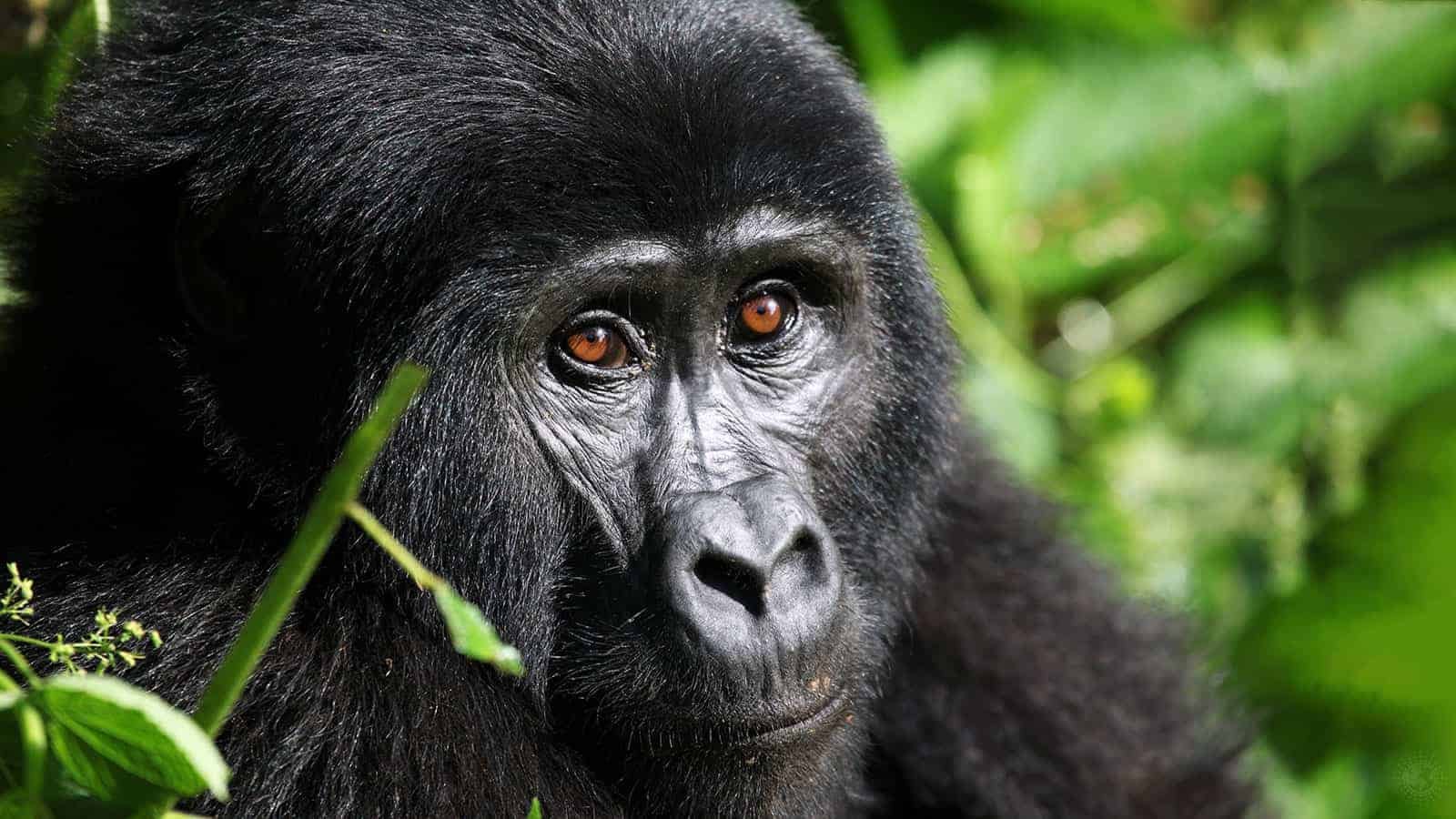
Mountain gorillas are extraordinarily powerful animals. An adult silverback can appear intimidating because of his size, strength, and protective role within the family. Nevertheless, tourists are not deliberately taken to completely wild gorilla groups that have never experienced people. Standard gorilla trekking takes place with habituated gorilla families that have gradually become accustomed to the controlled presence of human observers.
This does not turn gorillas into domestic animals. They remain completely wild and should always be treated with respect. Habituation simply means that researchers, conservation personnel, and trackers have spent considerable time carefully introducing a gorilla family to predictable human presence.
The safest approach is therefore simple: listen carefully to the ranger, remain calm, respect the animals’ space, and avoid behavior that could appear threatening.
Where Gorilla Trekking Takes Place in Uganda
Uganda offers gorilla trekking in two protected areas in the southwestern part of the country: Bwindi Impenetrable National Park and Mgahinga Gorilla National Park.
Bwindi is Uganda’s best-known gorilla trekking destination. Its mountainous rainforest landscape supports several habituated gorilla families, and trekking begins from different sectors around the forest. Uganda Wildlife Authority identifies the main trekking areas as Buhoma, Ruhija, Rushaga and Nkuringo.
Each sector offers a slightly different landscape and trekking experience. Some routes may involve steep hills and valleys, while others may begin relatively close to the previous day’s gorilla location. Because gorillas move freely through the forest, however, nobody can guarantee exactly how long a particular trek will take.
Mgahinga Gorilla National Park lies farther southwest in Uganda’s Virunga Mountains. The scenery is particularly dramatic, with volcanic slopes, bamboo forest, and mountain vegetation creating a completely different atmosphere from many areas of Bwindi.
Uganda Wildlife Authority recommends four-wheel-drive transportation for several approaches to Bwindi and Mgahinga because many roads near the parks are mountainous or unpaved.
When planning a gorilla safari with Lena Tours, your itinerary should allow enough time to reach your selected trekking sector without rushing. Staying reasonably close to the appropriate park headquarters the night before the trek is particularly important. A traveler holding a permit for one sector should not assume that accommodation elsewhere around Bwindi will necessarily provide easy morning access.
Bwindi is a large, mountainous forest, and different sectors can be separated by lengthy drives over winding roads. Careful accommodation planning therefore contributes not only to convenience but also to road safety and punctual arrival for the morning briefing.
Why Gorilla Habituation Makes Trekking Safer
One of the main reasons ordinary gorilla trekking can take place at close range is the process known as habituation.
Mountain gorillas naturally live in family groups led and protected by mature silverbacks. A gorilla group that has never encountered humans may interpret unfamiliar people as potential threats. Conservation organizations therefore do not normally introduce regular tourists directly to unhabituated gorilla families.
Instead, selected groups undergo a gradual habituation process. Researchers, trackers, and conservation personnel visit them repeatedly so the animals slowly become familiar with non-threatening human presence.
Habituation requires patience. Wildlife professionals carefully observe gorilla behavior and gradually reduce the distance at which their presence causes concern. Eventually, a family that responds calmly enough may become available for regulated tourism.
Even after habituation, gorillas remain wild. They decide where they travel, where they feed, and when they rest. Rangers do not control the gorillas; they manage the visitors.
This distinction is very important.
A habituated silverback may have seen humans almost every day for many years. He therefore usually recognizes the pattern of calm groups arriving with familiar ranger personnel, remaining for a limited period and then leaving. This predictability is one reason responsible gorilla tourism works.
Visitors must nevertheless avoid changing that pattern through shouting, running, touching the animals, or behaving aggressively.
Habituation also allows guides to become familiar with individual gorillas. Experienced trackers recognize family members, understand typical behavior, and can interpret body language that first-time visitors may not understand.
What looks frightening to an inexperienced tourist may sometimes be normal gorilla communication. A ranger’s knowledge therefore becomes extremely valuable during the encounter.
Can Gorillas Attack Tourists?
This is probably the question that worries first-time trekkers most.
Mountain gorillas are extremely strong wild animals and should never be treated casually. However, gorilla trekking procedures are specifically designed to minimize situations that could create confrontation.
Habituated gorillas usually continue feeding, resting, grooming, and interacting with one another while tourists observe them. Young gorillas may play in vegetation, mothers may carry infants, and the silverback may sit nearby while monitoring his family.
Because visitors remain under ranger supervision, dangerous behavior such as chasing gorillas, deliberately approaching infants or separating family members is avoided.
Most gorillas do not view properly behaved trekking groups as competitors or predators. They have become accustomed to observing people who follow a predictable pattern.
Problems are more likely to arise if somebody ignores instructions, runs suddenly, behaves aggressively, gets too close intentionally, or creates unnecessary disturbance.
A silverback’s primary responsibility is protecting his family. Visitors should therefore never attempt to challenge him.
If a gorilla displays dominance behavior, the correct response is usually calm submission rather than panic. Your ranger will provide instructions appropriate to the situation.
Do not decide independently that running away is safer. Running through dense forest creates its own danger because the terrain may contain roots, rocks, slippery vegetation, and steep slopes.
The presence of experienced guides is therefore an essential part of gorilla trekking safety.
What Happens If a Gorilla Charges?
The word “charge” sounds terrifying, but not every apparent charge represents an intention to attack.
Gorillas communicate through posture, vocalizations, movement, and physical displays. A silverback may beat his chest, make sounds, break vegetation, or move quickly as a warning or demonstration of authority.
The correct response depends on the circumstances, which is why visitors must follow the guide rather than reacting instinctively.
Running should generally be avoided. Sudden movement can escalate tension and can also cause a serious fall on steep forest terrain.
Visitors may be instructed to remain still, lower themselves, avoid direct confrontational behavior, and wait until the animal moves away.
The ranger understands the family far better than the visitor does. During the pre-trekking briefing, guides explain the basic behavior expected when interacting with gorillas.
Many travelers discover that the reality is considerably calmer than they imagined. Instead of roaring animals constantly displaying aggression, trekkers frequently find gorillas quietly eating leaves, grooming one another, or resting.
Young gorillas may be particularly curious, while adult females often concentrate on feeding or caring for infants.
A silverback may watch visitors closely because monitoring potential risks is part of his role. His attention should not automatically be interpreted as aggression.
Remain quiet, keep your movements controlled and allow your guide to manage the encounter.
What If a Gorilla Comes Close to You?
Despite official distance requirements, gorillas do not know tourism regulations.
A curious juvenile might move closer. A silverback could walk along a path where tourists happen to be standing. An entire family may change direction and pass near the group.
The visitor’s responsibility is not to move toward them.
Uganda Wildlife Authority’s published rules require visitors to maintain distance from gorillas. The current UWA tariff document specifies a distance of 10 metres.
However, there may be situations where a gorilla itself reduces that distance. When this happens, follow your ranger’s instructions.
Do not reach out to touch the animal.
Avoid making rapid movements simply because the animal appears close.
Your guide may ask you to remain still or carefully move aside.
One of the most important concepts in responsible gorilla trekking is that humans must give the gorillas freedom of movement. The forest belongs to the wildlife, and tourists are temporary visitors.
When photographers become excited, there can be a temptation to concentrate entirely on the camera. Remember to remain aware of what is happening around you. Listen continuously to the guide even when you are taking photographs.
A close approach initiated by a gorilla can become an unforgettable moment, but it should always happen on the animal’s terms.
Are Gorilla Rangers Armed?
Park security arrangements may include ranger and security personnel depending on the location and current situation. Their role extends beyond the gorilla encounter itself.
Wildlife rangers patrol protected areas, support conservation work, help manage tourism, and contribute to visitor security.
The United Kingdom’s current travel guidance specifically notes that security personnel routinely accompany tourists during gorilla tracking in Uganda’s southwestern parks near the borders with Rwanda and the Democratic Republic of the Congo. It also recommends using reputable registered tour operators and checking current Uganda Wildlife Authority information before travel.
Travelers sometimes see armed personnel and mistakenly assume that gorillas are considered dangerous enough to require weapons. That interpretation is misleading.
The security presence is part of broader protected-area and regional security management rather than a method of controlling the habituated gorilla family visitors are going to see.
Rangers understand that conservation depends on protecting wildlife as well as people.
Visitors should never attempt to carry weapons into the park themselves. UWA park regulations prohibit visitors from bringing firearms or ammunition into national parks.
Your responsibility as a tourist is simply to follow the procedures established by the authorities and your guides.
Is Bwindi Impenetrable National Park Safe?
Bwindi Impenetrable National Park has hosted gorilla tourism for decades and operates established trekking sectors with ranger stations, guides, trackers and tourist accommodation.
Thousands of visitors travel to the region specifically to trek mountain gorillas.
Nevertheless, travelers should distinguish between the controlled activity of gorilla trekking and wider travel-security conditions that may change over time.
Bwindi lies in southwestern Uganda, relatively close to international borders. Current government travel advisories may therefore include regional security information that should be checked shortly before departure.
For example, current UK guidance advises visitors traveling to national parks near Rwanda and the Democratic Republic of the Congo to use reputable registered operators and obtain up-to-date information from Uganda Wildlife Authority. It also notes routine security accompaniment during gorilla tracking.
Government advisories from different countries can also differ significantly in the risk levels they assign to Uganda. As of September 2026, travelers should consult the advisory issued specifically by their own government rather than relying on an old blog article or social-media post. Current information may change after this article is published.
This is particularly important because conditions can change faster than printed travel information.
Lena Tours can help organize transport, accommodation and gorilla permits, but every traveler should also maintain appropriate travel insurance and monitor official advice before departure.
How Rangers Keep Gorilla Trekkers Safe
Gorilla trekking guides do much more than show visitors where gorillas live.
Before entering the forest, trekkers attend a briefing where guides explain expected behavior. During the trek, guides control the pace, identify safe places to cross difficult terrain and help visitors understand forest conditions.
Once trackers locate the gorillas, the guide organizes the group so visitors can observe the animals without surrounding or unnecessarily disturbing them.
Rangers may also provide instructions about where to stand, when to lower cameras, and when to move.
Their understanding of gorilla behavior is especially valuable.
A first-time visitor may see a large silverback stand up and immediately assume something dangerous is happening. An experienced ranger can assess the animal’s behavior within the broader context of the family.
Knowledge reduces panic.
Rangers are also familiar with the forest.
Bwindi deserves its name. Vegetation can be extremely dense, and some sections of the forest contain steep hillsides, muddy ground, tangled roots, streams, and thick undergrowth.
Walking behind someone who understands the terrain is far safer than attempting to navigate independently.
Visitors should therefore remain with the group throughout the trek.
Trackers and Their Role in Safety
Trackers are another important part of the gorilla trekking system.
They may enter the forest earlier than the tourist group and search for signs indicating where the gorillas have moved since the previous observation.
Gorillas build nests for sleeping and then move through the forest during the day to feed. Trackers use experience, footprints, vegetation, droppings, nests and other signs to establish the family’s direction of travel.
Communication between trackers and the tourist guide can reduce the amount of time visitors spend searching randomly through the forest.
This is particularly useful because mountain gorillas do not remain in one fixed location.
Some mornings they may be relatively close to the starting point. On other days they can be several hours away.
The tracking system also supports conservation monitoring because wildlife personnel regularly observe the condition of habituated gorilla families.
Responsible tourism therefore depends on a network of guides, rangers, trackers, researchers, and conservation staff rather than a single person leading tourists into a forest.
Physical Safety During Gorilla Trekking
For many travelers, the most realistic safety challenge during gorilla trekking is not the gorillas themselves. It is the terrain.
Bwindi is mountainous and densely vegetated. Rain can make forest trails muddy, while exposed roots and loose soil can become slippery.
Some trekking routes involve repeated climbs and descents.
Uganda Wildlife Authority advises that the activity requires moderate fitness and that treks may last approximately two to seven hours depending on circumstances.
This does not mean that every traveler must be an athlete.
People of different ages and fitness levels successfully trek gorillas each year. However, visitors should understand that the experience involves genuine forest hiking rather than a short walk through a landscaped wildlife reserve.
Preparing before your safari can make an enormous difference.
Regular walking several weeks before departure can improve stamina. Hill walking is particularly helpful because it prepares the legs for uneven terrain.
If you normally live in a very flat area, stair climbing can provide useful preparation.
Travelers with existing mobility limitations should discuss them with their tour operator well before trekking day so that practical arrangements can be considered.
The goal is not to prove physical strength. The goal is to reach the gorillas safely while still having enough energy to enjoy the encounter.
Hiring a Porter Improves Safety and Comfort
Hiring a porter is one of the simplest ways to make gorilla trekking easier.
Porters can help carry backpacks, drinking water, cameras, packed lunches, and additional clothing. More importantly, they can provide a steady hand on steep or slippery sections of the trail.
Some visitors decline a porter because their backpack feels light during the morning briefing. After several hours of climbing through humid forest, that same bag can feel considerably heavier.
A porter allows you to concentrate on your footing instead of constantly adjusting equipment.
Hiring a porter also provides an economic benefit to people living around the protected areas.
Gorilla conservation works best when surrounding communities receive meaningful benefits from tourism. Local employment helps demonstrate the economic value of protecting forests and wildlife.
Even travelers who consider themselves physically fit may appreciate having assistance during a long trek.
If the route turns out to be easy, the porter still carries your belongings. If it becomes difficult, the decision can feel invaluable.
What Should You Wear for Safe Gorilla Trekking?
Proper clothing can significantly improve comfort and reduce minor injuries.
Long trousers are recommended because thick vegetation may scratch exposed legs. Tucking trousers into long socks can also reduce contact with insects and vegetation around the ankles.
A long-sleeved lightweight shirt protects the arms from branches, nettles and other plants.
Strong hiking boots with good grip are particularly valuable because forest surfaces can become slippery after rainfall.
Avoid relying on smooth-soled urban shoes.
Your footwear should ideally be worn in before the safari. Trekking for several hours in brand-new boots may cause painful blisters.
Gardening-style or lightweight protective gloves can help when you need to hold vegetation for balance. However, avoid grabbing plants unnecessarily because some may contain thorns or irritate the skin.
A lightweight waterproof jacket or poncho is useful because mountain-forest weather can change quickly.
A hat can provide additional protection, although it should fit securely enough not to fall off during the trek.
Choose practical clothing rather than dressing primarily for photographs.
You will have plenty of opportunities to take beautiful pictures once you reach the gorillas, and you will enjoy those photographs much more if you reach the encounter comfortably.
What Should You Carry?
Your daypack should contain useful essentials without becoming unnecessarily heavy.
Carry enough drinking water for several hours.
Your lodge or safari guide can usually organize a packed lunch or snacks for longer trekking days. Remember, however, that eating and drinking around the gorillas is prohibited under UWA tracking rules.
You can eat during appropriate parts of the trek when instructed by your guides.
Carry a rain jacket even if the morning appears clear.
Other useful items may include sunscreen, insect repellent, personal medication, a small camera, spare batteries, a waterproof camera cover, and tissues.
Avoid filling your backpack with unnecessary equipment.
Professional photographers may need more gear, but casual travelers often discover that one good camera or smartphone is sufficient.
If carrying expensive equipment, make sure it is protected against rain and humidity.
A porter can carry your daypack while you keep the camera you use most frequently.
Is Gorilla Trekking Safe in the Rain?
Gorilla trekking does not automatically stop simply because it rains.
Bwindi is a tropical forest, and rainfall is part of the environment that keeps the landscape green and supports its extraordinary biodiversity.
Rain mainly changes the physical difficulty of trekking.
Trails can become muddy, and slopes can become more slippery. Vegetation may also remain wet long after the rain has stopped.
Good boots, waterproof clothing, a walking stick when appropriate, and a porter can make rainy conditions much easier to manage.
Do not rush simply because you want to avoid getting wet.
A slow, controlled step is safer than trying to move quickly across mud.
Your guide will adjust the pace according to the group and terrain.
Protect cameras inside waterproof bags when they are not being used.
Interestingly, cloudy forest conditions can sometimes be excellent for photography because harsh overhead sunlight is reduced. Rain therefore does not necessarily ruin your trekking experience.
The forest atmosphere can become even more dramatic as mist settles through the trees.
Safe Distance From Mountain Gorillas
Maintaining distance is one of the most important rules of gorilla trekking.
Uganda Wildlife Authority’s published rules currently specify maintaining approximately 10 metres between visitors and gorillas.
Distance reduces disturbance and lowers the possibility of disease transmission.
Mountain gorillas share biological similarities with humans, making respiratory illness a serious conservation concern.
Visitors should never deliberately move closer simply to improve a photograph.
Modern cameras and phones provide excellent zoom capability without requiring physical proximity.
If vegetation obstructs your view, wait patiently. Gorillas move naturally, and another viewing opportunity may appear.
Your guide may also reposition the group when appropriate.
Never push ahead of other travelers or move independently around the family.
Responsible gorilla photography requires patience.
The objective is to leave the forest knowing that your presence caused as little disruption as possible.
Why Sick Visitors Should Not Trek Gorillas
Health precautions are especially important during primate tourism.
Mountain gorillas can be susceptible to diseases carried by humans, particularly respiratory infections.
UWA’s rules state that visitors suffering from a cold or other infectious illness should not visit gorillas.
This rule can be frustrating for a traveler who has crossed the world specifically to see gorillas, but conservation must take priority.
One infected visitor could potentially expose vulnerable wildlife to disease.
Travelers should therefore take sensible precautions during the days before trekking.
Wash or sanitize hands regularly, sleep properly, stay hydrated, and avoid unnecessary exposure to people who are clearly unwell where possible.
If you become sick, tell your guide rather than hiding symptoms.
Honesty protects the animals and helps park authorities determine the appropriate course of action.
Disease prevention is one of the reasons visitor numbers and viewing time are controlled.
Gorilla tourism succeeds only when human access remains compatible with long-term conservation.
Coughing or Sneezing Near Gorillas
If you unexpectedly need to cough or sneeze during the gorilla encounter, turn away from the animals and cover your mouth and nose.
Uganda Wildlife Authority specifically instructs visitors to turn away and cover their face if they need to cough or sneeze because gorillas can catch human respiratory illnesses.
This rule illustrates an important point: safety is not only about protecting humans from gorillas.
Humans can also represent a threat to gorillas.
Responsible tourism therefore requires visitors to think about the wellbeing of the animals they have traveled to see.
Follow any additional current health instructions given during the briefing.
Park-management rules can evolve as conservation knowledge develops, so the briefing you receive on the morning of your trek should always take priority over information from an old article.
Why Eating Near Gorillas Is Not Allowed
Visitors should not eat while observing gorillas.
Food can introduce unnecessary contamination and may alter wildlife behavior if anything is dropped.
UWA regulations prohibit eating, drinking, and smoking while visitors are with the gorillas.
Eat before entering the immediate viewing area or when your guide indicates an appropriate stop during the search.
Never offer food to a gorilla.
Feeding wildlife can change its natural behavior and create associations between people and food.
Even something that appears harmless to humans may be unsuitable for an animal.
Carry every piece of litter out of the forest.
The principle is straightforward: everything you bring into the forest should leave with you unless appropriate waste procedures require otherwise.
Why Touching Gorillas Is Dangerous
Touching a mountain gorilla is never appropriate.
Even when a juvenile appears curious or playful, visitors should not respond as they might to a domestic animal.
Physical contact increases the possibility of disease transmission and removes the distance that helps preserve natural behavior.
It can also place visitors in an unpredictable situation.
A young gorilla may appear harmless, but its mother or the family silverback is nearby.
Adults are responsible for protecting younger animals and may interpret certain interactions differently from humans.
If a gorilla approaches, remain calm and follow your guide.
Allow the animal to move away naturally.
A respectful encounter does not require touching.
Simply sitting quietly within a mountain rainforest while a wild gorilla family continues its daily life nearby is extraordinary enough.
Is It Safe to Look a Gorilla in the Eyes?
Visitors sometimes hear conflicting advice about eye contact.
Instead of trying to remember complicated internet rules, follow the ranger’s instructions during your encounter.
Long, deliberate staring combined with confrontational body language may be interpreted differently from brief natural observation.
You do not need to spend your entire gorilla encounter looking at the ground.
Tourists obviously look at gorillas while watching and photographing them.
The important difference is between calm observation and behavior that may appear challenging.
Avoid aggressive gestures.
Do not imitate gorilla displays.
Never beat your chest at a silverback.
Avoid making threatening noises.
The gorillas are not performers, and tourists should not deliberately attempt to provoke reactions for photographs or videos.
Observe quietly and allow natural behavior to unfold.
Photography Safety Around Gorillas
Photography is an important part of most gorilla safaris, but cameras should never distract visitors from ranger instructions.
UWA regulations prohibit flash photography around gorillas.
Before entering the forest, check your camera settings and disable automatic flash.
Some smartphones and cameras automatically activate flash in dark conditions, so confirm the settings before reaching the animals.
Forest photography can be challenging because light levels change quickly.
A gorilla may sit beneath dense vegetation one minute and move into brighter light the next.
Use camera settings that allow you to adapt without constant equipment changes.
When moving through the forest, secure large lenses carefully.
Do not walk while staring through your camera.
Stop, establish stable footing, and then take the photograph.
A spectacular picture is never worth falling down a slope.
Occasionally put the camera away and simply observe.
Many travelers return home with thousands of photographs but say their strongest memory came from several quiet seconds of direct observation.
Why Flash Photography Is Prohibited
Flash can disturb wildlife, particularly when tourists are relatively close.
The prohibition also encourages more respectful photography.
Fortunately, modern cameras perform well at higher ISO settings, making flash unnecessary for most gorilla photography.
Smartphone cameras have also improved considerably in low-light environments.
If your photographs are slightly darker than expected, exposure can often be adjusted later.
Do not compromise the animal’s comfort for the sake of obtaining a brighter image.
The experience is about observing wildlife responsibly rather than creating a studio photograph.
The One-Hour Gorilla Rule
For ordinary gorilla trekking, time spent with the allocated gorilla family is limited.
Uganda Wildlife Authority’s published rules state that visits are limited to one hour per gorilla group per day.
The hour begins when the formal observation period starts, as directed by the guides.
Limiting viewing time helps reduce prolonged disturbance.
Although one hour may initially sound short, it can feel surprisingly substantial when you are sitting quietly among mountain gorillas.
During that period, you might see feeding, grooming, infants playing, juveniles climbing vegetation, and a silverback moving between family members.
Every encounter is different.
Wildlife does not operate according to a performance schedule, and the unpredictability is part of what makes the experience special.
Group Size and Safety
Gorilla trekking groups are deliberately limited.
UWA rules specify a maximum of eight visitors with a gorilla group under standard trekking arrangements.
Smaller groups make visitor management easier and reduce disturbance.
Imagine twenty or thirty tourists surrounding one gorilla family. Noise, movement, and pressure on the vegetation would increase dramatically.
A limited group allows guides to keep everyone together and ensures a more intimate experience.
It also improves photographic opportunities because fewer people are competing for viewing positions.
Your group may include travelers of different ages and fitness levels, so patience is important.
The forest is not a race.
Helping create a calm group atmosphere contributes to everyone’s safety.
The Minimum Age for Gorilla Trekking
Uganda’s official minimum age for gorilla tracking is 15 years.
The age requirement supports both visitor management and wildlife protection.
Gorilla encounters require visitors to remain calm, follow instructions, and tolerate potentially long walks through difficult terrain.
Young children may find it difficult to remain quiet and controlled if a large silverback suddenly moves close.
Families traveling with younger children can still enjoy many other safari experiences in Uganda while eligible family members participate in the trek.
When planning a family safari, provide children’s ages early so that Lena Tours can arrange an itinerary appropriately.
Do Gorillas Recognize Rangers?
Gorillas can become familiar with regular human presence during habituation and ongoing monitoring.
Rangers and trackers who spend considerable time with specific families learn to identify individual gorillas and recognize behavioral patterns.
The animals also encounter familiar uniforms, voices, and movement patterns repeatedly.
However, visitors should avoid imagining the relationship as equivalent to human friendship with a pet.
The gorillas remain independent wild animals.
Their tolerance of familiar observers exists within a carefully managed conservation framework.
A responsible ranger does not attempt to dominate, command, or physically control a silverback.
Instead, successful gorilla tourism depends on understanding and respecting natural behavior.
Other Wildlife in the Forest
Bwindi is much more than a gorilla sanctuary.
The forest supports numerous bird species, butterflies, monkeys, small mammals and other wildlife.
Trekkers may therefore encounter more than gorillas during the hike.
Your guide understands the environment and will explain what to do when other animals are seen.
Do not touch snakes, insects, or unfamiliar plants.
Do not wander away to photograph wildlife without informing the guide.
Forest ecosystems contain both obvious and subtle hazards.
A slippery root may represent a more immediate danger than a distant wild animal.
Remaining with the organized trekking group is always the safest approach.
Insects and Gorilla Trekking
Insects form a natural part of tropical forest ecosystems.
Using insect repellent can improve comfort, particularly around exposed skin.
Long trousers, long sleeves and socks also provide physical protection.
Travelers should seek personalized medical advice before visiting Uganda because vaccination and malaria-prevention recommendations depend on health history, itinerary and current official guidance.
Do not rely exclusively on a safari blog for medical decisions.
Consult an appropriate travel-health professional before departure.
Carry any prescribed medication in your hand luggage when flying to Uganda and bring enough for the entire journey.
A small personal first-aid kit may also be useful for minor cuts, blisters and headaches.
The Importance of Travel Insurance
Comprehensive travel insurance is strongly recommended for international safari travel.
The policy should be appropriate for the activities included in your itinerary.
Read the terms rather than assuming every policy automatically covers trekking, remote destinations, medical evacuation or trip interruption.
Current UK travel guidance also recommends obtaining insurance appropriate to your itinerary, planned activities and potential emergency expenses.
Keep digital and printed copies of important policy information.
Leave another copy with somebody you trust at home.
Hopefully, you will never need it, but appropriate insurance provides valuable protection against unexpected situations.
Road Safety on a Gorilla Safari
Getting safely to the gorilla destination deserves as much planning as the forest trek itself.
Bwindi and Mgahinga lie in southwestern Uganda, and road journeys from Kampala or Entebbe can be lengthy.
Many travelers combine gorilla trekking with Queen Elizabeth National Park, Kibale Forest National Park, Lake Mburo National Park or other destinations, reducing the amount of driving required on a single day.
Road conditions near the parks vary.
Some mountain roads are unpaved and winding, and Uganda Wildlife Authority recommends four-wheel-drive vehicles for several approaches to Bwindi and Mgahinga.
Travel with an experienced safari driver-guide who understands local road conditions.
Avoid planning unrealistic transfer times.
A safari should leave room for rest stops, photographs, meals, and unexpected delays.
Arriving exhausted after an unnecessarily rushed journey is poor preparation for a physically demanding gorilla trek the next morning.
Flying to the Gorilla Parks
Travelers who prefer to reduce driving time can consider domestic flights.
Uganda Wildlife Authority notes that Bwindi can be accessed using flights from Entebbe toward Kisoro for the southern sectors and Kihihi for the northern side, followed by road transfers to lodges and park sectors.
Mgahinga can similarly be approached through Kisoro.
Flying can be particularly attractive for luxury travelers, older visitors, or people with limited safari time.
However, weather, luggage limits and flight schedules should be considered.
Lena Tours can structure an itinerary around either road transfers, domestic flights, or a combination of both depending on the traveler’s preferred pace and budget.
How Fitness Affects Gorilla Trekking Safety
Fitness preparation reduces fatigue, and reduced fatigue generally improves concentration.
When people become extremely tired, they may stop watching where they place their feet.
A simple walking program before traveling can therefore improve both comfort and safety.
Begin several weeks before your safari if possible.
Walk regularly.
Add hills.
Use stairs.
Practice walking in the boots you intend to take.
If you have never carried a small daypack, occasionally walk with one.
There is no need to train like a professional athlete.
Consistency matters more than intensity.
Visitors with medical conditions should discuss strenuous travel activities with a healthcare professional.
Do not hide important limitations from your tour operator or guide.
The objective is to plan a suitable experience rather than create unnecessary difficulty.
Trekking at High Elevation
Mountain gorilla habitats occur in elevated landscapes.
Travelers arriving from low-altitude areas may notice heavier breathing while climbing.
The combination of elevation, humidity, and steep terrain can make walking feel more demanding than a similar distance at home.
Walk at a comfortable pace.
Drink sufficient water.
Do not compete with faster members of the group.
Guides understand that visitors have different fitness levels.
If you need a short pause, communicate clearly.
Steady progress usually works better than moving too quickly and becoming exhausted.
Slippery Trails and Falling Risks
Falls are a practical risk in mountainous forest environments.
Wet leaves, exposed roots, mud, and loose stones can all reduce traction.
Use boots with strong tread.
Watch where you place each foot.
When descending steep ground, shorten your steps and avoid rushing.
Use a walking stick if guides provide or recommend one.
Accept help from your porter when appropriate.
If somebody in front of you slips, do not immediately follow the same line without checking your own footing.
Photography should wait until you are standing securely.
Many minor trekking accidents can be prevented simply by slowing down.
Should Older Travelers Trek Gorillas?
Age alone does not determine whether someone can participate comfortably.
Some travelers in their sixties and seventies are extremely active, while younger travelers may have limited fitness.
The most important factors are mobility, cardiovascular health, balance, stamina, and preparation.
Older travelers who remain active often complete gorilla treks successfully.
Hiring a porter is particularly useful.
Accommodation close to the trekking headquarters can also reduce unnecessary morning stress.
Travelers should communicate mobility concerns during the planning stage rather than waiting until they reach the park.
A personalized safari itinerary can include rest days before or after trekking.
There is no benefit in exhausting yourself simply to fit too many activities into one itinerary.
Can Solo Travelers Trek Gorillas Safely?
Solo travelers can participate in gorilla trekking because permit holders are normally organized into trekking groups at the park headquarters.
You will therefore not be sent into the forest alone.
A solo traveler booking a complete Uganda safari can also travel with a dedicated driver-guide between destinations.
As with any international travel, solo visitors should use reputable providers, keep family or friends informed of their itinerary, and maintain secure copies of important documents.
Gorilla trekking itself can be especially enjoyable for solo travelers because the shared excitement quickly creates conversation among members of the trekking group.
Gorilla Trekking for Women Traveling Alone
Women travel independently through Uganda and join organized gorilla treks.
The forest experience operates as a group activity under park supervision.
Outside the national park, the same general precautions appropriate for international travel apply.
Use established transport arrangements, avoid unnecessary movement alone in unfamiliar areas late at night, and choose reputable accommodation.
A properly planned private safari provides the benefit of having a dedicated driver-guide handling transfers between destinations.
Travelers can also consult their own government’s current Uganda travel advice before departure for the most recent recommendations.
Is Gorilla Trekking Safe During Pregnancy?
Pregnancy and strenuous forest trekking require individualized medical advice.
The terrain can be steep, slippery, and physically demanding, and the duration cannot be guaranteed in advance.
Rather than relying on a general tourism article, pregnant travelers should speak with their healthcare provider before booking.
If trekking is considered unsuitable, Uganda offers many alternative wildlife experiences that involve less demanding physical activity.
A safari can still include scenic drives, boat cruises, wildlife viewing, and cultural experiences.
Health should always take priority over completing a particular activity.
Food and Water Safety on Your Safari
Staying healthy before trekking is important because illness may prevent participation.
Drink safe water provided by reputable lodges and safari operators.
Maintain sensible food hygiene.
Choose established accommodation and restaurants where appropriate standards are followed.
Wash or sanitize hands before meals.
Remain well hydrated, particularly during long road transfers.
Avoid excessive alcohol on the evening before trekking.
Your gorilla trekking morning begins early, and dehydration combined with a steep climb is unlikely to produce an enjoyable experience.
Eat a good breakfast and carry the lunch provided by your lodge.
Responsible Gorilla Trekking Is Safer Gorilla Trekking
Conservation rules sometimes appear restrictive until visitors understand why they exist.
Limits on group size reduce disturbance.
Distance reduces unnecessary close contact.
Health restrictions lower disease risk.
Time limits control human pressure.
Prohibitions on touching, feeding, and flash photography protect natural behavior.
When every visitor follows these regulations, gorilla tourism becomes safer for both humans and wildlife.
Responsible tourism also helps ensure that future generations can enjoy the same experience.
Uganda Wildlife Authority reported in September 2026 that Bwindi’s 2018 census recorded 459 mountain gorillas and said results from the more recent 2025/2026 genetic analysis were still awaited at that time.
Conservation progress does not happen automatically. It depends on habitat protection, scientific research, law enforcement, veterinary support, community involvement, and carefully managed tourism.
Your behavior during one hour with the gorillas forms a small but meaningful part of that larger system.
Choosing a Reliable Gorilla Trekking Operator
A good safari operator should do far more than simply sell you a gorilla permit.
Your operator should understand the different trekking sectors, recommend accommodation based on permit location, arrange realistic transport schedules, and clearly explain what is included in the safari.
Permit arrangements should follow official procedures.
Uganda Wildlife Authority has published guidance and advisories relating to gorilla and chimpanzee permit management, making it important to arrange permits through legitimate channels.
Travelers should be cautious about unusually cheap offers that provide little detail about permits, accommodation or transport.
Ask questions before sending significant payments.
Confirm the company details.
Review the itinerary carefully.
Know which park and sector you will visit.
Understand cancellation conditions.
A professional operator should be willing to explain these details clearly.
How Lena Tours Helps Prepare Your Gorilla Safari
At Lena Tours, gorilla trekking can be incorporated into a complete Uganda safari based on the traveler’s available time, interests, and preferred accommodation level.
A gorilla safari may begin in Entebbe and travel directly toward Bwindi, or it may form part of a larger wildlife journey through Uganda.
Travelers can combine gorilla trekking with chimpanzee tracking in Kibale, game drives in Queen Elizabeth National Park, boat safaris, tree-climbing lion searches in Ishasha, wildlife experiences in Lake Mburo National Park, or visits to other parts of the country.
Planning the journey as a complete itinerary helps manage driving distances and creates a more relaxed experience.
Accommodation can also be selected in relation to the correct gorilla trekking sector.
This detail is important because staying far from the starting point can result in an unnecessarily early departure and a stressful drive before trekking.
Good planning begins long before the traveler arrives in Uganda.
Listening to the Morning Briefing
Even if you have read dozens of gorilla trekking blogs, listen carefully during the official briefing.
Internet information may become outdated.
The ranger standing in front of you knows the current park procedures and local conditions.
The briefing usually covers gorilla behavior, photography, health precautions, forest etiquette, and what to do in unusual situations.
Ask questions if something is unclear.
Once you enter the forest, remain attentive.
Wildlife encounters are dynamic.
A rule you read months before your safari cannot replace real-time guidance from trained personnel.
What Not to Do During Gorilla Trekking
Do not run toward or away from gorillas.
Avoid running toward or away from gorillas, as sudden movement may cause unnecessary disturbance. Keep your voice low and remain calm throughout the encounter. Never throw objects, feed the gorillas, or attempt to touch them, even when they come close.
For photography, stay patient and allow the gorillas to move naturally. Do not chase them for a better picture, and always keep your camera flash switched off. It is also important to maintain the recommended distance instead of deliberately moving closer for a photo.
Remain with your trekking group at all times and follow the instructions given by your ranger. Avoid copying aggressive gorilla behavior or making gestures that could be interpreted as threatening.
In addition, carry all rubbish out of the forest and help keep the habitat clean. If you are suffering from a communicable illness, inform park staff before trekking because human diseases can pose a serious risk to gorillas.
Finally, always follow the advice of your ranger rather than instructions from another tourist. Rangers understand the gorilla families, the terrain, and current park procedures, making their guidance essential for a safe and responsible trekking experience.
What Happens If You Cannot Finish the Trek?
Occasionally, a visitor may become too tired or unwell to continue.
Communicate early with the guide rather than pushing yourself until you are completely exhausted.
Depending on circumstances and available support, rangers can determine the safest approach.
This is another reason porters are useful.
They reduce the physical load from the beginning rather than waiting for exhaustion to develop.
Preparation also matters.
Get enough sleep the night before and eat breakfast.
A late evening followed by an early-morning mountain trek is unnecessary.
Gorilla trekking may be the highlight of your safari, so arrive prepared to enjoy it.
Emergency Preparedness in the Forest
Remote forest tourism naturally differs from being in a city where medical facilities may be minutes away.
Visitors should therefore disclose serious medical conditions to relevant travel professionals and carry essential medication.
Your travel insurance should reflect the remote nature of the activity.
Keep medication protected against rain.
If you use an inhaler or another small emergency medication, carry it somewhere easily accessible rather than buried at the bottom of a porter’s backpack.
Small preparation decisions can become important when conditions are challenging.
Weather and Seasonal Planning
Gorilla trekking operates throughout the year, and each season offers advantages.
Drier periods can provide somewhat easier trail conditions, while wetter periods often produce dramatic forest scenery.
However, tropical mountain weather remains unpredictable.
Rain can occur even during comparatively dry months.
Therefore, always carry waterproof protection regardless of the season.
Do not assume a weather forecast guarantees dry conditions inside the forest.
Likewise, do not assume rain means poor wildlife viewing.
The gorillas remain in their natural habitat throughout the year.
Does Trekking Season Affect Safety?
Season mainly affects trail conditions rather than fundamentally changing how the gorilla encounter is managed.
During wetter periods, mud can increase the chance of slipping.
During warmer periods, hydration becomes particularly important.
Proper footwear and a porter remain useful throughout the year.
Seasonal road conditions can also affect transfer times near the parks, reinforcing the value of suitable vehicles and experienced drivers.
When Lena Tours develops an itinerary, sufficient travel time should be included so clients are not forced to rush along mountain roads to reach their lodge.
Security Around Gorilla National Parks
Security is a legitimate subject for travelers visiting any international destination, and it should be discussed responsibly rather than either exaggerated or dismissed.
Bwindi and Mgahinga lie near Uganda’s borders with Rwanda and the Democratic Republic of the Congo.
Government travel advice should therefore be checked before departure.
Current UK guidance states that tourists should use registered operators and seek current Uganda Wildlife Authority information when visiting these national parks. It also states that security personnel routinely accompany gorilla-tracking visits in the area.
Different governments may issue different advisory levels based on their own assessments. Travelers should review the latest official guidance from their country, discuss concerns with their operator, and ensure insurance remains valid for the intended itinerary.
Avoid making decisions based solely on an old travel forum or social-media post.
Security conditions are time-sensitive.
Information that was accurate several years ago may have little relevance to your travel dates.
Why Travelers Should Avoid Unauthorized Border Adventures
A Uganda gorilla trekking itinerary should follow established tourism routes and official park procedures.
Do not independently attempt to enter remote border areas because someone offers a cheaper or unofficial wildlife experience.
Current UK travel guidance specifically advises against gorilla tours that cross into areas of the Democratic Republic of the Congo covered by its travel warnings.
Responsible operators respect national boundaries, permit requirements, and government advice.
An inexpensive shortcut is not worthwhile if it introduces unnecessary risk or operates outside established conservation systems.
Mountain Gorillas Are Wild, Not Dangerous Attractions
Language matters when describing gorillas.
Calling them harmless would be inaccurate because any powerful wild animal deserves respect.
Calling them naturally aggressive monsters would be equally misleading.
Mountain gorillas have complex social structures and communicate through a range of behaviors.
A mature silverback uses his strength primarily to protect the family.
Visitors who encounter habituated groups under controlled conditions usually observe ordinary social behavior rather than constant aggression.
The experience becomes safer when tourists stop thinking in terms of “conquering” the forest or getting as close as possible.
Responsible wildlife tourism requires humility.
You enter quietly, observe respectfully and leave the family to continue its day.
How to Stay Calm Around a Silverback
Seeing a silverback for the first time can be overwhelming.
He may weigh considerably more than a person and possess extraordinary physical strength.
If he moves close, your heart rate may increase even when nothing threatening is happening.
Focus on your ranger’s instructions.
Control your breathing.
Avoid sudden movement.
Remember that the gorilla family has likely experienced regulated human visits many times.
Do not interpret every sound as aggression.
Watch how the guide reacts.
Experienced guides provide a valuable behavioral reference. If they remain calm, follow their lead.
Fear often decreases after the first few minutes as visitors realize the gorillas are concentrating on their own social lives rather than on the tourists.
Protecting Children and Families
Families traveling with teenagers eligible for gorilla trekking should prepare them before the safari.
Explain that they will encounter wild animals rather than zoo animals.
They must listen to rangers, remain calm and avoid sudden behavior.
The official minimum trekking age in Uganda is 15 years.
Families with younger children should plan alternative activities for them while eligible members trek.
This arrangement should be discussed before arrival so that appropriate supervision and activities can be organized.
Safety After the Gorilla Encounter
The trek is not finished when your one-hour gorilla viewing period ends.
You still need to walk out of the forest.
Some visitors become so excited after meeting the gorillas that they stop concentrating on the terrain.
Continue walking carefully.
Drink water during appropriate stops.
Keep rain protection accessible.
Do not rush because you are eager to look through your photographs.
Save extensive photo reviewing until you reach the lodge.
The return walk can still include steep slopes and muddy trails.
Celebrating After Your Trek
Completing a gorilla trek is a genuine achievement, particularly after a long forest walk.
Many visitors receive a trekking certificate or celebrate at their lodge afterward.
Take time to relax, shower, change into dry clothing and rehydrate.
A quiet evening is often more enjoyable than immediately adding another strenuous activity.
When planning an itinerary, Lena Tours can avoid overcrowding the trekking day.
The gorilla encounter should feel like the main experience rather than one item squeezed between several demanding activities.
Common Gorilla Trekking Safety Myths
One common myth is that tourists are simply released into the forest to find gorillas alone. They are not.
Another is that every gorilla encounter involves an aggressive silverback charging visitors. That is also incorrect.
A third misconception suggests that habituated gorillas are tame. They are not.
Habituated means accustomed to controlled human presence, not domesticated.
Another myth is that stronger travelers do not need porters. Fitness reduces difficulty, but even strong travelers may appreciate help with equipment and slippery terrain.
Some visitors also assume the dry season guarantees completely dry trails. Tropical mountain weather does not follow guarantees.
Finally, some people believe the closest photograph is automatically the best. In responsible wildlife tourism, maintaining appropriate distance is more important than obtaining a dramatic image.
How Safe Is Gorilla Trekking Compared With Other Safari Activities?
Every outdoor activity carries some level of risk.
A wildlife drive involves road conditions and encounters with large animals.
A boat safari involves being on water.
A mountain hike involves terrain and weather.
Gorilla trekking involves forest hiking followed by controlled observation of powerful wild animals.
Risk is managed through rules, trained personnel, equipment, visitor behavior, and preparation.
Instead of asking whether an activity has zero risk, which no outdoor adventure can promise, a more useful question is whether risks are identified and responsibly managed.
In regulated gorilla trekking, substantial systems exist specifically for that purpose.
Conservation Makes Safety Possible
The organized gorilla trekking experience travelers enjoy today developed alongside decades of conservation work.
Uganda’s mountain gorillas are protected within national parks where research, tourism management, ranger patrols, and community programs contribute to their survival.
Tourism revenue supports the broader conservation system.
Visitors therefore become participants in conservation simply by obtaining permits legally and following responsible tourism procedures.
The safest gorilla tourism is also conservation-focused tourism.
Healthy gorilla populations, well-trained staff, protected habitat, and supportive communities create the conditions that allow regulated wildlife viewing to continue.
Community Benefits and Responsible Tourism
Communities surrounding Bwindi and Mgahinga play an important role in conservation.
Tourism creates employment through guiding, portering, accommodation, cultural activities, transport, food supply, and other services.
When communities receive tangible benefits from protected areas, conservation becomes connected to local livelihoods.
Hiring a porter is one small way visitors can contribute directly.
Buying locally made crafts responsibly and supporting community tourism projects can provide additional benefits.
Successful gorilla tourism therefore goes far beyond the one hour tourists spend with gorillas.
It connects wildlife protection, local economies and international tourism.
Safety Checklist Before Your Gorilla Trek
Before trekking, confirm that your permit arrangements are complete and that your accommodation matches the correct trekking sector.
Prepare your hiking boots before traveling.
Carry waterproof protection.
Arrange a porter if available.
Bring enough drinking water.
Eat breakfast.
Carry required medication.
Tell your guide about relevant physical limitations.
Do not participate if suffering from an infectious illness without reporting it.
Attend the briefing carefully.
Disable camera flash.
Keep your daypack reasonably light.
Listen to your ranger throughout the experience.
These simple preparations can transform a difficult day into an enjoyable adventure.
What to Do When You Finally Find the Gorillas
The moment trackers indicate that the gorillas are nearby can be incredibly exciting.
Your guides may ask you to leave walking sticks or larger belongings at a particular point depending on the conditions.
Listen closely because instructions become especially important during the final approach.
Control your voice.
Prepare your camera quietly.
Move only where directed.
Do not push ahead of other members of the group.
When the gorillas come into view, allow yourself a moment simply to observe.
Notice the details that photographs may never fully capture: leaves breaking as an animal feeds, the sound of movement through vegetation, the expressions of juveniles and the extraordinary calm of a silverback resting several metres away.
This quiet observation is the essence of gorilla trekking.
Respect Makes the Experience Better
The safest visitors are usually the most respectful visitors.
They do not need to test boundaries.
Do not need to approach animals closely to prove bravery.
They understand that having permission to enter a gorilla habitat is a privilege.
Follow the guide, respect distance, keep voices low, and allow the animals to behave naturally.
When responsible behavior becomes the priority, safety follows naturally.
Is Gorilla Trekking Worth It Despite the Physical Challenge?
For many travelers, absolutely.
The journey through the forest creates anticipation that makes the final encounter even more meaningful.
After walking through tangled vegetation and climbing forested hills, suddenly seeing a mountain gorilla sitting quietly among the leaves can be difficult to describe.
The experience feels different from observing wildlife from a vehicle.
You reach the animals on foot.
You can hear the forest around you.
Nothing separates you from the landscape.
That intimacy is exactly why rules and professional management matter so much.
Who Should Consider Gorilla Trekking?
Gorilla trekking suits travelers interested in wildlife, conservation, photography, primates, nature and adventure.
It is particularly appealing to visitors willing to accept that wildlife experiences cannot be completely scripted.
Your trek might be short or long.
The weather may be sunny or rainy.
The gorillas may spend much of the hour feeding quietly, or juveniles may provide constant activity.
Every day is different.
Travelers who appreciate authentic wildlife experiences generally understand that uncertainty is part of the adventure.
Who May Need Extra Preparation?
Travelers with mobility limitations, serious heart or respiratory conditions, limited hiking experience, or concerns about steep terrain should seek appropriate professional advice before booking.
This does not automatically mean they cannot participate.
It means the safari should be planned with their requirements in mind.
Extra nights near the park, porter assistance, suitable accommodation, and a relaxed itinerary can all improve the experience.
Transparent communication during the planning stage is important.
Should You Be Afraid of Gorilla Trekking?
Respect is useful. Excessive fear usually is not.
Mountain gorillas deserve to be treated seriously because they are powerful wild animals.
However, regulated gorilla trekking is built around professional supervision, habituated groups, and clear visitor rules.
Understanding how the system works often reduces anxiety.
Instead of imagining yourself walking alone through a jungle full of aggressive gorillas, picture the actual process: arriving at park headquarters, attending a briefing, joining a limited group, entering the forest with trained personnel, meeting trackers, approaching one habituated family and observing it quietly for the permitted time.
That is much closer to reality.
Final Answer: How Safe Is Gorilla Trekking?
Gorilla trekking in Uganda is a highly regulated wildlife experience conducted with trained guides, trackers, ranger personnel, habituated gorilla families, and established conservation rules.
Visitors can further reduce risks by preparing physically, wearing suitable footwear, hiring a porter, respecting health requirements, maintaining the required distance, avoiding sudden behavior, staying with the group, and following ranger instructions.
The trek itself may be physically demanding because Bwindi and Mgahinga contain mountainous forest terrain. Rain, mud, vegetation, and long walking distances can create challenges. For many visitors, careful footing and fitness preparation are more relevant practical concerns than aggression from gorillas.
No responsible operator should promise that any wildlife experience or international journey is completely risk-free. Conditions can change, and travelers should always review current official travel information before departure. However, gorilla tourism in Uganda operates within an established system designed to manage both wildlife encounters and visitor movement.
Most importantly, remember that safety and conservation are closely connected.
Do not touch the gorillas.
Never feed them.
Do not trek while knowingly carrying an infectious illness without informing the authorities.
Avoid using flash.
Listen carefully to your ranger.
Remain calm if a gorilla approaches.
Respect the forest.
When visitors follow these principles, they contribute to an experience that protects both people and one of the world’s most remarkable endangered primates.
Plan Your Gorilla Trekking Safari With Lena Tours
A gorilla trek can become the highlight of a much larger Uganda adventure.
Lena Tours can help travelers combine gorilla trekking in Bwindi Impenetrable National Park or Mgahinga Gorilla National Park with Uganda’s other outstanding safari destinations. Your journey can include chimpanzee trekking in Kibale Forest, wildlife viewing and boat safaris in Queen Elizabeth National Park, the famous tree-climbing lions of Ishasha, game drives in Murchison Falls National Park, rhino tracking, Lake Mburo National Park and relaxing stays in some of Uganda’s beautiful safari lodges.
Careful planning allows your gorilla permit, accommodation, transport and other safari experiences to work together smoothly. Instead of worrying about the distance between trekking sectors, road conditions and transfer arrangements, travelers can concentrate on enjoying their journey.
Whether you are planning a short Uganda gorilla trekking safari or a complete wildlife and primate adventure, preparing properly is the key to a safe and unforgettable experience.
Mountain gorillas are among the world’s most extraordinary wild animals. Meeting them in their natural rainforest habitat is not simply another safari activity. It is an opportunity to step quietly into their world, observe them with respect and appreciate why protecting these forests remains so important.
With good preparation, professional guidance and responsible behavior, your gorilla trekking day can become one of those rare travel experiences you remember for the rest of your life.
Explore Uganda with Lena Tours and experience the country’s mountain gorillas, wildlife, landscapes and welcoming communities through a carefully planned safari designed around your travel style.
Plan Your Safari with Lena Tours
Complete the enquiry form below and our safari specialists will prepare a personalised itinerary and quotation for your journey.