Gorilla Trekking in Africa: The Complete Guide to an Unforgettable Gorilla Safari
Gorilla trekking in Africa ranks among the continent’s most extraordinary wildlife experiences. Unlike a traditional safari, where animals are usually observed from the comfort of a vehicle, gorilla trekking takes travelers deep into tropical forests on foot in search of habituated gorilla families. The experience combines hiking, conservation, adventure, photography, culture, and an incredibly intimate encounter with one of humanity’s closest wild relatives. For many travelers, sitting quietly in a rainforest while a silverback feeds only a short distance away becomes the defining moment of an entire African journey.
Africa is the only continent where travelers can experience wild gorillas in their natural habitat. Mountain gorillas live in a relatively small region spanning Uganda, Rwanda, and the Democratic Republic of the Congo, while western lowland gorillas inhabit forests farther west across the Congo Basin. The classic gorilla trekking journeys most international travelers recognize take place in Uganda’s Bwindi Impenetrable National Park and Mgahinga Gorilla National Park, Rwanda’s Volcanoes National Park, and historically in Virunga National Park in the Democratic Republic of the Congo. Western lowland gorilla experiences are also associated with destinations such as Odzala-Kokoua National Park in the Republic of Congo.
Yet planning a gorilla safari involves much more than simply deciding where to see gorillas. Travelers need to understand permits, trekking sectors, fitness requirements, seasons, accommodation, transportation, clothing, photography, health rules, conservation practices, and the differences between destinations. Because permits are limited and gorilla trips often represent a major financial investment, careful planning becomes extremely important.
This Lena Tours guide explores gorilla trekking in Africa in detail, with particular attention to Uganda while also explaining the alternatives available elsewhere on the continent.
What Is Gorilla Trekking?
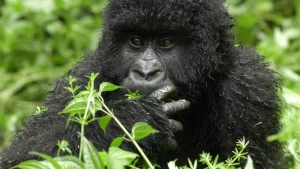
Gorilla trekking is a guided wildlife activity in which visitors walk through natural forest habitat with trained trackers and rangers until they locate a habituated gorilla family. Unlike animals in a zoo or sanctuary, these gorillas roam freely. They choose where to feed, rest, socialize, build nests, and move each day.
Trackers monitor the habituated families and help trekking guides determine the direction in which the gorillas have traveled. Visitors then follow forest trails and, when necessary, move through thicker vegetation until they eventually reach the family allocated to their group.
The actual search may last anything from a relatively short walk to several demanding hours. Uganda Wildlife Authority says gorilla treks in Uganda commonly last approximately two to seven hours depending on the location of the animals and prevailing conditions. Once trekkers reach the assigned family, the standard observation period lasts one hour.
That hour can pass remarkably quickly.
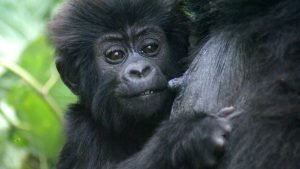
A silverback may sit quietly among the vegetation while females feed nearby. Young gorillas could climb branches, tumble through leaves, chase one another, or remain close to their mothers. Infants occasionally appear from beneath their mother’s arms before disappearing again into thick vegetation. Every family behaves differently, and even the same group can provide a completely different experience from one day to the next.
The uncertainty makes gorilla trekking very different from a staged wildlife attraction. Nobody can instruct a gorilla to sit in good light for photographs. Neither can guides determine exactly where a family will be found that morning.
Visitors step temporarily into the gorillas’ world rather than asking the animals to enter theirs.
Where Can You Go Gorilla Trekking in Africa?
Several African countries have wild gorilla populations, but established tourism experiences vary significantly.
For travelers primarily interested in mountain gorillas, Uganda and Rwanda currently provide the best-established international tourism infrastructure. Mountain gorillas occur naturally only in the Bwindi-Sarambwe ecosystem and the Virunga Massif, which extends across Uganda, Rwanda, and the Democratic Republic of the Congo. The International Gorilla Conservation Programme reported a global mountain gorilla estimate of 1,063 based on the most recently published combined census figures, although a newer Bwindi-Sarambwe survey launched in 2025 and Uganda Wildlife Authority said in September 2026 that the latest genetic-analysis results were still awaited.
Uganda offers trekking in:
- Bwindi Impenetrable National Park
- Mgahinga Gorilla National Park
Rwanda offers trekking in:
- Volcanoes National Park
The Democratic Republic of the Congo historically offers mountain gorilla trekking in:
- Virunga National Park
However, travelers need to pay particular attention to current conditions in the DRC. As of September 2026, Virunga National Park’s official tourism website states that gorilla and Nyiragongo treks remain closed until further notice. Anyone researching older articles advertising active Virunga gorilla tours should therefore verify the present situation rather than assuming those itineraries remain available.
For a different gorilla experience, travelers can also explore parts of Central and West Africa where western lowland gorillas occur. Odzala-Kokoua National Park in the Republic of Congo protects critically endangered western lowland gorillas and continues gorilla habituation, monitoring, and tourism-related conservation work.
Therefore, the phrase gorilla trekking in Africa can describe several distinct experiences rather than one identical activity.
Mountain Gorillas Versus Lowland Gorillas
Understanding the difference between gorilla subspecies helps travelers choose the experience they want.
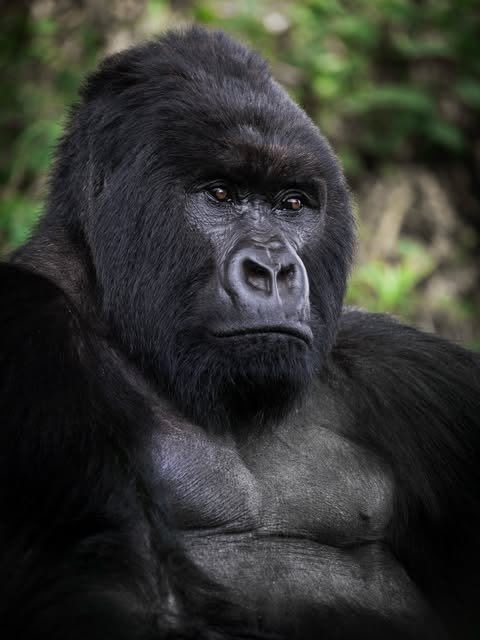
Mountain gorillas are a subspecies of eastern gorilla adapted to life at high elevations. They have thick fur that helps them survive in cool, wet montane forests. The International Gorilla Conservation Programme notes that mountain gorillas inhabit high-altitude environments and normally live in social families led by a dominant silverback.
Western lowland gorillas occur farther west in the forests of Central Africa. Their habitat, ecology, appearance, and travel logistics differ from those associated with mountain gorillas.
Most first-time gorilla safari travelers choose Uganda or Rwanda because mountain gorilla tourism is well established, international access is relatively straightforward, and combining gorillas with other safari activities is easier.
Travelers seeking a more remote Congo Basin expedition may instead consider western lowland gorilla experiences. Odzala-Kokoua, for example, lies within a vast Central African rainforest ecosystem containing gorillas, forest elephants, chimpanzees, buffalo, bongo, sitatunga, and hundreds of bird species. African Parks describes it as one of Africa’s oldest national parks and a major protected area within the Congo Basin.
Neither experience should be viewed as simply a substitute for the other. Mountain gorilla trekking emphasizes highland rainforest hiking and close observation of habituated families, whereas lowland gorilla expeditions can feel more remote and deeply connected to the immense forests of Central Africa.
Gorilla Trekking in Uganda
Uganda is one of Africa’s principal gorilla trekking destinations and provides two separate national parks for mountain gorilla encounters.
Bwindi Impenetrable National Park is the country’s best-known gorilla destination. Its dense rainforest, steep valleys, mist-covered ridges, streams, and extraordinary biodiversity create the dramatic setting most travelers imagine when dreaming about a gorilla trek.
The park contains four principal trekking sectors:
Buhoma, in the northern part of the park, has a long history of gorilla tourism and a broad selection of accommodation.
Ruhija, on Bwindi’s eastern side, offers beautiful highland scenery and convenient combinations with destinations such as Queen Elizabeth National Park.
Rushaga, in the south, supports several trekking opportunities and is closely associated with Uganda’s Gorilla Habituation Experience.
Nkuringo, also in southern Bwindi, is known for dramatic landscapes and challenging terrain.
Uganda Wildlife Authority identifies these four areas as Bwindi’s primary gorilla trekking sectors.
Choosing the correct sector is one of the most important decisions when planning a Uganda gorilla safari. A permit is linked to a particular trekking area, and accommodation should ideally be booked nearby.
Travelers sometimes make the mistake of thinking that all Bwindi lodges are located close together because they share the same national park name. In reality, mountainous roads separate different sectors, and driving between them can take considerable time.
Lena Tours therefore recommends matching the lodge to the permit sector from the beginning rather than choosing accommodation first and attempting to solve transportation problems afterward.
Bwindi Impenetrable National Park
Few African park names create as much imagination as Bwindi Impenetrable National Park.
The forest feels ancient, dense, and alive. Towering trees rise above tangled vegetation while vines, ferns, shrubs, and mosses fill the lower layers. Mist occasionally hangs between hills, particularly during cool mornings, creating the atmospheric landscape that makes gorilla trekking photographs so recognizable.
Although gorillas are the major attraction, Bwindi contains far more than one species. Birdlife, butterflies, forest mammals, monkeys, and diverse vegetation make the park one of Uganda’s most important natural ecosystems.
The trekking experience changes considerably depending on the gorillas’ location.
On some mornings, trackers may find a family relatively close to the starting point. Another group may need to climb for several hours through steep terrain before reaching its assigned gorillas.
Consequently, travelers should avoid planning the experience with a fixed expectation.
One visitor may describe a gentle ninety-minute search, whereas another traveler trekking a different family on the same day might spend several hours crossing hills.
Neither experience is more authentic.
The gorillas decide where they move.
Buhoma Gorilla Trekking Sector
Buhoma is perhaps Bwindi’s most internationally recognized sector.
Located on the northern side of the forest, it was among the first areas developed for organized gorilla tourism in Uganda. The community around the park entrance contains numerous lodges ranging from simpler accommodation to high-end properties.
Buhoma’s tourism infrastructure makes it particularly attractive for travelers who appreciate being close to the trekking headquarters.
Another advantage is its position for certain Uganda safari routes. Visitors traveling from Queen Elizabeth National Park’s Ishasha region can continue toward Buhoma, allowing tree-climbing lion searches and gorilla trekking to fit naturally within one itinerary.
The landscape still varies by family and tracking location, so no one should assume Buhoma guarantees an easy trek.
Gorillas do not remain beside park headquarters simply because tourists are arriving.
Depending on their movement, your day may include significant hills and dense vegetation.
Nevertheless, Buhoma remains a highly appealing choice for first-time visitors who value established accommodation and straightforward safari combinations.
Ruhija Gorilla Trekking Sector
Ruhija sits in the eastern part of Bwindi and provides another distinctive mountain gorilla experience.
The higher elevations create cool temperatures, beautiful views, and excellent forest scenery. Birdwatchers often appreciate the region because Bwindi contains an exceptional range of Albertine Rift species.
Ruhija can fit particularly well into itineraries approaching Bwindi from Kabale, Lake Bunyonyi, or Queen Elizabeth National Park.
Because mountain weather changes quickly, visitors trekking here should carry waterproof protection even when the morning begins under clear skies.
Several aspects of the terrain can feel demanding, but proper footwear, a steady pace, and porter assistance make the experience much more manageable.
Travelers should also remember that trekking difficulty cannot be assigned permanently to one sector.
A supposedly “easy” family can move far into the forest overnight.
The following day’s trek might therefore become far more challenging than expected.
Rushaga Gorilla Trekking Sector
Rushaga has become one of southern Bwindi’s most important gorilla tourism areas.
Its location works particularly well for travelers approaching Uganda through Kisoro or combining Bwindi with Mgahinga Gorilla National Park.
Rushaga is also important for visitors interested in the Gorilla Habituation Experience, an extended form of gorilla observation in which participants accompany researchers and habituation teams working with gorillas that are becoming accustomed to controlled human presence.
Standard trekking and habituation should not be confused.
Ordinary trekking involves a fully habituated family and approximately one hour of observation once the gorillas are located. The habituation experience allows more prolonged involvement in the process and attracts travelers particularly interested in primate behavior, conservation, or photography.
Because permit structures can change, Lena Tours recommends confirming current UWA regulations and availability when booking.
Nkuringo Gorilla Trekking Sector
Nkuringo is famous for magnificent landscapes and physically demanding hills.
Travelers approaching from southern Uganda enjoy sweeping views of the surrounding highlands, and some lodges offer exceptional scenery toward the Virunga volcanoes.
The terrain contributes enormously to the experience.
A difficult climb through the forest can create an incredible sense of achievement when gorillas are finally located.
However, visitors should prepare properly.
Good hiking boots, water, appropriate clothing, a walking stick when available, and porter assistance are particularly valuable.
Anyone concerned about fitness should mention this during planning. Rangers may consider fitness and other factors when allocating groups on trekking morning, although nobody can guarantee an easy route.
The objective is not to prove how strong you are.
Your goal is to arrive safely, enjoy the gorillas, and return from the forest with enough energy to appreciate what you have experienced.
Gorilla Trekking in Mgahinga Gorilla National Park
While Bwindi receives much of the attention, Mgahinga Gorilla National Park provides one of Uganda’s most beautiful primate experiences.
The park forms part of the greater Virunga landscape and lies against the dramatic backdrop of volcanic mountains.
Instead of the endless green ridges associated with Bwindi, Mgahinga combines bamboo zones, montane vegetation, volcanic scenery, and open views.
Uganda Wildlife Authority currently identifies Mgahinga as Uganda’s second gorilla trekking destination and notes that its permit availability is much smaller than Bwindi’s.
For travelers interested in primates, Mgahinga offers an additional advantage: golden monkey tracking.
This makes it possible to spend one day with mountain gorillas and another observing energetic golden monkeys moving through bamboo forest.
Active travelers can also consider volcano hiking.
As a result, Mgahinga works especially well for visitors who want a compact adventure-focused extension around Kisoro.
Uganda’s Gorilla Conservation Story
Mountain gorilla tourism exists because extensive conservation work has taken place over many decades.
Uganda Wildlife Authority reported in September 2026 that the 2018 census estimated 459 mountain gorillas in the Bwindi population, while results from the latest genetic work connected to the 2025/2026 survey were still awaited. UWA also described the increase from earlier census estimates as part of a longer conservation story involving habitat protection, research, tourism, ranger work, and community participation.
The International Gorilla Conservation Programme uses the most recently established combined global estimate of 1,063 mountain gorillas.
These figures deserve context.
Mountain gorillas remain endangered.
Population growth does not mean conservation work can stop. Their habitat remains geographically limited, and disease, habitat pressure, human-wildlife interactions, and other threats require continuous management.
Tourism can contribute positively when conducted responsibly because permits generate revenue connected to conservation and protected-area management.
Visitors therefore participate in a larger conservation system every time they follow trekking rules, purchase permits through legitimate channels, employ local porters, stay in community-linked accommodation, and respect the forest.
Gorilla Trekking in Rwanda
Rwanda’s Volcanoes National Park is another internationally celebrated mountain gorilla destination.
Situated in the country’s northwest, the park forms part of the Virunga Massif and contains dramatic volcanic scenery.
For many visitors, Rwanda’s major attraction is accessibility.
The journey from Kigali to the Volcanoes region is considerably shorter than the traditional road journey from Entebbe or Kampala to Bwindi. Consequently, travelers with limited time can potentially arrange a relatively compact gorilla itinerary.
The experience still follows the fundamental principles seen elsewhere: briefing, allocation to a habituated family, guided trekking, controlled observation, and conservation rules.
Visit Rwanda currently lists the standard international gorilla permit price at US$1,500 per person per day, with a minimum trekking age of 15.
Rwanda therefore occupies a high-price position within mountain gorilla tourism.
Some travelers choose the destination because of its short transfer from Kigali, polished infrastructure, and luxury accommodation around Volcanoes National Park.
Others prefer Uganda because permit costs can be lower and gorilla trekking fits naturally into a longer wildlife circuit.
The experience itself should not be reduced entirely to price.
Travel style, available time, desired accommodation, other safari interests, flight connections, and preferred scenery should all influence the decision.
Uganda or Rwanda for Gorilla Trekking?
Travelers frequently ask whether Uganda or Rwanda is the better gorilla trekking destination.
There is no universal answer because the two countries suit different travel priorities.
Uganda provides more gorilla trekking sectors and allows visitors to choose between Bwindi and Mgahinga. It also combines easily with chimpanzee trekking in Kibale, wildlife safaris in Queen Elizabeth National Park, boat cruises, tree-climbing lions in Ishasha, Murchison Falls, Lake Mburo, and several other attractions.
Rwanda offers straightforward access to Volcanoes National Park from Kigali and is particularly attractive to travelers planning shorter gorilla-focused trips.
Landscape also differs.
Bwindi delivers the feeling of entering a deep ancient rainforest filled with steep hills, tangled vegetation, and enclosed green scenery.
Volcanoes National Park offers the impressive presence of the Virunga volcanoes.
Mgahinga combines both highland forest and volcanic landscapes.
Another distinction is permit cost. Rwanda currently lists the standard international price at US$1,500. Uganda Wildlife Authority introduced discounted low-season rates in 2026 for April, May, and November, while its updated tariff structure continues to distinguish rates by visitor category. Exact prices should always be checked for the travel date because UWA tariffs can change.
Rather than asking which country is “best,” consider which itinerary matches your style.
A traveler with three days available after a conference in Kigali may appreciate Rwanda.
Someone planning twelve days of primates, lions, elephants, waterfalls, boat cruises, and gorillas may find Uganda particularly practical.
Gorilla Trekking in the Democratic Republic of the Congo
The Democratic Republic of the Congo has historically offered mountain gorilla trekking in Virunga National Park, Africa’s oldest national park.
Virunga contains extraordinary biodiversity and dramatic landscapes ranging from volcanic terrain to forests and savannah.
Its mountain gorillas remain an important conservation population.
Virunga reports that its teams monitor gorilla families daily and continue intensive conservation work even while tourism is suspended.
For tourism planning, however, current information is essential.
As of September 2026, Virunga’s official visitor site states clearly that gorilla and Nyiragongo treks are closed until further notice.
Travelers should therefore avoid booking a DRC gorilla itinerary based on outdated guides that describe regular Virunga departures.
Security conditions, border regulations, park operations, and tourism availability can change.
Whenever Virunga tourism eventually resumes, prospective travelers should rely on the park itself and current official travel guidance rather than assuming earlier procedures remain unchanged.
Western Lowland Gorilla Experiences
Mountain gorillas dominate international safari marketing, but Africa offers additional gorilla experiences.
Odzala-Kokoua National Park in the Republic of Congo protects western lowland gorillas within one of the Congo Basin’s vast rainforest landscapes.
African Parks describes the reserve as a biodiversity hotspot containing western lowland gorillas, forest elephants, chimpanzees, buffalo, antelope, and more than 440 bird species.
Gorilla habituation and monitoring remain central to conservation there. Teams spend extensive periods observing gorilla groups and gradually helping selected families become comfortable with controlled human presence, which supports both scientific work and carefully managed tourism.
This is a different style of African adventure.
Travel logistics may be more complex, trips can be expensive, and the rainforest environment feels markedly different from Uganda’s mountain landscapes.
For experienced African travelers seeking deeper exploration of the Congo Basin, however, a western lowland gorilla expedition can offer an extraordinary extension beyond the classic mountain gorilla circuit.
What Is Gorilla Habituation?
Habituation is the gradual process of helping wild gorillas become accustomed to non-threatening human presence.
Researchers, trackers, veterinary teams, and conservation personnel repeatedly approach a selected family over an extended period.
At first, the animals may remain distant or react cautiously. Over time, predictable and respectful contact helps reduce their concern.
Eventually, a group may become sufficiently accustomed to controlled observation that regular tourism can begin.
Habituation does not domesticate gorillas.
They remain wild animals.
Nobody trains them to pose, approach visitors, or remain in a particular location.
Instead, they learn that calm human observers are not necessarily a threat.
This process supports responsible gorilla tourism because taking tourists directly to completely unfamiliar wild groups would create unnecessary stress and potential danger.
Experienced trackers also become familiar with individual animals and family relationships.
That knowledge helps guides interpret behavior during tourist visits.
Gorilla Trekking Versus Gorilla Habituation
Visitors sometimes confuse standard gorilla trekking with the Gorilla Habituation Experience.
The two activities share a forest setting but differ in purpose and duration.
Standard gorilla trekking normally involves locating an established habituated family and observing it for approximately one hour.
The habituation experience offers a longer and more research-oriented encounter connected to the gradual habituation process.
Photographers often appreciate having additional time because rainforest photography is unpredictable.
A gorilla may spend long periods behind leaves before suddenly moving into an open position.
More time can create additional opportunities to observe behavior rather than concentrating exclusively on obtaining photographs during a limited window.
Wildlife enthusiasts also enjoy watching researchers identify individuals, interpret interactions, and record observations.
Nevertheless, the longer activity can be physically demanding.
Participants should be comfortable spending extended periods in the forest.
What Happens on Gorilla Trekking Day?
A gorilla trekking morning usually begins early.
After breakfast at your lodge, your Lena Tours guide transfers you to the appropriate park headquarters.
Trekkers then register and attend a briefing.
Rangers explain forest conditions, gorilla behavior, photography rules, conservation requirements, and what visitors should do when encountering the family.
Groups are then allocated.
Several considerations may influence allocation, including permit sector, available families, group composition, fitness, and operational decisions made by park authorities.
Porters can normally be hired before departure.
Once preparations are complete, trekkers enter the forest behind their guide.
The first section may follow an established trail.
Later, trackers may direct the group toward less defined areas depending on the gorillas’ location.
The forest becomes part of the adventure.
You may cross streams, step over roots, descend slippery slopes, or climb through thick vegetation.
Eventually, communication from the trackers changes.
The gorillas are close.
Your guide may ask you to prepare cameras, leave walking sticks or bags with porters if appropriate, and approach quietly.
Then the forest opens just enough to reveal a dark shape among the leaves.
For many travelers, that first glimpse becomes one of the most emotional moments of their safari.
The First Gorilla Encounter
Seeing a mountain gorilla photograph is completely different from standing in the forest beside one.
Their size becomes immediately apparent.
A mature silverback possesses enormous shoulders and arms, yet his behavior may be surprisingly calm.
Instead of roaring or constantly displaying dominance, he may simply pull leaves toward himself and eat while watching the group occasionally.
Nearby females might rest with infants.
Juveniles often bring more activity.
One may climb a thin sapling until it bends under the animal’s weight, while another chases a sibling through vegetation.
These small moments reveal the complexity of gorilla family life.
Visitors frequently arrive expecting the silverback to dominate every second of the encounter.
Instead, they discover an intricate social group filled with feeding, grooming, play, communication, rest, and parental care.
That is what makes gorilla trekking so compelling.
You are not simply checking an animal species off a list.
For one carefully managed hour, you watch a family living its ordinary life.
How Difficult Is Gorilla Trekking?
Difficulty varies considerably.
Several factors determine how demanding your trek becomes:
The gorillas’ location matters most.
Terrain also plays an important role.
Rain changes trail conditions.
Altitude affects some visitors more than others.
Individual fitness determines how tiring the same route feels.
A traveler who regularly hikes mountains may find the trek moderate.
Someone who rarely walks uphill could find the same route extremely challenging.
Uganda Wildlife Authority describes gorilla tracking as requiring moderate fitness and notes that the activity may take approximately two to seven hours.
Preparation helps enormously.
Start walking regularly several weeks before traveling.
Include hills whenever possible.
Use stairs if you live in a flat area.
Wear the hiking boots you plan to bring so they are already comfortable.
You do not need professional-level fitness.
Steady stamina is more useful than speed.
Why Hiring a Porter Is Worthwhile
One of the most valuable gorilla trekking decisions is hiring a porter.
Some visitors initially decline because their backpack feels light at 8 a.m.
Three hours later, after climbing muddy hills, the same bag may feel considerably heavier.
A porter carries water, lunch, rain gear, and other equipment.
More importantly, porters help trekkers negotiate difficult sections.
A steady hand while crossing a slippery slope can make an enormous difference.
Hiring locally also distributes tourism income into communities surrounding the protected areas.
A porter may be supporting school fees, household expenses, or other family needs.
For this reason, porter employment combines practical trekking assistance with direct economic benefit.
Even physically strong travelers can hire one.
You do not have to wait until you are exhausted before deciding that help would have been useful.
Gorilla Trekking Safety
Gorilla trekking takes place under organized ranger supervision.
Tourists do not enter the forest alone and search for wild gorillas independently.
Habituated families are monitored, guides understand gorilla behavior, and visitor conduct follows established rules.
The International Gorilla Conservation Programme notes that gorillas generally do not behave aggressively toward properly managed tourist groups and identifies hiking-related issues such as falls on steep terrain as a more realistic visitor concern.
That does not mean gorillas should be regarded as harmless pets.
A silverback is an immensely powerful wild animal.
Visitors remain safe largely because people respect his space and follow instructions.
Sudden running, touching animals, approaching infants, throwing objects, or attempting to provoke a reaction would be irresponsible.
Calm behavior greatly reduces avoidable risk.
What If a Gorilla Approaches?
Gorillas do not understand tourist distance regulations.
Occasionally, a juvenile may move closer because of curiosity.
An adult could also walk along the path occupied by visitors.
When this happens, remain calm.
Do not reach out.
Avoid backing away quickly unless the ranger instructs you to move.
Never attempt to touch the gorilla.
Your guide understands the animal’s behavior and will tell you what to do.
Visitors sometimes become nervous because they imagine that proximity automatically means aggression.
It does not.
A gorilla may simply be moving from one feeding area to another.
Allow it to pass.
The safest approach is to remain predictable and non-threatening.
What If a Silverback Charges?
Gorillas use physical displays as part of communication.
A silverback may beat his chest, vocalize, move quickly, or break vegetation.
A display does not always mean an attack will follow.
Visitors should rely on ranger instructions rather than instinct.
Running can create additional problems.
Besides potentially escalating a wildlife situation, sprinting through steep forest terrain may cause a serious fall.
If your ranger tells you to remain still, follow that instruction.
Avoid trying to challenge the animal through prolonged aggressive staring or imitation.
Your objective is not to demonstrate bravery.
The forest belongs to the gorillas.
Guests should behave accordingly.
Gorilla Trekking Rules
Gorilla trekking regulations protect both visitors and gorillas.
Although exact procedures can evolve, the principles remain consistent.
Keep the required distance whenever possible.
Stay with your group.
Speak quietly.
Switch off camera flash before reaching the gorillas.
Avoid eating while observing them.
Never feed wildlife.
Leave no rubbish behind.
Do not touch a gorilla even when an animal moves close.
Visitors who feel unwell should report their condition before trekking because human illnesses can threaten gorilla health.
Young travelers must also meet the minimum-age requirement. Rwanda currently lists 15 as the minimum age for gorilla tracking, while Uganda applies similar age restrictions under its gorilla tourism framework.
Following these rules should not feel like a limitation.
They are the reason tourists can continue entering a fragile habitat without turning wildlife into entertainment.
Why Human Illness Matters
Gorillas are genetically close enough to humans that infectious disease represents an important conservation concern.
Respiratory illnesses are particularly relevant.
A simple cold that causes only mild inconvenience for a traveler can create a greater problem for a gorilla family.
Consequently, visitors who are clearly sick should not attempt to hide symptoms simply because they have spent months planning the trip.
Tell park staff.
Conservation must take priority over completing one activity.
Good hygiene before trekking also makes sense.
Wash hands regularly, maintain sensible health practices during international travel, and avoid unnecessary exposure to illness in the days before your permit.
The experience depends on healthy gorillas.
Protecting them is part of being a responsible visitor.
What to Wear for Gorilla Trekking
Proper clothing increases both comfort and safety.
Wear long trousers because vegetation can scratch exposed skin.
A lightweight long-sleeved shirt protects arms from branches, insects, and stinging plants.
Hiking boots should provide strong grip.
Smooth-soled trainers are less suitable on muddy slopes.
Long socks can be useful because travelers often tuck trousers inside them to reduce contact with insects around the ankles.
Gardening-style gloves provide extra protection when holding vegetation for balance.
Carry a lightweight waterproof jacket even during relatively dry periods.
Mountain forests create their own weather, and rain can arrive unexpectedly.
Neutral outdoor clothing usually works well.
Expensive safari fashion is unnecessary.
Your priorities should be grip, protection, flexibility, and comfort.
What to Carry in Your Daypack
A gorilla trekking backpack should remain relatively light.
Water is essential.
Carry enough to remain hydrated during several hours of walking.
Your lodge can usually prepare a packed lunch or snack.
Bring rain protection.
Keep personal medication easily accessible.
A waterproof cover protects cameras and phones from sudden rainfall.
Spare batteries can be useful because cold or damp conditions occasionally reduce battery life.
Insect repellent and sunscreen also deserve space, depending on the season and individual needs.
Professional photographers may carry additional lenses.
Casual travelers often find that one versatile camera or smartphone provides enough flexibility.
Avoid bringing equipment that you will resent carrying after several hours of climbing.
Porters can help considerably, but unnecessary weight remains unnecessary weight.
Gorilla Trekking Photography
Mountain gorillas are incredibly photogenic, but rainforest photography can be challenging.
Light changes rapidly beneath dense vegetation.
A gorilla may sit in deep shade before suddenly moving through a bright opening.
Prepare your camera settings before the encounter begins.
Flash should remain off.
Consider using a higher ISO when light becomes limited.
A moderate telephoto or versatile zoom can work particularly well because visitors should not deliberately move closer simply to fill the frame.
Mobile phones now produce excellent results, particularly when lighting is reasonable.
More importantly, do not experience the entire hour through a screen.
Take photographs, then lower your camera.
Watch the gorillas directly.
Notice their sounds.
Observe the way a mother holds her infant.
Listen to leaves tearing as a silverback feeds.
Many of the strongest memories will never appear in a photograph.
Best Time for Gorilla Trekking in Africa
Gorilla trekking operates throughout much of the year in Uganda and Rwanda.
Drier seasons often attract more visitors because forest trails may be easier to negotiate.
However, “dry season” should never be interpreted as a guarantee that rain will not fall inside a tropical mountain forest.
Rain can occur at almost any time.
Wetter periods create muddier conditions but also offer beautiful green scenery.
Cloud cover can produce excellent photography because harsh sunlight becomes less severe.
Permit demand may vary seasonally as well.
Uganda Wildlife Authority introduced discounted low-season gorilla permit rates for April, May, and November in 2026, demonstrating the country’s effort to encourage travel outside peak periods.
Travelers focused on value may therefore want to compare different months.
Those with strict dates should reserve early rather than waiting for discounts.
Gorilla Trekking During the Dry Season
Many visitors target June through September or periods around December to February because rainfall can be lower.
Trail conditions may become somewhat easier.
Road travel around mountainous regions can also be more predictable.
However, peak periods frequently bring stronger permit demand.
Popular lodges may fill quickly.
Booking several months in advance becomes especially important for travelers requiring specific accommodation standards or sectors.
Another advantage of early planning is that the entire safari can be designed around the permit.
Instead of purchasing whatever sector remains available and then trying to restructure the route, Lena Tours can secure the permit and build the journey logically around it.
Gorilla Trekking During the Rainy Season
Rain should not discourage every traveler.
Uganda’s forests look especially lush during wetter months.
Mist hanging between hills can create remarkable scenery.
Visitor numbers may also feel lower outside major travel periods.
The primary challenge is mud.
Trails become slippery, vegetation remains wet, and steep hills require slower movement.
Good boots become even more important.
Waterproof bags protect electronics.
Porters provide valuable support.
With appropriate preparation, rainy-season trekking can be deeply rewarding.
Some travelers even prefer the atmospheric quality of a wet rainforest.
After all, Bwindi would not be an extraordinary green forest without rainfall.
Gorilla Trekking Permits
A gorilla permit is required for regulated trekking.
Permits limit visitor numbers and help authorities manage daily access to specific gorilla families.
Because availability is finite, securing permits should come before booking non-refundable accommodation.
Rwanda currently lists its standard international gorilla permit at US$1,500.
Uganda maintains a multi-category tariff structure and in 2026 introduced special low-season rates for April, May, and November. UWA’s February 2026 notice lists low-season gorilla tracking at US$600 for foreign non-residents and US$500 for foreign residents during those months. The authority also announced a revised tariff structure effective January 2027, so travelers should confirm the applicable price for their exact travel date.
This is precisely why old online articles can create confusion.
Permit rates and booking procedures change.
Always work with current official information.
Booking Gorilla Permits Early
High-demand dates can sell out.
A traveler planning a honeymoon, family holiday, photography trip, or peak-season safari should avoid leaving permit arrangements until the final weeks.
Once your approximate travel period is known, Lena Tours can check the possibilities and design the itinerary around available sectors.
Payment rules also matter.
Uganda Wildlife Authority announced in 2026 that the previous seven-day unpaid reservation window had been suspended and that permits would be secured upon full payment at booking.
This means delaying payment after availability is found may result in losing the desired space.
Preparation becomes particularly important for larger groups because everyone usually needs to trek on the same date.
Gorilla Trekking Age Limit
Standard gorilla trekking is generally restricted to visitors aged 15 years and above in the main mountain gorilla destinations.
Visit Rwanda confirms a minimum age of 15 for Volcanoes National Park gorilla tracking.
The rule exists for several reasons.
Forest terrain can be physically demanding.
Visitors also need to remain calm when a large gorilla approaches.
Long trekking hours, mud, rain, insects, and close wildlife encounters may prove difficult for younger children.
Families traveling with children below trekking age can still enjoy Uganda.
Alternative experiences might include wildlife drives, boat cruises, community visits, nature walks appropriate to age, or lodge activities while adults and older teenagers trek.
Discuss children’s ages during planning so suitable arrangements can be built into the itinerary.
Gorilla Trekking for Older Travelers
People sometimes assume gorilla trekking belongs exclusively to young adventure travelers.
That is not true.
Many active travelers in their sixties and seventies complete gorilla treks successfully.
Age itself matters less than mobility, fitness, balance, health, and preparation.
Hiring a porter is strongly recommended.
A walking stick can provide additional stability.
Spending a comfortable night near the trekking headquarters also prevents an unnecessarily exhausting morning transfer.
Travelers with health conditions should consult an appropriate medical professional before undertaking strenuous forest hiking.
Never compare yourself with somebody else’s pace.
Your gorilla trek is not a race.
Gorilla Trekking for Solo Travelers
Solo travelers can participate comfortably because individual permit holders join organized trekking groups.
Nobody is sent into Bwindi alone.
During a private Uganda safari, a solo guest may travel between destinations with a dedicated Lena Tours driver-guide and then join other visitors for the park’s official gorilla activity.
This arrangement creates a useful balance.
Road transfers remain personalized, while the trekking day provides opportunities to meet other wildlife enthusiasts.
Solo travel also allows flexibility.
A guest can spend additional time photographing landscapes, extend stays at preferred lodges, or combine gorilla trekking with specialized interests such as birding.
Gorilla Trekking for Couples
Few wildlife experiences are more memorable to share as a couple.
Gorilla trekking works particularly well within honeymoons, anniversaries, or special-occasion safaris.
Couples can combine the adventure with romantic lodges overlooking forests, lakes, or volcanic landscapes.
After the trek, returning to a comfortable lodge for a warm shower, relaxed dinner, and evening beside a fireplace can become part of the experience.
A honeymoon itinerary does not need to be physically demanding every day.
Lena Tours can alternate active adventures with slower days, allowing travelers to enjoy both Uganda’s wilderness and their accommodation.
Gorilla Trekking for Families
Families with teenagers aged 15 and above can make gorilla trekking part of a broader educational safari.
Seeing gorillas in the wild creates an opportunity to discuss conservation, endangered species, ecosystems, tourism revenue, and relationships between protected areas and surrounding communities.
Parents should prepare teenagers for the activity before arrival.
Phones may need to remain quiet.
Instructions must be followed immediately.
Wildlife cannot be touched.
There may be several hours of hiking before the reward appears.
Teenagers who understand these expectations often find the experience incredibly meaningful.
Younger children can still enjoy many other Ugandan attractions while older family members trek.
Gorilla Trekking and Chimpanzee Tracking
One of Uganda’s major advantages is the ability to combine mountain gorillas with chimpanzees.
Kibale Forest National Park is the country’s premier chimpanzee destination.
This creates a fascinating primate journey because gorillas and chimpanzees offer completely different encounters.
Gorillas often move slowly, feeding on vegetation and resting as a family.
Chimpanzees can be considerably more energetic.
They climb trees, vocalize loudly, travel quickly, and interact through complex social behavior.
Combining both experiences allows visitors to appreciate how diverse great apes can be.
A popular itinerary might begin with chimpanzee tracking in Kibale, continue through Queen Elizabeth National Park, and finish with gorilla trekking in Bwindi.
This route flows naturally through western Uganda.
Combining Gorillas With Queen Elizabeth National Park
Queen Elizabeth National Park creates one of the easiest wildlife combinations with Bwindi.
After primate experiences, travelers can enjoy traditional game drives in search of elephants, buffalo, antelope, lions, and other animals.
A boat safari along the Kazinga Channel offers another perspective.
Hippos, waterbirds, crocodiles, elephants, and buffalo can often be observed close to the water.
The Ishasha sector becomes especially relevant when traveling toward Bwindi.
The region is famous for lions that sometimes rest in fig trees.
A safari can therefore move from classic savannah wildlife into tropical gorilla forest without returning to Kampala.
That diversity makes Uganda particularly appealing for travelers who want more than one type of experience.
Combining Gorillas With Murchison Falls
A longer Uganda itinerary can include Murchison Falls National Park.
The landscape here contrasts dramatically with Bwindi.
Savannah replaces dense rainforest.
The Nile becomes the dominant feature.
Game drives reveal giraffes, elephants, buffalo, antelope, and predators.
Boat trips approach the base of Murchison Falls, where the river forces itself through a narrow rocky gap before exploding downstream.
Adding gorillas later in the journey creates enormous variety.
The traveler experiences open plains, a major river ecosystem, tropical forest, primates, and mountainous scenery in one country.
Combining Gorillas With Golden Monkeys
Mgahinga allows visitors to combine mountain gorillas and golden monkeys with minimal relocation.
Golden monkeys live in high-altitude bamboo and forest environments.
They are considerably smaller and more energetic than gorillas.
Watching them leap between bamboo stems creates a lively contrast with the heavier, more deliberate movement of mountain gorillas.
Travelers staying around Kisoro can allocate one day to each primate activity.
Adventurous visitors may add a volcano hike afterward.
Such an itinerary works particularly well for travelers who enjoy active holidays.
Lake Bunyonyi After Gorilla Trekking
After a demanding gorilla trek, Lake Bunyonyi provides an attractive place to slow down.
The lake’s surrounding hills and islands create peaceful scenery.
Visitors can spend time relaxing, taking gentle boat trips, photographing landscapes, or simply enjoying a slower day before continuing the safari.
Adding Lake Bunyonyi is especially useful for travelers who dislike moving continuously between parks.
A rest day helps balance the intensity of trekking.
The best itineraries are not always those containing the greatest number of activities.
Sometimes removing one transfer improves the entire experience.
Gorilla Trekking and Lake Mburo National Park
Travelers returning toward Kampala or Entebbe can include Lake Mburo National Park.
The park provides a convenient final safari stop after southwestern Uganda.
Its landscape contains zebra, impala, eland, buffalo, giraffe, and numerous birds.
Depending on current park offerings and arrangements, travelers may enjoy game drives, boat trips, or guided nature-based activities.
Because Lake Mburo lies closer to central Uganda than Bwindi, it can divide the long return journey.
This makes the final days less tiring.
How Many Days Do You Need?
A gorilla safari can range from a short three-day itinerary to an extensive multi-week journey.
A three-day Uganda gorilla safari generally focuses almost entirely on Bwindi.
Day one
Involves transfer from Entebbe or Kampala toward the gorilla region.
Day two
Is reserved for trekking.
Day three
Returns toward Entebbe.
Although possible, the journey contains considerable road travel.
A four- or five-day safari feels more relaxed and can incorporate Lake Bunyonyi, Mgahinga, or additional cultural activities.
Seven days allow visitors to combine gorillas with Queen Elizabeth National Park.
Ten days create enough time for gorillas, chimpanzees, wildlife, and scenic destinations.
Two weeks can include much of western Uganda without rushing.
The right duration depends on whether gorillas are the entire purpose of the trip or one highlight within a broader safari.
A Sample Three-Day Gorilla Safari
A short itinerary works for travelers with limited vacation time.
Day One: Depart Entebbe or Kampala and drive toward Bwindi. The route passes changing landscapes, towns, farmland, and rolling hills before reaching southwestern Uganda. Arrive at the lodge, enjoy dinner, and rest before trekking.
Day Two: Eat an early breakfast and transfer to park headquarters. Attend the official briefing, hire a porter, and enter the forest with your ranger. After locating the gorillas, enjoy the permitted viewing period before hiking back. Return to the lodge for rest.
Day Three: Travel back toward Entebbe or Kampala, stopping for meals and scenic breaks along the way.
Travelers wanting less road time can investigate domestic flight options depending on schedules and sector.
A Sample Five-Day Gorilla Safari
Five days create a more comfortable experience.
The first day can take travelers from Entebbe toward Lake Mburo or another intermediate stop.
A relaxed second day continues to Bwindi.
Day three becomes the gorilla trekking highlight.
The fourth day may include Lake Bunyonyi, Mgahinga, golden monkeys, or a community experience.
Day five returns toward Entebbe.
Compared with a rushed three-day itinerary, this structure allows travelers to appreciate the journey rather than seeing every road transfer as an obstacle between activities.
A Sample Seven-Day Primate and Wildlife Safari
Seven days allow a strong combination.
Begin with Kibale Forest for chimpanzees.
Continue toward Queen Elizabeth National Park for game drives and a boat safari.
Travel through Ishasha in search of tree-climbing lions.
Proceed to Bwindi.
Spend the following morning trekking gorillas.
A final scenic stop can break the return journey.
This type of itinerary demonstrates why Uganda works so well for primate tourism.
Chimpanzees, savannah animals, water-based wildlife, and gorillas all fit into one route.
A Ten-Day Uganda Gorilla Safari
Ten days allows a considerably deeper journey.
Travelers might begin at Murchison Falls, continue to Kibale, visit Queen Elizabeth National Park, pass through Ishasha, trek gorillas in Bwindi, relax near Lake Bunyonyi, and finish around Lake Mburo.
Such an itinerary avoids making the gorilla trek feel isolated.
Instead, it becomes part of a complete exploration of Uganda.
Wildlife encounters develop progressively.
Savannah experiences lead into forests.
Long road journeys are divided naturally.
Accommodation styles can vary between national parks, forest lodges, lakeside retreats, and wildlife camps.
For first-time visitors to Uganda, this is often an excellent way to understand the country’s diversity.
Getting to Bwindi From Entebbe
The traditional road journey from Entebbe or Kampala toward Bwindi takes much of the day.
Exact travel time varies according to the trekking sector, traffic, weather, road conditions, and stops.
The drive should therefore be treated as a safari transfer rather than compared with a motorway journey in Europe or North America.
Scenery changes continuously.
Urban landscapes gradually give way to farmland, cattle country, rolling hills, and eventually the greener mountains of southwestern Uganda.
Lunch stops and photography breaks make the journey more comfortable.
Using an experienced driver-guide becomes important because local knowledge helps with routes and changing road conditions.
Flying to Bwindi
Domestic flights can reduce road travel.
Depending on schedules, travelers may fly toward Kihihi for northern Bwindi or Kisoro for southern areas and Mgahinga.
A road transfer from the airstrip completes the journey to the lodge.
Flying works especially well for travelers with limited time, luxury clients, older visitors who prefer shorter road journeys, or travelers combining Uganda with another East African country.
However, domestic flights come with luggage limitations and specific schedules.
The most practical arrangement depends on the entire itinerary.
Sometimes flying one direction and driving the other creates an ideal balance.
Accommodation Around Bwindi
Bwindi offers accommodation ranging from relatively simple lodges to luxury properties.
The most important consideration is location.
A beautiful lodge in the wrong sector may create a complicated trekking morning.
Therefore, accommodation should be selected only after confirming where your permit starts.
Budget travelers can stay in comfortable basic lodges that provide meals and easy access to park headquarters.
Mid-range properties often offer private cottages, hot showers, forest views, and pleasant dining.
Luxury lodges may add fireplaces, premium service, spa treatments, high-end cuisine, exceptional views, and more personalized attention.
The gorilla experience itself remains the same wildlife encounter regardless of lodge category.
Accommodation influences comfort before and after the trek rather than determining the quality of the gorilla family you see.
How Much Does Gorilla Trekking Cost?
Total safari cost depends on much more than the permit.
Consider transportation.
Accommodation category makes a significant difference.
Domestic flights raise the price.
Private versus shared travel also matters.
Length of safari influences the total.
Additional activities such as chimpanzee tracking, boat cruises, golden monkeys, or national park visits contribute further costs.
Then come meals, drinks outside inclusions, porter fees, tips, visas where applicable, insurance, and international flights.
A short road-based Uganda gorilla safari generally costs substantially less than a luxury fly-in itinerary.
Rather than asking only for the cheapest package, compare exactly what each price includes.
A very low quote may omit permits, park fees, meals, airport transfers, or suitable accommodation.
Budget Gorilla Trekking
Travelers can reduce costs without sacrificing the gorilla experience itself.
Choose comfortable budget accommodation near the correct sector.
Travel by road rather than domestic flight.
Keep the itinerary focused.
Visit during applicable low-season periods when permit promotions are available.
Travel with companions so vehicle costs are shared.
Avoid changing lodges every night unnecessarily.
However, do not save money by booking unofficial permits or unlicensed operators.
Gorilla trekking depends on regulated conservation systems.
Legitimate arrangements protect both your trip and the animals.
Luxury Gorilla Trekking
Luxury gorilla safaris emphasize comfort surrounding the forest experience.
Travelers may fly from Entebbe to a regional airstrip.
Premium lodges reduce transfer time and offer high service levels.
Private vehicles allow greater flexibility.
Spa treatments can feel particularly welcome after several hours of hiking.
Fine dining, scenic decks, fireplaces, attentive staff, and spacious cottages create a comfortable contrast with the demanding forest trek.
Some visitors combine Uganda and Rwanda or connect gorilla trekking with premium safaris elsewhere in East Africa.
The actual gorilla encounter remains wild and unscripted.
Luxury can improve the journey, but it cannot control the gorillas.
Is Gorilla Trekking Worth the Cost?
For travelers genuinely interested in wildlife, many consider the experience one of Africa’s major highlights.
The permit may seem expensive compared with a standard game drive.
However, gorilla tourism operates with very limited daily visitor numbers, intensive ranger work, continuous monitoring, conservation programs, and expensive protected-area management.
You are also accessing habitat occupied by an endangered great ape.
The experience should therefore not be compared directly with a mass-tourism attraction.
Value depends on personal priorities.
Someone who dreams about primates may regard the trek as the central reason for visiting Africa.
Another traveler more interested in large predators and open savannah may prefer allocating more of the budget to traditional safari parks.
Understanding your interests is essential.
Conservation and Your Gorilla Permit
Gorilla permits contribute to a tourism system connected with conservation.
Protected forests require rangers, monitoring, research, veterinary support, infrastructure, law enforcement, and community engagement.
Tourism also creates employment.
Guides, trackers, porters, lodge employees, drivers, craftspeople, farmers, and many other community members participate directly or indirectly in the visitor economy.
International Gorilla Conservation Programme initiatives highlight how conservation across Uganda, Rwanda, and the DRC depends on cooperation between protected-area managers and surrounding communities.
Responsible tourism therefore extends beyond simply avoiding litter.
Choosing legitimate operators, hiring local porters, respecting community initiatives, and following park regulations all contribute to the wider system.
Community Tourism Around Gorilla Parks
A gorilla safari can include community experiences outside the forest.
Travelers may visit craft projects, cultural programs, farms, or local initiatives depending on the area and itinerary.
These experiences should be approached respectfully.
Local residents are not tourist exhibits.
Good community tourism creates genuine economic benefits and encourages meaningful interaction.
Purchasing crafts directly, using local porters, and supporting appropriately managed projects can help spread tourism income beyond lodges and park authorities.
Conservation becomes more sustainable when nearby communities see practical benefits from protecting wildlife habitat.
Responsible Gorilla Tourism
Responsible gorilla trekking begins before the forest.
Choose authorized permits.
Follow health guidance.
Use licensed providers.
Respect the minimum age.
During the trek, remain with your guide.
Keep the required distance.
Avoid feeding or touching animals.
Use no flash.
Remove every piece of waste.
Afterward, consider the way you share the experience online.
Photographs showing responsible distance and respectful behavior help normalize ethical wildlife tourism.
Avoid celebrating images that make dangerous proximity look desirable.
Travel has influence.
Use it carefully.
Common Gorilla Trekking Mistakes
One frequent mistake is staying in the wrong Bwindi sector.
Another involves waiting too long to purchase permits.
Some visitors wear unsuitable footwear because they assume the trek resembles an easy park walk.
Others carry too much camera equipment.
A surprising number initially refuse porters before regretting the decision halfway through a long climb.
Travelers sometimes underestimate road distances as well.
Trying to schedule excessive activities can transform an enjoyable safari into a series of rushed transfers.
Finally, people occasionally arrive with unrealistic expectations based on social media.
Not every gorilla will sit in an open clearing.
Vegetation may obstruct photographs.
Rain may fall.
Your trek may last longer than expected.
Wildlife becomes meaningful precisely because it is not controlled.
Gorilla Trekking Myths
One myth suggests mountain gorillas constantly attack tourists.
They do not.
Regulated trekking involves habituated groups and trained personnel.
Another misconception claims habituated gorillas are tame.
They remain completely wild.
Some travelers believe the dry season means guaranteed sunshine.
Tropical mountain forests disagree.
Another myth says every trek requires extreme athletic fitness.
Many people of ordinary fitness complete gorilla trekking successfully with preparation and assistance.
A final misconception suggests Uganda provides an inferior experience simply because its permit is cheaper than Rwanda’s standard international permit.
Permit pricing reflects national tourism policies and conservation strategies; it does not determine how extraordinary the gorillas will be.
Preparing Physically
Start preparing several weeks before departure.
Walk regularly.
Increase distance gradually.
Include hills.
Use stairs where possible.
Strengthen legs through simple exercises.
Wear trekking boots during preparation.
Practice carrying a light daypack.
Good preparation reduces fatigue, and less fatigue improves balance and concentration.
You do not need to become an endurance athlete.
Consistency is enough for most healthy travelers.
Anyone with significant medical concerns should seek professional medical advice before committing to strenuous trekking.
Preparing Mentally
Physical fitness is only one part of the experience.
Prepare for uncertainty.
You may wait.
You may sweat.
Rain could soak the forest.
Mud might cover your boots.
Photographs may not look perfect.
A young gorilla could disappear behind leaves every time you lift the camera.
Accepting these possibilities helps you enjoy the experience rather than judging it against an idealized social-media image.
Adventure becomes memorable because unexpected things happen.
Health Preparation Before Traveling
Travel-health recommendations differ according to nationality, medical history, itinerary, current disease patterns, and length of stay.
Consult an appropriate travel-health provider well before departure.
Do not rely entirely on a tourism blog for vaccine or medication decisions.
Carry enough prescribed medicine for the trip.
Keep important medication in hand luggage during international flights.
Travel insurance should also match your itinerary and include appropriate coverage for outdoor activities and remote-area travel.
The forest is not the place to discover that your insurance excludes the activity you booked.
Travel Insurance
Comprehensive travel insurance is strongly recommended for a gorilla safari.
Policies differ substantially.
Review medical coverage.
Check emergency evacuation provisions.
Understand trip cancellation terms.
Verify whether trekking activities are covered.
Keep electronic and printed copies of policy information.
Remote wildlife destinations are part of the attraction, but remoteness can complicate unexpected medical or logistical problems.
Appropriate insurance provides important financial protection.
Gorilla Trekking and Rain
Rain belongs in a rainforest.
Instead of considering every shower a problem, prepare for it.
Carry waterproof clothing.
Protect cameras.
Use footwear with strong traction.
Allow the guide to set a safe pace.
Trails often become slippery quickly.
Trying to rush downhill creates unnecessary risk.
Rain can also transform the atmosphere.
Mist forms among trees, leaves become intensely green, and forest sounds change.
Some of the most memorable gorilla photographs come from damp, soft-light conditions.
Is Gorilla Trekking Scary?
Nervousness is normal.
Most people have never stood near an adult silverback before.
His physical size can initially feel intimidating.
The feeling often changes once visitors observe the family’s calm daily behavior.
Instead of focusing entirely on tourists, gorillas usually continue feeding, resting, grooming, and socializing.
Rangers provide reassurance because they understand the group.
Listen to them.
Fear becomes easier to manage once you understand what is actually happening.
Respect should remain.
Panic does not need to.
Can You Touch a Gorilla?
No.
Visitors should never deliberately touch a mountain gorilla.
Even if a juvenile moves close, resist the temptation.
Touching increases health risks and disrupts appropriate wildlife boundaries.
A mother or silverback may also respond differently from what you expect.
If an animal approaches, follow the ranger.
Remain calm.
Allow the gorilla to decide where it moves.
Close observation does not need physical contact to feel extraordinary.
Can Gorillas Touch You?
Occasionally, gorillas themselves may approach closely.
A curious youngster could pass near a visitor.
Because animals do not recognize visitor-distance rules, unexpected proximity sometimes occurs.
Do not encourage it.
Avoid reaching toward the animal.
Your ranger will instruct you.
The difference is important: an animal voluntarily reducing distance does not permit tourists to initiate contact.
Responsible gorilla tourism keeps human behavior predictable even when wildlife behaves unpredictably.
Can You Use Your Phone?
Yes, smartphones are commonly used for photographs, subject to park rules.
Disable the flash before approaching gorillas.
Put the phone on silent.
Avoid distracting yourself by posting or reviewing images while still in the forest.
The purpose of the trek is to experience the animals.
Social media can wait until you reach the lodge.
Carry a waterproof pouch or secure pocket to protect the phone against rain.
What Camera Lens Is Best?
A versatile zoom lens often provides the most flexibility.
Rainforest encounters can shift quickly between relatively close subjects and partially obscured animals farther away.
Large professional lenses produce excellent images but add weight.
If photography is the central purpose of your safari, the extra equipment may be worthwhile.
Casual photographers should prioritize portability.
Remember that carrying a huge lens through several hours of forest hiking is very different from using it beside a safari vehicle.
A porter can help with equipment, but valuable gear should remain protected against moisture.
Gorilla Trekking Etiquette
Good etiquette begins with patience.
Your group shares a limited viewing area.
Allow other visitors space.
Avoid stepping directly in front of somebody who has waited for a photograph.
Speak quietly.
Follow guide positions.
When a gorilla moves, do not rush after it.
Allow rangers to reposition the group.
The experience becomes better when everybody cooperates.
Wildlife encounters should not turn into competition for the closest picture.
What Happens After the Trek?
Once your observation time ends, guides lead the group away.
The walk back can still be physically demanding.
Continue concentrating on the trail.
Do not spend the entire return journey reviewing photographs while walking.
At the park headquarters, visitors may have time to celebrate and reflect on the experience.
Back at the lodge, a hot shower becomes especially welcome.
Wet clothing can be changed.
Boots begin drying.
Lunch or dinner tastes unusually satisfying after hours in the forest.
A relaxed afternoon is often preferable to scheduling another major activity immediately.
Why Gorilla Trekking Feels Different From a Game Drive
Traditional African safaris usually place visitors inside a vehicle.
That distance provides comfort and protection.
Gorilla trekking removes much of that separation.
You walk through the same vegetation.
Your boots sink into the same mud.
You hear branches breaking before you see the animal.
Every step toward the family builds anticipation.
When a silverback finally appears, nothing about the experience feels casual.
The physical effort creates emotional investment.
That combination explains why many seasoned safari travelers describe gorilla trekking as fundamentally different from observing wildlife on open plains.
Gorilla Trekking and Conservation Photography
Photography can become a powerful conservation tool when images communicate the value of living wildlife.
A photograph of an infant resting against its mother may help people understand what is at risk when habitats disappear.
Images can also show the work of trackers, porters, rangers, guides, and communities.
However, photographers carry responsibility.
Do not provoke behavior for a dramatic image.
Avoid approaching illegally.
Never encourage guides to break rules.
An ethical photograph is more valuable than a spectacular image obtained through irresponsible behavior.
Sustainable Travel Choices
Visitors can reduce environmental impact in simple ways.
Carry reusable water bottles when safe refill systems are available.
Avoid unnecessary single-use plastics.
Respect waste policies.
Support lodges with credible conservation practices.
Buy locally produced items rather than imported souvenirs.
Spend enough time in destinations rather than flying repeatedly between places simply to collect experiences.
Sustainable tourism does not require perfection.
It requires awareness and better choices.
Why Gorilla Tourism Benefits Local Economies
Gorilla tourism creates economic activity far beyond park gates.
A traveler pays for accommodation.
The lodge employs staff.
Food comes from suppliers.
Vehicles require drivers and maintenance.
Porters earn trekking income.
Craft sellers reach international customers.
Guides develop professional careers.
Communities around protected areas therefore interact with tourism in numerous ways.
When benefits are distributed fairly, conservation can become economically meaningful to people living beside wildlife habitat.
That relationship remains essential for long-term protection.
Gorilla Trekking From Europe
Travelers from Europe typically connect through major international hubs to Entebbe or Kigali.
Uganda itineraries normally begin at Entebbe International Airport.
Visitors may spend the first night nearby before traveling west.
Those combining Uganda and Rwanda can create cross-border itineraries depending on current immigration requirements and transport arrangements.
Before booking international flights, ensure arrival and departure times fit the safari.
An early morning arrival does not always mean travelers should immediately begin an eight-hour drive.
Rest can improve the first days considerably.
Gorilla Trekking From North America
North American travelers usually face longer journeys and time-zone changes.
Adding an arrival night in Entebbe is particularly valuable.
A full night’s sleep helps recover from international travel before long safari transfers begin.
Because flights represent a significant portion of the journey, many North American visitors choose longer Uganda itineraries rather than traveling solely for a three-day trek.
Ten to fourteen days can provide excellent value from the long journey.
Gorilla Trekking From Asia
Travel from Asia usually involves connections through major Middle Eastern, African, or European hubs.
As with other long-haul visitors, an arrival night creates a more comfortable transition.
Uganda’s combination of primates and classic wildlife makes the country attractive for first-time African safari travelers who want varied experiences.
Trip planning should leave sufficient time for international connection delays, especially when domestic flights or fixed permit dates follow soon after arrival.
Gorilla Trekking From Australia and New Zealand
Travel times from Australia and New Zealand can be extensive.
For that reason, many visitors combine gorilla trekking with a longer East African holiday.
Uganda can form one section of a broader journey including Kenya, Tanzania, Rwanda, or island destinations depending on interests.
However, avoid overloading the itinerary simply because the international flight is long.
Constant border crossings and flights can consume valuable vacation time.
Sometimes concentrating on one or two countries creates a richer experience.
Combining Uganda With Rwanda
Uganda and Rwanda can be combined when border arrangements, visas, and current travel requirements allow.
Travelers may trek in one country and continue sightseeing in the other.
Kisoro and the southwestern Uganda region sit relatively close to Rwanda geographically.
A combined itinerary can include Bwindi, Mgahinga, Volcanoes National Park, Kigali, and other attractions.
However, duplicating gorilla treks in both countries raises cost significantly.
Some travelers love the comparison.
Others would rather trek once and spend the remaining budget on chimpanzees, wildlife, or additional nights.
There is no single correct approach.
Should You Trek Gorillas Twice?
A second permit can be worthwhile for serious photographers or primate enthusiasts.
No two encounters are identical.
One family may remain inside thick vegetation.
Another could spend time in relatively open surroundings.
Weather changes.
Light differs.
Juvenile activity varies.
A second trek also removes some pressure from the first encounter.
Instead of worrying that every photograph must be perfect, you can focus more on observation.
For a general safari traveler, one trek is usually enough.
For somebody who has dreamed about gorillas for years, two can feel completely reasonable.
Gorilla Trekking Frequently Asked Questions
Is gorilla trekking in Africa safe?
Regulated gorilla trekking uses trained guides, trackers, habituated gorilla families, and controlled visitor procedures. Visitors must still follow ranger instructions because gorillas remain wild and forest terrain can be demanding.
Which African country has gorilla trekking?
The principal mountain gorilla trekking countries are Uganda and Rwanda, while the Democratic Republic of the Congo historically provides trekking in Virunga when tourism operations are open. Western lowland gorilla experiences can also be found in parts of the Congo Basin.
Where can I see gorillas in Uganda?
Mountain gorillas can be trekked in Bwindi Impenetrable National Park and Mgahinga Gorilla National Park.
How long does gorilla trekking take?
Uganda Wildlife Authority states that treks may last approximately two to seven hours depending on where the gorillas are found.
How long do you spend with the gorillas?
Standard gorilla trekking generally allows approximately one hour with the habituated family once it has been located.
What is the minimum age?
The usual minimum age is 15 years. Rwanda officially lists 15 for gorilla tracking.
Can I trek when I have a cold?
Visitors should report illness to park staff because gorillas can be susceptible to human disease.
Do I need to be very fit?
Extreme athletic fitness is unnecessary for most travelers, but moderate fitness greatly improves comfort.
Should I hire a porter?
Yes, porters are highly useful for carrying bags and helping visitors on difficult terrain.
Can I take photographs?
Yes. Flash should remain switched off.
Will I definitely see gorillas?
Tracking teams monitor habituated families closely, making sightings highly reliable, although wildlife encounters can never be treated as completely controllable.
Can a gorilla approach me?
Yes. Gorillas occasionally move closer than expected. Visitors should remain calm and follow ranger instructions.
Can I touch one?
No. Visitors should never deliberately touch gorillas.
What shoes should I wear?
Strong hiking boots with reliable grip are recommended.
What clothing is best?
Long trousers, a long-sleeved shirt, rain protection, long socks, and practical outdoor clothing work well.
Can I trek in the rain?
Yes. Rain commonly occurs in mountain forests. Prepare with suitable clothing and footwear.
Which is cheaper, Uganda or Rwanda?
Rwanda currently lists the standard international gorilla permit at US$1,500. Uganda uses a different tariff structure and has introduced special low-season rates for some months, so travelers should compare current official prices for their dates.
Is gorilla trekking available in Virunga right now?
As of September 2026, Virunga’s official tourism website says gorilla and Nyiragongo treks are closed until further notice.
Why Choose Uganda for Gorilla Trekking in Africa?
Uganda brings together several features that make it particularly attractive.
Two national parks offer mountain gorilla experiences.
Bwindi contains four major trekking sectors.
Mgahinga adds volcanic scenery and golden monkeys.
Chimpanzees can be tracked elsewhere in the country.
Savannah parks provide lions, elephants, buffalo, giraffes, and many other animals.
Boat safaris add another dimension.
Scenic lakes and mountains diversify the journey further.
Travelers can therefore create an entire African safari around a single international arrival.
Instead of flying to one destination only for gorillas and then leaving, visitors can spend ten or fourteen days exploring dramatically different ecosystems.
This breadth is one of Uganda’s greatest strengths.
Planning Gorilla Trekking With Lena Tours
Successful gorilla safaris depend on coordination.
The permit must match the date.
Your lodge should match the trekking sector.
Road transfers need realistic timing.
International arrival should leave sufficient recovery time.
Additional parks should fit geographically rather than creating unnecessary backtracking.
Lena Tours can organize these components as one complete itinerary.
A short gorilla-focused tour may suit travelers with limited time.
Longer journeys can combine Bwindi or Mgahinga with Kibale Forest, Queen Elizabeth National Park, Murchison Falls, Lake Mburo, Lake Bunyonyi, or other Ugandan destinations.
Accommodation can be selected according to budget and travel style.
Private road safaris, domestic flights, or combinations of both can also be arranged depending on the itinerary.
Final Thoughts on Gorilla Trekking in Africa
Gorilla trekking in Africa is much more than standing beside a famous animal.
The experience begins long before the gorilla appears.
It starts while driving through highland villages.
It continues during the morning briefing.
Anticipation grows as guides lead you beneath the forest canopy.
Boots become muddy.
Branches brush against clothing.
Birds call somewhere above the trees.
Trackers examine signs that seem meaningless to inexperienced visitors but reveal exactly how the gorillas have moved.
Eventually, the pace slows.
Your guide signals for silence.
Vegetation shifts.
A black shape appears between leaves.
Then a mountain gorilla looks in your direction.
For a few seconds, everything else seems unimportant.
That moment explains why travelers cross continents to visit these forests.
Mountain gorillas are not attractions placed conveniently beside a lodge. They remain wild animals living within complex ecosystems whose survival depends on continued protection. The privilege of observing them comes with responsibility.
Travelers must respect distance.
Health rules matter.
Photography should never interfere with animal welfare.
Permits should be obtained legitimately.
Communities surrounding the forests deserve meaningful economic benefits from tourism.
When these principles are respected, gorilla trekking becomes a powerful example of how wildlife tourism and conservation can support one another.
Uganda stands at the heart of this experience.
Bwindi’s deep rainforest offers multiple trekking sectors and one of Africa’s most atmospheric wildlife settings. Mgahinga adds the volcanic beauty of the Virunga Mountains. Beyond the gorillas, Uganda allows visitors to encounter chimpanzees, lions, elephants, hippos, giraffes, rhinos, golden monkeys, spectacular birds, lakes, waterfalls, and welcoming communities.
Rwanda provides another established mountain gorilla destination through Volcanoes National Park, particularly suitable for visitors prioritizing shorter transfers from Kigali. Central Africa adds a different perspective through western lowland gorilla conservation and tourism in places such as Odzala-Kokoua.
Whichever experience you choose, preparation makes the journey better.
Train before traveling.
Bring good footwear.
Hire a porter.
Pack waterproof clothing.
Listen to your ranger.
Take photographs, but occasionally lower the camera.
Most importantly, give yourself time to appreciate what is happening.
A gorilla trek may last only one day of a longer African safari, but the memory often lasts much longer.
For travelers dreaming about gorilla trekking in Africa, Lena Tours can build the experience into a complete Uganda safari, from gorilla permits and correctly located accommodation to transport, chimpanzee trekking, wildlife parks, boat safaris, and personalized extensions.
.
Plan Your Safari with Lena Tours
Complete the enquiry form below and our safari specialists will prepare a personalised itinerary and quotation for your journey.