How Safe Is Uganda? A Complete Travel Safety Guide
Uganda is one of East Africa’s most rewarding destinations. It attracts visitors with mountain gorillas, chimpanzees, dramatic waterfalls, vast savannahs, beautiful lakes, tropical forests, and the River Nile. Before planning a journey, however, many international travelers want to know how safe Uganda is for tourists. This question becomes especially important for first-time visitors.
The answer requires balance because no international destination is completely free from risk. Uganda has an established tourism industry with professional safari operators, experienced guides, national park rangers, modern hotels, and comfortable safari lodges. Established tourism routes connect Entebbe, Kampala, Murchison Falls National Park, Kibale National Park, Queen Elizabeth National Park, Bwindi Impenetrable National Park, Mgahinga Gorilla National Park, Lake Mburo National Park, Jinja, and other destinations.
At the same time, travelers should remain aware of road safety, petty crime, health risks, political demonstrations, security concerns, and changing border conditions. Understanding these factors before departure helps visitors prepare properly. It also prevents unnecessary fear or unrealistic confidence.
Planning Makes a Difference
For most tourists, the way a journey is organized has a major influence on comfort. A traveler arriving at Entebbe International Airport can benefit from meeting an established safari company immediately. This is usually easier than arranging unfamiliar transport after a long international flight.
Visitors traveling between Uganda’s national parks also benefit from professional driver-guides. Local drivers understand roads, accommodation locations, park procedures, fuel stops, weather conditions, and realistic journey times. Organized safaris also allow gorilla permits, chimpanzee permits, lodges, activities, and transfers to be confirmed before departure.
Lena Tours therefore encourages travelers to treat safety as part of safari planning. Reliable transport, sensible travel times, suitable accommodation, insurance, current information, and responsible behavior all matter. Together, these factors can create a smoother and more enjoyable journey.
Is Uganda Safe for Tourists?
Uganda receives international visitors throughout the year. They arrive for wildlife safaris, gorilla trekking, chimpanzee tracking, birdwatching, cultural tours, conferences, adventure activities, business trips, and family holidays. Many tourists follow established safari routes and stay in recognized lodges, hotels, camps, and guesthouses.
National parks also operate through organized systems. Visitors usually explore with guides, rangers, or safari drivers. Gorilla trekking in Bwindi and Mgahinga does not involve tourists entering the forest alone. Participants report to park headquarters, attend a briefing, join a group, and enter the forest with trained personnel.
The same approach applies to chimpanzee tracking, boat safaris, guided nature walks, birding excursions, and many wildlife experiences. Professional supervision does not remove every possible risk. However, it creates a structured environment and gives travelers access to experienced guidance.
Understanding Everyday Risks
Tourism infrastructure should never encourage visitors to become careless. Large cities can experience theft and other crime. Busy roads may create traffic hazards, while wildlife remains unpredictable even when an animal appears calm. Security conditions can also change around some international borders.
Travelers should therefore check current official information shortly before departure. Depending only on old articles or social-media posts can create problems. Practical awareness should become a normal part of the journey rather than a source of anxiety.
Visitors can reduce many preventable problems through simple habits. Secure valuables, avoid unnecessary nighttime movement, use trusted transport, maintain suitable insurance, and follow health precautions. Listening to local professionals also helps. With sensible preparation, travelers can focus more fully on Uganda’s landscapes, wildlife, and culture.
Understanding Travel Advice Before Visiting Uganda
Government travel advisories provide useful information about security, health, political developments, and regional concerns. However, different governments may assess the same destination in different ways. One country may issue broad guidance, while another may focus on specific regions.
Travelers should therefore read the full advisory instead of checking only the headline. Look at which areas are mentioned and when the information was updated. Then consider whether those locations form part of your planned safari route.
A visitor traveling between Entebbe, Murchison Falls, Kibale, Queen Elizabeth National Park, and Bwindi may face different circumstances from someone exploring remote border areas. Route details matter when interpreting travel advice.
Check Your Insurance Too
Travel insurance should be reviewed alongside official travel advice. Some policies contain restrictions linked to government advisories. Before paying large non-refundable costs, confirm that your insurance remains valid for Uganda.
Coverage should also match your planned activities. Gorilla trekking, hiking, white-water rafting, mountain climbing, domestic flights, and medical evacuation may have separate conditions. Every provider uses different rules.
Lena Tours can assist with safari logistics. However, each traveler should confirm insurance requirements independently. Coverage varies according to provider, nationality, itinerary, and personal circumstances.
Safety in Entebbe
Entebbe is Uganda’s main international gateway. It often provides the first introduction to the country for arriving travelers. Situated beside Lake Victoria, the town usually feels calmer than Kampala. It also contains international hotels, guesthouses, restaurants, banks, tourism businesses, and visitor attractions.
Many safari itineraries begin with an overnight stay in Entebbe. This gives guests time to recover from a long international flight. It also avoids starting a lengthy road transfer immediately after arrival.
This approach is especially useful when a flight arrives late. Immigration, baggage collection, and airport procedures can already leave travelers tired. Beginning a major cross-country drive at that point may create unnecessary fatigue.
Arrange Airport Collection
Prearranged airport collection makes arrival much easier. After completing immigration and collecting luggage, travelers can meet their Lena Tours representative or driver-guide. They can then transfer directly to the reserved hotel.
Passports, cameras, phones, wallets, and luggage should still be handled carefully. Airport areas can become busy. Large amounts of cash are better kept discreet, and bags should never be left unattended.
Once settled into an established hotel, travelers can rest before starting the safari. A relaxed first evening often provides a better introduction to Uganda than an immediate long-distance transfer.
Safety in Kampala
Kampala is a lively capital with markets, shopping malls, restaurants, hotels, nightlife, offices, universities, and residential neighborhoods. Travelers arriving from quiet national parks may notice the difference immediately. Traffic is heavier, streets are busier, and commercial areas can contain many people.
Busy areas may include pedestrians, motorcycles, taxis, buses, vendors, and private vehicles moving in different directions. This does not mean travelers should avoid Kampala. However, normal big-city awareness is useful.
Valuable possessions should remain discreet in crowded places. Unnecessary cash and expensive jewelry are better stored securely. Holding a phone beside an open vehicle window can create avoidable risk. The same applies to leaving a camera visible on a seat.
Moving Around Kampala
Reliable transport is generally preferable to long walks through unfamiliar neighborhoods at night. Visitors going to restaurants, markets, museums, shopping areas, or cultural attractions can ask their hotel or guide for transport.
Spending time in Kampala can reveal another side of Uganda. Restaurants, historical attractions, cultural venues, craft centers, and markets all add variety to a safari.
Awareness does not need to prevent exploration. Local guidance and sensible transport choices make the city easier to enjoy.
Crime and Personal Security in Uganda
Petty crime is one of the more realistic concerns for international visitors. Crowded urban areas can attract pickpockets or opportunistic thieves. Wallets, phones, handbags, and cameras are common targets in many countries, including Uganda.
Simple habits can reduce exposure. A secure cross-body bag or closed backpack provides better protection than loosely carrying important items. Phones should also be returned to a pocket or bag after use.
Safari travelers naturally spend much of their holiday inside private vehicles, parks, lodges, and organized attractions. Even so, stops at shopping centers, fuel stations, restaurants, roadside markets, and busy towns still require awareness.
Protecting Valuables
Vehicle doors should remain locked in congested traffic. Expensive devices should not sit beside wide-open windows. Passports and spare money can often remain in a hotel or lodge safe when not needed.
Digital copies of passports, insurance information, visas, and other documents can also help if something is lost. Keeping an emergency bank card separately from the main wallet may be useful.
These precautions should not make a safari feel restrictive. Once they become routine, travelers can focus more fully on the experience.
Road Safety in Uganda
Road travel forms an important part of almost every Uganda safari. National parks and attractions are spread across different regions. Overland journeys also allow visitors to see towns, farms, villages, forests, cattle country, and mountain landscapes.
Road conditions vary considerably. Major highways may be paved and relatively smooth. Approaches to some parks can contain gravel, potholes, mountain sections, or muddy surfaces. Heavy rain may make these conditions more difficult.
Traffic around Kampala and other towns can also become congested. Motorcycles, bicycles, pedestrians, livestock, buses, trucks, and private cars may all share the road.
An experienced safari driver-guide contributes greatly to comfort and safety. Local drivers understand traffic patterns, speed humps, road surfaces, fuel availability, and suitable routes.
Allow Enough Travel Time
Itineraries should avoid unrealistic transfer schedules. Pressure to cover large distances late in the day can increase fatigue. A safari with reasonable stops often feels far more enjoyable.
Lena Tours prefers realistic journey times. Reaching a lodge safely matters more than arriving a few minutes earlier. Visitors should also use seat belts whenever available.
Long transfers can still become enjoyable parts of the safari. Travelers have more time to appreciate Uganda’s changing scenery when they are not constantly rushing.
Driving After Dark
Long-distance night driving is best minimized where practical. Reduced visibility introduces additional road challenges. Rural roads may have little lighting, while pedestrians can become harder to see.
Motorcycles or bicycles may not always be clearly illuminated. Livestock can also move onto roads. Potholes and damaged vehicles become more difficult to identify after dark.
Heavy rainfall may reduce visibility even further. For these reasons, well-planned itineraries usually aim to complete major transfers before late evening.
Late Airport Arrivals
Airport journeys sometimes take place after dark because international flights arrive at different hours. However, a short transfer near Entebbe differs greatly from a long cross-country journey.
Guests arriving late are usually better served by sleeping in Entebbe first. They can begin the main safari after breakfast the following morning.
Extra rest reduces fatigue and gives visitors a better chance to enjoy their first major road journey.
Wildlife Safety on Safari
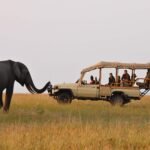
Uganda’s wildlife is one of the main reasons travelers visit. However, elephants, lions, leopards, buffalo, hippos, crocodiles, gorillas, and chimpanzees remain wild animals.
National parks are natural ecosystems rather than zoos. Wildlife can cross roads, approach lodges, disappear into vegetation, or behave differently from one day to another.
Experienced guides understand animal behavior and know how much distance should be maintained. Visitors should avoid pressuring drivers to approach animals too closely.
A slightly wider photograph is always better than creating unnecessary stress or risk.
Staying Safe Around Lodges
Guests should remain inside safari vehicles unless a guide confirms that exiting is permitted. An elephant feeding quietly beside a road can suddenly change direction.
Buffalo also deserve respect when encountered nearby. Hippos frequently leave rivers and lakes after dark to graze.
For this reason, independent nighttime walks around some lodges are inappropriate. Many properties provide escorts between guest rooms, restaurants, and common areas.
Visitors should use these escorts even when the distance appears short. Lodge staff understand recent wildlife movements better than newly arrived guests.
Gorilla Trekking Safety
Gorilla trekking is one of Uganda’s greatest wildlife experiences. It takes place in Bwindi Impenetrable National Park and Mgahinga Gorilla National Park.
Mountain gorillas are extremely powerful animals. However, trekking follows an organized system designed to protect both visitors and gorillas.
Before entering the forest, participants attend a briefing. Rangers explain behavior, photography procedures, health requirements, distance rules, and what to do when gorillas come closer.
Trekking groups then enter the forest with trained personnel. Tourists do not independently search for the animals.
The gorilla families used for standard tourism have undergone habituation. This means they have gradually become accustomed to controlled human observation. Habituation does not make them tame.
Forest Terrain
For many travelers, the terrain presents a greater challenge than gorilla behavior. Bwindi can be steep, humid, muddy, and densely vegetated.
Rainfall may make trails more slippery. Strong hiking boots, long trousers, gloves, waterproof clothing, water, and porter assistance can make the experience easier.
A porter can carry equipment and provide support on difficult slopes.
Once the gorillas are located, trekkers should remain calm. Avoid touching the animals, keep voices controlled, and follow ranger instructions.
When a gorilla moves closer than expected, do not run or panic. The guide understands the family and will explain how to respond.
Chimpanzee Tracking Safety
Chimpanzee tracking in Kibale National Park offers another memorable primate experience. Its atmosphere can feel very different from gorilla trekking.
Chimpanzees may travel quickly, climb high into trees, communicate loudly, and change direction suddenly. Rangers manage the experience and explain visitor behavior before entering the forest.
Participants should remain close to the group. Photography should never distract them from instructions.
Comfortable hiking footwear, long trousers, insect protection, and enough drinking water improve the experience.
Protecting the Chimpanzees
Health precautions matter because chimpanzees can be vulnerable to human diseases. Anyone experiencing symptoms of an infectious illness should inform park staff.
Responsible primate tourism must protect animals as well as visitors. Respect distance, avoid feeding wildlife, and behave quietly.
A patient approach gives travelers more time to appreciate chimpanzee behavior without turning the trek into a rushed search for photographs.
Health and Safety in Uganda
Health preparation should begin before the international flight. Uganda’s tropical environment creates medical considerations that may differ from those at home.
Mosquito-borne illnesses such as malaria deserve particular attention. Individual medical advice depends on age, existing conditions, vaccination history, itinerary, and length of stay.
Visitors should therefore consult a qualified travel-health professional before departure. Blogs and travel articles should not replace personalized medical advice.
Personal prescriptions should be carried in adequate quantities. Keeping them in hand luggage can help if checked luggage is delayed.
Mosquito Protection
Mosquito protection remains important. Repellent, suitable clothing, mosquito nets, and professionally recommended antimalarial medicine may form part of a prevention strategy.
Travelers should also remain hydrated. This is especially important during hot game drives, long road journeys, and forest treks.
Reputable lodges generally provide safe drinking water. Guides can also help visitors obtain additional supplies during transfers.
A small first-aid kit may be useful for minor problems. More serious or persistent symptoms should receive professional medical attention.
Food Safety in Uganda
Trying local food can become an enjoyable part of a Uganda safari. Visitors may encounter tropical fruits, vegetables, grilled meats, traditional dishes, lodge cuisine, and international meals.
Basic food hygiene remains sensible. Travelers unfamiliar with local conditions may prefer established restaurants, hotels, lodges, and well-used meal stops.
Hot food is generally best eaten freshly prepared. Raw ingredients should come from businesses that maintain suitable hygiene standards.
Safari driver-guides can recommend dependable restaurants or roadside meal stops.
Drinking Water
Safe drinking water is available through many established hotels and safari lodges. Properties may provide bottled, filtered, or treated water.
Some lodges also offer refill stations to reduce plastic waste. Unless accommodation confirms that tap water is safe, treated water is usually the better option.
Visitors may also use safe water when brushing teeth if advised by their accommodation.
Keeping enough drinking water inside the safari vehicle is important during long transfers. Shops can become less frequent around remote parks.
Good hydration supports energy and concentration throughout the safari.
Travel Insurance
Comprehensive travel insurance should be arranged before visiting Uganda. Safari holidays combine road travel, wildlife activities, remote areas, international flights, and sometimes adventure experiences.
Insurance policies vary greatly. Travelers should read the details carefully instead of assuming every activity is covered.
Gorilla trekking, mountain climbing, high-altitude hiking, white-water rafting, domestic flights, medical evacuation, and cancellation may have specific conditions.
Remote parks may lie several hours from major medical facilities. A serious illness or accident could require transport to Kampala or even evacuation abroad.
Keep Insurance Details Accessible
Suitable insurance provides protection against costs that can become substantial. Visitors should keep emergency information on their phones and carry another copy separately.
Family members at home may also keep policy details and the traveler’s itinerary.
Hopefully, insurance will never be required. However, arranging proper coverage before departure gives visitors greater confidence.
Political Gatherings and Demonstrations
Travelers should avoid demonstrations, rallies, and large protests. Even peaceful gatherings can change quickly.
Crowds may become difficult to leave if tensions increase. Tourists gain little from entering such gatherings simply to observe events or take photographs.
When demonstrations affect a road, local drivers are usually better placed to identify alternative routes.
Political discussions can also involve sensitive subjects. Visitors should communicate respectfully and avoid making unnecessary assumptions.
If You Encounter Unrest
If travelers unexpectedly encounter a demonstration, moving away calmly is usually the better choice. Hotel staff, local authorities, or safari guides can provide advice.
Inside a safari vehicle, follow the driver’s instructions. Routes may need to change, and some activities may be postponed.
Flexibility allows guides to make practical decisions without unnecessary pressure.
Safety Near International Borders
Uganda shares borders with Kenya, Tanzania, Rwanda, South Sudan, and the Democratic Republic of the Congo.
Conditions around these borders vary. Travelers should not assume every international boundary presents the same circumstances.
Established tourism routes pass relatively close to borders in some areas. This is especially true in southwestern Uganda, where Bwindi and Mgahinga are near Rwanda and the Democratic Republic of the Congo.
Proximity alone does not automatically make a destination unsafe. However, regional developments should still be monitored.
Crossing Borders Safely
Visitors entering neighboring countries should use recognized immigration crossings. Informal border crossings should be avoided.
When a safari combines Uganda and Rwanda, an operator can arrange transport to the correct border point.
Visa and entry rules can change. Information remembered from an earlier journey may no longer be current.
Checking official requirements shortly before departure can prevent unnecessary delays.
Safety for Solo Travelers
Uganda can offer rewarding experiences for solo travelers. Advance arrangements make the journey easier.
A private safari allows one guest to travel with a dedicated driver-guide. The traveler can still join other visitors during gorilla trekking or chimpanzee tracking.
This arrangement provides independence without requiring the visitor to manage every logistical issue alone.
Solo guests also enjoy greater flexibility with photography stops, pacing, and accommodation preferences.
Normal personal security still applies. Share your itinerary, maintain communication where possible, and avoid unfamiliar areas late at night.
Enjoying Solo Travel
Established hotels and lodges provide useful bases for solo visitors. A regular driver-guide also creates continuity during a multi-day safari.
Unexpected transport offers from strangers should still be approached cautiously.
Traveling solo does not mean remaining alone throughout the trip. National park activities and lodge meals often provide opportunities to meet other travelers.
Thoughtful planning creates both freedom and support.
Safety for Families
Uganda offers excellent family safari possibilities when itineraries suit children’s ages and energy levels.
Long road journeys can become tiring for younger travelers. Family programs often work better when transfer days remain reasonable.
Comfortable lodges, meal stops, shorter activities, and rest periods can reduce exhaustion.
Wildlife rules should also be explained clearly. Children may become excited when elephants, monkeys, or giraffes approach.
Families should choose accommodation that suits their needs instead of focusing only on price or scenery.
Children Around Wildlife
Parents should supervise younger travelers closely around swimming pools, lakes, rivers, viewing platforms, and unfenced lodges.
Staff escorts should be used after dark whenever a property recommends them.
Gorilla trekking also has minimum-age requirements. Younger children may need alternative activities during trekking day.
Discussing ages with Lena Tours before booking makes it easier to build a suitable family itinerary.
Safety for Older Travelers
Uganda is not limited to young adventure travelers. Older guests regularly enjoy game drives, boat safaris, birdwatching, cultural experiences, lodges, chimpanzees, and gorillas.
The main consideration is matching the itinerary to mobility, health, fitness, and preferred travel pace.
Private transport allows additional stops. Domestic flights may also shorten certain long road journeys.
Accommodation can be selected according to steps, room access, and walking distances.
Gorilla Trekking for Older Visitors
Anyone considering gorilla trekking should assess physical ability realistically.
Porters provide valuable support, while walking sticks can improve balance on muddy or uneven trails.
Travelers with important medical concerns should seek advice from an appropriate healthcare professional.
A slower itinerary often creates a better holiday than trying to include too many destinations.
Safari travel should feel enjoyable rather than exhausting.
Hotel and Lodge Safety
Reputable hotels and safari lodges generally maintain procedures suited to their location.
Urban properties may use gates, guards, secure parking, reception controls, and room safes. National park lodges must also consider wildlife movement.
Guests should listen carefully during arrival briefings. Staff may explain whether escorts are needed after sunset.
They may also provide instructions about doors, balconies, or animals that sometimes cross the lodge grounds.
Wildlife Around Lodges
Food should not be left outside guest rooms. Monkeys and other animals may quickly associate accommodation with easy meals.
Doors and windows should remain secured according to lodge instructions.
Torches are useful at remote properties. However, they do not replace staff escorts when dangerous wildlife may be nearby.
Lodge employees understand their surroundings better than newly arrived visitors. Following local procedures helps guests enjoy the wilderness more safely.
Staying Safe While Taking Photographs
Photography is an important part of most Uganda safaris. Expensive cameras and phones require both physical protection and security awareness.
In cities and busy towns, equipment is better kept inside a secure bag until needed.
Inside safari vehicles, cameras should be secured while traveling. Rough roads or sudden braking can cause equipment to fall.
Waterproof covers are useful during gorilla trekking, forest walks, and rainy-season journeys.
Photographers should also avoid carrying more equipment than they expect to use.
Respect Photography Restrictions
Visitors should avoid photographing military installations, border facilities, airports, or other sensitive locations without permission.
When photographing local residents, asking permission shows respect and often creates a better interaction.
Wildlife photographers must also place safety above the perfect image.
Leaving a vehicle without authorization or moving too close to an animal is never worthwhile.
Common Safety Mistakes to Avoid
Some travel problems happen because visitors become careless.
Carrying every bank card and all available cash in one wallet creates unnecessary vulnerability.
Walking alone after dark because a hotel looks close on a map may also create avoidable risk.
Ignoring mosquito protection, drinking questionable water, or continuing strenuous activities while ill can cause further problems.
Simple preparation usually provides more value than complicated emergency planning.
Overloading the Safari
Trying to include too many destinations can create another problem.
Long drives may push travel into the evening and leave visitors tired after arrival.
The same principle applies to gorilla trekking. Travelers who reject porter assistance while already struggling may become exhausted.
Good planning includes knowing when extra comfort also improves safety.
A slower itinerary usually creates a better experience than trying to see everything quickly.
So, How Safe Is Uganda?
Uganda cannot be described responsibly with a simple yes-or-no answer.
Travel safety depends on the destination, transport, timing, current conditions, planned activities, and individual behavior.
The country has an established safari industry. Visitors explore gorilla habitats, chimpanzee forests, savannah parks, Nile attractions, lakes, mountains, cities, and cultural destinations.
Professional guides, park rangers, lodge staff, drivers, and tourism companies support these journeys throughout the year.
Visitors should still take genuine risks seriously. Crime, road accidents, illness, unrest, wildlife, and changing regional conditions deserve attention.
Preparation Is the Key
Travelers who monitor current information place themselves in a stronger position.
Using reputable transport also helps. The same applies to maintaining insurance, following health advice, respecting wildlife, and listening to guides.
Being prepared does not mean spending the entire safari thinking about danger.
Instead, good preparation removes many concerns before they develop.
Once transport, accommodation, permits, insurance, and activities are organized, visitors can concentrate on experiencing Uganda.
Final Thoughts
Uganda rewards travelers who arrive prepared and remain open to its remarkable variety.
A single journey can begin beside Lake Victoria and continue through rolling countryside. It may then reach Murchison Falls, enter the forests of Kibale, cross Queen Elizabeth National Park, and finish among mountain gorillas in Bwindi.
Few destinations combine so many different landscapes and wildlife encounters within one safari.
Uganda’s appeal also lies in the journeys between attractions. Visitors encounter communities, farms, mountains, forests, wildlife, lakes, and changing scenery along the way.
Travel With Awareness
Understanding safety should improve the safari rather than overshadow it.
Travelers do not need to spend every moment worrying. However, they should remain informed and avoid unnecessary risks.
Reliable transportation, suitable accommodation, health preparation, insurance, realistic schedules, and ranger guidance provide a strong foundation.
Conditions can change over time. Visitors should therefore review official information shortly before departure.
Travel Uganda With Lena Tours
Lena Tours can organize Uganda safaris that connect the country’s major destinations practically.
Guests can explore Bwindi Impenetrable National Park, Mgahinga Gorilla National Park, Kibale National Park, Queen Elizabeth National Park, Murchison Falls National Park, Lake Mburo National Park, Jinja, Lake Bunyonyi, Entebbe, Kampala, and other remarkable destinations.
Itineraries can be designed around available time, interests, accommodation preferences, and travel style.
Private airport transfers, driver-guides, safari vehicles, gorilla permits, chimpanzee experiences, game drives, boat safaris, cultural visits, and lodge arrangements can form part of one journey.
A Carefully Planned Safari
Travelers can organize the main logistics before arriving in Uganda. This reduces the need to worry about routes, trekking sectors, transfer distances, and lodge locations during the holiday.
Uganda is a destination where preparation and adventure work together.
Responsible planning and knowledgeable local support allow visitors to experience the Pearl of Africa with greater confidence.
Explore Uganda with Lena Tours and discover mountain gorillas, wildlife, forests, lakes, the Nile, and some of East Africa’s most memorable landscapes through a carefully planned safari experience.
Plan Your Safari with Lena Tours
Complete the enquiry form below and our safari specialists will prepare a personalised itinerary and quotation for your journey.