Uganda is one of Africa’s most exciting destinations for families who want to introduce their children to wildlife, nature, different cultures, and outdoor adventure. Parents planning their first African holiday often ask an important question before they book: Are kids allowed on a safari in Uganda? The simple answer is yes. Children can enjoy many safari experiences in Uganda, including wildlife game drives, boat safaris, birdwatching, community visits, nature experiences, sightseeing, cultural tours, and selected walking activities. However, some experiences have minimum age requirements because of safety, terrain, wildlife behavior, physical difficulty, or conservation regulations.
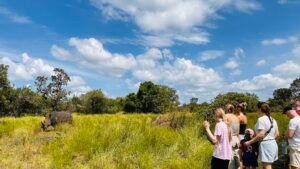
A family safari in Uganda can be far more than a holiday spent looking at animals from a vehicle. Children may see elephants crossing the savannah, giraffes feeding beside acacia trees, hippos resting in the water, monkeys moving through forests, zebras grazing across open plains, and colorful birds almost everywhere they travel. They can also visit waterfalls, cruise along famous rivers and channels, learn about local communities, discover tropical forests, enjoy swimming at suitable lodges, and spend evenings listening to the sounds of the African wilderness.
Uganda works particularly well for families because the country offers many different environments within one journey. Families can move from the savannahs of Murchison Falls National Park to the forests around Kibale, continue through Queen Elizabeth National Park, visit the highlands near Bwindi, and finish among the zebras of Lake Mburo National Park. This diversity helps parents design a safari that does not become repetitive for younger travelers.
Parents should nevertheless understand that a children’s safari should be planned differently from an adult-only expedition. Long driving days, extremely early mornings, difficult forest treks, and overly packed schedules can quickly make children tired. A successful family itinerary normally includes shorter travel periods, comfortable lodges, flexible activities, regular breaks, child-friendly meals, swimming opportunities where available, and enough free time between wildlife adventures.
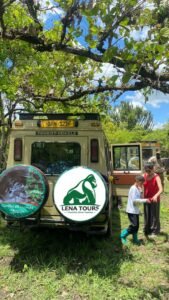
This guide explains everything parents need to know about family safaris in Uganda, including which activities children can enjoy, which experiences have age restrictions, the best national parks for families, accommodation considerations, health and safety, family safari packing, suggested itineraries, and practical advice for creating an unforgettable holiday with children.
Are Kids Allowed on Safari in Uganda?
Yes. Children are allowed to visit Uganda’s national parks and take part in many safari activities. Families travel throughout the country every year, and several national parks are particularly suitable for children. Game drives are among the easiest wildlife activities for families because guests remain inside a safari vehicle while searching for animals with a professional guide.
Boat safaris are another excellent family activity. Depending on the destination and operator’s safety rules, children can experience cruises on the Nile, Kazinga Channel, Lake Mburo, or other suitable waterways. These journeys often provide close views of hippos, crocodiles, elephants, buffaloes, waterbirds, and other wildlife without requiring long walks.
Children can also participate in many cultural experiences, visit communities, explore craft markets, watch traditional performances, take part in age-appropriate nature walks, enjoy birdwatching, visit scenic viewpoints, and spend time around safari lodges.
Certain specialized activities are restricted. Mountain gorilla trekking has a strict minimum age, while chimpanzee experiences also have age conditions that may vary according to the location and specific activity. Challenging mountain climbs, some long wilderness walks, rafting trips, or other adventure sports may have additional limits set by wildlife authorities or individual operators.
Consequently, parents should never assume that every safari activity is automatically open to children. A well-planned family safari matches each activity to the child’s age, confidence, physical ability, interests, and the rules in place at the destination.
Why Uganda Is a Great Destination for a Family Safari
Uganda combines wildlife, forests, lakes, rivers, mountains, and cultural experiences within a relatively compact part of East Africa. This makes it possible for families to create a varied itinerary without needing to fly between several countries.
Wildlife is one of the biggest attractions. Uganda’s national parks protect elephants, lions, leopards, giraffes, buffaloes, zebras, hippos, crocodiles, warthogs, antelopes, monkeys, chimpanzees, mountain gorillas, and hundreds of bird species. Although younger children cannot participate in every primate activity, they can still experience an impressive range of wildlife during ordinary game drives and boat cruises.
Another advantage is variety. Children sometimes lose concentration if they spend several days repeating the same activity. Uganda allows a family to enjoy a morning game drive one day, take a boat safari the following afternoon, visit a waterfall, explore a local community, watch birds, relax beside a lodge pool, and then continue to another ecosystem.
Many safari lodges also provide large family cottages or interconnected rooms. Some properties have gardens, swimming pools, open spaces, special children’s meals, and flexible dining arrangements. Parents should always confirm the exact facilities before booking because standards and services vary between properties.
Uganda also gives children the opportunity to learn outside a classroom. A safari can introduce them to ecosystems, conservation, geography, animal behavior, photography, traditional cultures, farming, wetlands, forests, and responsible tourism.
Rather than simply reading about elephants, lions, giraffes, or hippos, children can observe these animals living naturally. Experiences of this kind can create a lasting interest in nature and conservation.
What Ages Are Best for a Uganda Family Safari?
Uganda can accommodate families with children of many ages, although the style of the safari should change according to the age group.
Families traveling with babies and toddlers need the greatest flexibility. Long journeys should be reduced where possible, and parents should select comfortable accommodation with easy access to meals, bathrooms, safe sleeping arrangements, and private facilities. Short game drives may be more appropriate than spending an entire day inside a safari vehicle.
Children aged approximately five to eight often enjoy animals enormously but may have limited patience during long periods of driving. Wildlife experiences should therefore be combined with lodge time, short walks where permitted, swimming, games, storytelling, and other interactive activities.
Travelers aged nine to twelve can usually handle longer safari days and may become deeply interested in identifying animals and birds. Parents can turn the trip into an adventure by giving children binoculars, wildlife checklists, simple cameras, or safari journals.
Teenagers can generally participate in a wider range of activities depending on specific age restrictions. Older teenagers may especially enjoy photography, hiking, cycling in permitted areas, longer game drives, cultural activities, boat safaris, birding, and certain primate experiences when they meet the official minimum age requirement.
No single age guarantees a perfect safari. A calm seven-year-old who loves animals may enjoy a game drive more than a fourteen-year-old who dislikes long journeys. Parents should therefore consider personality as well as age.
Game Drives With Children in Uganda
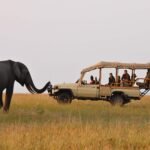
Game drives are one of the best activities for children on a Uganda safari. Families normally travel in a safari vehicle with a professional driver-guide while exploring wildlife-rich areas of a national park.
Kids can remain safely inside the vehicle as the guide searches for animals. Depending on the park, families may encounter elephants, giraffes, zebras, buffaloes, warthogs, Uganda kobs, waterbucks, hartebeests, lions, leopards, hyenas, monkeys, and many different bird species.
Murchison Falls National Park, Queen Elizabeth National Park, Lake Mburo National Park, and Kidepo Valley National Park are among Uganda’s major game-drive destinations.
Parents traveling with younger children should avoid making every game drive excessively long. An adult wildlife enthusiast may happily spend five hours searching for a leopard, while a six-year-old may become restless much sooner. Flexible game drives help keep the experience enjoyable.
Morning drives often provide cooler temperatures and good wildlife viewing. Afternoon or evening drives can also be enjoyable depending on the destination and safari schedule.
Children should remain seated when instructed, avoid shouting at wildlife, never throw anything from the vehicle, and follow the guide’s directions. Animals should not be called, chased, surrounded, or disturbed for photographs.
Uganda Wildlife Authority park rules also require visitors to remain responsible around wildlife and prohibit practices such as driving off designated tracks or disturbing animals with vehicle horns. These rules protect both visitors and wildlife.
Boat Safaris for Families
A boat safari can become one of the highlights of a family safari in Uganda because children can observe animals while enjoying a different style of adventure.
The Kazinga Channel in Queen Elizabeth National Park is particularly famous for its wildlife. Families may see large numbers of hippos, crocodiles, buffaloes, elephants, waterbucks, monitor lizards, and waterbirds along the shoreline.
Murchison Falls National Park also offers memorable boat trips on the Nile. A cruise toward the falls combines scenery and wildlife before giving travelers an opportunity to appreciate the power of the Nile as it approaches the dramatic waterfall area.
Boat activities can sometimes hold a child’s attention better than a long game drive because the scenery changes continuously. Birds take flight, hippos surface, crocodiles appear along the banks, and elephants may approach the water.
Life jackets and operator instructions should always be followed. Parents should supervise young children closely throughout the trip and should never allow them to lean dangerously over the boat or move around without permission.
Age requirements can depend on the particular boat, destination, conditions, and operator. Families should therefore confirm suitability when booking.
Can Children Go Gorilla Trekking in Uganda?
One of the most important rules parents need to understand concerns mountain gorilla trekking.
Children below the required minimum age cannot participate in gorilla trekking in Uganda. Uganda Wildlife Authority currently sets the minimum age for tracking and viewing mountain gorillas at 15 years.
Mountain gorilla trekking takes place in Bwindi Impenetrable National Park and Mgahinga Gorilla National Park. Treks can involve steep slopes, dense vegetation, mud, uneven trails, altitude, and several hours of walking before the gorillas are located.
The age restriction is not simply about physical fitness. Gorilla trekking involves close observation of endangered wild primates. Visitors must understand ranger instructions, remain calm during unexpected movements, maintain appropriate behavior, and respect strict conservation rules.
Parents traveling with children below 15 can still include Bwindi in their family itinerary. One parent may trek gorillas while the other stays with the children, followed by a switch on another day if permits and childcare arrangements allow. Alternatively, families can arrange age-appropriate activities around the forest while eligible members complete their gorilla experience.
Possible alternatives can include community visits, selected nature experiences, cultural activities, birdwatching, relaxation at the lodge, or other activities approved for the children’s ages.
A family should never travel to Bwindi assuming that rangers will ignore the gorilla trekking age requirement. The restriction is a formal conservation and visitor-management rule.
Can Children Go Chimpanzee Trekking in Uganda?
Chimpanzee trekking requires extra attention when planning for children because age rules can depend on the exact experience.
Uganda Wildlife Authority’s general guidelines for gorilla and chimpanzee tracking state a minimum age of 12 years for tracking and viewing chimpanzees. However, the current Uganda Wildlife Authority information for the standard guided chimpanzee tracking walks at Kanyanchu in Kibale National Park states that participants must be at least 16 years old.
Because of this difference, parents should confirm the exact age requirement for their intended chimpanzee location and experience at the time of booking rather than assuming that one rule automatically applies everywhere.
Chimpanzee tracking can involve long forest walks, uneven paths, mud, dense vegetation, and fast movement when chimpanzees travel through the forest. Participants also need to stay quiet, follow their ranger, maintain the required distance, and react appropriately around wild primates.
Families with younger children can still visit the Kibale region. Alternatives may include community activities, suitable nature experiences, birdwatching, Bigodi-area activities where age and operator rules permit, village visits, and lodge-based relaxation.
Careful itinerary planning allows parents or eligible teenagers to enjoy primate tracking without making younger children feel excluded from the entire destination.
Family Safaris in Murchison Falls National Park
Murchison Falls National Park is an excellent choice for families because it combines wildlife, landscapes, river activities, and the famous waterfall.
Children can enjoy game drives across the savannah while searching for giraffes, elephants, buffaloes, lions, hartebeests, Uganda kobs, warthogs, and other animals. The relatively open landscape can make wildlife easier for young visitors to see.
A Nile boat safari adds a completely different experience. Families can watch hippos in the water, crocodiles near the riverbanks, elephants approaching to drink, and many bird species around the shoreline.
The waterfall itself provides another attraction. The Nile squeezes through a narrow rocky section before creating one of Uganda’s most powerful natural spectacles. Depending on current access conditions and the family’s itinerary, a visit to suitable viewpoints can add scenery and excitement to the safari.
Families should avoid creating an exhausting schedule by combining every activity in a single day. A morning game drive followed by lunch and an afternoon boat cruise can work well, provided the children are comfortable with the duration.
Two or three nights generally provide a more relaxed family experience than arriving late one afternoon, spending one rushed day in the park, and leaving immediately the following morning.
Queen Elizabeth National Park With Kids
Queen Elizabeth National Park is another outstanding family safari destination. The park offers wildlife drives, boat safaris, dramatic landscapes, crater areas, birdlife, and access to several ecosystems.
A family game drive may reveal elephants, buffaloes, Uganda kobs, warthogs, waterbucks, lions, monkeys, and, with good luck, a leopard.
The Kazinga Channel boat cruise is particularly suitable for wildlife-loving families. Hippos can be seen throughout the channel, while buffaloes, elephants, crocodiles, and birds frequently appear near the water.
Older children who enjoy photography can practice taking pictures of wildlife from the boat. Younger travelers often find the activity exciting because animals appear frequently and there is less waiting than during some game drives.
The Ishasha sector in the southern part of Queen Elizabeth National Park is famous for its tree-climbing lions. Sightings can never be guaranteed because these are wild animals, but searching for lions resting in fig trees can turn the game drive into an exciting family challenge.
Families can make the journey more interactive by giving each child a checklist containing animals such as elephants, buffaloes, hippos, warthogs, lions, eagles, kingfishers, baboons, and antelopes.
Lake Mburo National Park for Families
Lake Mburo National Park can be particularly attractive for families because of its manageable size and range of possible activities.
Zebras are one of the park’s signature animals, making Lake Mburo especially exciting for children. Families may also see impalas, buffaloes, elands, topis, warthogs, waterbucks, monkeys, and numerous birds.
Regular game drives provide the easiest introduction. Depending on current regulations, child age, conditions, and operator arrangements, families may also consider selected walking, cycling, horseback, or boat experiences where these are permitted and suitable.
The park is conveniently positioned along the route between Kampala or Entebbe and southwestern Uganda, which makes it useful as either a first safari stop or the final wildlife destination before returning toward Entebbe.
A relaxed afternoon game drive followed by an overnight stay can help break up an otherwise long road journey.
Parents considering activities outside a vehicle should always confirm age limits in advance. A walking safari suitable for adults may not automatically be appropriate for small children.
Kidepo Valley National Park With Children
Kidepo Valley National Park lies in northeastern Uganda and provides one of the country’s most dramatic wilderness experiences.
The open landscapes, mountains, wildlife, and relative remoteness create a classic African safari atmosphere. Families may encounter buffaloes, elephants, giraffes, zebras, lions, antelopes, and many birds.
Kidepo is particularly attractive for older children and teenagers who enjoy wilderness and photography. Younger children can also visit, although parents need to consider the longer travel distances required to reach the park by road. Domestic flights can reduce road time for families with an appropriate budget.
Spending several nights in Kidepo is generally better than rushing in and out. The park’s distance means travelers benefit from slowing the itinerary and allowing enough time to enjoy the destination.
Cultural encounters in the wider Karamoja region may also provide families with educational opportunities when arranged respectfully through responsible local tourism partners.
Bwindi With Children Who Are Too Young for Gorilla Trekking
Parents sometimes remove Bwindi entirely from a family itinerary when their children are below 15. That is not always necessary.
Bwindi is a beautiful highland destination even for visitors who are not trekking gorillas. Forest views, cool mountain air, birdlife, communities, crafts, cultural experiences, and scenic drives can still make the region worthwhile.
Families can arrange their schedule so that one parent participates in gorilla trekking while another spends the day with the younger children. Some lodges may help organize supervised or guided child-friendly experiences, although arrangements must always be confirmed before travel rather than assumed.
Older children may enjoy learning why gorillas need protected forests, how conservation creates tourism income, and why visitors have to follow strict health rules around primates.
A visit to Bwindi can therefore become an opportunity to teach young travelers about conservation even when they are not old enough to enter the forest for a gorilla trek.
Cultural Experiences for Kids in Uganda
A family safari becomes richer when it includes people as well as wildlife.
Uganda has many cultures, languages, traditions, foods, crafts, dances, farming practices, and community stories. Carefully arranged cultural visits can give children a deeper understanding of the country they are visiting.
Families may learn how local foods are prepared, watch dance performances, participate in craft demonstrations, visit farms, hear traditional stories, or learn about community conservation projects.
Children often remember interactive cultural moments long after they forget the name of a particular road or hotel.
Respect is essential during community tourism. Parents should teach children to ask before taking close-up photographs of people, avoid treating communities as exhibits, listen when hosts are speaking, and follow the guidance of local leaders.
Responsible tourism works best when local people benefit directly from the experience.
Birdwatching With Children
Uganda is an extraordinary birding destination, but children do not need to become serious birdwatchers to enjoy the country’s birdlife.
Brightly colored kingfishers, hornbills, bee-eaters, turacos, eagles, cranes, storks, sunbirds, and many other species can attract a child’s attention.
Parents can make birding interactive by giving children a simple checklist or asking them to find birds of different colors. A challenge such as spotting one blue bird, one red bird, one large raptor, and one waterbird can be more entertaining than trying to memorize difficult species names.
Mabamba Swamp near Entebbe is famous for opportunities to search for the shoebill. The wetland experience can be especially exciting for older children who are comfortable in a canoe or boat, subject to local safety procedures.
National parks, forests, wetlands, hotel gardens, and even roadside stops can provide birding opportunities throughout a Uganda family safari.
Visiting the Source of the Nile With Children
Jinja is a popular addition to family holidays because it provides scenery, the Nile, cultural activities, restaurants, and various adventure options.
A family can visit the Source of the Nile area and learn about the river’s geographical importance. Children studying geography may find the experience particularly memorable because the Nile changes from something they have read about into a real landscape.
Families should choose additional Jinja activities according to age and comfort level. Boat trips, sightseeing, craft shopping, and relaxed riverside experiences are generally easier for families than high-intensity adventure sports.
White-water rafting, kayaking, tubing, quad biking, horse riding, and similar activities operate under provider-specific conditions. Minimum ages, river levels, route difficulty, equipment standards, and safety restrictions can change.
Parents should therefore confirm the exact age and safety rules directly through their tour operator before adding an adventure activity to a child’s itinerary.
Can Kids Go White-Water Rafting in Uganda?
Rafting on the Nile can be exciting, but it is not an activity that parents should automatically include for every child.
Different rafting companies may operate different sections, experiences, and minimum-age policies. River conditions may also influence what is appropriate.
Families with younger children may have access to gentler water-based experiences rather than full high-grade rafting. Older children and teenagers may qualify for more adventurous options when the operator permits it.
The decision should be based on the professional rafting company’s rules, the child’s swimming confidence, the river conditions, the difficulty of the selected trip, and the parents’ own comfort.
No reputable family itinerary should promise that a child can participate in rafting without first confirming the operator’s current policy.
Can Children Do Walking Safaris in Uganda?
Walking safaris require careful planning because participants leave the protection of a vehicle and enter a natural wildlife environment.
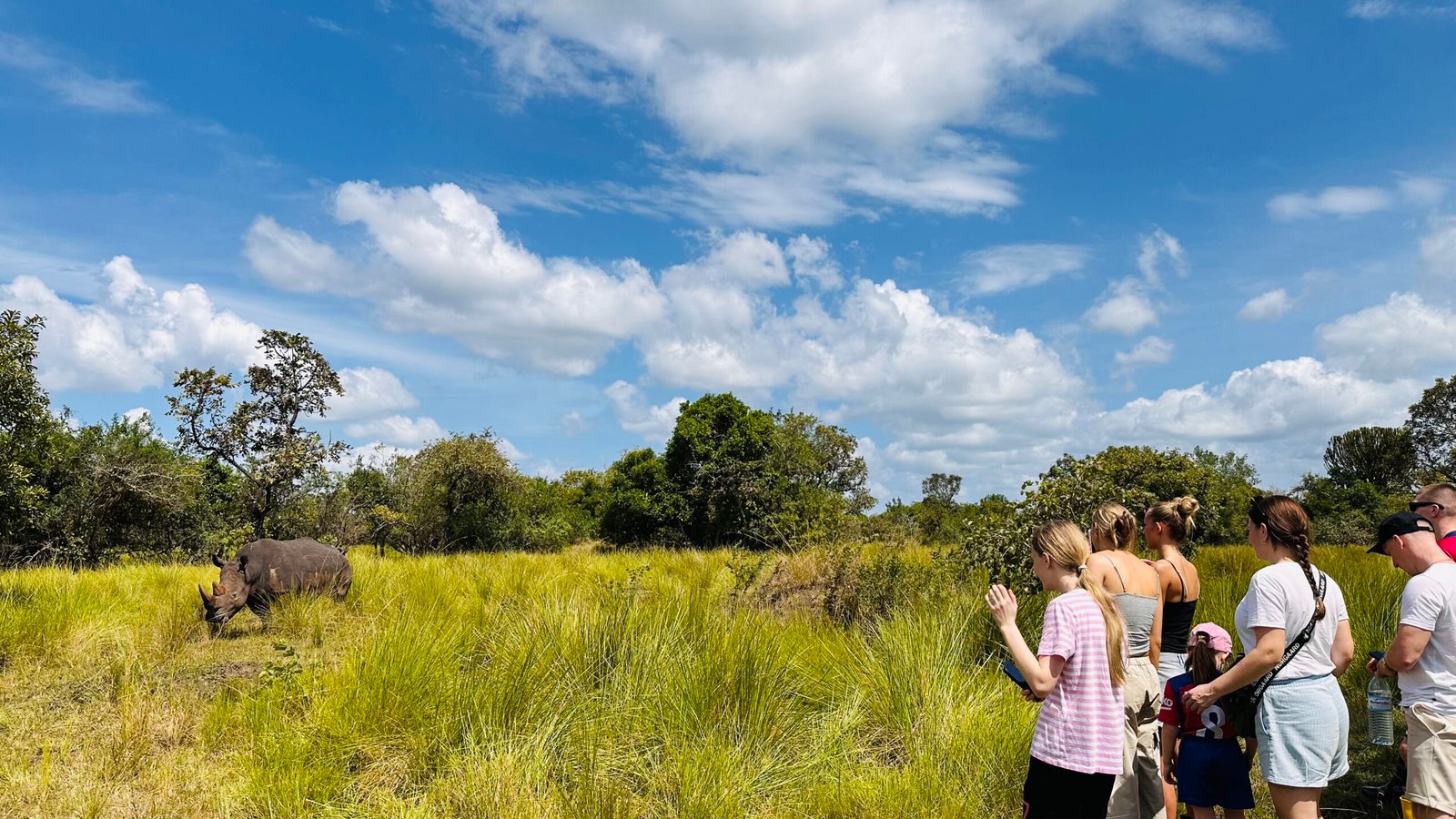
Lake Mburo is known for guided walking experiences, while several other destinations offer forest walks or nature trails. However, not every walk is suitable for every child.
Age, trail difficulty, wildlife presence, walking distance, ranger regulations, and operator policies all matter.
Young children may be better suited to short nature walks around safe lodge grounds or community areas rather than wilderness walks among large mammals.
Older children who can listen carefully and follow instructions may qualify for more structured walking experiences, depending on current rules.
Parents should never decide to leave a safari vehicle and walk through a national park without authorization. All activities must take place in designated areas with the required guide or ranger.
Can Kids Go on Night Game Drives?
Night drives allow visitors to search for nocturnal animals that are less active during daylight.
Whether children can participate depends on the national park, operating rules, lodge arrangements, age, and individual provider.
Night drives may finish late and can involve long periods of sitting quietly in darkness. They are therefore often more suitable for older children and teenagers than toddlers.
Uganda Wildlife Authority has also clarified that regulated night game drives in national parks are subject to specific conditions. Families should book them only through authorized arrangements.
For younger children, an evening spent listening to wildlife from the lodge may be more enjoyable than a late-night drive.
Nature Walks and Forest Experiences
Uganda’s forests offer many experiences beyond gorilla and chimpanzee trekking.
Families can explore selected forest trails, wetland environments, botanical areas, lodge grounds, and community-managed landscapes where children are permitted.
Nature walks can teach kids to notice smaller details that are easily missed during a vehicle safari. Butterflies, insects, tree species, footprints, flowers, birds, frogs, and monkeys can become part of the experience.
A good family guide knows how to turn a walk into a story rather than simply reciting scientific names.
Children may enjoy learning how to identify animal tracks, recognize bird calls, understand how trees support forest wildlife, or discover why wetlands are important.
Before booking, parents should ask about walking distance, terrain, duration, minimum ages, toilet availability, weather conditions, and whether the activity can be shortened if a child becomes tired.
Community and Village Visits
Community experiences can add enormous educational value to a family safari.
Children can meet other families, observe different lifestyles, learn simple words in a local language, see farming activities, watch crafts being created, and hear local stories.
These encounters should be authentic and respectful rather than staged around intrusive photography.
Parents can encourage their children to ask questions politely. Conversations about school, favorite games, food, sports, animals, or daily routines often help children connect naturally.
Tourism operators should work with communities in a way that provides fair economic benefits.
Giving money or sweets directly to children without local guidance can create undesirable expectations. Families wanting to support a community can ask their tour operator about responsible ways to contribute to schools, conservation initiatives, health programs, or community enterprises.
Family Photography on Safari
A Uganda safari provides children with excellent opportunities to learn photography.
A simple camera can encourage a child to observe wildlife more carefully. Instead of constantly asking when the game drive will finish, a young traveler may become focused on photographing giraffes, elephants, birds, sunsets, landscapes, or family moments.
Parents should teach children that wildlife photography must never interfere with animal welfare. No photograph is worth shouting at an animal, leaving an authorized track, approaching too closely, or encouraging a guide to break park regulations.
Flash photography is restricted during sensitive primate experiences, and ranger instructions must always take priority.
A family photo competition can make the safari more entertaining. Categories might include best bird photo, funniest warthog picture, best sunset, most unusual animal, best landscape, and favorite family moment.
Swimming and Lodge Time
One mistake parents make when organizing a family safari is assuming that every hour needs an activity.
Children need downtime.
A lodge with a swimming pool can become almost as memorable as seeing an elephant, particularly after several hours in a safari vehicle. Parents should check whether the swimming pool is supervised and should always watch younger children closely.
Gardens, board games, books, photography, wildlife viewing from the lodge, campfire evenings, and relaxed family meals can all help balance the itinerary.
Safari holidays feel much easier when parents accept that resting is part of the experience.
Packing every day with a sunrise activity, afternoon excursion, evening drive, and late dinner may work for highly motivated adults. It can quickly exhaust children.
What Activities Can Children Do on a Uganda Safari?
The exact answer depends on age, national park, operator rules, safety requirements, and physical ability. Nevertheless, many families can consider the following experiences:
Wildlife game drives: One of the best activities for children, particularly in Murchison Falls, Queen Elizabeth, Lake Mburo, and Kidepo Valley National Parks.
Boat safaris: Great for viewing hippos, crocodiles, elephants, buffaloes, and birds where age and safety rules allow.
Birdwatching: Suitable for a wide range of ages and available almost everywhere.
Cultural visits: Children can learn about communities, crafts, food, music, farming, and traditions.
Nature activities: Selected trails and guided nature experiences may be suitable depending on the destination.
Photography: An excellent activity for older children who enjoy observing animals and landscapes.
Swimming: Available at some safari lodges and hotels under proper adult supervision.
Source of the Nile sightseeing: A good family activity while visiting Jinja.
Scenic tours: Crater landscapes, waterfalls, lakes, highlands, tea-growing areas, and viewpoints provide variety.
Wildlife identification games: Parents can use animal checklists, bird lists, maps, and safari journals.
Community craft experiences: Some destinations allow guests to watch or participate in traditional craft-making.
Selected cycling or horseback experiences: Availability and minimum ages differ, so families should confirm before booking.
Short boat excursions: Suitable options may be available in different parts of Uganda under operator-specific safety conditions.
Activities Young Children Generally Cannot Do
Some safari experiences are unsuitable or prohibited for young travelers.
The most important example is mountain gorilla trekking. Participants must meet Uganda Wildlife Authority’s official minimum age of 15.
Chimpanzee tracking also has age restrictions. Parents must verify the specific activity because the general Uganda Wildlife Authority tracking guidelines and the current Kibale Kanyanchu activity information specify different minimum ages.
Young children should not take part in unauthorized wilderness walks around dangerous animals.
Extremely demanding mountain climbs are also inappropriate for most small children. The Rwenzori Mountains, for example, involve rugged high-altitude terrain and should not be treated as a casual children’s excursion.
High-intensity rafting, technical kayaking, long endurance hikes, or similar adventures should only be considered when a child satisfies the provider’s age, ability, and safety requirements.
Children must never leave a vehicle near dangerous wildlife simply for photographs.
Feeding wildlife is not acceptable.
Running toward wild animals, approaching animals independently, or trying to touch them can create serious danger.
Parents should also prevent children from making loud noises intended to provoke animals.
Understanding Gorilla Trekking Rules as a Family
Families traveling with teenagers who are old enough for gorilla trekking should prepare them before arriving in Bwindi or Mgahinga.
Visitors must follow ranger instructions throughout the trek. Anyone experiencing a contagious illness may be prevented from visiting gorillas because great apes are vulnerable to human diseases.
Trekkers should remain calm, avoid sudden behavior around gorillas, maintain the instructed distance, and follow rules concerning eating, drinking, photography, coughing, and waste.
Gorilla trekking can take several hours depending on where the assigned gorilla family is located. Terrain may include steep hills, slippery surfaces, tangled vegetation, stream crossings, and muddy forest trails.
A teenager who technically meets the age limit should therefore still understand the physical challenge.
Good hiking boots, long trousers, rain protection, gloves where appropriate, drinking water, and suitable clothing can improve comfort.
Parents should discuss the experience with their tour operator honestly if a teenager has mobility limitations or other concerns.
How to Make Long Game Drives Fun for Children
A safari vehicle can become a moving classroom, photography studio, observation platform, and family game space.
Children can keep score of different animal species they see. Parents might award points for spotting elephants, giraffes, zebras, lions, monkeys, hippos, or unusual birds.
A safari journal is another useful tool. Each evening, children can write down the day’s favorite animal, funniest moment, new fact, and best photograph.
Binoculars are particularly effective. Even inexpensive child-friendly binoculars can make young travelers feel more involved.
Snacks and drinking water should be available, subject to park and vehicle rules. Parents should avoid creating excessive packaging waste and should ensure nothing is thrown outside the vehicle.
Audiobooks, quiet games, or downloaded entertainment may help during long road transfers between destinations, although wildlife-viewing time is often more rewarding when screens are put away.
Breaking the journey with scenic stops or lunch can also make road travel easier.
Choosing the Right Safari Vehicle for a Family
Comfort matters on a family safari.
A vehicle that feels acceptable for two adults may become cramped when carrying parents, several children, luggage, camera equipment, drinking water, and safari gear for many days.
Families should ask whether the vehicle provides every passenger with a proper seat and seat belt where available, sufficient legroom, good ventilation, charging options, and reliable access to windows or a viewing roof.
Private safari vehicles are often preferable for families because they provide flexibility. Parents can shorten a game drive if a child becomes tired, request an extra bathroom stop, or adjust departure times without inconveniencing unrelated travelers.
A professional family-friendly driver-guide is equally important. Guides who understand children can explain wildlife using simple stories, answer endless questions patiently, and recognize when younger guests need a break.
How Long Should a Family Safari in Uganda Be?
The ideal length depends on the children’s ages, available holiday time, budget, and destinations.
A short 3- to 5-day safari can work well for families who want to focus on one or two national parks.
A 7-day Uganda family safari provides enough time for a broader wildlife experience without becoming overwhelming.
Trips lasting 10 to 14 days allow families to explore several regions slowly, provided rest days are included.
Longer itineraries should not become a race across the country.
Driving from Entebbe to Murchison Falls, then immediately to Kibale, followed by Queen Elizabeth, Bwindi, Lake Mburo, and back to Entebbe without sufficient breaks may feel exhausting to young travelers.
Choosing fewer destinations and enjoying them properly often produces a better family holiday.
Sample 5-Day Uganda Family Safari
Day 1: Entebbe to Murchison Falls National Park
After breakfast, the family begins the journey toward Murchison Falls National Park. Depending on the chosen route and itinerary, suitable stops can be arranged for meals, stretching, or sightseeing.
After reaching the park area, check into a family-friendly lodge and allow children time to settle in. Rather than adding too many activities immediately, enjoy the lodge surroundings and prepare for the following day’s wildlife adventure.
Day 2: Family Game Drive and Nile Boat Safari
Start with a morning game drive in search of giraffes, elephants, buffaloes, antelopes, warthogs, lions, and other wildlife.
Return for lunch and a short rest.
During the afternoon, take a boat safari on the Nile. Children can watch hippos, crocodiles, waterbirds, and mammals approaching the riverbanks.
The combination of driving and boating makes the day varied and engaging.
Day 3: Murchison Falls Experience and Transfer
After breakfast, include an appropriate scenic visit connected to Murchison Falls according to the day’s routing and access arrangements.
Continue toward the next destination with breaks along the way.
Families wanting a slower safari can spend another night around Murchison Falls instead.
Day 4: Lake Mburo National Park
Explore Lake Mburo National Park on a family game drive. Search for zebras, impalas, buffaloes, elands, warthogs, topis, and birds.
Suitable optional activities can be arranged depending on the children’s ages.
Finish the afternoon at the lodge with time to relax.
Day 5: Return to Entebbe
Enjoy breakfast before beginning the return journey.
Stops can be arranged along the route according to time and the family’s interests.
This compact itinerary is ideal for families who want wildlife without extremely long or complicated travel schedules.
Sample 7-Day Uganda Family Safari
Day 1: Arrival in Entebbe
Meet your safari representative and transfer to the hotel.
A relaxed arrival day allows children to recover from their international journey.
Depending on arrival time, the family may explore the hotel gardens or enjoy a short optional Entebbe activity.
Day 2: Entebbe to Murchison Falls
Travel toward Murchison Falls National Park, stopping for refreshments and lunch.
Check into the lodge and relax before dinner.
Day 3: Murchison Falls Wildlife Adventure
Enjoy a morning game drive followed by an afternoon Nile boat safari.
Watch for giraffes, elephants, buffaloes, hippos, crocodiles, antelopes, lions, and numerous birds.
Day 4: Transfer Toward the Kibale Region
Continue through Uganda’s countryside toward the Kibale area.
Families traveling with children below the age requirement for chimpanzee tracking can focus on community, birding, wetland, or suitable nature activities.
Day 5: Family Nature and Community Experiences
Eligible family members may participate in a booked primate activity when they meet the applicable age requirement.
Younger travelers can enjoy pre-arranged alternative activities suitable for their age.
Spend another night in the region instead of rushing immediately onward.
Day 6: Queen Elizabeth National Park
Transfer to Queen Elizabeth National Park and enjoy an afternoon boat safari on the Kazinga Channel or a game drive depending on the schedule.
Day 7: Wildlife Drive and Departure Route
Take an early game drive before starting the journey toward the next destination or returning toward Entebbe according to the family’s wider travel plans.
Sample 10-Day Uganda Family Safari
A ten-day itinerary gives families enough time to combine several destinations without moving every morning.
Day 1: Arrival in Entebbe
Arrive, meet the safari team, transfer to the hotel, eat, rest, and recover from the flight.
Day 2: Travel to Murchison Falls
Drive north with scheduled breaks and arrive at the lodge for a relaxed evening.
Day 3: Murchison Falls Game Drive and Nile Cruise
Search for wildlife in the morning before taking a boat safari during the afternoon.
Day 4: Relaxed Morning and Scenic Experience
Enjoy a slower morning around Murchison Falls before continuing with a suitable scenic activity.
Day 5: Transfer Toward Kibale
Travel through western Uganda to the Kibale region and settle into the lodge.
Day 6: Kibale Family Experiences
Eligible family members can participate in an appropriate booked chimpanzee activity subject to the exact age rules.
Younger children can join alternative activities arranged in advance.
Day 7: Queen Elizabeth National Park
Transfer south and enjoy an afternoon wildlife drive.
Day 8: Game Drive and Kazinga Channel Boat Safari
Search for lions, elephants, buffaloes, antelopes, and other wildlife during the morning. Spend the afternoon on the Kazinga Channel.
Day 9: Lake Mburo National Park
Continue to Lake Mburo for zebras, impalas, elands, buffaloes, and suitable optional experiences.
Day 10: Return to Entebbe
Enjoy breakfast before driving back toward Entebbe with planned stops.
Families with teenagers aged 15 or above can extend this itinerary to Bwindi for mountain gorilla trekking.
Choosing Family-Friendly Accommodation in Uganda
Accommodation can determine whether a family safari feels relaxing or stressful.
Parents should ask about family rooms before confirming a booking. Some lodges provide cottages capable of accommodating parents and children together, while others offer interconnected rooms.
Very young children should not be placed alone in a separate cottage far from their parents, particularly in unfenced wildlife areas.
Families should also check the walking distance between rooms, restaurant, swimming pool, reception, and parking area.
Certain safari lodges are located inside or near natural wildlife environments where animals may walk through the property. Guests may need an escort between their room and the restaurant after dark.
Children must understand this rule.
Swimming pools can be extremely useful, but parents should never assume a safari lodge employs a lifeguard.
Food is another consideration. Families with picky eaters, allergies, vegetarian requirements, or special diets should communicate with the lodge before arrival.
Laundry services may also make a significant difference during longer family journeys.
Food for Children on Safari
Most established safari lodges offer a mixture of local and international dishes, although menus differ significantly.
Breakfast may include eggs, fruit, bread, cereal, pancakes, tea, coffee, juice, or other items.
Lunch and dinner often feature meat, fish, vegetables, potatoes, rice, pasta, soups, salads, and local dishes.
Parents traveling with children who have dietary restrictions should provide details during booking.
Carrying a few familiar snacks can be helpful during long drives, particularly for young children.
Reusable water bottles are useful throughout the journey. Families should follow professional health advice regarding drinking water and generally use safe treated, filtered, or bottled water provided by reputable accommodation or the safari operator.
Encouraging children to drink regularly is important because hot weather can lead to dehydration faster than they expect.
Health Preparation for a Uganda Family Safari
Parents should consult a qualified travel-health professional well before traveling because medical requirements depend on age, health history, vaccination record, itinerary, season, and country of origin.
Uganda is a tropical destination, and malaria prevention should be discussed with a medical professional.
Mosquito avoidance remains important even when preventive medicine is being used. Families can wear suitable long clothing during mosquito-active periods, use appropriate insect repellent, sleep under mosquito nets where provided, and keep room screens or doors closed when practical.
Routine vaccinations should be reviewed before travel, and families should check Uganda’s current entry health requirements close to departure because regulations can change.
Parents should bring sufficient quantities of prescription medication in original packaging together with any documents recommended by their doctor.
A small family medical kit can include plasters, antiseptic, oral rehydration products, prescribed medicines, age-appropriate fever or pain medication recommended by a healthcare professional, and other personal items.
Travel insurance should cover medical treatment, evacuation where appropriate, and planned safari activities.
Protecting Children From the African Sun
Uganda lies close to the Equator, making sun protection important even on cloudy days.
Children should use suitable sunscreen, hats, sunglasses, and lightweight protective clothing.
Sun exposure can be particularly strong during boat safaris because water reflects light.
Parents should reapply sunscreen according to product guidance and encourage children to drink enough fluids throughout the day.
A light long-sleeved shirt can provide useful protection during open-vehicle activities or midday stops.
What Clothes Should Children Wear on Safari?
Comfortable clothing is more important than fashionable safari outfits.
Neutral-colored shirts, trousers, shorts for appropriate lodge use, a light sweater, rain jacket, comfortable shoes, socks, hat, and sleepwear can cover most family safari requirements.
Southwestern highland destinations such as Bwindi can become cool, particularly during mornings and evenings.
Murchison Falls and other lower-altitude areas can feel much warmer.
Layers therefore work well.
Bright white clothes quickly become dusty, while very dark clothing may absorb heat. Neutral greens, browns, greys, beige, and similar colors are practical.
Families planning forest walks should pack long trousers and suitable closed shoes.
Family Safari Packing List
A practical packing list can include passports, travel documents, insurance details, vaccination records where required, prescription medication, sunscreen, insect repellent, comfortable clothing, rain jackets, hats, walking shoes, sandals for lodge use, binoculars, cameras, charging equipment, reusable water bottles, small backpacks, books, travel games, snacks, and personal toiletries.
Parents with babies or toddlers should carry enough specialist items because a particular brand may not be easily available once the safari leaves a major town.
A favorite toy or blanket can help younger children settle into unfamiliar lodges.
Older kids may appreciate a wildlife identification book or safari notebook.
Packing should remain manageable. Safari vehicles have limited luggage space, particularly when a larger family is traveling together.
Safety Around Wild Animals
The most important lesson for children is simple: safari animals are wild.
An elephant that appears calm should not be approached.
A hippo resting near water remains potentially dangerous.
A lion lying under a tree is still a predator.
Monkeys should not be fed or encouraged to approach.
Children must follow their guide immediately when instructions are given.
Nobody should leave a safari vehicle without permission.
Food should not be offered to wildlife.
Parents should stop children from shouting, chasing smaller animals, throwing objects, or trying to attract wildlife for photographs.
At unfenced lodges, young travelers should not wander independently, particularly after dark.
Professional guides understand animal behavior and local conditions. Their instructions should always take priority over a visitor’s desire for a closer photograph.
Road Travel With Children in Uganda
Road journeys are part of the Uganda safari experience.
Families pass farms, villages, towns, hills, markets, tea plantations, tropical vegetation, wetlands, and changing landscapes.
Still, long drives can be difficult for young travelers.
Parents should choose itineraries that include reasonable stops and avoid unnecessary backtracking.
Private transportation gives families the greatest control over bathroom breaks, meal times, and rest stops.
Children prone to motion sickness may find winding highland roads uncomfortable. Parents should discuss suitable medical preparation with their healthcare provider before travel.
Simple entertainment can help during long transfers. Downloaded music, audiobooks, drawing materials, card games, travel journals, and snacks can keep children occupied when wildlife is not visible.
Flying Between Safari Destinations
Domestic flights can reduce driving time for families with a larger travel budget.
Scheduled or charter flights connect some major safari areas with Entebbe and other airstrips.
Flying can be particularly helpful when visiting more remote destinations or combining Bwindi with other parks during a shorter holiday.
However, small aircraft have luggage restrictions. Families carrying large suitcases, strollers, or significant equipment should check baggage allowances before departure.
Flight times and routes may change, and weather can affect operations.
A professional safari planner can compare road and air options when building the itinerary.
Teaching Children About Conservation
A family safari provides a powerful opportunity to explain why national parks exist.
Children can learn that wildlife needs space, clean water, healthy ecosystems, and protection from illegal hunting and habitat loss.
They can also see how tourism creates jobs for guides, rangers, lodge employees, drivers, craftspeople, farmers, conservation organizations, and community enterprises.
Gorilla and chimpanzee rules provide an excellent conservation lesson. Restrictions may initially disappoint children who are too young to participate, but parents can explain that endangered primates are protected through carefully managed tourism.
Learning to accept conservation rules is itself part of responsible travel.
Children should leave Uganda understanding that wildlife does not exist merely for entertainment. Animals have natural behaviors, habitats, social systems, and ecological roles that visitors must respect.
Making Safari Educational Without Making It Feel Like School
Parents do not need to lecture children throughout the holiday.
Learning happens naturally when children are encouraged to ask questions.
Do giraffes have long tongues?
Why do hippos spend so much time in water?
Does a lion sleep during the day?
How can an elephant communicate?
Why do zebras have stripes?
What does a ranger do?
Why can’t visitors feed monkeys?
Why are gorilla numbers carefully monitored?
A skilled safari guide can answer these questions using stories and observations.
Giving children responsibility also helps. One child can manage the wildlife checklist. Another can photograph birds. Someone else can note each national park on a map.
By the end of the safari, children may have learned far more than they realize.
Screen Time During a Family Safari
Phones and tablets can be useful during long road transfers, but constant screen use can cause children to miss the experience happening outside.
Parents can create simple family rules.
Screens might be allowed during longer highway drives but put away during game drives, boat safaris, community visits, meals, and guided nature activities.
Photography provides an alternative use for phones. Older children can document their trip rather than watching videos throughout the day.
Internet connectivity may be limited in some safari locations. Families should download essential entertainment before leaving Entebbe or Kampala.
A safari also provides a valuable opportunity to disconnect from everyday routines.
Traveling With Teenagers in Uganda
Teenagers can be excellent safari companions because they are old enough to appreciate conservation, photography, culture, and adventure.
Many enjoy taking responsibility for wildlife photography or creating short travel videos.
Eligible teenagers may participate in a broader selection of activities than young children. Those who meet the minimum gorilla tracking age can join one of Uganda’s most famous wildlife experiences.
Chimpanzee participation must still be checked according to the specific activity being booked.
Teenagers may also enjoy cycling, hiking, cultural visits, water activities, adventure sports, birding, and wildlife tracking where age regulations permit.
Parents should involve teenagers in itinerary planning. Allowing them to choose one or two activities increases their sense of ownership over the journey.
Traveling With Toddlers
Safari travel with toddlers is possible, but parents need realistic expectations.
A toddler is unlikely to appreciate a five-hour search for a leopard.
Shorter drives, comfortable accommodation, private transportation, easy meal arrangements, and plenty of rest will make the holiday smoother.
Parents should choose lodges carefully. Steep steps, open balconies, unfenced swimming pools, and rooms separated across large wildlife areas may require additional supervision.
Car-seat arrangements should be discussed before arrival.
Families also need to carry adequate baby supplies because specialty products may be difficult to find in remote national parks.
A slower itinerary with fewer destinations is normally best.
Traveling With Several Children
Families with three or more children should pay particular attention to vehicle size and accommodation configuration.
A standard safari vehicle might technically have enough seats while still feeling cramped after several hours.
Requesting a larger private vehicle may significantly improve comfort.
Accommodation should also be confirmed carefully. A lodge’s definition of a family room may not match the family’s expectations.
Parents should request the exact bed arrangement rather than simply asking whether children are allowed.
Meal times, dietary preferences, and laundry needs become more important with a large family.
An experienced tour operator can coordinate these details before arrival.
When Is the Best Time for a Family Safari in Uganda?
Uganda can be visited throughout the year, although weather can influence road conditions, forest trails, wildlife distribution, and comfort.
Drier periods are popular because many roads and walking trails are easier to navigate. Wildlife viewing can also be rewarding as animals gather around water sources.
Rainier months bring greener scenery, fewer visitors in some areas, dramatic skies, and excellent photography conditions. Forest areas may become muddy, however, and heavy rain can affect outdoor plans.
Families often travel during school holidays, which may coincide with popular safari seasons.
Those traveling during busy periods should book important accommodation and permits well in advance.
Rather than choosing dates solely on weather, families should consider school schedules, children’s ages, desired activities, budget, park availability, and international flight prices.
How Many National Parks Should Families Visit?
More parks do not automatically create a better safari.
A family spending seven days in Uganda may enjoy two or three destinations far more than attempting to visit five.
Every relocation involves packing bags, checking out, loading the vehicle, driving, checking in, and adjusting to another room.
Younger children can become tired by constant movement.
Murchison Falls combined with another destination can produce an excellent short safari.
Queen Elizabeth, Kibale region, and Lake Mburo can work well for a western Uganda route.
Families with eligible teenagers who prioritize gorillas may include Bwindi and then add Queen Elizabeth or Lake Mburo.
Kidepo deserves enough time because of its remote position.
Quality should come before quantity.
Should Families Book a Private Safari?
For most families, a private safari is highly recommended.
Private travel provides flexibility with departure times, bathroom stops, meals, game-drive duration, and children’s needs.
If a young traveler becomes tired after two hours, the family can return to the lodge without affecting strangers.
Parents can also communicate directly with their guide about the children’s interests.
Some kids love elephants, while others may care more about birds, photography, geography, insects, or local villages.
A private guide can adjust explanations accordingly.
Private safaris can cost more than some shared departures, but the additional flexibility often provides better value for families.
Responsible Family Travel in Uganda
Responsible travel begins with respect.
Families should avoid littering, damaging vegetation, feeding animals, buying products made from threatened wildlife, or asking guides to break regulations.
Plastic waste should be minimized.
Reusable bottles and bags can reduce unnecessary rubbish.
Wild animals should be viewed quietly without crowding or provoking them.
Local people deserve the same respect. Photographs should be taken sensitively, and parents should avoid encouraging children to treat villages as tourist attractions.
Purchasing crafts directly from responsible community enterprises can support local households.
Choosing reputable safari companies and lodges also helps ensure tourism benefits conservation and communities.
Common Mistakes Parents Should Avoid
Trying to cover too many destinations is one of the biggest mistakes.
Booking activities without checking age restrictions is another.
Parents sometimes build a safari around gorilla trekking before realizing their children are below 15.
Chimpanzee trekking can create similar confusion because exact minimum-age requirements need confirmation for the chosen location and activity.
Another mistake is forgetting downtime. Children may love wildlife while still needing an afternoon by the pool.
Choosing an unsuitable vehicle can make long drives uncomfortable.
Failing to explain wildlife safety rules before entering a park may create unnecessary stress.
Parents should also avoid promising specific animal sightings. Lions, leopards, elephants, gorillas, and other animals live freely in natural habitats. Skilled guides greatly improve viewing opportunities, but nature never provides absolute guarantees.
What Happens When Parents Want to Gorilla Trek but Their Children Are Too Young?
This situation is common and can usually be planned around.
Parents can trek on separate days while one remains with the children.
Another option is arranging suitable childcare or supervised activities through a lodge when reputable services are genuinely available.
Families must confirm these arrangements before booking because childcare is not automatically provided by every lodge.
Young travelers can participate in a special alternative experience so that the day still feels exciting.
A village walk, craft activity, birding session, nature experience, storytelling session, or other approved excursion can keep them engaged.
Parents should never leave young children unsupervised at a lodge while participating in a full-day trek.
How Much Does a Uganda Family Safari Cost?
Family safari prices vary widely.
Major factors include travel season, number of days, accommodation category, number of travelers, private vehicle requirements, park entrance fees, selected activities, domestic flights, meals, and primate permits.
Budget family safaris normally use simpler accommodation and road transport.
Midrange tours provide additional comfort and often suit families particularly well.
Luxury safaris may include premium lodges, larger suites, domestic flights, private dining arrangements, and highly personalized service.
Children may qualify for different rates for some services depending on age and the applicable tariff.
Because Uganda Wildlife Authority tariffs and lodge policies can change, families should request a current quotation rather than relying on old prices found online.
Why a Tailor-Made Family Safari Works Better
Every family is different.
Some parents travel with an adventurous fifteen-year-old who wants gorillas, hiking, and rafting.
Others have children aged three and six who need short drives, pools, simple meals, and early bedtimes.
A fixed itinerary cannot serve these families equally well.
Tailor-made planning allows the route to reflect the children’s ages and interests.
Accommodation can be chosen according to room layout.
Driving times can be controlled.
Activities can be matched to official age requirements.
Rest days can be inserted exactly where they are needed.
Families can also decide how much wildlife, culture, relaxation, and adventure they want.
Frequently Asked Questions About Family Safaris in Uganda
Are kids allowed on safari in Uganda?
Yes. Children can join many Uganda safari activities, including wildlife game drives, boat safaris, cultural experiences, sightseeing, birdwatching, and selected nature activities.
Can children go gorilla trekking in Uganda?
Mountain gorilla trekking has a minimum age of 15 years under Uganda Wildlife Authority rules.
Can children see gorillas without trekking?
Wild mountain gorillas are viewed through regulated trekking experiences. Children below the tracking age cannot join the normal gorilla trek. Families can still visit the Bwindi region and arrange alternative activities for younger travelers.
Can children go chimpanzee trekking?
Chimpanzee activities have age restrictions that need careful checking. Uganda Wildlife Authority’s general primate tracking guidelines state a minimum age of 12 for tracking and viewing chimpanzees, while current information for the Kanyanchu chimpanzee tracking walks in Kibale National Park states a minimum age of 16. Confirm the exact experience when booking.
Can kids go on a game drive?
Yes. Game drives are among the best safari activities for children, provided they remain under adult supervision and follow park and guide instructions.
Can children go on boat safaris?
Many family itineraries include boat safaris. Suitability may depend on age, boat type, weather, operator rules, and destination.
Which Uganda park is best for children?
Murchison Falls, Queen Elizabeth, and Lake Mburo are particularly attractive for family wildlife safaris. Kidepo can also be excellent for families comfortable with the additional travel involved.
Can toddlers go on safari?
Yes, but itineraries should be designed around shorter activities, comfortable accommodation, private transport, food requirements, naps, and frequent breaks.
Are family safaris safe?
A professionally organized safari can be a safe form of family travel when visitors follow wildlife rules, use reputable guides, prepare appropriately for health risks, supervise children, and respect activity restrictions.
Can children swim at safari lodges?
Many lodges have swimming pools. Parents should supervise children because lifeguards may not be present.
Do children need binoculars?
They are not compulsory, but binoculars can make wildlife viewing much more exciting.
Are there family rooms in Uganda safari lodges?
Many lodges offer family cottages, triples, extra beds, or interconnected rooms. Exact arrangements should be confirmed before booking.
Can children see lions in Uganda?
Yes. Lions can be found in parks including Queen Elizabeth, Murchison Falls, and Kidepo Valley. Sightings are never guaranteed because the animals live freely.
Where can children see giraffes?
Murchison Falls, Lake Mburo, and Kidepo Valley are among the destinations where giraffes may be seen, depending on current wildlife distribution.
Can kids see elephants?
Yes. Uganda’s major savannah parks provide opportunities to see elephants, especially Murchison Falls and Queen Elizabeth National Parks.
Are there zebras in Uganda?
Yes. Lake Mburo and Kidepo Valley are among Uganda’s well-known zebra destinations.
Can children see hippos?
Boat safaris on the Kazinga Channel and Nile provide excellent opportunities to watch hippos.
Can children use phones during a game drive?
They can, although parents may want to encourage photography and wildlife observation rather than continuous entertainment.
Is Uganda suitable for a first African family safari?
Yes. Uganda offers wildlife, primates, rivers, forests, culture, birds, and diverse landscapes within one country, making it an excellent choice for many first-time safari families.
Best Family Safari Experiences by Age
Families with children under five should concentrate on comfort, short wildlife drives, lodge time, simple sightseeing, and flexible schedules.
Children from approximately five to eight may enjoy game drives, boat safaris, wildlife games, cultural encounters, lodge pools, birdwatching, and short approved nature experiences.
Kids from around nine to twelve can become more involved with photography, animal identification, longer game drives, birding, cultural activities, and selected adventure experiences where operator rules allow.
Teenagers generally have access to a wider range of activities. Those aged 15 and above may participate in gorilla trekking, while chimpanzee activities must be checked separately because exact rules differ by experience.
Age alone does not determine suitability. Parents should consider maturity, physical ability, interests, attention span, and confidence.
Why Children Remember African Safaris
Children may forget the name of their hotel, but they are unlikely to forget watching an elephant walk past their safari vehicle.
They may remember the first roar of a lion heard in the distance.
A hippo surfacing beside a boat can become a favorite story for years.
Seeing giraffes walking across a golden savannah feels completely different from watching them on television.
Community experiences may also leave a strong impression. Children can discover that people around the world live in many different ways while still sharing similar interests in family, games, food, school, music, and friendship.
Safari travel creates moments that families experience together without many of the normal distractions of daily life.
These shared memories often become the greatest value of the journey.
Planning a Family Safari With Lena Tours
A successful family safari requires more planning than simply choosing national parks from a map.
Children’s ages should be considered before primate permits or adventure activities are booked.
Driving distances need to remain realistic.
Hotels and lodges should provide suitable room arrangements.
Meal requirements must be communicated early.
Activities need to balance wildlife, education, adventure, and rest.
Lena Tours can design a private Uganda family safari according to the number of adults and children traveling, children’s ages, available days, preferred accommodation category, desired wildlife experiences, and budget.
Families with young children can follow a slower route centered on game drives, boat safaris, cultural visits, and comfortable lodges.
Parents traveling with teenagers can add more adventurous activities and, where official age requirements are met, mountain gorilla trekking.
Every itinerary should remain flexible enough for a family to enjoy Uganda rather than simply rushing between attractions.
Are Kids Allowed on a Safari in Uganda?
Yes. Kids are allowed on safari in Uganda, and the country can provide an extraordinary family holiday when the itinerary is designed around their ages.
Children can watch elephants, giraffes, lions, zebras, hippos, monkeys, crocodiles, antelopes, and hundreds of bird species. They can cruise along rivers and channels, visit local communities, photograph wildlife, learn about conservation, explore landscapes, enjoy lodge swimming pools, visit the Source of the Nile, and experience Uganda’s diverse cultures.
Some restrictions are essential. Mountain gorilla tracking has a minimum age of 15 years. Chimpanzee activities have specific age requirements that should be confirmed for the exact experience being booked. Challenging hikes, wilderness walks, rafting, cycling, horse riding, and other adventure activities may also have age or safety conditions.
These rules should not discourage families. Instead, they help parents build a safari that is safe, realistic, comfortable, and enjoyable.
The best family safari does not need to include every national park.
It does not need to begin before sunrise every day.
Children do not need to spend ten straight hours inside a vehicle.
A successful Uganda family safari combines exciting wildlife encounters with enough time to rest, play, learn, talk, take photographs, and enjoy being together.
Whether your children dream of seeing their first elephant, photographing a giraffe, watching hippos from a boat, searching for lions, learning about African birds, or eventually trekking mountain gorillas when they are old enough, Uganda offers experiences capable of inspiring an appreciation of wildlife that can last a lifetime.
With thoughtful planning, comfortable accommodation, professional guides, responsible wildlife viewing, and an itinerary designed specifically for children, a family safari in Uganda can become one of the most memorable journeys your family ever takes.
Plan Your Safari with Lena Tours
Complete the enquiry form below and our safari specialists will prepare a personalised itinerary and quotation for your journey.